

Choosing a Reliable Tree Service in Beaverton: Local Tips, Pricing and Timelines
Whether you are a homeowner or property manager in Beaverton, choosing the right tree service affects safety, permits, and your budget. This practical guide shows how to vet tree service beaverton options, explains pricing drivers and realistic timelines, and finishes with a one-page checklist you can use to compare quotes and schedule the job.
Why local Beaverton expertise matters
Direct reality: hiring a contractor who knows Beaverton changes cost, schedule, and risk more than a lower bid does. A local tree service Beaverton crew understands which species split under winter wind, where municipal permits are likely, and which neighborhoods have narrow access that turns a 4-hour job into a full day.
Local species and hazards
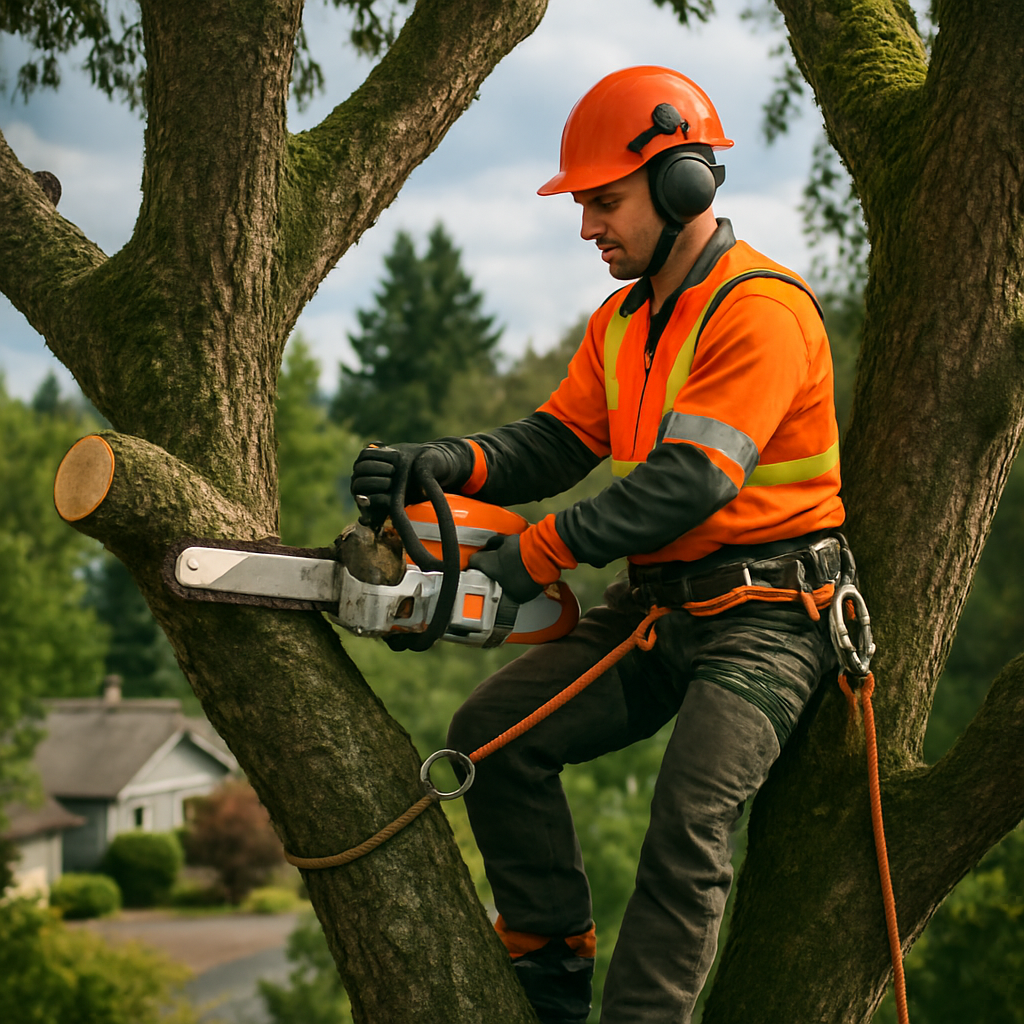
Species matter: Douglas fir, western red cedar, bigleaf maple and Oregon white oak behave differently under stress. A Douglas fir failure near power lines will usually require a different rigging plan than a bigleaf maple pruning job; that changes crew size, equipment and liability. Certified tree climbers Beaverton and local arborists know how these species rot patterns show up in winter storms.
Practical trade-off: local crews provide better diagnosis and fewer unnecessary removals, but they may not always have the specialized equipment a large out‑of‑town contractor brings. If your site needs a crane or heavy land clearing, expect higher mobilization costs even with a local company—yet the alternative is a miscut or property damage.
Permits, soil, microclimate and timing
Regulatory advantage: contractors familiar with City of Beaverton rules avoid permit delays that add days or weeks. If a tree is on a protected list or your property borders a public right-of-way, experienced local crews handle permit paperwork and the arborist reports the city often requires. See City of Beaverton urban forestry for triggers.
Site knowledge matters: Beaverton's clay pockets and drainage issues change how crews plan root protection and stump grinding. Poor planning on soils and access leads to stuck equipment or rescheduled jobs—and those are the costs you actually pay, not the headline estimate.
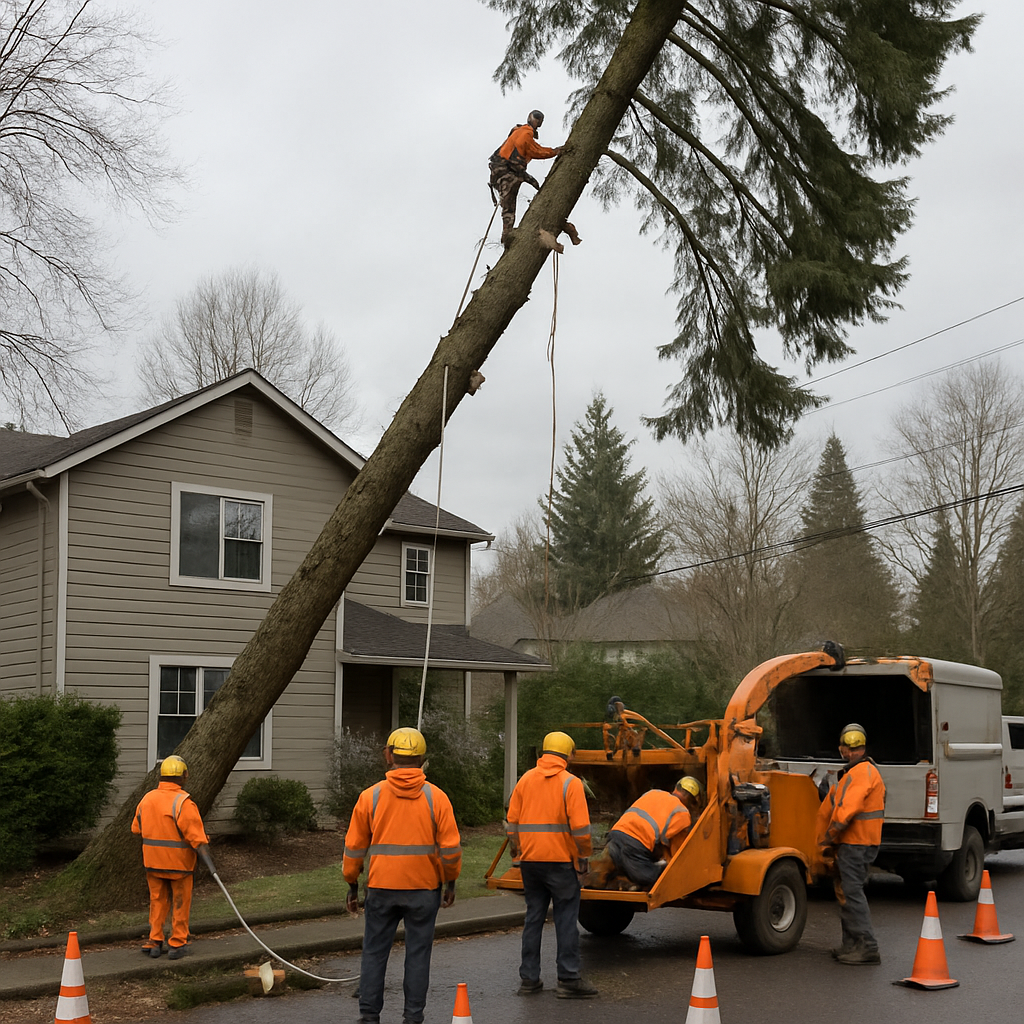
Concrete Example: After a December windstorm, a homeowner in West Beaverton had a 70-foot Douglas fir leaning into a fence and close to a detached garage. A local crew assessed decay at the main stem, pulled permits the same day, and used sectional rigging to drop the tree safely without a crane. The job took a full day but avoided a neighbour's property claim and a costly emergency crane call.
- What local expertise shortens: permit processing, correct equipment selection, realistic timelines
- What it doesn't replace: formal arborist inspection when preservation or permit reports are required
- Red flag: contractors who claim every removal is urgent without showing decay evidence
Choose local knowledge when the job sits near structures, utilities, or protected trees; it usually saves money and risk even when the upfront price is higher.
Verify credentials, insurance, and regulatory compliance
Start here: treat credentials and insurance as the primary filter. If a contractor cannot produce verifiable proof of an ISA Certified Arborist or a current CCB license when asked, they should not be on your short list for anything beyond basic shrub removal.
What to check and why it matters
Credentials that reduce risk: look for an ISA Certified Arborist, evidence of certified tree climbers, and a contractor who lists commercial or residential tree service credentials for Beaverton jobs. An arborist credential matters because it shows training in tree health assessment and safe pruning techniques rather than just chainsaw experience.
- Insurance checklist: request a certificate of insurance showing general liability with at least $1 million per occurrence and workers compensation or a valid exemption; verify the policy number and effective dates with the insurer
- Permits and regulatory compliance: confirm whether the contractor will pull required permits and understands local rules at City of Beaverton Urban Forestry
- Licensing: verify the contractor's
CCBstatus (if applicable) and business registration; contractors doing larger removals or land clearing should hold the appropriate state license
Practical trade-off: higher insured crews and certified arborists cost more up front, but they materially reduce your exposure to property damage and liability. Cheap estimates often omit workers compensation or carry low coverage limits; that gap becomes your problem if a worker is injured or a limb damages a neighbor fence.
Concrete example: A Beaverton homeowner hired a low-cost crew without verifying insurance. A falling limb nicked the house and the crew had no workers compensation; the homeowner ended up paying a deductible and managing a complex claims dispute. Asking for a COI and calling the insurer would have prevented that scenario.
How to verify quickly: use the ISA online lookup at International Society of Arboriculture to confirm certification, ask to see the contractor's COI on-site, and check local permit familiarity via the Beaverton urban forestry page. If the contractor says they will handle permits, get that promise in writing and note who is responsible for fees.

Next consideration: once credentials, insurance, and permit responsibilities are confirmed, move to itemized estimates so you can compare scope and timelines rather than headline price alone.
Services you may need and how they affect the job
Straight fact: the service you pick dictates crew size, equipment, timeline, permits, and disposal strategy more than the hourly rate. If you search for tree service beaverton you will see prices vary because the scope under that label can mean anything from a single pruning visit to full land clearing with cranes and hauling.
Common services and how they change the job
- Emergency tree service Beaverton: same-day or 24 to 48 hour response, smaller crew for immediate hazard removal, higher surcharge, temporary fixes may be done before full cleanup.
- Tree removal Beaverton (scheduled): planned crew, rope-and-pulley or bucket truck work for mid-size trees, may require permits depending on size and location; disposal and chip size influence price.
- Stump grinding Beaverton: usually separate line item; grinder access can be restricted by slope or garden beds and this increases labor or requires partial landscaping repair.
- Tree trimming / pruning / tree pruning Beaverton: maintenance vs corrective pruning affects frequency and arborist skill; cosmetic cuts are cheaper than structural pruning by an ISA arborist.
- Cabling and bracing, pest management, preservation: lower immediate removal cost but adds monitoring and materials, often longer-term and requires certified arborist input.
- Land clearing Beaverton: large crews, heavy equipment, erosion control and permits may be required; disposal and hauling are major cost drivers.
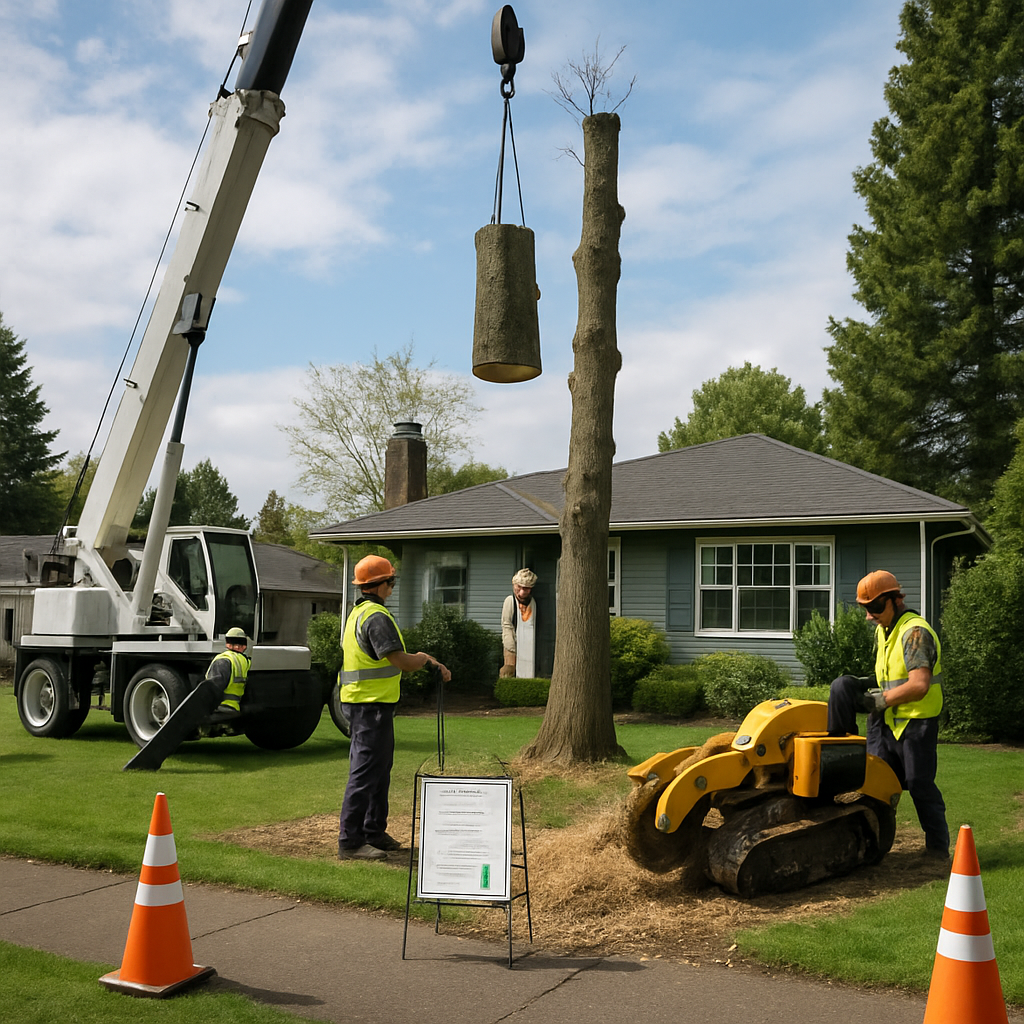
Access is the multiplier. A 30 inch Douglas fir in a backyard with 6 foot gates is a different job than the same tree with driveway access. Cranes, bucket trucks, or extended rigging push a job from a day to multiple days and add traffic control or pavement protection costs.
Tradeoff to recognize: choosing removal over aggressive pruning eliminates repeated pruning cost but destroys canopy value and increases disposal expense. Conversely, investing in cabling or selective pruning preserves an established tree but carries ongoing inspection and maintenance costs.
Concrete example: A large Douglas fir leaning toward a house often triggers a staged response. First an emergency crew secures and reduces immediate hazard, then a scheduled crane removal team returns for a controlled lift. Expect separate line items for emergency service, crane mobilization, wood chipping services, and stump grinding.
Permits and assessments matter. An arborist assessment can add time and an upfront fee, but it clarifies whether a permit or tree health treatment is required. Check City of Beaverton rules at City of Beaverton Urban Forestry and consider an ISA certified opinion for complex cases via ISA or OSU guidance at OSU Extension urban forestry.
Next consideration: when you compare estimates, match services line by line rather than prices. If a bid includes arborist report, crane, chip hauling, and stump grinding while another omits those items, the jobs are not comparable even if the totals look close. For local examples of bundled services, see Mr. Tree services at Mr. Tree Inc. services and their emergency workflow at Mr. Tree emergency services.
How pricing is calculated and how to read an estimate
Start with itemization, not the bottom line. A single lump-sum number hides the assumptions that drive cost: crew size, equipment rented, disposal method, and whether stump grinding or permit work is included. When you request an estimate for tree service Beaverton, insist on line items so you can compare apples to apples.
Line items you should see on every estimate
- Mobilization: travel, site prep, and any minimum call-out fee
- Labor: crew hours, number of workers, and hourly vs flat crew day rate
- Equipment: chippers, stump grinder, lift truck, crane – note day rates and rental marks
- Disposal and hauling: chip hauling, green waste tipping fees, or on-site chipping allowance
- Stump grinding: per-stump or per-inch pricing and whether grindings are hauled or left as mulch
- Permits and arborist reports: city fees or required assessments for protected trees
- Emergency surcharge: higher rates for same-day or storm response
- Site restoration: root pruning, soil replacement, sodding or barkscatter cleanup
Pricing models and what they hide. Contractors use several common models: per-tree flat bids, diameter-based pricing (inch-by-inch), per-hour crew rates, or bundled project bids. Diameter pricing is usually the clearest for large trees because it ties cost to measurable risk and work. Per-hour pricing favors contractors when access is tight or jobs run long; it can also leave homeowners exposed to inefficiency. Flat bids work if the scope is tightly defined.
| Estimate line item | What to ask or watch for |
|---|---|
| Mobilization | Is there a minimum day charge? Does it cover permits or only travel? |
| Equipment / crane | Is crane time quoted by the hour or full day? Who pays for operator overtime? |
| Stump grinding | Price per stump or per inch, and are grindings removed or left on site? |
| Disposal | Chip volume allowed on site before hauling fees apply; tipping fees if any |
| Permits / arborist report | Who pulls permits and pays fees? Is an arborist report included if required? |
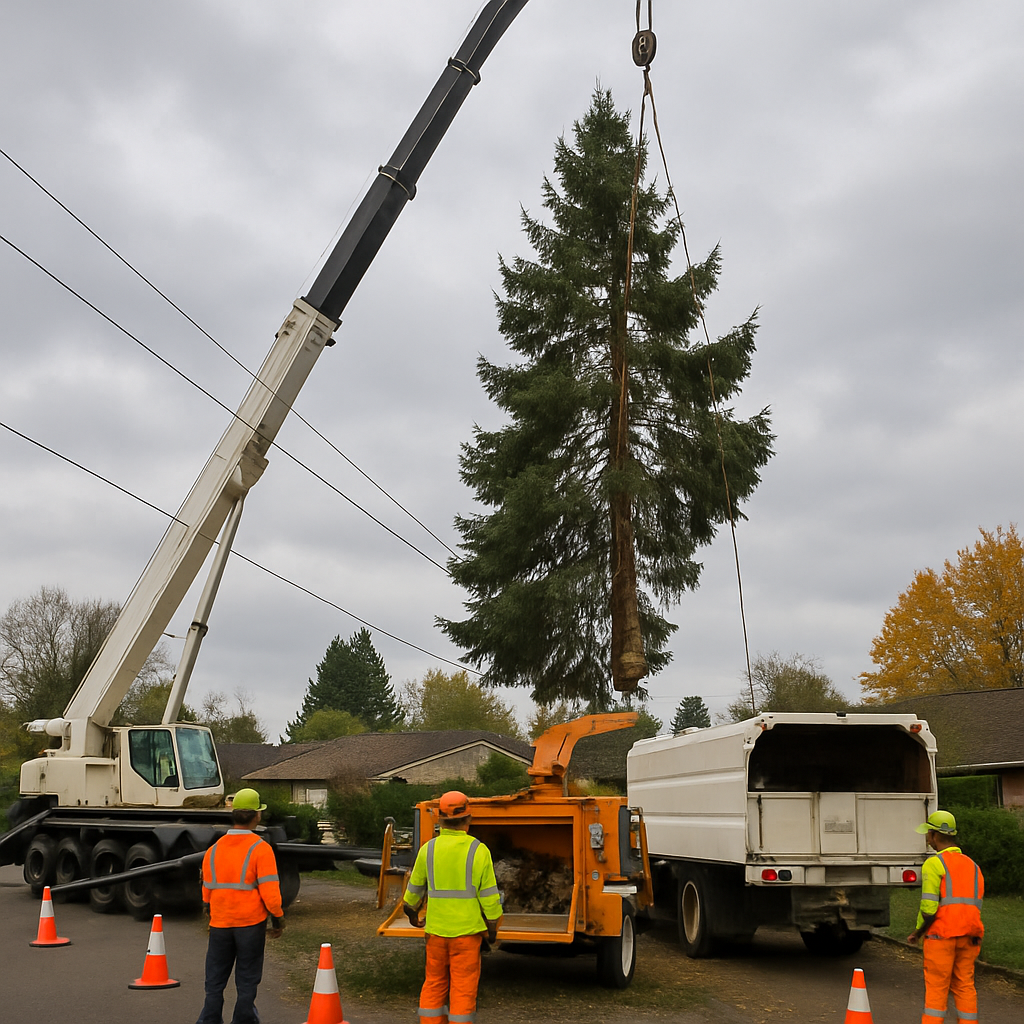
Concrete example: A 40 inch Douglas fir next to a house in Beaverton will often need a crane or multi-stage rigging. Expect separate line items for crane rental, a four-person rigging crew, stump grinding, chip hauling, and a permit review if the tree is on a protected list. Choosing a contractor who offers a lower crane fee but omits chute-and-chip containment can raise your cleanup and landscaping costs after the crew leaves.
Insist on DBH (diameter at breast height) measurements for every large tree and a clear statement of who handles permits and disposal.
Practical judgment. Low bids often omit costs you will pay later – haul fees, stump grinding, or post-job site restoration. If a contractor refuses to itemize or uses vague language like cleanup included without specifics, treat that as a red flag. When comparing quotes, normalize them to unit rates and check whether the contractor will handle permits and provide proof of insurance before signing.
Timelines and scheduling expectations in Beaverton
Expect variability — not a firm appointment. For routine work with a reputable tree service Beaverton crew, plan on a typical lead time of one to three weeks outside of peak demand. During winter storms or immediately after a major wind event, waits for non-life-threatening jobs commonly stretch to three to six weeks because crews are triaging hazards.
Emergency response differs from scheduled work. A true hazard — leaning into a house, large limb across power lines, or a situation threatening life or vehicle access — should get a same-day or 24- to 48-hour response from established contractors offering emergency tree service Beaverton. Lesser-urgent hazards will be queued behind these calls. Ask contractors how they define and prioritize emergencies.
Scheduling factors that change timelines
- Permits and reports: If the job triggers a City of Beaverton permit or requires a tree health assessment Beaverton, add days to weeks for processing — see City of Beaverton urban forestry.
- Equipment needs: Crane lifts, specialty rigging, or large stump grinders require bookings that can push the start date out by one to three weeks.
- Access and disposal: Tight yards, steep slopes, or restricted street parking slow crews and can require separate staging days or additional permits from the city.
- Seasonal demand and weather: Wet ground limits heavy-equipment work; heavy rain and saturated soils in winter often delay crane work and stump grinding.
Trade-off to accept: Faster scheduling almost always costs more.** If you need expedited removal, expect emergency surcharges, weekend premiums, or a smaller specialized crew that charges higher hourly rates. Speed can save risk but eats into your budget.
Concrete example: A 30-inch Douglas fir leaning toward a house in Beaverton often follows this timeline: on-call crew does a same-day phone triage, an on-site arborist visit within 48 hours, permit review or application (7–14 days if required), crane and crew booked 7–21 days out, and the removal completed in a single day. Stump grinding frequently schedules separately and may occur 1–2 weeks after the cut depending on equipment availability and ground conditions.
Practical scheduling tactic: When you request estimates, ask for a start window and a completion date, and require the contract to specify who handles permit pulls and expected permit delays. Vendors that refuse to give a booking window or that demand full payment to reserve a date are a red flag.
Next consideration: If timing matters (sale, fence installation, landscaping), book well before your hard deadline and prioritize contractors who will put scheduling and permit responsibility in writing — this is where licensed tree service Beaverton providers separate themselves from weekend or storm-chasing crews. For immediate hazards, use a vetted emergency route such as Emergency Tree Services – Mr. Tree Inc..
Compare quotes: exact questions to ask and red flags to watch for
Direct start: Never accept a single, lump-sum number without an itemized breakdown. An itemized estimate is the single best predictor of whether the contractor understands the site and will deliver what you expect for a tree service beaverton job.
Exact questions to ask on the phone and at the site
- Scope clarity: What exactly is included line by line – tree removal, stump grinding, chip size, hauling, and final cleanup
- Crew and equipment: How many crew members, what equipment will you use (crane, chipper, stump grinder) and will certified tree climbers be on site
- Schedule: Proposed start date, expected crew days on site, and a completion date
- Permits and reports: Will you handle permits and provide a tree health assessment Beaverton arborist report if required
- Insurance and licenses: Can you provide a current certificate of general liability and workers compensation and your
CCBlicense number - Payment terms: Payment schedule, deposit amount, and whether final payment is withheld until cleanup and inspection
- Disposal plan: Where will debris go, will chips be left on site, and what are disposal charges
- Warranty and cleanup: Is there a written warranty for work and will you provide before/after photos and a cleanup checklist
Practical insight: If a contractor refuses to put permit responsibility in writing, expect surprises. Handling permits saves you time but adds cost and paperwork. The tradeoff is clear: pay to transfer administrative risk, or keep costs lower and accept additional follow up and potential delays.
Red flags that mean walk away or probe harder
- Vague estimate: No itemization or a price that swings wildly from other quotes
- No proof of insurance: Refuses to provide certificates or gives expired policy dates
- Demand for full payment up front: Legitimate contractors take a reasonable deposit, not full payment
- Storm chaser behavior: Pressures you immediately after a weather event or offers only cash deals
- Unwilling to sign a scope or warranty: Leaves cleanup, damage responsibility, or timelines verbal only
Concrete example: One homeowner in Beaverton had three quotes. The cheapest excluded stump grinding and charged per-hour for cleanup; the mid quote was itemized and included disposal; the most expensive bundled a crane and permit handling. The mid quote ended up being the lowest final cost and the smoothest schedule because it matched site constraints and local permit needs.
| Red flag | Real consequence |
|---|---|
| No insurance certificate | You are on the hook for damages or injured workers until verified |
| Unclear disposal plan | Surprise hauling fees or leftover debris on your property |
| Huge upfront deposit | Limited leverage if work is incomplete or done poorly |
CCB status online; request insurer contact details and confirm coverage dates. If a contractor mentions the City of Beaverton permit, confirm the contractor will provide the permit documentation before work starts. See Mr. Tree service examples at Mr. Tree Inc. services.Key takeaway: an itemized quote plus verifiable insurance and a firm schedule beats a low headline price every time for tree removal Beaverton jobs.
Actionable next steps and homeowner checklist
Start practical: get the facts on the ground before you hire anyone. Take clear photos from multiple angles, note which structures or lines are within 20 feet, and measure approximate trunk diameter at chest height – this small set of facts will determine whether you need a routine job, stump grinding Beaverton services, or emergency tree service Beaverton.
On-site prep and what to record
- Photos: wide shots showing tree relative to house, closeups of damaged areas, and a shot of the base and root flare
- Measurements: trunk diameter (inches), clearance to roof and power lines, gate width and driveway access
- Access notes: obstacles for trucks or cranes, overhead wires, and where wood and chips can be staged
- Permits and trees of concern: flag any heritage or protected trees and check City of Beaverton Urban Forestry if a permit might be needed
- Safety note: if the tree is an immediate hazard, keep people clear and call an emergency crew
Request three written, itemized estimates and compare them line by line. Ask each contractor to list mobilization, crew hours, equipment (crane, chipper, stump grinder), disposal or hauling, permit fees, and any emergency surcharge. Use Mr. Tree services as a benchmark for line items and compare who will actually pull permits and handle disposal.
Concrete example: A homeowner finds a large maple cracked over the garage after a wind event. First call for safety evaluation or an emergency crew via Mr. Tree emergency services if the limb threatens the structure. If it is not an immediate collapse risk, photograph the damage, record distances to the garage and power lines, then collect three estimates that specify whether stump grinding and chip removal are included.
Tradeoff to accept: faster response costs more. If you need same-day removal after a storm expect emergency premiums or different crew mixes – chainsaw crews for quick removal versus crane teams for careful lifts. Budget for a premium if response time matters more than price.
Payment and contract rules: do not pay full amount up front. Standard practice is a modest deposit, progress payments tied to milestones, and final payment on satisfactory cleanup. Require before-and-after photos and written confirmation that permits and disposal receipts will be provided.
Post-job checklist: verify stump grinding depth and surface finish, confirm chip or slash removal or your permission to leave chips as mulch, keep all permits and invoices, and schedule a follow up tree health check or pruning in 6 to 12 months to prevent regrowth issues.
0 Comments