

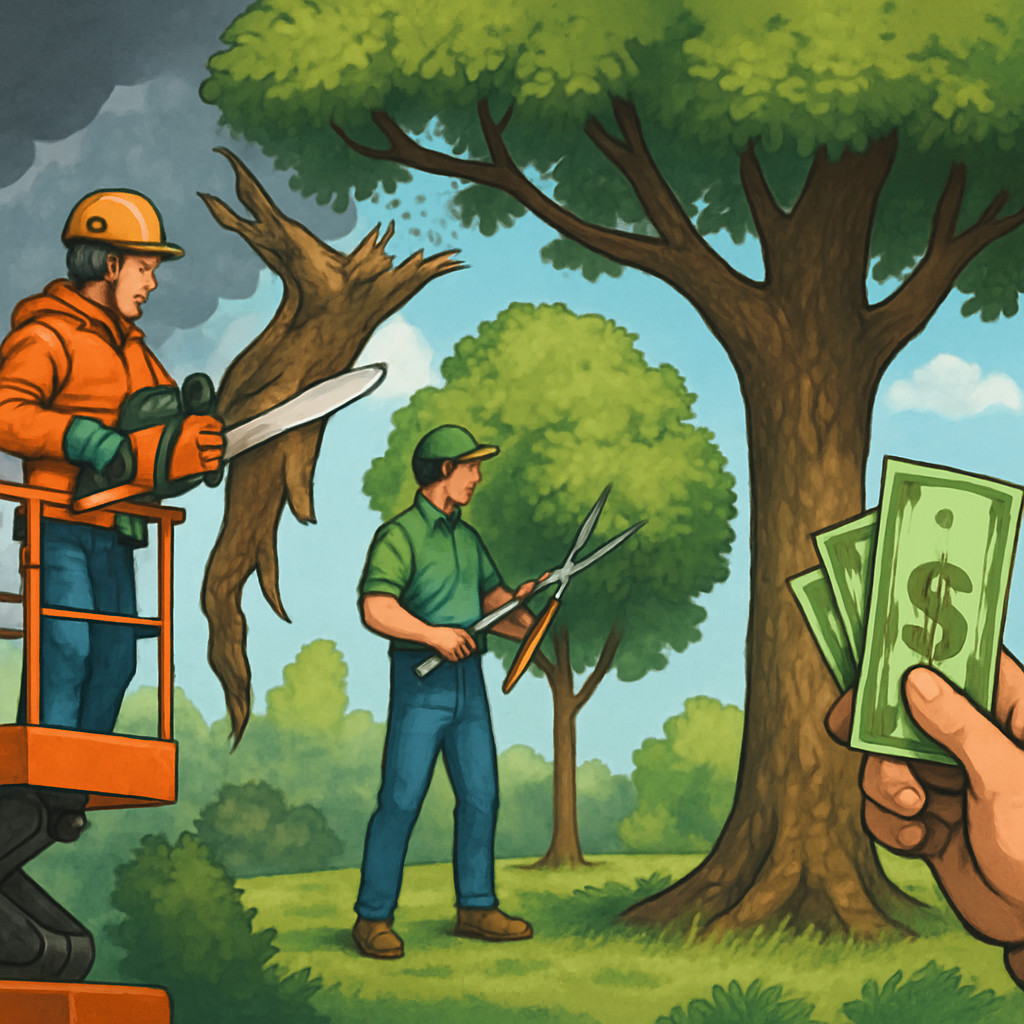
Tigard Tree Service Options: Emergency Care, Routine Maintenance and Cost-Saving Tips
If a storm just knocked a limb into your yard or you want to lower long-term costs, knowing your tigard tree service options matters. This guide explains when to call an emergency crew versus scheduling routine pruning, what professional services in Tigard typically cover, and practical ways to cut costs without compromising safety. Use the checklists and seasonal timing tips here to help homeowners and property managers make fast, informed decisions.
Emergency tree situations and first actions for Tigard homeowners
If a large limb is hanging over people, a trunk has a visible crack, or the root plate is lifting, treat it as an immediate hazard. These are the concrete signs that require urgent attention: fallen or partially attached large limbs, trees leaning into structures or power lines, crushed fencing or sidewalks from root failure, and hanging branches that could fail onto occupied areas.
First actions that matter
Prioritize life and access over property. Move people and pets out of the danger zone, cordon the area if you can do so safely, and keep a clear path for crews and emergency vehicles. Photograph damage for documentation and insurance; images taken from multiple angles before any work are invaluable.
Call the right contacts immediately. If power lines are involved, call the utility before anyone else. If a structure is compromised or someone is injured, call 911. For non-life-safety hazards on private property, contact a local emergency arborist; see Emergency Tree Services – Mr. Tree Inc. for typical response scope and triage.
What to expect from a professional emergency response. Crews will triage hazards, stabilize large limbs or the trunk, clear immediate threats, and create a written plan for either scheduled removal or permanent repairs. Fast response crews in Tigard often use sectional rigging to protect structures and will advise if temporary bracing is a short-term stopgap.
Tradeoff to understand: stabilization buys time, not always money. Temporary cabling, bracing, or selective reduction can avoid immediate removal but often requires subsequent work and inspection. In many cases – especially with severe root or trunk failure – full removal sooner reduces total cost and liability compared with repeated emergency visits.
Local rules and insurance coordination. Permit requirements and protected tree rules in Tigard can affect timing; check the City of Tigard site and notify your insurer early. Don’t assume coverage; document everything and get a written scope before work starts.
Concrete Example: A February windstorm pushed a mature maple so its root plate lifted and leaned into a garage. The homeowner cleared the garage, called the utility because the tree brushed a service drop, photographed the scene, and booked an emergency crew. The crew stabilized the limb, removed unstable branches that threatened the roof, then scheduled full removal the next week after permit checks.
- Do: Evacuate the hazard area and document damage with photos from multiple angles
- Do: Call utilities for downed lines and a reputable emergency arborist for triage
- Do: Move vehicles away but do not attempt to push trees off structures
- Don’t: Climb the tree, cut hanging limbs yourself, or work under suspended branches
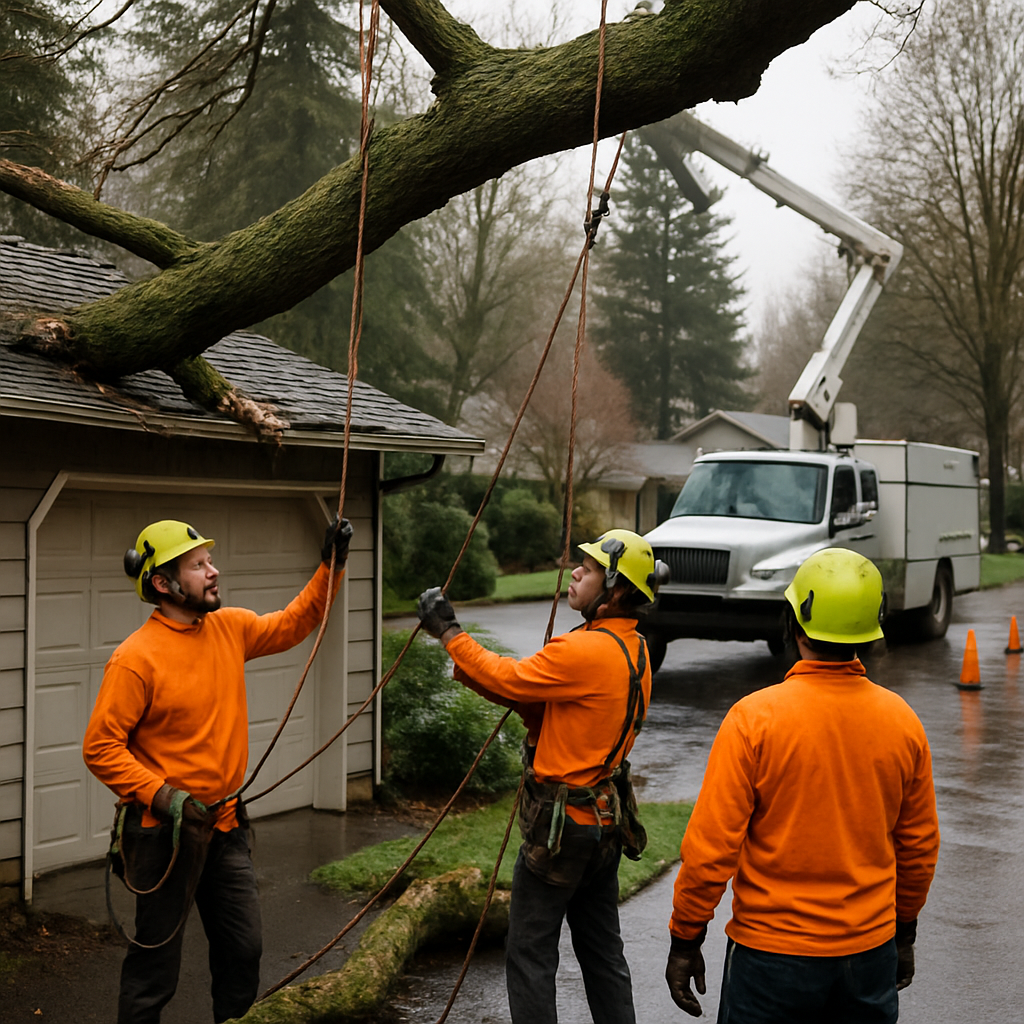
Next consideration: after safety is secured, schedule a formal tree health assessment with a certified arborist to decide between scheduled removal, restoration pruning, or preservation measures.
When to remove versus when to stabilize or prune
Do not assume removal is the only safe choice. Many damaged or declining trees can be made safe and useful again with targeted pruning, cabling, or a short stabilization program. The practical question is not can we fix it but should we, given cost, future risk, and the tree's expected lifespan.
Assessment criteria that decide action
Key criteria: look at structural defects, percent of canopy lost, visible root plate or soil heave, advanced decay or hollowing, and immediate proximity to structures or power lines. Root failure or a split trunk through the center crown usually forces removal. Surface cracks and broken limbs often can be handled with pruning or temporary bracing.
- Removal is the right call when: the root plate is lifted, trunk has a through crack or large rot cavity, the tree is actively leaning into a building or live power line, or the remaining canopy is less than roughly 25 percent and the tree will not recover.
- Stabilize or brace when: the main union is sound but cracked, the tree has high amenity value, and you accept short to medium term monitoring and potential follow-up work.
- Prune when: damage is limited to a few large limbs, there is no root failure, and pruning will not remove more than 30 to 40 percent of live crown to avoid stressing the tree.
Tradeoff to accept: stabilization is a time and maintenance commitment. Cabling and bracing reduce immediate risk but are not a permanent cure for decline. Repeated heavy pruning protects property in the short term but increases long-term vulnerability to pests and decay if overused.
Concrete example: After a winter windstorm in Tigard, a 40-inch maple lost two major limbs and developed a visible diagonal trunk crack. Because the crack did not penetrate the entire trunk and roots remained firm, a certified arborist installed temporary cabling, removed hazardous limbs, and scheduled a follow-up health assessment in 12 months. That approach avoided an urgent crane removal and spread cost over time while monitoring for decline.
What people get wrong: homeowners often pay to preserve a tree with a low probability of long-term recovery because of sentiment. In practice, measure cost against expected years of safe service. If stabilization costs approach or exceed staged removal plus replanting, removal is usually the smarter choice.
Next step: document the damage with photos, avoid DIY rigging, and get a written assessment from a qualified local arborist. For emergency situations or fast triage in Tigard, review Mr. Tree emergency services and permit rules on the City of Tigard site before scheduling removal.
Routine maintenance plan tailored to Tigard and common local species
Start with a pragmatic cadence. For most Tigard yards a 3 to 5 year cycle for structural pruning on mature street and yard trees prevents the steady decline that creates expensive removals later. Over-pruning is a real problem – too-frequent heavy cuts weaken trees and increases long-term liability.
Cadence and species-specific goals
| Species | Recommended pruning cadence | Primary maintenance goal |
|---|---|---|
| Red maple and other maples | Every 3 to 4 years | Reduce weight on major limbs, correct co-dominant stems, and manage root zone compaction |
| Douglas fir | Every 4 to 6 years | Remove deadwood, avoid heavy crown thinning, protect wind stability |
| Western red cedar | Every 3 to 5 years | Control basal suckers, thin inner crown to reduce moisture trapping |
| Oregon white oak | Every 4 to 6 years – prune in dry summer window when possible | Minimize large cuts during wet season to reduce disease risk |
| Fruit trees | Annual light pruning | Maintain structure, increase fruiting and reduce pest hotspots |
Practical insight – timing matters. In Tigard aim for structural pruning in late winter to early spring for most deciduous trees. Oaks are an exception – pruning in the drier summer window reduces the risk of disease spread. Also schedule heavy work outside peak windstorm season to ensure crews can complete stabilizing cuts if needed.
What homeowners should do versus when to call a pro
- Homeowner tasks: Monitor for wood decay, maintain 2 to 3 inches of mulch over the root zone, check soil moisture in summer for young trees, and remove small suckers and crossing branches.
- Call a professional: For any work above shoulder height, pruning near power lines, suspected root plate heave, or when you want a certified assessment – request a tree health assessment Tigard from a certified arborist.
- Service pairing: Combine tree trimming Tigard with stump grinding Tigard when removing a tree to save mobilization costs and avoid future trip hazards.
Tradeoff to accept. Cheaper annual shearing for cosmetic shape often sacrifices structural pruning that prevents future failures. Spend less often but with the right scope – targeted structural cuts beat yearly blanket trimming for long-term risk reduction.
Concrete example: A Tigard homeowner with a mature red maple near a driveway scheduled a structural prune every 3 years, added 3 inches of mulch and a single aeration of the compacted root zone. Within five years the tree required no cabling, saved the owner the higher cost of hazardous tree removal Tigard, and improved sidewalk clearance without losing canopy cover.
Where to look for local guidance and help. For permit questions consult the City of Tigard tree rules at City of Tigard. For pruning standards use ISA guidelines and for pest and soil considerations reference OSU Extension. When you are ready to schedule combined services link to practical local options at Mr. Tree services.
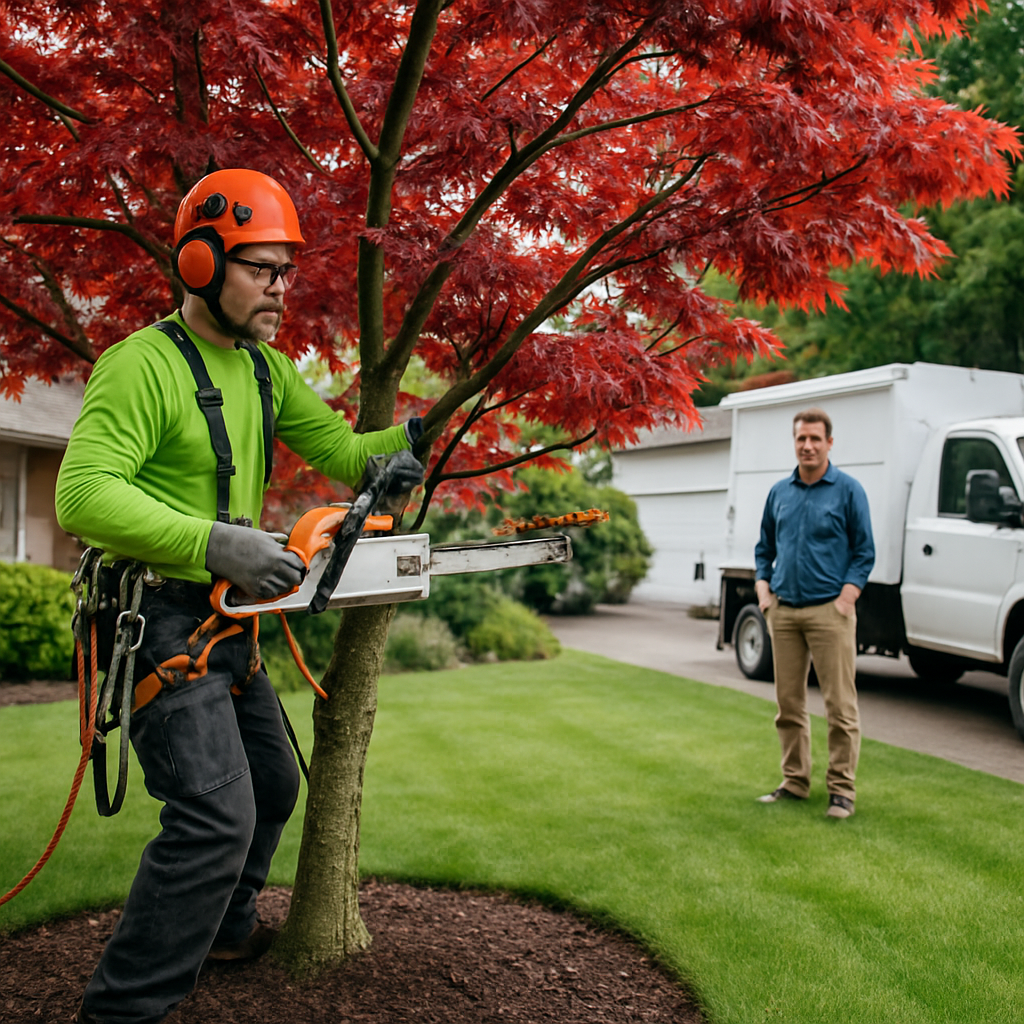
Mr. Tree service options explained and when to use each
Key point: Choose a service by the outcome you need, not the label on the invoice. Mr. Tree organizes work around three practical goals – immediate safety, long term tree health, and site clearance or redevelopment – and each service is optimized for one of those goals with different costs and tradeoffs.
Core Mr. Tree services and when to use them
- Emergency Tree Services: use for life safety hazards or property contact; fast response stabilizes risk but often costs more than scheduled work. See Emergency Tree Services – Mr. Tree Inc..
- Tree Removal and Stump Grinding: choose removal when structural failure, invasive roots, or redevelopment require it. Stump grinding is the cost effective option for clearing but leaves root material – full stump extraction is pricier and only needed for heavy regrading or new foundations.
- Tree Trimming and Pruning: use for canopy health, clearance, and structural pruning. Regular pruning reduces long run risk but will not fix advanced internal decay.
- Arborist Services and Tree Health Assessment: hire a certified arborist for complex decisions – insect or disease issues, veteran tree preservation, or contested removal decisions. A written assessment prevents unnecessary removals.
- Cabling and Bracing: a preservation tool for structurally compromised trees. It buys time and reduces failure risk but is not a cure for decay – expect periodic inspections and possible future removal.
- Root Management, Mulching, Fertilization: use when decline is linked to poor soil or compaction. These are preventive investments that lower future removal probability.
- Brush, Lot Clearing and Land Clearing Services: select when clearing for construction or to reduce wildfire fuel; plan for erosion control and permits with the city.
- Wood Chipping and Disposal, Commercial and Residential Service Packages: combine services for cost savings and cleaner timelines; verify whether debris removal and chip reuse are included in the written scope.
Tradeoff to understand: preservation measures like cabling or targeted pruning are cheaper than removal but require monitoring and may delay an inevitable removal. Conversely, immediate removal solves the problem but increases short term cost and creates a longer term landscape gap that requires planting and site work.
Concrete example: A mature maple with a 30 percent split at a major limb junction but otherwise healthy can often be stabilized with selective pruning and cabling rather than full removal. Mr. Tree would start with a written tree health assessment, do the stabilization work, and schedule follow up inspections – this typically costs less than a complex crane removal and preserves canopy value for years.
Practical judgment: homeowners commonly underestimate disposal and permit costs. Always request a single written quote that lists removal, stump grinding, debris hauling, and any City of Tigard permits. For permit questions consult City of Tigard and link service scopes to the Mr. Tree services page at Mr. Tree services.
Next consideration: get a written assessment that ties recommended services to a timeline and disposal plan before approving work.
Cost factors and realistic pricing guidance for Tigard properties
Key point: Tree work in Tigard is priced by complexity, not just tree size. Two trees with the same trunk diameter can cost very differently if one is over a driveway, next to power lines, or requires traffic control.
Primary cost drivers to watch for include trunk diameter and height, access difficulty, proximity to structures or utilities, need for specialist equipment like a crane, disposal volume, stump grinding, and any required permits. Seasonal demand and storm surges also change labor rates and response fees for emergency calls.
- Diameter and height: Bigger trees mean longer climbs, heavier rigging, and larger sections to lower safely
- Access and rigging complexity: Tight yards, fences, roofs, or narrow streets increase labor and time
- Hazard factors: Trees touching power lines or leaning onto structures require certified crews and can add premium charges
- Equipment and disposal: Crane time, chipper use, truck haul-away, and stump grinding are billed separately in many estimates
- Permits and traffic control: City of Tigard permit fees and traffic control for work affecting sidewalks or roads add fixed costs; check City of Tigard
Typical price bands and what they actually mean
Reality check: National cost guides are a starting point, not a quote. Expect wide local variation in the Portland Metro market. As a practical guide, small removals without access issues often fall into the low hundreds, medium trees with some access constraints land in the mid hundreds to low thousands, and large or high-risk extractions with crane or extensive rigging commonly run several thousand dollars. See industry benchmarks at HomeAdvisor for reference.
Trade-off to understand: Saving by choosing the lowest bid usually means accepting shortcuts elsewhere – smaller crews, less rigging, or poor cleanup. That can increase risk to property and create hidden costs later. Paying more for experienced crews, proper insurance documentation, and a full disposal plan is often cheaper after you factor in liability and cleanup quality.
Concrete Example: A 30-inch maple in a backyard with a clear drop zone and driveway access may be removed and the stump ground on the same day for a mid-range price. The same 30-inch maple leaning toward a house with a narrow side yard, needing sectional removal and a crane or extended rigging, can double or triple that cost because of extra labor, time, and equipment.
Practical saving tactics that work in practice: Bundle work to avoid repeat mobilization charges, schedule non-urgent removals in off-peak months, include stump grinding in the original scope, and ask the contractor for a line-item breakdown of labor, equipment, disposal, and permit handling. Where safe, phase multi-tree projects so crews can plan efficient rigging sequences rather than treat each tree as a separate job.
Judgment: In Tigard you are usually better off paying for a competent local crew that understands municipal permit processes, storm patterns, and neighborhood access constraints. Low bids can look attractive until you factor in delays, additional site protection, or the need to redo poor work.
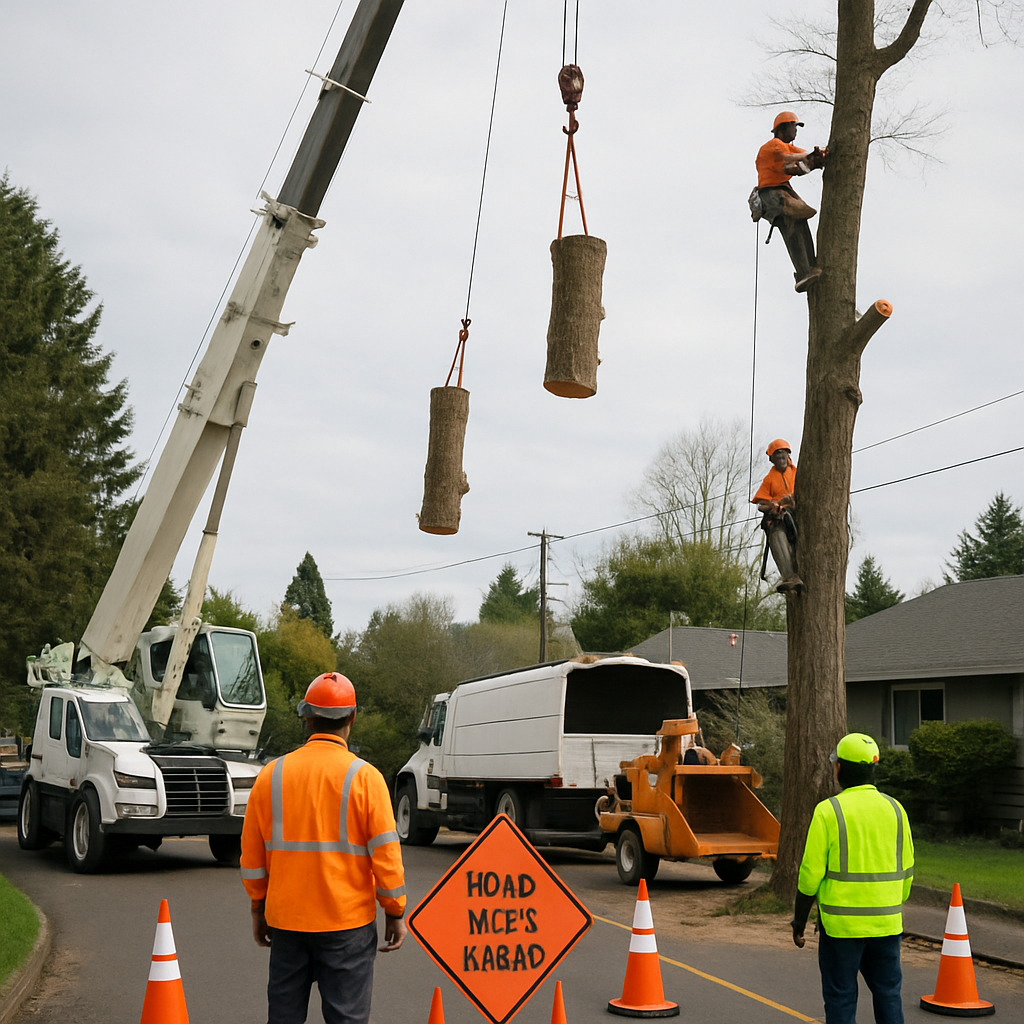
Next consideration: When you get estimates, compare apples to apples. If the quotes differ widely, ask each contractor to justify equipment choices, disposal plan, and permit handling so your decision tracks real risk and not just the lowest line on the page.
Practical cost-saving strategies that do not compromise safety
Start with priorities, not price. Spend an hour with a certified arborist to create a prioritized worklist for your property so urgent hazards are separated from cosmetic or low-risk items. Paying for one solid assessment saves money because it prevents unnecessary full removals and targets interventions that postpone expensive large-tree work.
Tactical moves that cut cost without adding risk
- Bundle similar work. Combine pruning, stump grinding, and brush removal into one job to eliminate multiple mobilization fees and get a lower per-tree rate.
- Schedule off-peak. Book non-urgent work in late winter or late summer when crews are less busy; contractors commonly offer better pricing outside peak storm-response windows.
- Do safe prep yourself. Remove cars, clear walkways, and stack small brush away from the work zone. These low-risk tasks reduce crew time on site and lower labor charges.
- Reuse material. Ask the crew to produce wood chips for mulch or cut firewood from removed logs. Reuse lowers disposal costs and often reduces the bill versus hauling everything away.
- Batch permits and jobs. If multiple trees require permits through the City of Tigard, file them together. Permitting and inspection fees and inspector visits stack when handled separately.
- Get scope-focused bids. Avoid cheapest-price traps by asking for itemized, scope-specific estimates; line-item pricing exposes where quality or safety is being cut.
Tradeoff to accept. Choosing off-season or bundled scheduling may delay work for weeks. That is acceptable for low-risk pruning but not for storm-damaged or leaning trees. Always treat safety issues as non-deferrable expenses.
Practical limitation. Reusing material as firewood or mulch saves money but shifts responsibility for proper drying, storage, and pest inspection to the homeowner. If you plan to use wood on-site, state that when you request an estimate so the crew can adjust their cleanup scope.
Concrete Example: A Tigard homeowner had three medium maples and an old stump near the driveway. They scheduled a bundled job in early spring, combined stump grinding with selective crown reduction to preserve one healthy specimen, and asked for chips to be left on-site for garden beds. The combined approach cut the quote by roughly 20 percent compared with three separate calls and avoided a crane by allowing the crew to work in a safer sequence.
Coordination with insurance and permits matters. Document storm damage with photos, notify your insurer, and coordinate timing with your adjuster. For permit questions refer to the City of Tigard site and ask contractors how they handle permit filing to avoid surprise fees.
Judgment: Do not chase the lowest bid. In Tigard the biggest savings come from planning – grouping work, reusing wood, and scheduling wisely – not from unsafe shortcuts. Next consider asking a local arborist for a phased plan that balances urgent fixes with cost-efficient bundled work and seasonal timing.
Hiring checklist and safety verification for Tigard tree services
Start here: insist on paperwork before you schedule a crew. A verbal promise is not a contract. For any job in Tigard — from a prune to a hazardous tree removal — get proof of insurance, a written scope, and a timeline before workers show up.
Key documents to request and verify
- Certificate of Insurance: request current general liability and workers compensation certificates. Practical minimum: look for $1,000,000 per occurrence liability and evidence of workers comp. Call the insurer listed on the certificate to confirm coverage is active and that your property is not excluded.
- Written estimate and scope: the estimate must list tasks, equipment (crane, chipper, stump grinder), disposal plan, and whether stump grinding is included.
- Business and permit references: confirm the contractor has a local business license and asks whether a City of Tigard permit is required; refer to City of Tigard if there is uncertainty.
- Arborist credentials: ask if a certified arborist will inspect the tree and whether they can provide a written tree health assessment. Verify ISA credentials at ISA if claimed.
- Safety and traffic control plan: for work near roads, utilities, or busy yards ask for a traffic control diagram and utility coordination plan; reputable firms will manage permits and notifications.
On-site safety checks: before work starts, confirm crew PPE, visible rigging anchors, and that chippers and cranes have current inspection tags. If the job involves power lines, verify the contractor has utility company approval and a documented plan for de-energizing or working at safe distances.
- Ask this on the phone and again in person: Who is the crew lead and are they trained for complex rigging? Will you receive a post-job invoice itemizing disposal and stump work? Who is the point of contact for damage claims? How will property restoration be handled?
Trade-off to accept: lower bids often reflect fewer safety controls or smaller crews. For trees close to houses, power lines, or narrow access, paying more for experienced rigging and traffic control reduces your liability and the chance of secondary damage. Cheap does not equal affordable when repairs follow poor removals.
Concrete example: a homeowner in Tigard had a 48-inch Douglas fir leaning toward the garage with feeder roots heaved after a storm. The hired crew produced insurance certificates, arranged utility contact with PGE, and used sectional removal instead of a crane to keep costs down while protecting the garage. The written scope included stump grinding and driveway cleanup, preventing surprise fees.
Red flags: refusal to show insurance, pressure to pay full amount up front, or evasive answers about permits or utility coordination.

Next consideration: if you are assessing bids, compare final deliverables not just price. Two contractors can quote similar numbers but include different protections; pick the one whose written scope and verified insurance match the level of risk on your property.
Seasonal maintenance calendar for Tigard microclimate
Local fact: Tigard has wet winters, spring regrowth and dry summer stretches, so timing determines whether a cut helps or creates new problems. Focus seasonal work on reducing wind and snow stress in fall and winter, then use late winter pruning windows for structural corrections before trees leaf out.
| Season / Window | Primary actions and priorities |
|---|---|
| Late fall to winter (Nov Jan) | Inspect for hazards after storms; secure cabling and bracing, remove hanging or partially attached limbs, clear gutters and rooflines, document storm damage for insurance. |
| Late winter to early spring (Feb Mar) | Best window for structural pruning on most deciduous species, schedule major removals before heavy spring growth, perform tree health assessments and apply root zone mulching. |
| Spring to early summer (Apr Jun) | Monitor new growth and pests, perform selective crown thinning for airflow, plant new trees while root systems establish during wetter months. |
| Summer (Jul Aug Sep) | Irrigation checks for young and newly planted trees, monitor drought stress and bark sun exposure, avoid heavy structural pruning unless urgent. |
| Late summer to early fall (Sep Oct) | Reduce large crown weights only when necessary, prepare weak trees for winter, schedule non-urgent removals and stump grinding before heavy rains. |
Species nuance: Maples and many flowering trees can bleed if pruned in late winter but bleeding is cosmetic; prefer late winter structural cuts for long term health. Conifers rarely need major pruning and respond poorly to heavy crown reduction. Fruit trees benefit from a late winter structural prune plus light summer thinning.
- Tradeoff to expect: Scheduling major removals in late winter can lower labor rates because crews are less busy, but saturated soils may require extra erosion control or heavier equipment.
- Permit note: Larger removals near designated trees or public right of way may require approval from the City of Tigard; check City of Tigard before work.
- Health check: Use late winter inspections to identify root plate lift, trunk cracks, and decay so you can choose stabilization now or removal before spring storms.
Concrete example: After a December windstorm a homeowner found a large maple with a split leader but the trunk still rooted. Instead of an immediate full removal, an emergency crew stabilized the site and removed the hanging wood, then scheduled a late winter structural prune and cabling assessment. That approach avoided unnecessary removal, preserved shade, and reduced the immediate bill while managing risk.
Practical judgment: In practice, Tigard property managers save the most by aligning preventive pruning and planting with the seasonal labor rhythm of local arborists. Combine multiple small jobs into a single late winter visit to cut mobilization costs, but do not delay repairs on trees showing active failure signs.
Next action: Add a late winter inspection to your annual calendar and mark any immediate hazards for emergency response so you get the safety work done now and the restorative work scheduled in the efficient pruning window.
0 Comments