

Lake Oswego Tree Service Buyer’s Guide: How to Get Accurate Quotes and Reliable Work
Whether you need pruning, hazardous tree removal, or seasonal maintenance, a Lake Oswego tree service quote should be itemized, comparable, and tied to a clear scope. This guide walks you through what to prepare for an on-site inspection, the line items every credible estimate must include, Lake Oswego permit and safety considerations that affect cost, and a one-page checklist to compare bids and vet contractors.
Why Lake Oswego Requires Local Knowledge
Local context changes the work and the price. Lake Oswego is not a generic suburban lot — mature Douglas firs, bigleaf maples and tightly spaced landscape trees, steep waterfront and hillside parcels, legacy irrigation, and close property lines mean access, rigging, and permitting show up in every realistic quote.
Practical trade-off: paying for a proper on-site inspection up front increases quote accuracy and prevents change orders, but it will add a small fee most contractors will credit if you hire them. Phone or photo estimates routinely miss root heave, hidden decay, slope hazards, and utility conflicts — those are the items that double or triple a lowball price once crews arrive.
What specifically makes Lake Oswego different
- Steep lots and tight access: narrow driveways or steep backyards often require cranes, additional rigging, or hand-lowering labor, not just a bucket truck.
- Protected trees and mitigation: City rules and neighborhood covenants can require permits, replacement planting, or fines for protected removals — read the City of Lake Oswego tree resources.
- Historic and HOA restrictions: older neighborhoods may have additional approvals or preferred species lists that influence method and schedule.
- Seasonal and soil conditions: winter-saturated soils increase root damage risk and limit heavy equipment access, pushing some work to drier months.
Concrete example: A homeowner needed a 36-inch Douglas fir removed from a steep rear yard near an overhead service line. One quote assumed a straightforward remove; the local contractor who inspected in person priced a crane, traffic control, an arborist report for a protected-tree waiver, and stump grinding. That onsite-aware bid was higher but accurate; the lowball bidder later requested extras when they discovered the same constraints on day one.
Judgment you can act on: prefer contractors who list recent Lake Oswego projects, carry an ISA certified arborist or provide documented permit experience, and include specific line items for crane/traffic control/mitigation. Local crews know which City inspectors will push back and can write a scope that passes without costly revisions.
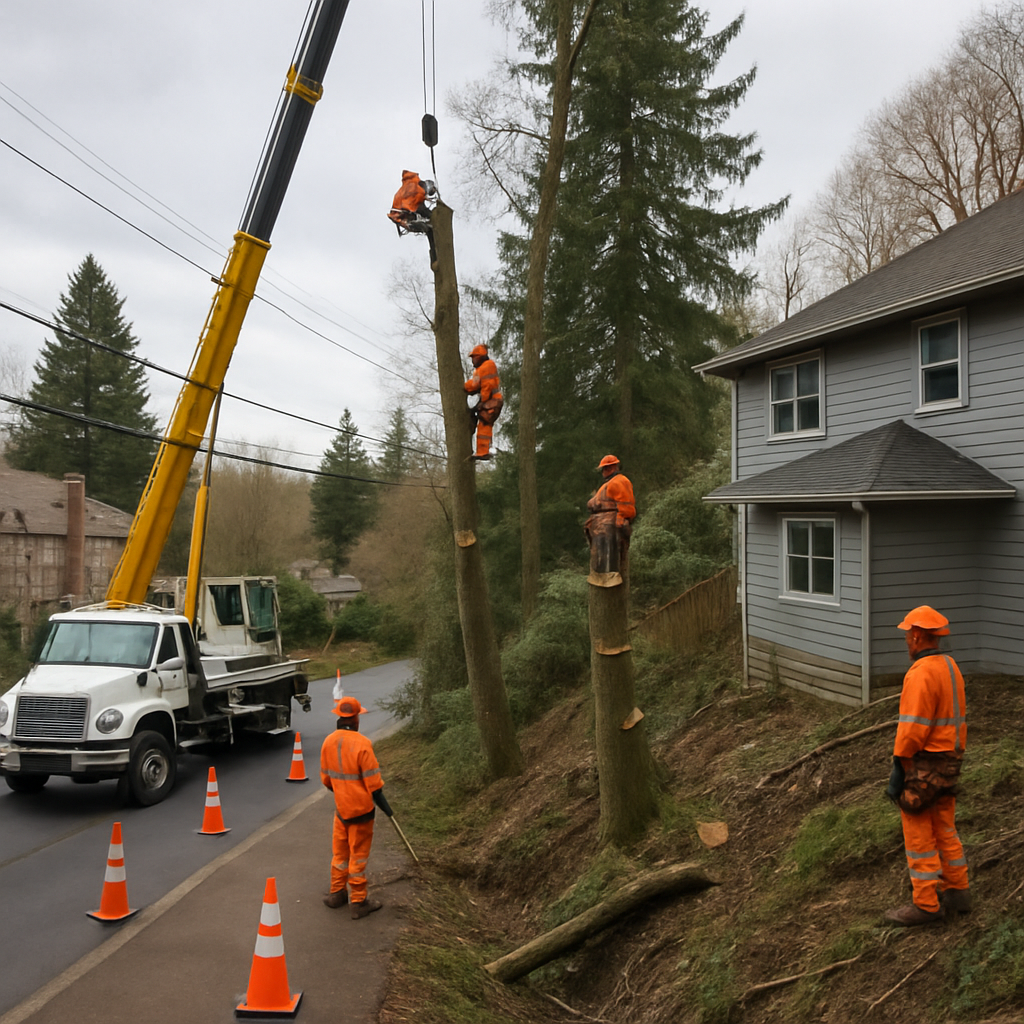
Next consideration: before you request bids, note slope, gate widths, overhead wires, and any HOA or historic district rules so every contractor is quoting the same constraints.
How to Prepare Your Property and Info Before You Request Quotes
Start precise, not vague. Before you contact contractors assemble a short packet of photos, measurements, and site notes so each bidder prices the same problem. That reduces the common wild variation you see with photo-only estimates and forces firms to disclose equipment needs up front.
What to photograph and measure
- Tree ID and condition: wide shot showing whole tree and relation to house or structure, close ups of trunk base, wounds, cavities, or fungal fruiting bodies
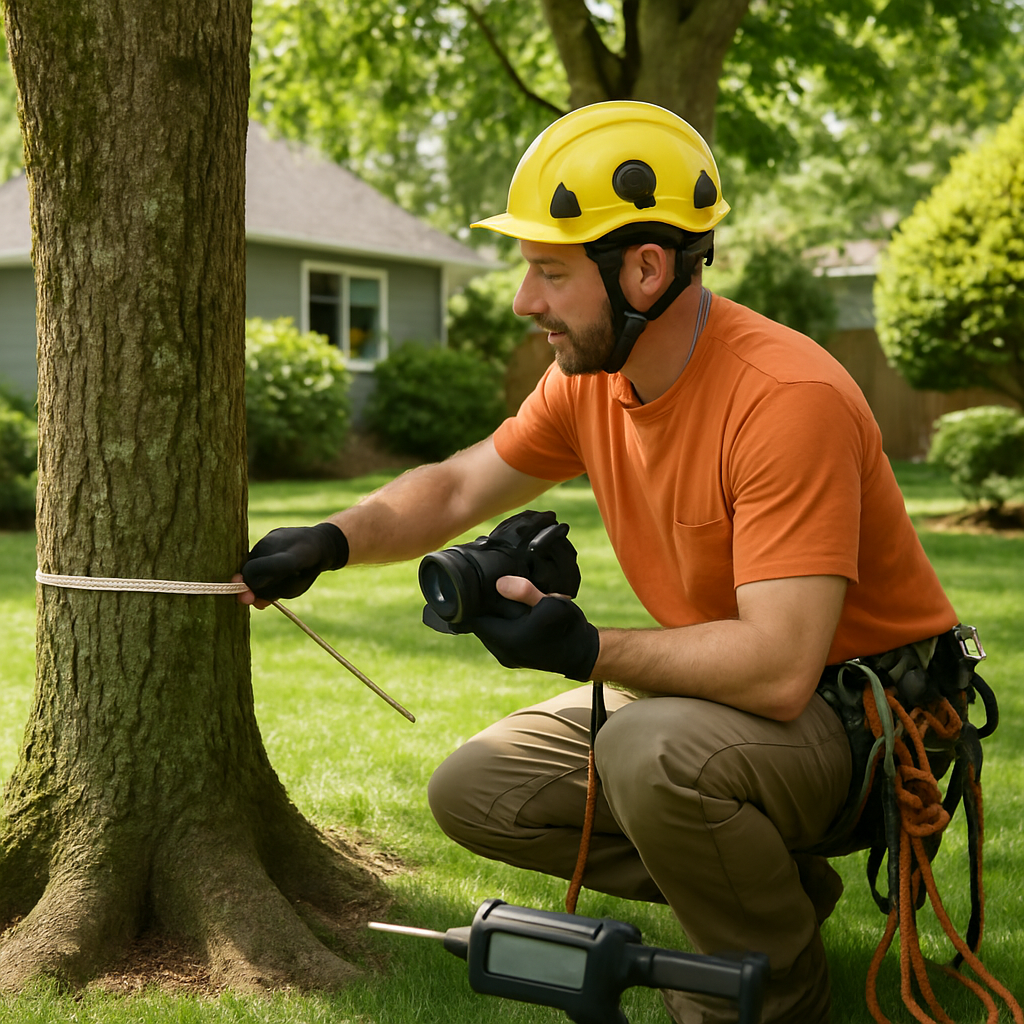
- Size metrics: measure trunk diameter at about 4.5 feet above ground – DBH is the single most useful number for pricing; estimate height using a nearby two-story reference if you do not have a clinometer
- Access shots: gates, driveway width, overhead wires, steep slopes, and where a chip pile or crane could be staged
Practical insight: Photos paired with a DBH and notes about access let a qualified crew give a realistic preliminary range. For complex or hazardous jobs insist on an on-site inspection first. Photo-only bids are fine for routine pruning or small single-stump grinding, but they are poor basis for hazardous tree removal or jobs next to houses and utilities.
Site facts contractors care about
- Underground utilities: mark sprinkler lines and known buried utilities and call your utility locate service – in Oregon the universal locate number is 811
- Property lines and easements: have a recent survey or note where you suspect the line sits – disputes about ownership stop work and add cost
- Timing constraints: delivery windows, required completion dates, and any neighborhood parking restrictions or HOA rules
Tradeoff to accept: Spend 30 to 60 minutes preparing this packet and you will get fewer follow up site visits and tighter, comparable quotes. The tradeoff is time invested up front. If you need same-day emergency tree service Lake Oswego pricing will still be fluid and contractors will charge a premium.
Concrete example: A Lake Oswego homeowner measured DBH on three maples, flagged the ones for removal, photographed the tight alley access and nearby power line, and attached a copy of the lot survey. Two contractors declined to bid without an on-site visit because of the access and power line issues; one firm quoted with a crane included and a clear staging plan, so the homeowner avoided a late added crane fee when work started.
Bring a simple packet: photos, DBH, access notes, survey or property lines, and timing. This one step will filter out underqualified bids and reduce surprises.
What a Proper On-Site Assessment Looks Like
Key point: A meaningful on-site assessment is an evidence-gathering process, not a quick look. The inspector should walk the entire property, record measurable conditions that affect risk and cost, and produce a written recommendation you can compare across bids.
Core inspection steps a professional should follow
- Hazard sweep: Identify immediate risks to people, structures, and utilities and flag any emergency conditions that require urgent work or traffic control.
- Trunk and root collar evaluation: Measure DBH, look for cracks, fungal conks, root plate heave, and exposed roots that indicate instability.
- Canopy and branch inspection: Check for deadwood, included bark, cavity extent, recent failure patterns, and target pruning locations.
- Soil and site conditions: Note compaction, drainage, grade changes, and irrigation lines that influence root health and equipment access.
- Access and logistics: Confirm gate size, driveway limitations, slope, and staging area for chips and equipment; record whether a crane or crane permit will be needed.
- Documentation: Take photos, sketch removal direction or drop zone, and record measurements that justify line items on the estimate.
Tools and tests: Most residential inspections use visual assessment, sounding with a mallet, and a probe to check for soft wood. Resistograph or similar decay testing is useful for high-risk trees near structures but is not cost effective for routine pruning. Expect the inspector to explain why they used or declined those tools.
Tradeoff to understand: Noninvasive visual tests work for most jobs, but they leave uncertainty. If the tree sits over a house or septic field, paying for advanced testing or a certified arborist report is justified. Conversely, insistence on resistograph for every medium tree is a cost trap and delays work unnecessarily.
Concrete example: On a Lake Oswego lot with a 30 inch Douglas fir leaning toward a garage and crossing overhead power lines, a proper on-site assessment will include DBH measurement, climb or pole inspection at the union, root collar excavation to check for heave, utility coordination, and a recommendation on staged removal with crane or sectional dismantling. That sequence typically converts a simple quote into a multi-line proposal including traffic control and utility fees.
What you should receive after the visit
- Written scope with risk rating: Clear statement of what will be removed, pruned, or stabilized and why, plus a simple low/medium/high risk rating and rationale.
- Itemized cost drivers: Equipment needs, crew size and estimated hours, permit or coordination tasks, and disposal plan including stump grinding line item.
- Photos and sketch: Visual evidence of decay, lean, or access issues the contractor relied on when pricing.
- Permit triggers and recommendations: Note if the job likely requires a city permit or arborist report and who will pull the permit.
Next consideration: If the report recommends advanced testing or an arborist report, ask for the specific decision threshold that triggered it and an itemized price for that option so you can decide based on risk tolerance and budget.
Line Items Every Accurate Quote Should Include
Start here: an accurate quote is an itemized map of what the crew will do, how they will do it, and what they will not do. If the document is vague about scope, assume the price will change once work starts.
Core line items to expect
- Scope description: exact trees (location or address), species if known, DBH or trunk circumference, and the work: full removal, crown reduction, selective limb removal, or pruning to a standard.
- Equipment and crew: list of equipment (crane, bucket truck, stump grinder, chipper), crew size, and estimated hours per tree or per task.
- Access and site conditions: notes on gates, driveway width, slope, overhead lines, and whether a crane or hand-felling is required.
- Disposal plan and fees: chip/wood removal, chip-on-site option, hauling distance, green waste charges, and tipping fees.
- Stump work: grind diameter, depth, unit price per stump or per inch, and root removal if requested.
- Permits and coordination: permit fee estimates, who pulls permits, utility locates, and traffic control or street closures.
- Insurance and safety: statement of liability insurance and worker compensation with limits and certificate on file.
- Schedule and milestones: start date, estimated completion, and time windows for interruptions like weather.
- Payment and change orders: deposit amount, progress payments, final payment, and how changes are priced and approved.
- Cleanup and restoration: debris cleanup standard, lawn protection, chip spreading or hauling, and landscape repair exclusions.
- Warranties and exclusions: what is guaranteed (e.g., pruning cuts) and common exclusions such as insect treatment, root work, or buried utilities.
Practical trade-off: an all-in fixed price is simpler, but only reliable when the scope is nailed down. If access, hidden decay, or protected-tree status is uncertain, insist on an itemized quote with hourly and equipment rates plus a not-to-exceed cap.
Concrete example: Two Lake Oswego homeowners request removal of a 30-inch Douglas fir. Bid A lists a flat price with no stump line and no permit item. Bid B lists tree DBH, crane mobilization $900, stump grinding $350, chip hauling $150, permit $250, and two-man crew 8 hours. When a protected-root issue required an arborist report, Bid B absorbed the permit paperwork; Bid A added a 40 percent surcharge mid-job. The difference mattered because Bid B documented assumptions up front.
Red flag judgment: vague hourly rates without crew size, absent stump details, or no mention of permits are not minor omissions — they are the places contractors hide future charges. Demand specifics and compare totals, not just the bottom-line number.
Insist on a written line-item quote before any work starts; verbal assurances do not protect you from scope creep or liability.
Common Cost Drivers for Lake Oswego Tree Work
Key point: contractors do not price tree jobs by emotion or guesswork; they price by risk, time, equipment, and disposal. Trunk diameter is a start, but it is not the whole story in Lake Oswego where steep lots, big old canopy trees, and strict city rules change the math.
Primary drivers and why they matter
- Tree size and wood density: DBH matters for labor hours and stump grinding, while species such as Douglas fir or bigleaf maple add weight and splitting behavior that slow work.
- Tree condition and hidden decay: internal rot or cracks add risk and require slower sectional removal, ropes, or even a crane.
- Site access and terrain: narrow gates, steep slopes, stairs, or lawns with irrigation force hand rigging or smaller equipment which increases hours and crew size.
- Proximity to structures and utilities: work near houses, fences, or power lines needs protective measures, coordination with utilities, and sometimes certified arborist supervision.
- Equipment needs and traffic control: crane lifts and road closures push a quote up quickly compared with a standard bucket truck and chipper.
- Disposal and hauling: hauling chips to a green waste facility, tipping fees, or long driveways where chips must be trucked out add line items.
- Permits and mitigation: protected tree status or critical root zone impacts can require arborist reports, permits from City of Lake Oswego, and mitigation planting.
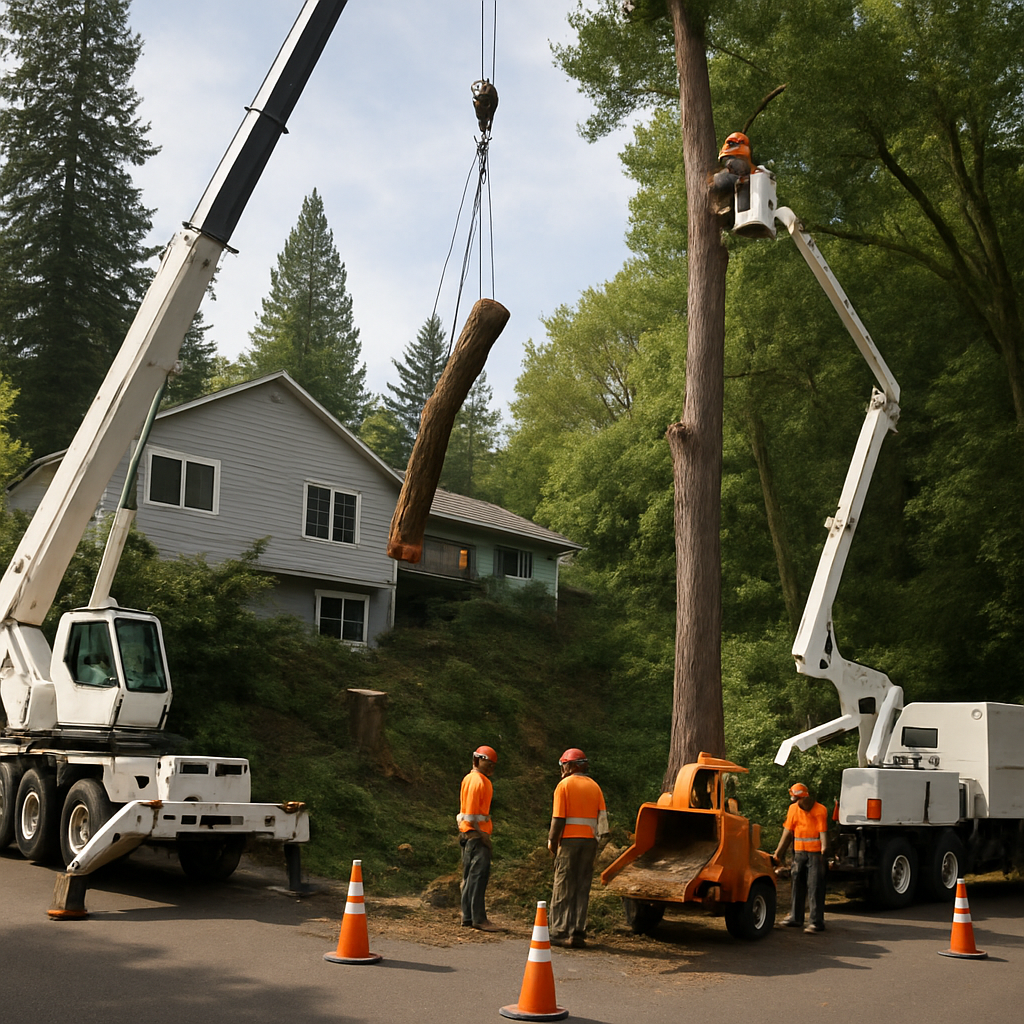
Trade off to watch: using a crane speeds removal and reduces property damage risk but doubles or triples equipment rental fees for a day. Removing by sectional climb saves crane cost but increases crew time and exposure to mistakes. Choose the method that minimizes total risk to the asset you value most.
Concrete Example: a 36 inch Douglas fir on a steep Lake Oswego hillside next to a driveable retaining wall commonly requires sectional removal with rope rigging, a crane for some lifts, and a flagged lane for the truck. Expect the quote to reflect several separate line items for crane rental, traffic control permits, extra rigging crew hours, and chip hauling.
Practical insight: homeowners fixate on price per inch or per hour because it looks simple. In practice those metrics are meaningless without crew size, lift requirements, disposal plan, and whether the contractor includes permit work or arborist reports. Require itemized bids.
Next consideration: when you collect quotes, annotate each bid against these drivers so differences are visible. The cheapest number rarely equals the best value when steep lots, protected trees, or tight access are involved.
How to Compare Multiple Quotes and Spot Red Flags
Direct rule: compare apples to apples, not sticker prices. Ask every bidder to quote the exact same scope line by line so you are comparing scope, equipment and liabilities rather than headlines.
Practical scoring framework
Score what matters: assign weights to nonprice factors before you look at totals. Price matters, but a cheap number with missing liability, permits, or cleanup is a false economy.
- Create a standardized scope: list each tree by location,
DBH, action (remove, crown reduce, prune), stump grinding yes/no, and disposal method. - Assign weights: for example Scope completeness 40%, Safety and insurance 25%, References and local experience 15%, Price and payment terms 20%.
- Normalize costs: convert vague entries to line items – e.g., stump grinding per inch, crane per hour, permit allowance fixed fee.
- Score each bid: give each line a simple 0-10 score, multiply by weight, then total to rank bids objectively.
| Criteria | Bid A (Low) | Bid B (Middle) | Bid C (High) |
|---|---|---|---|
| Scope completeness | Limited – no stump grind listed | Complete – trees, stumps, cleanup | Complete + arborist report |
| Permits included | Not listed | Permit allowance included | Contractor pulls permits |
| Insurance verified | No COI provided | COI provided | COI + umbrella policy |
| Total score | 58 | 82 | 90 |
Trade-off to accept sometimes: a higher score and higher price can be worth it when the site is constrained – steep slope, proximity to structures, or protected trees under City of Lake Oswego rules. Paying more up-front for a crew that includes a certified arborist and traffic control often saves money from change orders or permit delays.
Concrete example: a Lake Oswego homeowner received three quotes for removing a large maple on a steep slope. The low bid omitted stump grinding and did not list a permit fee; the mid bid included stump grinding and a permit allowance; the high bid added an arborist report and crane. The homeowner chose the mid bid after confirming the contractor had current insurance and local references because it balanced cost with documented scope and avoided the high bid premium for the crane evaluation.
- Red flag – vague hourly rate: no crew size or estimated hours makes it impossible to compare; ask for crew count and estimated man-hours.
- Red flag – no insurance proof: if a bidder cannot supply a certificate of insurance, do not proceed.
- Red flag – abbreviated timeline: an unrealistically short schedule often means fewer precautions or skipped cleanup.
- Red flag – large cash-only deposit: legitimate contractors use staged payments and provide invoices.
- Red flag – refuses permit responsibility: contractors who balk at pulling permits or documenting protected trees will shift risk to you.
Judgment call: prioritize clarity and documented protections over the lowest number. The correct next step is to use your ranked results to request proof of insurance, local references, and a contract that mirrors the winning quote before scheduling work.
Verifying Contractor Credibility and Safety
Start by treating documentation as a functional safety device, not a courtesy. Ask for current certificates of liability insurance and worker compensation before any work starts and verify them with the insurer listed on the certificate.
What to ask for and how to verify
- Certificate of Liability Insurance: Request the COI showing policy numbers, effective dates, limits (look for at least $1M per occurrence and ideally a $2M aggregate), and the insurer contact. Call the insurer to confirm the policy is active.
- Worker Compensation: In Oregon most tree crews must carry worker compensation. Ask for the carrier name and policy number and verify with the carrier to avoid becoming liable for a injuries on your property.
- Additional Insured / Waivers: If a contractor refuses to name the homeowner or property on the COI as an additional insured or provide a written waiver of subrogation when asked, treat that as a negotiation risk — it changes who pays if something goes wrong.
- Credentials and Certifications: Confirm any ISA certification or arborist credentials via the ISA directory and ask for site-specific reports for complex removals. For crane work, ask for operator credentials (NCCCO) and rigging experience.
- Safety Program Evidence: Request a written safety plan, proof of crew training, and examples of jobsite hazard controls (e.g., traffic control, tree protection fencing). Companies that follow OSHA tree care guidance link their procedures to standards; check OSHA tree care for baseline expectations.
- Local experience and references: Ask for recent Lake Oswego job references and inspect a finished site if possible. Local firms will know City of Lake Oswego permit nuances — confirm familiarity via references or permit numbers.
Trade-off to accept: Higher bids frequently reflect better insurance, documented safety practices, and experienced crews. That cost is real, but it reduces your exposure to property damage, delayed work, and personal liability — cheaper is often risk, not savings.
Concrete Example: A homeowner hired a low-bid tree cutting contractor without verifying worker compensation. When a climber fell and required medical care, the homeowner received a claim because the contractor had misclassified workers as subcontractors. The insurer and a local attorney confirmed that the homeowner would have faced partial liability if the contractor had no valid WC policy. Verifying the carrier beforehand prevented that outcome on other jobs we've overseen.
What people misunderstand: Many assume an emailed COI is proof enough. In practice COIs can be outdated or misissued. Calling the insurer is the only reliable verification. Also, an ISA certificate is useful but not a substitute for demonstrated experience on steep Lake Oswego lots or work near utilities.
If a contractor cannot produce verifiable insurance and worker compensation, do not hire them — exceptions create homeowner risk you cannot insure away afterward.
Next step: When you request quotes, include a short checklist asking for the documents above and set a firm condition that work will not start without verified proof. That single clause saves time and prevents most common contractor credibility failures.
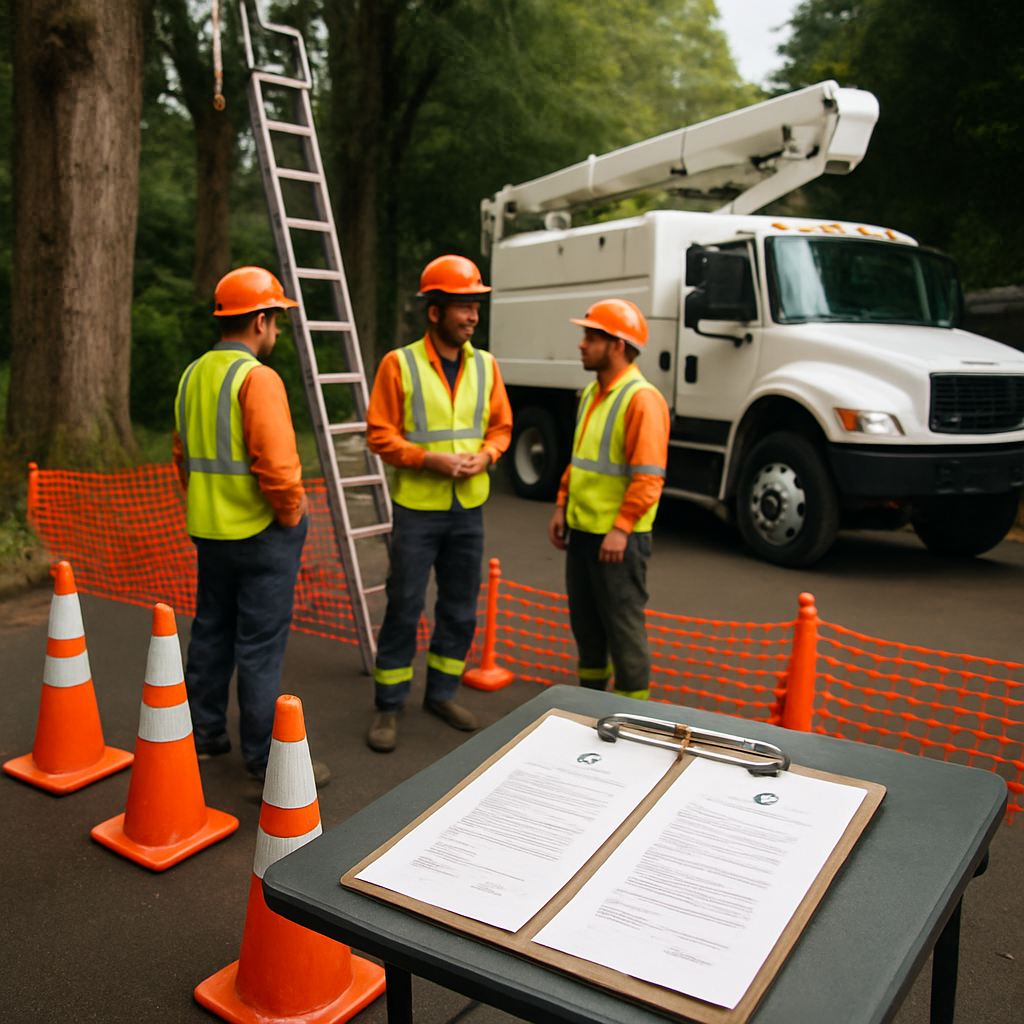
How to Write a Clear Contract and Manage the Project
Start with the scope, not the price. If the contract does not describe exactly which trees, which parts of each tree, and where debris will be left or removed, you do not have a contract — you have a receipt for trouble.
Must-have contract clauses. Insist the contract includes: precise tree ID (photo or address and DBH), a line-item scope (tree removal lake oswego or tree trimming lake oswego, stump grinding lake oswego if included), equipment to be used, crew size and estimated hours, disposal method and fee, start and completion dates, payment schedule with a holdback, warranty terms for pruning or root damage, and an explicit change-order process.
- Permits and responsibility: state who will pull permits and pay fees; link the permit clause to the City of Lake Oswego process so there is no ambiguity.
- Insurance and indemnity: require certificate of liability and worker compensation on file before work begins; add that the contractor must name the property owner as additional insured if requested.
- Payment milestones: use a three-part schedule (deposit, mid-job, final holdback) and fix the final holdback until final cleanup and signed inspection.
- Change orders: require written approval for any additional work with an hourly rate and cap.
Trade-off to accept: larger holdbacks protect you but slow down contractor cashflow. For small residential tree services lake oswego jobs, 5–10% holdback is reasonable; for complex commercial tree service lake oswego or jobs requiring cranes, plan on 10–20% or use staged releases tied to clear milestones.
On-the-day logistics and project management
Define the worksite before day one. The contract should specify staging areas, protection for lawns and irrigation, parking or traffic control needs, neighbor notification responsibilities, and where wood chips and cut logs will be left or removed. If stump grinding lake oswego is included, state depth and disposal.
Emergency work needs a different document. For emergency tree service lake oswego, do not rely on verbal authorizations. Get a short written work order that cites the later full contract, lists immediate hazards addressed, and confirms insurance and price basis. If you skip this, you will pay premium rates with no leverage.
Concrete Example: A homeowner needs hazardous tree removal near a detached garage. The signed contract named the tree by photo, required crane use, included stump grinding lake oswego, made the contractor responsible for pulling the permit, set a 10% final holdback until driveway and irrigation are inspected, and required repair of any damaged sprinkler heads at contractor expense. The clear clauses prevented a dispute when the crew needed an extra day for unexpected decay and produced a documented change order for the minor additional cost.
Practical judgment: never accept vague warranty language like all work warranted or workmanship guaranteed without time limits and clear remedies. For pruning or pest treatments, limit warranties to one year and state corrective actions. For hazardous tree removal, the remedy is cleanup and repair, not tree replacement.
Next consideration: after the contract is signed, schedule a short pre-job walkthrough with the crew leader, photograph the site, and confirm the contact person and emergency procedures. Those 20 minutes prevent most on-site misunderstandings.
Sample Tools for Homeowners: Request Template and Quote Comparison Checklist
Practical point: Use a short, precise request for quote and a single-page comparison checklist to force contractors into the same assumptions. Vague emails produce vague bids; the template below makes scope, access, permits, and disposal explicit so you can compare lake oswego tree service offers apples to apples.
Request for Quote – Copy and Paste Template
Copy this and paste into an email to contractors. Replace bracketed items and attach photos of the tree from four directions plus a driveway and access shot. Ask for an on-site visit if the bid is not itemized.
Subject: RFQ - Tree work at [street address], Lake Oswego
Contact: [Your name, phone, email]
Property type: residential / small commercial
Work requested: [example - remove single Oregon white oak, 30 inch DBH, stump grind to 8 inch below grade, chip and haul chips off site OR leave chips on driveway]
Access notes: [gate width, driveway slope, overhead wires, parking restrictions]
Permit: I understand Lake Oswego may require permits for protected trees. Please state whether you will pull permits or provide documentation for permit application.
Deliverables requested with bid: itemized line items for labor, equipment, disposal, stump grinding, permit fees, traffic control, start and completion dates, proof of insurance and worker compensation, and a short reference from a recent Lake Oswego project.
Timeline: [desired start window]
Budget cap: [optional - state if you have a budget constraint]
Please respond with a written, itemized estimate; do not send only a ballpark number. If you require a site visit, please propose two dates within the next 7 days.
One-page Quote Comparison Checklist (Excel friendly)
| Line item | What to look for | Red flag |
|---|---|---|
| Scope description | Exact tree(s), limbs to be removed, pruning standard, stump depth | Vague scope or language like remove as needed |
| Equipment and crew | List of machines – crane, bucket truck, grinder, chippers and crew size | Hourly rate with no crew size or equipment listed |
| Permits and fees | Who pulls permits and who pays city mitigation or replacement | No mention of permits for protected trees |
| Disposal plan | Chip on site, haul to yard, or paid disposal – specify chip pile location | Bid excludes disposal or says will decide on the day |
| Insurance and WC | Certificate of insurance described and worker compensation confirmed | Contractor refuses to provide COI |
| Start/completion | Firm dates or range and estimated working days | Unrealistic one-day completion for major removal |
| Price and payment | Itemized totals, deposit amount, final payment terms | Large cash deposit or payment up front without paper contract |
- Sample questions to ask on-site: Do you recommend a permit or arborist report for this tree in Lake Oswego?
- Safety and neighbors: How will you protect lawn, irrigation, and nearby structures during removal?
- Stump specifics: What diameter and depth will you grind and how will you dispose of the grindings?
- Equipment: Will you need a crane or a city lane closure for this job?
- Timing: How many work days and which hours will the crew be on site?
- Insurance: Can you email a certificate of liability and worker compensation now?
- Change orders: How are unforeseen issues priced and approved?
- References: Can I see two recent Lake Oswego projects and a contact number?
- Environmental: Do you offer eco-friendly disposal or chipping for mulch reuse?
- Warranty: Do you provide a written warranty for pruning work or removal cleanup?
Concrete example: A homeowner used this template for a 30 inch oak next to a narrow driveway. One contractor quoted a flat number with no permit mention; another provided an itemized bid listing a bucket truck, grinder, lane closure, and permit fee and agreed to remove chips. The itemized bid was 20 percent higher but avoided a surprise city mitigation charge and required no rush-day add ons.
Judgment: Cheap bids without itemization usually move risk to the homeowner. Accept a slightly higher documented price if it removes ambiguity on permits, disposal, and safety. Next consideration – use the completed checklist to score bids numerically and call the listed references before signing a contract.
0 Comments