

Tree Logging for Property Projects: What Landowners Should Know About Safety and Permits
If your property project requires tree logging, that work touches permits, safety rules, contractor selection, and environmental protections more than most landowners expect. This guide lays out which permits to check, the safety standards crews should follow, how to vet contractors, realistic cost and timeline expectations, and the restoration steps you will be responsible for after trees are removed. Use the checklists and practical examples here to plan, budget, and hire with confidence.
1. Decide whether logging is necessary for your project and define the scope
Main point: Not every site that needs trees cleared requires commercial tree logging. Many property projects are satisfied with targeted tree removal or selective logging rather than full timber harvesting, and that choice changes cost, permits, and timeline materially.
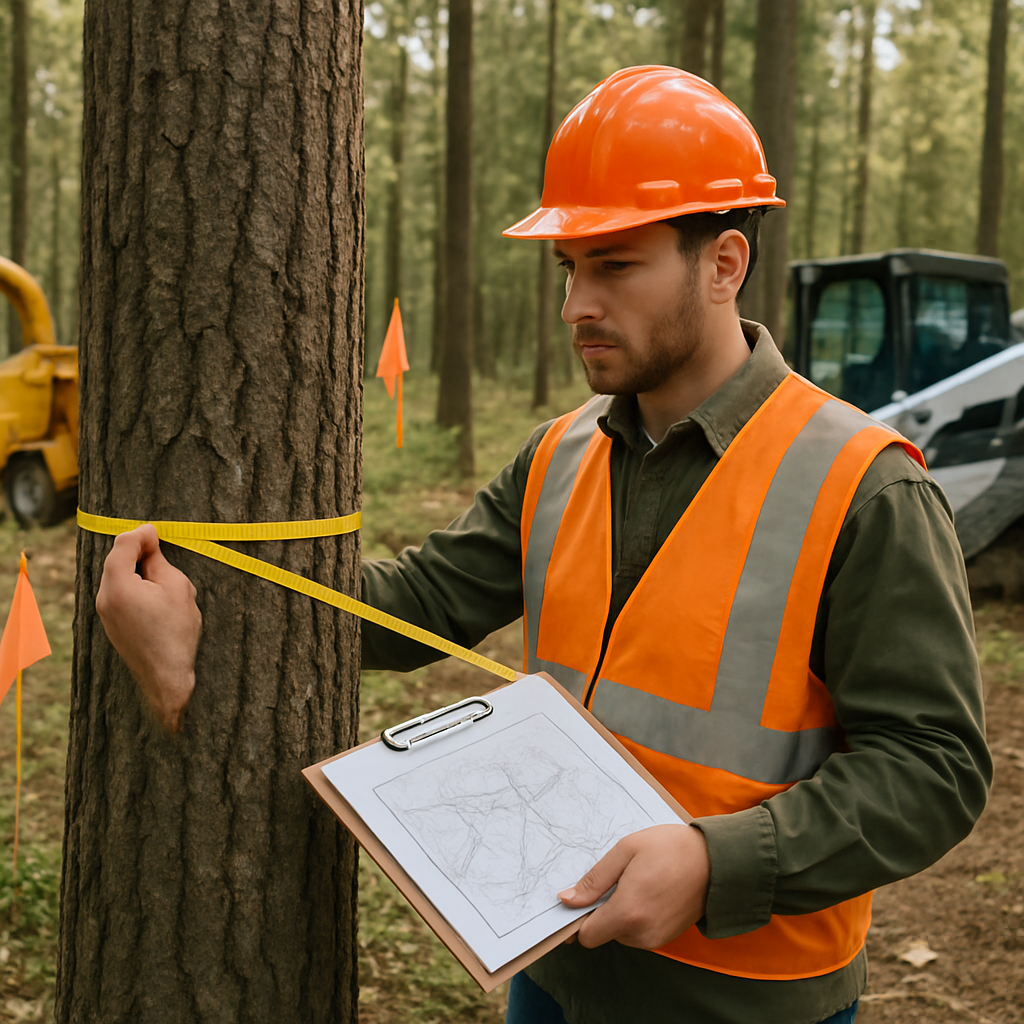
Quick inventory you can do today: walk the footprint of the work and record for each tree the species, approximate diameter at breast height (DBH measured at 4.5 feet), distance to structures or utilities, and an obvious health note (dead, declining, healthy). Mark the map with trees you think must go and trees you want to keep.
When to treat this as a logging job versus a tree removal job: if you have multiple merchantable trees (typically several trees above 12 inches DBH of marketable species), steep or remote access that favors mechanized harvest, or you intend to sell timber, this becomes timber harvesting and may trigger state forestry rules and a timber sale contract. Salvaging timber can lower net removal cost but adds permitting, timing, and the need for a licensed logger.
- Decision checklist: Is the work corridor narrow or wide? Narrow corridors usually require selective removal; wide corridors may allow mechanized logging.
- Access test: Can trucks, chippers, and a small skidder get within 50 to 100 feet of the trees? If no, expect higher handling and labor charges.
- Regulatory check: Are there known wetlands, heritage trees, or a homeowner association rule? If yes, factor in permit time and mitigation.
- Value question: Do marketable trees exist that justify a timber sale? If yes, consult a forester before contractors start work.
Concrete Example: A homeowner building a 50 foot driveway through a two acre woodlot often has a choice. Selective removal of trees within the 30 foot corridor lets the contractor use a chipper and manual rigging for nearby hazard trees, keeps most canopy intact, and usually avoids commercial logging permits. Full corridor clear-cutting could recover merchantable logs and reduce per-tree pricing but will almost certainly require additional permits and erosion controls, delaying the project by weeks or months.
Practitioner judgment: Landowners commonly underestimate the influence of access and adjacency. A single large oak 20 feet from the foundation will cost more to remove safely than five medium trees in a clear field. Removing fewer trees to save on immediate cost can raise equipment manipulation risk and increase overall hours on site. Plan based on access constraints first, tree count second.
2. Understand which permits may apply and how to check local rules
Start local and be specific. Permit requirements for tree logging change block by block, and the single worst planning mistake is assuming a residential removal is automatically unregulated. Municipal tree protection, county planning, state forestry, and federal water rules can all apply to the same parcel.
Common permit categories to check
- Municipal tree removal permits: Many cities require permits for street trees, trees above a diameter threshold, or trees on public easements. Search your city code for tree protection or tree removal ordinance.
- Heritage, landmark, or protected-species rules: Historic or specimen trees and trees used by protected wildlife need special approval and may require mitigation or replacement planting.
- State forestry or commercial timber permits: If the work qualifies as timber harvesting or will be sold commercially, state forestry agencies may require notification, a harvest plan, or bonding. See USDA Forest Service for guidance and state offices for local rules.
- Wetlands, waterways, and riparian buffers: Work near streams or wetlands often needs county, state, or federal permits; plan for buffer setbacks and erosion controls.
- Construction stormwater/NPDES: Projects that disturb soil may trigger EPA NPDES construction stormwater requirements and local erosion control plans.
Practical steps to check local rules
- Search municipal and county portals first. Use keywords like tree protection, tree removal permit, and canopy ordinance on city or county websites.
- Call planning or public works with parcel details. Give the assessor parcel number and say you plan tree logging for a property project; request applicable permit names and fee schedules in writing.
- Measure and document trees before you ask. Record species, approximate DBH, and distance to buildings – many ordinances hinge on diameter at breast height thresholds.
- Check conservation easements and HOA covenants. Private restrictions are enforced separately and can require permission or mitigation.
- Ask about permit timelines and required supporting documents. Ask whether a tree survey, arborist report, wetland delineation, or traffic plan is required and whether a pre-application meeting is available.
- Confirm who pulls the permit. Some jurisdictions require the property owner to sign applications; others allow the contractor to apply but require owner authorization.
Concrete Example: A rural homeowner cleared a half acre for a driveway and assumed only a local permit would apply. The county required a tree removal permit, the state required a small timber harvest notification because merchantable material was being removed, and the project needed NPDES coverage for the access road. The combined paperwork added six weeks and required a temporary silt fence and a small replanting plan that added to cost.
Tradeoff to accept up front. Filing permits costs time and money and may require mitigation such as replacement trees or erosion controls, but skipping permits risks stop-work orders, fines, and costly rework. In practice it is often cheaper to budget for permits than to manage enforcement consequences.
Practical judgment. If you plan to sell or commercially mill wood from the site, treat the work like commercial logging until a permitting authority tells you otherwise. Many landowners misclassify projects as simple removals and then face state forestry rules midproject.
Begin permit checks 4 to 8 weeks before work for typical residential jobs; allow several months if wetlands, state forestry, or habitat reviews may be involved.
3. Safety planning and regulatory standards to follow
Plain fact: safety planning is not optional—it drives permit approvals, dictates what equipment is allowed on site, and is the single biggest factor insurers and municipalities review after an incident. Landowners need a documented safety plan before work starts, not after a tree has been cut.
Key elements of a compliant safety plan
- Site risk assessment: documented hazards (power lines, slopes, structures, root plates) and a mitigation decision for each.
- Exclusion zones and traffic control: clear perimeters, flaggers or temporary road permits when working near public ways.
- PPE and crew training: chainsaw PPE, hard hats, hi-vis, and records showing crews meet OSHA and ISA training expectations.
- Equipment and rigging protocols: inspection logs for chippers, cranes, winches and written rigging plans for complex lifts.
- Chainsaw and tree-felling procedures: planned cut sequence, escape routes, and spotters—no improvisation near structures.
- Emergency and rescue plan: site-specific rescue procedures and contactable emergency numbers posted on-site.
- Documentation: written safety plan, daily toolbox talk notes, proof of insurance, and list of whom to notify for permit inspections.
Standards to reference: OSHA logging standard is the baseline for worker safety — see OSHA logging operations standard 1910.266. The International Society of Arboriculture provides best-practice techniques that go beyond OSHA; ask for an ISA-guided plan or an ISA Certified Arborist on the job (ISA).
Trade-off to accept: stricter controls add cost and time. A crane lift, staged debris zones, and a trained rigging crew can double labor and equipment costs compared with a simple ground-fall, but they also cut the risk of property damage and liability. If you try to save money by cutting corners on safety documentation, you will likely pay more after a claim or a stop-work order.
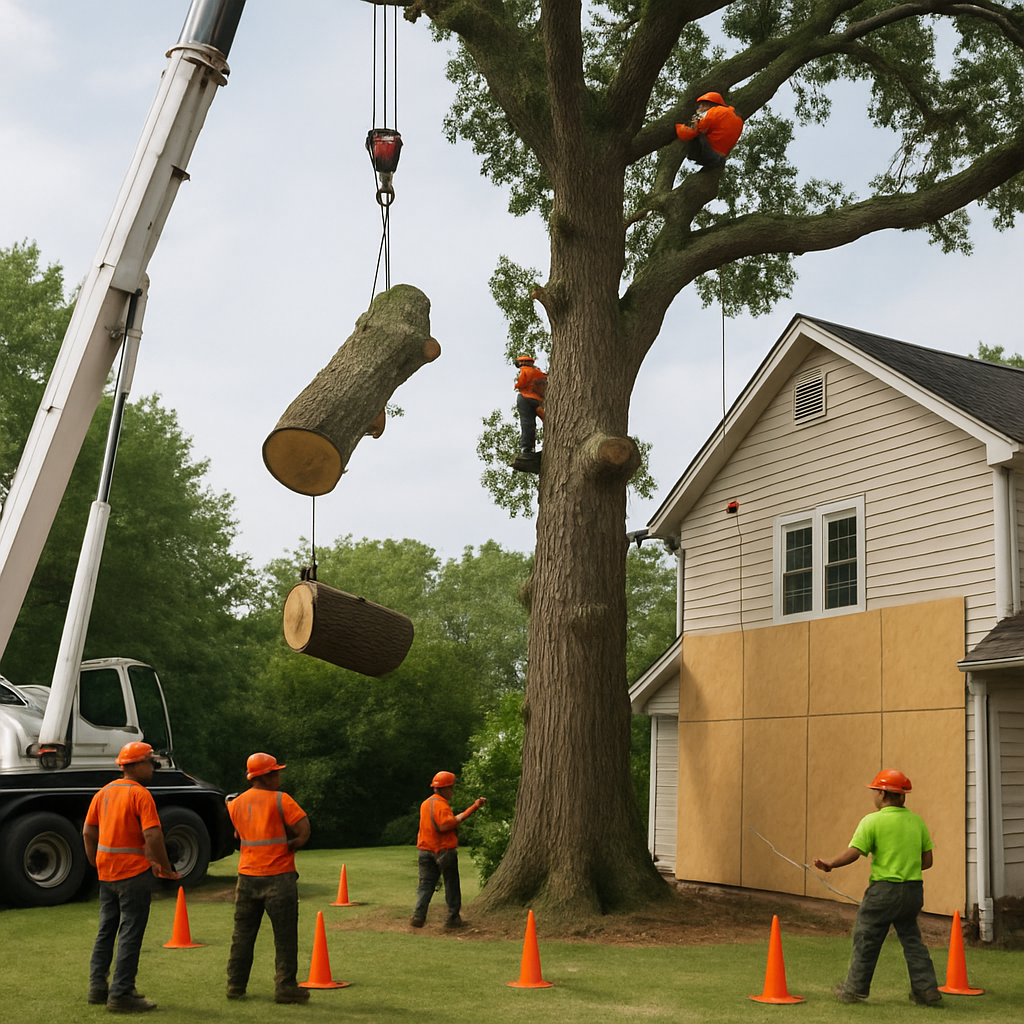
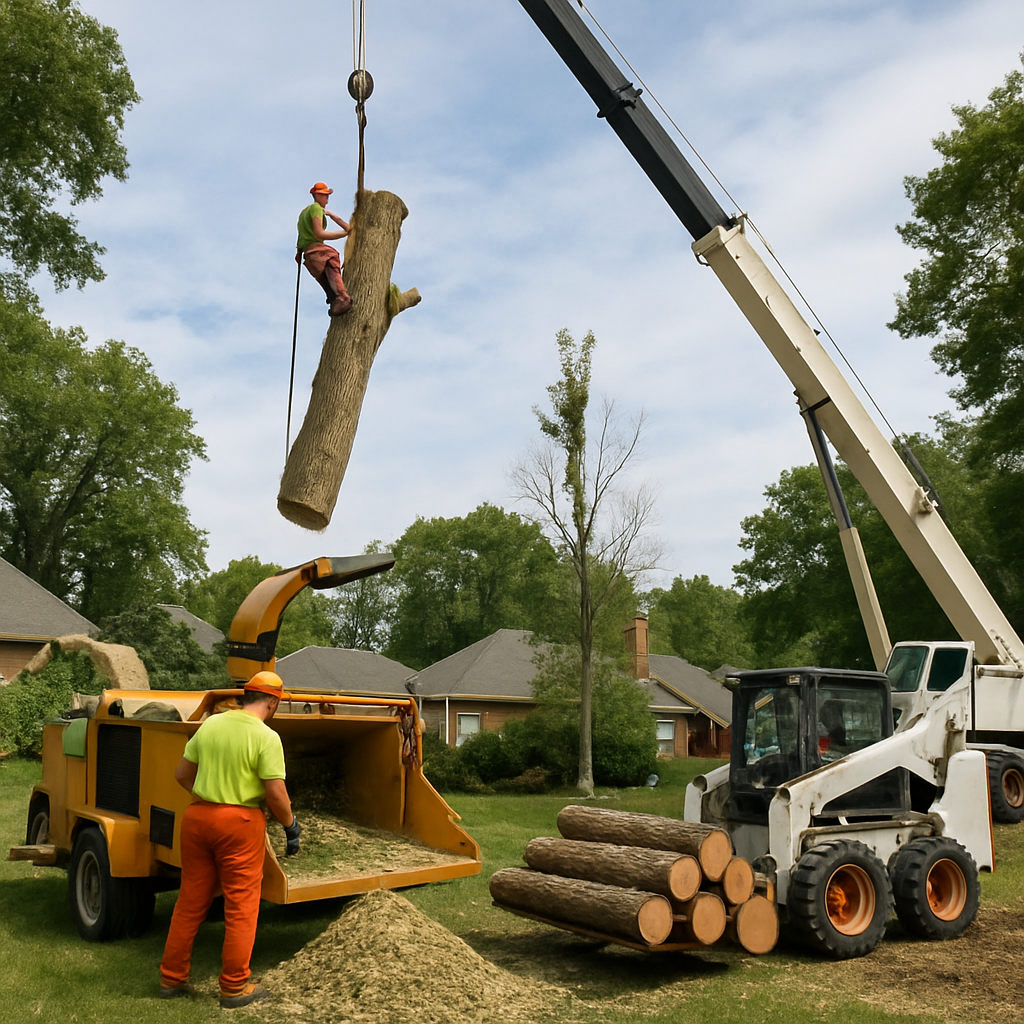
Concrete Example: A homeowner needs four large oaks removed 12–18 feet from a house. The contractor proposed a crane-assisted dismantle with a 30-foot exclusion zone, doubled crew for rigging, plywood protection for siding, and a traffic control plan for the street. That setup required a street use permit, a crane safety plan, and daily safety sign-off—adding two days and roughly 25–40% to the removal price compared with a non-crane removal, but eliminated risk to the home and avoided an insurance claim.
Real-world judgment: many crews meet OSHA minimums but skip ISA-level mitigations that matter in tight or urban sites. Insist on a site-specific plan, not a generic checklist. Ask contractors to show prior photo-documented jobs like yours — see Tree Removal – Mr. Tree Inc. for the type of documentation to expect.
Next consideration: before you sign, get the safety plan, insurance certificates, and a timeline in writing—then schedule the work when weather and permit windows minimize additional risks and potential delays.
4. How to vet and contract the right professionals
Straight to the point: you need two checks before signing anything — the right professional for the job, and a contract that makes responsibilities and risks explicit. Cheap bids, vague scopes, or verbal promises are the common failure modes that trigger permit delays, property damage claims, and unfinished cleanup.
Who to hire and when
Match skills to the work: use an ISA Certified Arborist for selective tree removal, preservation of retained trees, and pruning; hire a licensed logging contractor or timber operator for commercial timber harvesting, clear-cutting, or when heavy logging equipment is necessary. If you plan to sell logs, bring in a forester to appraise and write the timber sale contract.
| Task | Best professional |
|---|---|
| Selective tree removal near structures or preserved trees | ISA Certified Arborist / Tree care service (ISA) |
| Large-scale timber harvest, log trucking, stumpage sale | Licensed logging contractor / professional forester |
| Permit coordination and site restoration for construction | Tree removal contractor with construction experience (see services) |
Documents and checks to demand
- Proof of credentials: ISA certification number or forestry credentials and photos of similar completed projects.
- Insurance certificates: general liability (check limits), workers compensation, and auto coverage. Call the insurer to confirm the policy is current.
- Licensing and bonding: contractor license where required and performance bond for larger or public projects.
- References and job-site contacts: three recent projects, including one with the same scale or technique (e.g., crane removal, timber harvest).
Contract must-haves: a detailed scope with quantities (trees by DBH or stump count), who secures permits, exact haul/disposal plans, site restoration obligations, payment milestones, retainage amount, and a change-order process. Do not accept a scope that says remove trees without listing permit responsibilities and disposal.
- Payment structure trade-off: fixed-price gives certainty but expects higher bids; time-and-materials can be cheaper but requires daily logs and a cap to control overruns.
- Liability trade-off: if the contractor takes permit responsibility they often assume more risk — expect a higher fee but fewer coordination headaches for you.
- Timber sale trade-off: engaging a logger to buy standing timber (stumpage) reduces removal cost but complicates environmental compliance, reporting, and potential revenue sharing.
Concrete example: A homeowner hiring an inexpensive logger to clear a 2-acre building pad found the crew removed protected trees because the contract did not specify protected-tree retention. The homeowner paid fines and paid again to replant. With a clear contract assigning permit checks to the contractor and listing preserved-tree IDs, that liability would have shifted or been avoided.
Practical test: ask any candidate to provide a written answer to who pulls permits, who inspects stump grinding, and how wood will be disposed or sold. If they shrug or give vague answers, move on.
Next consideration: gather site maps, tree inventory (species and DBH), and your target timeline so vendors can produce apples-to-apples bids and you can compare contract language rather than price alone.
5. Site logistics, equipment, and traffic or neighbor impacts
Major point: site logistics drive price, schedule, and risk more than tree count. If a contractor cannot stage equipment and trucks without blocking a street or crossing fragile ground, the job will need extra permits, protection mats, traffic control, or crane pads – and those items are billed separately.
Equipment, staging, and ground protection
Common gear and when it matters: Know the tool for the constraint you have. Larger machines speed up work but need room and load-bearing ground; smaller rigs reduce disturbance but increase time and labor costs.
- Feller buncher or track skidder: fast for multiple trees on wide, stable sites – needs heavy access and may require temporary mats.
- Cranes with man baskets: used for trees close to structures or steep slopes – reduces hazard but adds crane pad prep, lift permits, and noise impacts.
- Knuckleboom or truck-mounted boom: best where roadside drop is possible and access is narrow – balance between speed and setup time.
- Chippers, stump grinders, and skidsteers: standard finishing gear – chippers reduce haul-away costs, stump grinders are billed per stump.
- Wood chip or log staging areas: plan location away from waterways and driveways; store chips to reuse for mulch or erosion control.
Practical tradeoff: choosing a crane often eliminates risky rigging near houses but increases mobilization cost, requires a wider exclusion zone, and can trigger neighborhood complaints about noise and road closures.
Environmental constraint: locate staging and wood piles outside protected buffers and use ground protection mats or timber mats to avoid compaction and rutting. For sites near streams consult the EPA NPDES guidance before placing heavy equipment or chips in low areas.
Traffic control and neighbor coordination
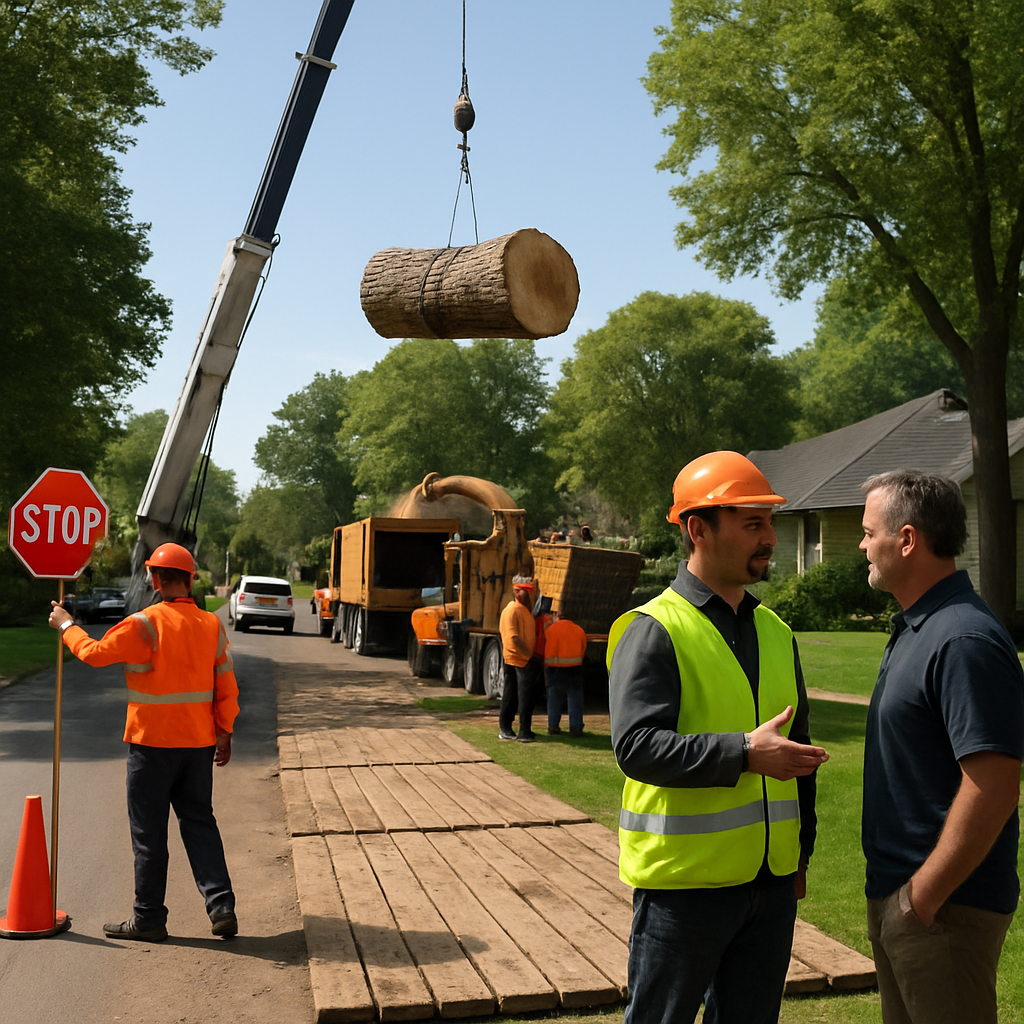
Traffic permits matter: if trucks, cranes, or chip vans will use a public street you may need a lane closure or oversize load permit from the city or county – expect lead times and fees. Contractors often handle these permits but confirm responsibilities in the contract.
- Notify neighbors in writing: include start date, work hours, expected noisy operations, and a contact phone number.
- Parking and access plan: reserve on-site parking for crews where possible or obtain temporary no-parking zones from the municipality.
- Flagging and signage: hire certified flaggers for road work and require daily signage if trucks will block sidewalks or lanes.
Concrete example: A homeowner clearing a 0.8 acre lot for a new driveway had a 40 inch Douglas fir whose crown overhung the street. The contractor used a crane to lower large sections, paid for a one-day lane closure permit, and laid timber mats across the lawn to protect irrigation lines. The extra mobilization and permit fees added 18 percent to the original per-tree estimate but avoided damage claims and a longer cleanup.
Logistics judgment: do not treat the site as just trees. Think of it as a mini construction job – haul routes, crane pads, staging, neighbor relations, and disposal logistics all interact. Saving on mobilization by squeezing equipment into a tight access point often costs more in repairs, delays, or claims.
Actionable next step: ask bidders for a written site logistics plan showing equipment, staging area, haul routes, and traffic control responsibilities. If you need services like stump grinding or complex removals, see Tree Removal and Services for examples of how crews present logistics plans.
6. Environmental protections and mitigation during logging
Immediate point: environmental mitigation is not optional on most projects — it is a predictable line item that protects the site, your permit approval, and your timeline. Planning mitigation up front saves money compared with retrofit fixes after sediment leaves the site or a protected species is discovered.
Erosion, sediment control, and water protection
Practical controls: use a sequence of measures — divert flows, install silt fences or straw wattles, stage woody debris away from channels, and apply temporary seed or erosion control matting on exposed soils. For projects disturbing more than a very small area, expect NPDES or local stormwater requirements; see EPA NPDES guidance.
- Order work to limit bare soil: do high-disturbance tasks last and restore disturbed strips immediately.
- Protect crossings and buffers: maintain a 25–50 foot buffer where practical around streams and wetlands; use temporary bridges or mats for equipment crossings.
- Staging and fuel management: keep fuel, chips, and stockpiles uphill and outside buffers to avoid contaminant runoff.
Protecting retained trees, soils, and long-term site health
Root protection is cheap insurance: define root protection zones (RPZs) around trees you want to keep and enforce them with fencing. Heavy equipment over roots compacts soil irreversibly; use timber mats or low-ground-pressure machines where you must cross RPZs.
Mulch and micro-site care: chip produced on site can be reused as a protective layer to reduce compaction and erosion, but do not pile chips against trunks. For retained trees plan post-logging root collar inspections and a follow-up by an ISA certified arborist — see ISA resources for best practices.
Wildlife, invasive species, and timing
Timing matters: avoid major cutting during nesting season for birds and breeding windows for amphibians where applicable. If habitat is present, the right call is to consult a qualified biologist early; delaying that consultation risks stop-work orders and rework.
Invasive species trade-off: mechanical disturbance can spread invasives. Use clean equipment, limit bare soil, and budget for follow-up invasive control — skipping this almost always increases long-term maintenance and reduces replanting success.
Concrete example: A rural homeowner clearing 0.7 acres for a driveway next to a seasonal creek had to reroute the access, install a temporary bridging mat, place silt fencing, and delay work two weeks to avoid nesting. The mitigation added roughly 12% to the job cost but prevented a county stop-work order and a required riparian restoration redesign.
Judgment call: selective logging with careful protection typically preserves soil and reuse value of standing trees better than clear-cutting. Clear-cutting may be cheaper up front but raises erosion, replanting, and regulatory costs — choose clear-cut only when the site and permits explicitly justify it.
Next step: require the contractor to include an environmental mitigation plan in the bid (erosion controls, RPZ fencing, equipment cleaning, and a post-job restoration checklist). If you want help mapping reasonable protections into a scope, Mr Tree Inc. offers site assessments and restoration services at Mr Tree services.
7. Cost factors, permitting timeline, and example budgets
Key point: Cost and calendar risk determine whether a logging portion of a project is manageable or becomes a schedule and budget failure. Landowners who treat tree logging as a line item instead of a project phase will underprice permits, delays, and specialized equipment.
- Primary cost drivers: tree size and species, quantity, and health status which change labor and equipment needs
- Complexity and risk: trees near structures, utilities, or on steep slopes increase hours, require cranes or rigging, and raise insurance costs
- Access and site prep: narrow roads, soft soils, or long haul distances add mobilization, crews for matting, and extra time
- Post‑work items: stump grinding, chipping, haul away, and erosion controls are often billed separately
- Permits and compliance: municipal fees are usually small but environmental permits or wetland reviews can be expensive and slow
- Timber value and logistics: salvage timber sales can offset costs but add time, regulations, and hauling logistics
Comparing bids and building a realistic budget
Practical insight: Ask every bidder for an itemized scope with unit rates rather than a lump sum. Require mobilization fees, per tree pricing by DBH bands, stump grinding per stump, chip and haul per cubic yard, crane hours separately, and a line for permit coordination so you can compare apples to apples.
- Bid checklist: mobilization, per tree removal, stump grinding, chipping and removal, heavy rigging or crane, erosion controls, permit handling, daily site cleanup
- Contract clarity: set a permit contingency and a schedule that ties payments to milestones not calendar days
- Salvage option: request a separate timber salvage proposal showing revenue estimates and who handles taxes, transport, and required state forestry notifications
Timeline realities: Simple jobs can be done in days but permit windows and seasonal restrictions create real waits. Expect municipal tree permits to take a few days to several weeks, and environmental or state forestry permits to take months. Build schedule buffers for permit review, utility locates, and weather shutdowns.
Concrete example: A single large oak 30 to 36 inch DBH leaning toward a house may require a crane and a two to three person rigging crew. Typical cost range is ___CODE0 to CODE1 depending on access and disposal, permit fee CODE2 to CODE3, and scheduling lead time one to two weeks. A half acre lot clearing with trees, stumps, and erosion controls often falls in the CODE4 to CODE5 range, permit and erosion compliance CODE6 to CODE7___, and a realistic lead time of four to twelve weeks.
Tradeoff and judgment: The lowest bid is rarely the safest value. Low bids often exclude permit coordination, erosion controls, or stump grinding which appear later as change orders. Plan a contingency of 20 to 30 percent and hold back final payment until permits are closed and erosion controls are inspected.
Next consideration: align your contractor contract and construction schedule to the permit timeline and include clear holdbacks tied to permit closeout and site stabilization inspections.
8. Post-logging obligations and restoration steps
Immediate post-logging actions set the difference between a finished job and an open liability. Within 48–72 hours you should stabilize exposed soil, clear cut debris that blocks access or creates a hazard, and secure any temporary erosion controls required by your permit.
- Stabilize soil: install silt fences, straw wattles, or temporary seed/matting on slopes to prevent runoff and meet EPA NPDES expectations.
- Stump and root management: grind stumps to the level specified by local code or leave them if a planned mill or habitat feature makes sense (see trade-off below). See stump grinding options at Tree Removal – Mr Tree Inc..
- Wood disposition: document salvage sales, milling contracts, or haul-away manifests — permits often require proof that debris was removed lawfully.
- Safety recheck: walk the site with the contractor, confirm no hanging limbs or unstable root plates remain, and get signed completion of hazards.
Trade-off to accept: leaving large logs on site helps wildlife and reduces disposal cost, but it raises fire-fuel loads and may violate local clear-zone rules. In practice, retain a few isolated logs in remote parcels and remove ladder fuels within 30–50 feet of structures.
Replanting, soil work, and multi-year maintenance
Plan for at least three years of follow-up. Planting in the wrong season or using poorly adapted species is the most common post-logging failure I see — and it wastes both money and permit credits. Prioritize site-specific mixes, deer protection, and a watering schedule for the first two growing seasons.
- Soil test first: adjust pH and organic matter before planting; planting into compacted, nutrient-poor fill will have low survival.
- Species selection: choose natives or species recommended by the local forestry office or USDA Forest Service for resilience and future timber value.
- Protect and monitor: use tree tubes or fencing as needed; inspect plantings each spring and replant failures in year two.
Recordkeeping and permit close-out matter more than most landowners expect. Keep copies of permits, inspection sign-offs, before/after photos, seed tags, haul receipts, and contractor reports — municipalities will ask for them at final inspection or if questions arise later during sale of the property.
Concrete example: A homeowner cleared 0.8 acre for a driveway, had stumps ground and silt fencing installed, and retained lumber for milling. The county required two growing seasons of vegetation cover; because the owner used a native seed mix and tracked watering, the inspector signed off after 18 months and returned the erosion bond.
Next consideration: confirm what documentation your local permitting authority requires for final sign-off before work begins — that single step prevents the most frequent post-logging headaches.
9. When and how Mr Tree Inc. can support a property logging project
Direct support scope: Mr Tree Inc. routinely manages property-scale tree logging for construction and site-prep projects – arborist assessments, selective tree removal, stump grinding, chipping and haul-away, erosion-control setup, and replanting. The company is set up for work where safety plans, permit coordination, and neighborhood logistics matter; it is not a substitute for state-level commercial timber buyers or regulatory approvals.
How Mr Tree fits into each project phase
- Pre-bid assessment: on-site visit by an ISA certified arborist to catalogue trees, hazards, and access; produces a scope document useful for permitting and bids. See Tree Removal – Mr. Tree Inc..
- Permit coordination assistance: prep of drawings, mitigation notes, and contractor statements for municipal or county permits; does not guarantee permit issuance and will refer to local agencies for final clearance. Refer to OSHA standards for safety expectations at OSHA 1910.266.
- Execution and safety: crew deployment with PPE, chainsaw and rigging specialists, chipper and stump grinder, traffic control and neighbor notifications where required. Work is managed under a site-specific safety plan.
- Site wrap and restoration: erosion controls, mulch distribution, stump grinding, and tree planting or follow-up care as specified in the contract. See full services at Mr. Tree Inc. services.
Practical tradeoff to consider: hiring a single contractor for assessment, removal, and restoration simplifies communication and scheduling but concentrates execution risk. If you want independent oversight, budget for a separate third-party arborist or construction inspector to review scopes and sign off on permit conditions.
Concrete example: A homeowner needing a driveway cut through a wooded 0.5 acre hires Mr Tree. The crew performs an arborist inventory, provides drawings needed for a municipal permit, sets silt fence and traffic control, uses a crane for two large oaks close to the road, grinds stumps, and chips debris on site. The on-site work took two days; permit coordination and scheduling added three weeks to the start date.
Limitations and when to hire specialists: for commercial timber harvesting, timber sales, or projects requiring lengthy environmental review Mr Tree will subcontract or recommend licensed forestry contractors or a consulting forester. Do not assume permit coordination equals permit approval – for wetlands or state forestry permits you will still need agency sign-off.
- What to have ready before requesting an estimate: property survey or parcel number, photos of access and key trees, any existing permit applications or municipal correspondence, utility locates, and your target start window.
- What Mr Tree will provide with a bid: written scope with exclusions, timeline, certificate of insurance, ISA arborist identification, equipment list, and a safety plan summary.
Next step: prepare the documents listed above and request an on-site estimate so Mr Tree can match equipment and safety needs to your permit window and budget.
0 Comments