
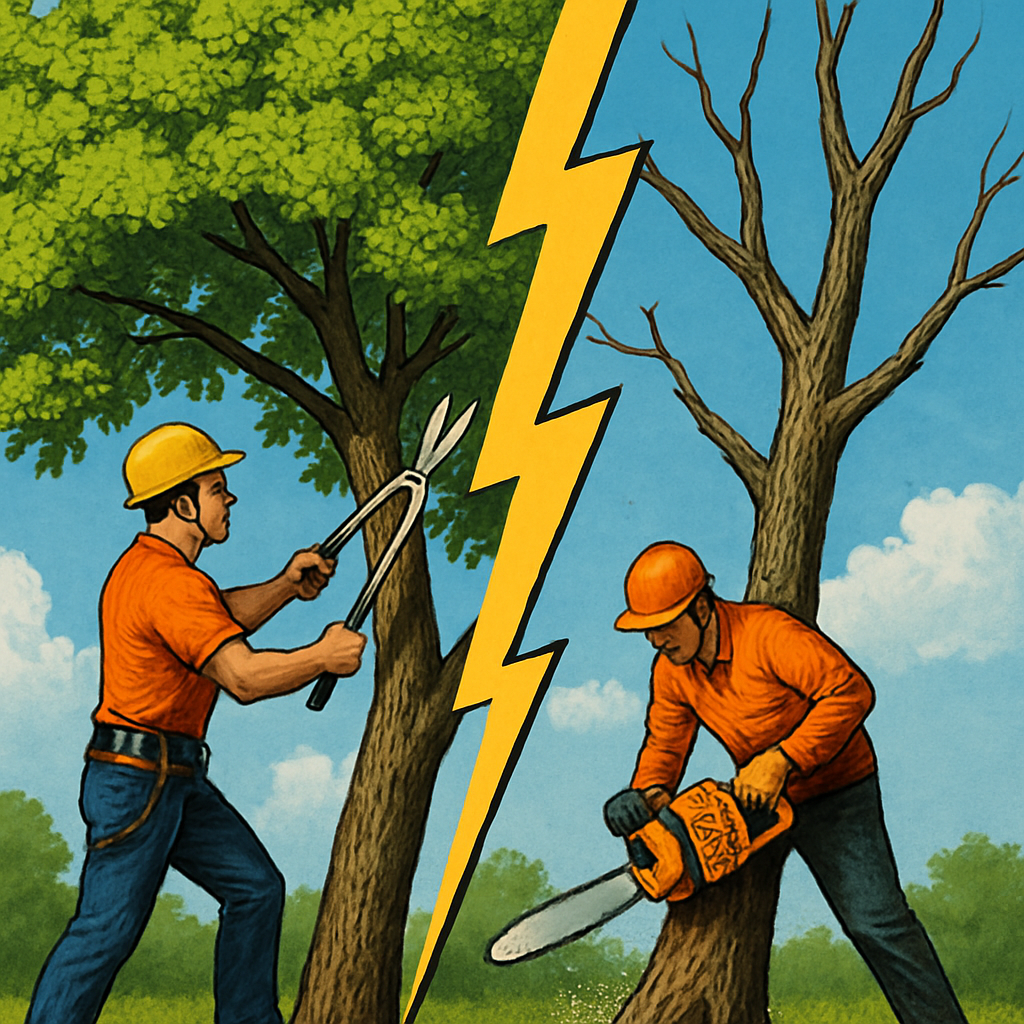
Tree Trimming vs. Removal: When to Save a Tree and When to Call the Professionals
Facing a failing or overgrown tree on your property forces a practical choice: will targeted tree trimming and removal preserve safety and landscape value, or is full removal the safer, smarter option. This post gives a clear decision framework—visible and hidden risk signs, safety and permit issues, cost drivers, and realistic alternatives—so homeowners and property managers can make an informed call and know what to expect from a professional crew.
1. How to Assess a Tree: Visible and Hidden Risk Indicators
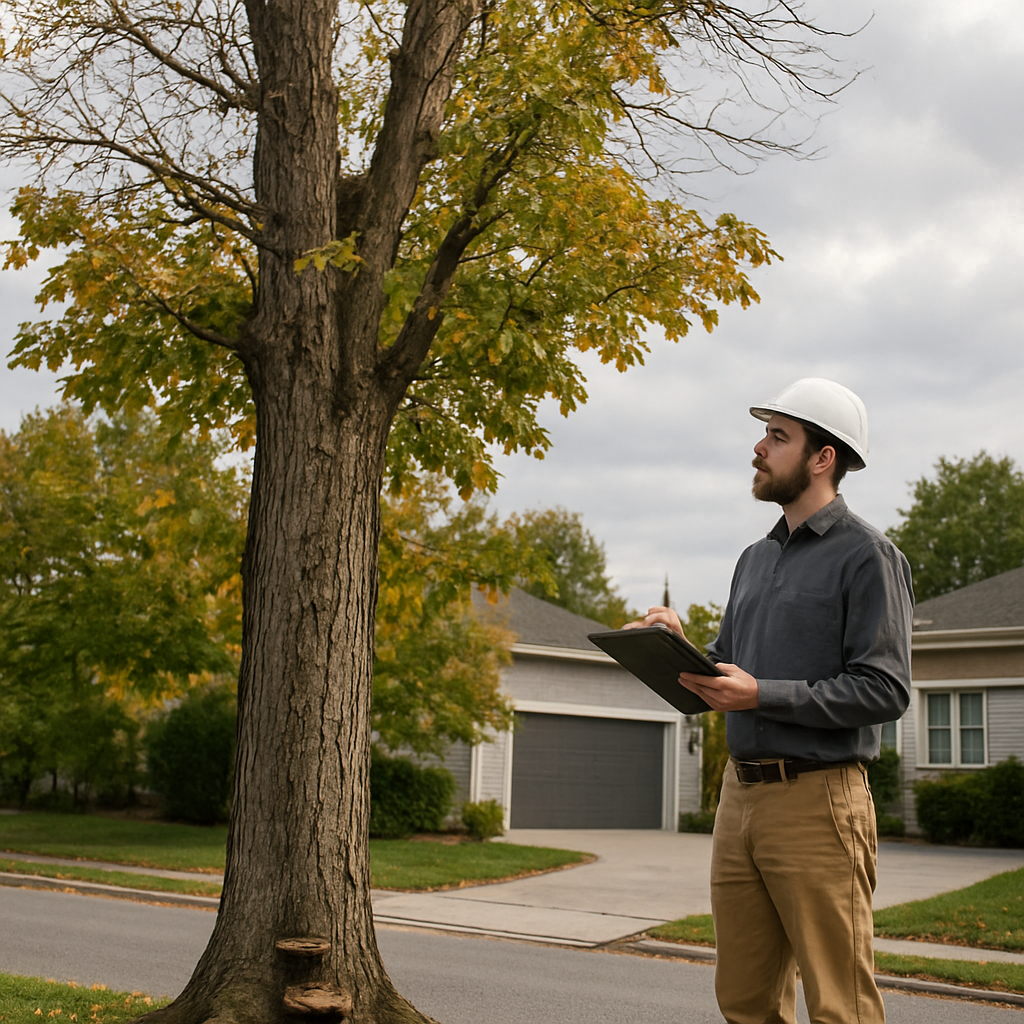
Straight observation first. Most property owners inspect only the canopy and assume a tidy pruning will fix the problem. That misses the two things that actually decide whether a tree can be saved: structural integrity (trunk and major limbs) and root system stability. Treat on-site observation as triage — note what is obvious, then prioritize tests or a professional inspection for the less visible failure modes.
Visible indicators to record on site
- Canopy dieback: significant dead branches or >30-40 percent crown loss on mature trees.
- Fruiting bodies: mushrooms or conks at the base usually indicate internal decay.
- Large splits or cracks: vertical trunk splits or long branch fissures that expose wood.
- Severe lean or recent change in tilt: especially after storms or soil disturbance.
- Root plate heave or exposed roots: soil upheaval, torn roots, or visible rot at the flare.
Hidden defects worth probing
Sound and probe tests are cheap but limited. Tap the trunk and listen for hollow notes, check for soft or crumbly wood at wounds, and inspect the root flare for rotten pockets. Tools like resistograph or sonic tomography provide better evidence of internal decay, but they are not perfect and should be interpreted by a trained arborist.
Trade-off to accept: non-invasive testing limits false positives and avoids additional stress to the tree, but it also misses early internal decay. If a tree sits near a structure or public path, lean toward a professional diagnostic rather than repeated visual monitoring.
Species and pest context matters. For example, an ash with progressive canopy thinning and D-shaped exit holes strongly suggests emerald ash borer and a high likelihood of removal. Oaks with new, rapidly spreading crown dieback in certain regions raise oak wilt concerns and require different timing and response.
Concrete example: A mature sugar maple showed 40 percent canopy dieback and mushrooms at the root flare. A field tapping test produced hollow sounds up the lower trunk; follow-up resistograph testing confirmed extensive heart rot. The crew chose removal because the tree presented an imminent failure risk to the house and driveway.
If you find trunk cracks, conks at the base, or sudden leaning, stop work and call a certified arborist — these signs predict failure more reliably than sparse crown dieback alone.
2. When Trimming and Pruning Will Save the Tree
Straight to the point: targeted pruning preserves trees when the problem is structural imbalance, surface-level deadwood, or clearance conflicts — not when the trunk or root plate is failing. Pruning is a conservation tool, not a cure-all.
What professional pruning actually achieves
- Reduce failure potential: remove specific high-risk limbs and deadwood to lower the chance of branch breakage during storms.
- Improve structure: selective cuts re-balance weight and remove included-bark attachments so future growth is safer.
- Manage clearance: create predictable space from roofs, fences, and utilities without altering the tree's long-term health.
- Encourage recovery: phased reductions let the tree allocate resources and seal wounds, reducing decay risk compared with drastic cuts.
Practical limitation: heavy corrective pruning buys time but creates ongoing maintenance needs. A single large reduction will reduce risk in the short term but often requires follow-up visits every 3 to 5 years to manage vigorous regrowth. If you need a one-time fix with no intent to maintain the tree, removal may be the more honest, cost-effective choice.
Common mistake to watch for: many property owners accept low-cost cutters who perform crown topping or flush cuts. Those techniques produce weak regrowth, increase decay, and usually shorten a tree's life. Insist on incremental reductions and cuts made at the branch collar — those are signs of professional tree trimming and removal practices.
Timing, species nuance, and methods that matter
Season and technique matter. For most deciduous trees, late dormant-season pruning limits stress and pest attraction; evergreens tolerate pruning at other times but recover slower from large cuts. Some species and local disease pressures change the calendar — ask a certified arborist for species-specific timing rather than relying on a one-size-fits-all schedule.
Trade-off to accept: removing weight through crown thinning lowers wind load but changes shade patterns and aesthetics. Structural pruning preserves canopy form but costs more up front than basic deadwood removal. Choose based on the tree's landscape value and your willingness to budget for recurring tree maintenance.
Concrete example: A 50-year-old red oak had several long lower limbs rubbing a house gutter and two codominant stems with included bark. The crew performed staged structural pruning and selective branch removal over two seasons, installed a temporary cable on a suspect stem, and avoided removal. The homeowner gained clearance and a 10+ year extension of useful life, at the cost of planned follow-up pruning.
If the defect is limited to limbs or attachment points and the root plate and lower trunk test sound, professional pruning is usually the safer, more cost-effective option than removal.
3. When Removal Is the Right Choice
Direct rule: choose removal when the tree is a clear, ongoing danger or when preservation would be more costly, risky, or temporary than taking it out. Trimming and pruning are maintenance tools; removal is risk elimination.
Actionable removal triggers
- Imminent failure near targets: large trunk splits, open cavities through the trunk, or a freshly increased lean toward a house, road, or play area.
- Root plate collapse evidence: heaved soil, exposed and rotten roots, or the tree moving in high winds – these indicate the foundation that holds the tree is compromised.
- Widespread, untreatable infestation or disease: species-specific crises such as advanced emerald ash borer damage in ash or pervasive Phytophthora root rot where treatments will not restore structural integrity.
- Conflict that pruning cannot fix: trees that must be entirely removed for new construction, utility relocations, or when clearance would permanently damage the tree’s form and health.
Practical trade-off: removal removes ongoing liability and eliminates repeated maintenance costs, but it also removes canopy benefits like shade and stormwater interception. In many urban yards the right judgment is financial and spatial: if a mature tree will require costly, recurring corrective pruning or cabling for the rest of its life, removal plus strategic replanting is often the better long-term investment.
Limitation to expect: emergency or complex removals frequently require specialty equipment, traffic control, or utility coordination, which inflates cost and lead time. Do not assume a crew can do a safe large-tree removal overnight without permits or a scoped plan.
Concrete example: A 70-foot ash with D-shaped exit holes, extensive crown thinning, and mushrooms at the root flare had lost more than half its live canopy over a single season. The property manager opted for removal after an arborist documented internal decay and calculated that staged pruning plus cabling would cost nearly as much as removal while leaving an ongoing hazard. The crew performed sectional tree cutting with rigging, arranged stump grinding, and coordinated utility clearance before work began.
If the tree presents a continuing public-safety risk or if preservation would require repeated, high-risk interventions, removal is the responsible, often more economical decision.
4. Safety, Permit, and Utility Considerations Before Any Work
Start with the site constraints, not the saw. The single biggest practical mistake homeowners make is treating tree work as an isolated task. Overhead power, underground utilities, easements, and municipal tree rules frequently dictate what can be done, who must be called first, and how fast the job can proceed.
Who to contact and in what order
- Live electrical lines: contact the utility first — they control de-energizing and safe access; do not let a contractor start work near a service drop without utility sign-off.
- Certified arborist or qualified crew: next, so the assessment, rigging plan, and traffic control can be coordinated with the utility.
- Municipal permitting office: last for non-emergencies — many cities require permits for trees above a trunk diameter threshold or for protected species and some have strict replanting rules.
Practical limitation: even when a tree obviously needs removal, a permit or utility hold can delay work by days to weeks. If the tree is an immediate hazard, emergency procedures exist, but expect higher cost and extra documentation after the fact.
Liability and insurance details that matter. Ask any contractor for a current certificate of insurance showing general liability (preferably $1M+), worker's comp, and auto coverage. Call the carrier to confirm the policy — shady operators present forged papers. Also confirm the crew includes or consults a certified arborist for complex jobs rather than relying solely on tree cutting service credentials.
Underground work, stump grinding, and 811
Before any stump grinding, root work, or post-removal planting contact 811 for utility locates. Hitting an unmarked gas line or telecom conduit is not hypothetical — it is expensive and dangerous, and it will shift responsibility back to the property owner if the locate was skipped.
Trade-off to accept: crews that include permit handling and utility coordination cost more up front but reduce your risk of fines, rework, or liability. Low bids that ignore these items are rarely affordable when the hidden costs show up.
Concrete example: After a thunderstorm a large limb fell across the service drop to a house. The homeowner called a cheap local cutter who began sawing; the crew accidentally shorted the line and caused an outage. The utility fined the homeowner for unauthorized work and charged for emergency reconnection. The correct sequence would have been to call the utility to de-energize, then a certified arborist team to perform sectional removal and coordinate reconnection. The safer route cost more on the front end but avoided fines and a dangerous service outage.
If power lines, gas, or public right-of-way are involved, assume additional approvals and coordination are required. Do not treat these constraints as optional.
Judgment call that matters: homeowners often undervalue the time and cost of proper coordination. For large or utility-adjacent trees, the permitting and utility steps are often the critical path — not the cutting itself. Plan for that before approving a quote.
5. Cost Comparison and Decision Framework
Straight fact: price differences between professional tree trimming and removal are driven less by whether you cut or remove and more by site complexity and risk. A small, accessible tree with only deadwood is cheap to prune; a large, leaning specimen next to a house can make removal three to five times more expensive because of rigging, utility coordination, and safety controls.
Primary cost drivers
| Driver | Why it increases cost |
|---|---|
| Tree size and trunk diameter | Taller trees require more labor, larger equipment, and sometimes cranes or sectional removal plans |
| Site accessibility | Narrow yards, fences, or steep slopes force hand rigging and extra labor hours |
| Proximity to structures and utilities | Working near buildings or service lines needs utility coordination, traffic control, and slower, more careful techniques |
| Need for specialty rigging or crane | Cranes and specialty rigging systems add rental and operator costs |
| Permits and inspections | Municipal permits, arborist reports, and post-job inspections add fees and time |
| Debris handling and stump services | Chipping, hauling, and stump grinding are often optional add ons but materially change the final price |
How to compare quotes: do not judge on a single final number. Ask for line itemization that separates the on site assessment, pruning stages, removal, rigging or crane, permit fees, stump grinding, and disposal. Watch for omissions. Low bids often skip permit pulls or insurance verification and then present change orders mid-job.
- Decision step 1: Prioritize immediate hazards first – if the tree threatens people or property, seek an emergency assessment.
- Decision step 2: Define your objective – preservation for landscape value, short term risk reduction, or complete removal and replanting.
- Decision step 3: Request a written diagnostic that notes internal decay testing where appropriate and an estimated service life if left standing.
- Decision step 4: Insist on separate pricing for
assessment,pruning(by stage),removal,stump grinding, anddisposalso you can compare apples to apples. - Decision step 5: Confirm timeline for permits and utility clearances and include that in your cost comparison.
- Decision step 6: Choose based on lifecycle cost not just upfront price – include expected future pruning, cabling, or monitoring costs in your math.
Concrete example: A 30 foot maple with moderate lower limb decay and easy access typically costs a fraction of a sectional removal. Professional pruning and cleanup will often restore useful life for several years with scheduled maintenance. By contrast, a 60 foot leaning oak with internal decay near a garage requires sectional removal with rigging, permit coordination, and stump grinding, which will push the project into a higher cost tier and longer scheduling lead time.
Practical judgment: if preserving a tree means repeated major interventions every few years, removal plus strategic replanting is frequently the smarter financial decision and reduces long term liability. Environmental and aesthetic value matter, but they must be balanced against the predictable costs of future work and the risk to people and property.
Get at least two itemized estimates, require permit and insurance confirmation in writing, and compare the projected five year maintenance cost against removal and replacement before deciding.
6. What Professionals Do: From On Site Assessment to Cleanup
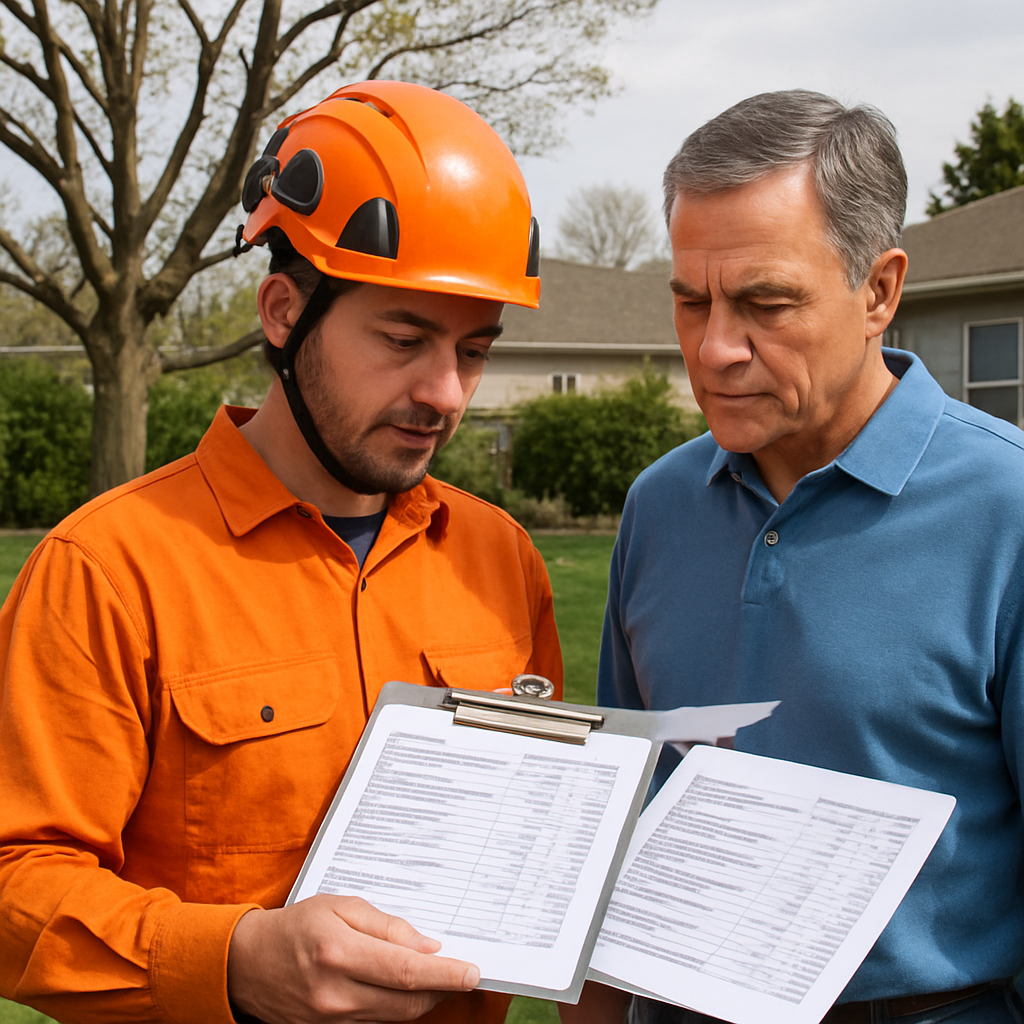
Start with a practical reality: a good crew does more than cut; they translate risk into a documented plan and a scoped cost. Professional work is a sequence of decision points — diagnostics, scope, permits, execution, and restoration — each one can change price, timing, and outcome.
On-site assessment and diagnostics
What they inspect: crews look beyond visible branches. Expect a walk-around that notes target zones, root-flare condition, signs of decay or pests, and any utility or access constraints. Certified arborists will add level-of-risk ratings and, when needed, non-invasive tests such as sonic or resistograph readings.
A practical limitation: non-invasive diagnostics reduce needless removals but are not infallible. If a tree sits over a driveway or house, crews will often recommend a conservative approach — either staged pruning with monitoring or removal — because the cost of misjudging internal decay is high.
Execution, safety controls, and cleanup
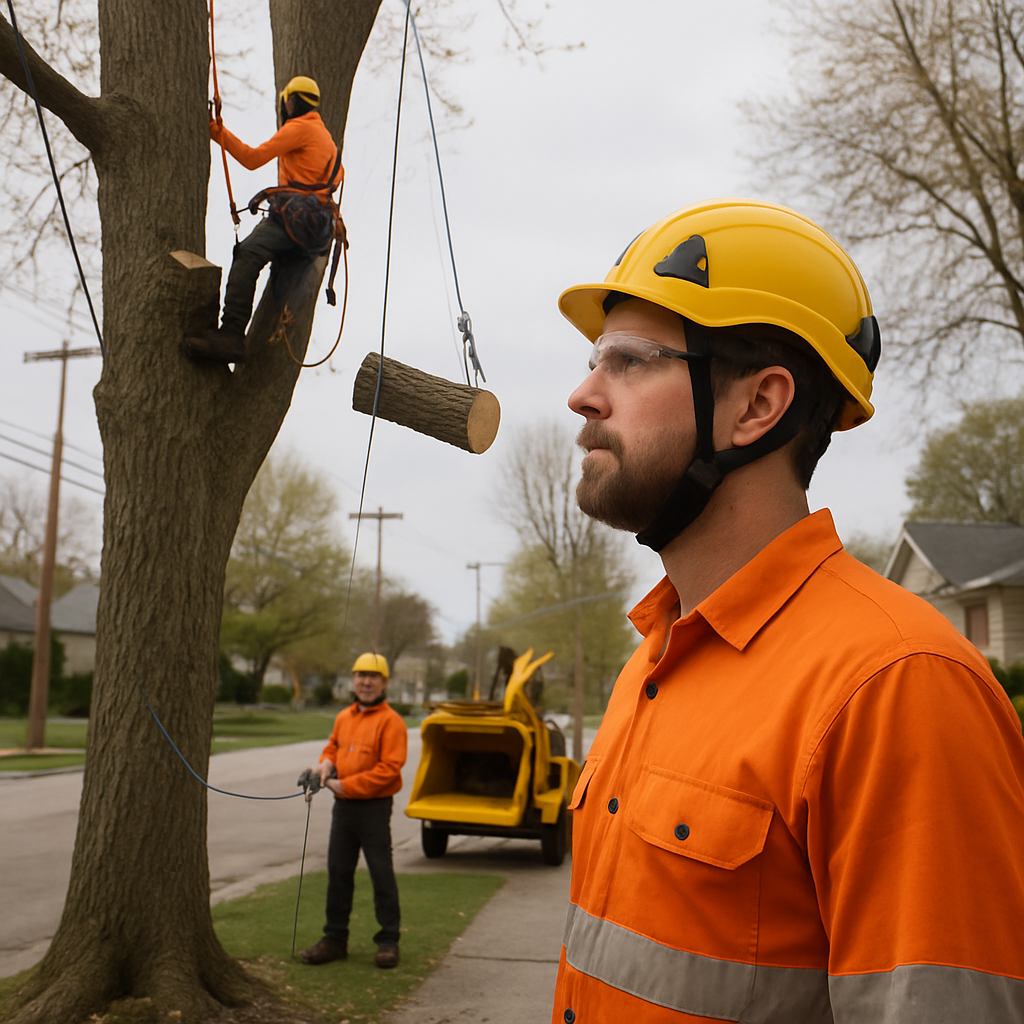
How the work is staged: after permitting and any utility coordination, crews set the safety perimeter, rigging anchors, and load paths. For pruning the focus is on targeted removals (deadwood, weight reduction, crown thinning). For removals you will see sectional cutting, rope rigging, and often a chipper and stump grinder on site.
- Estimate transparency: expect a written, line-item quote showing assessment, permit handling, rigging, removal or pruning labor, chipper and hauling, and optional stump grinding.
- Safety first: a certified crew will show proof of insurance and confirm who will contact utilities if service lines are involved.
- Site restoration: typical options include chip mulch spread on site, hauling wood off, or stacking rounds for firewood — clarify what the bid includes.
Trade-off that matters: fast emergency removal limits planning and raises cost. Planned removals allow permit pulls, traffic control, and lower-risk techniques that save money and property. Decide whether speed or cost-control is the priority and communicate that when you request service.
Concrete example: Mr Tree Inc. inspected a 50-foot maple leaning toward a garage, used resistograph testing to confirm internal decay, pulled a municipal permit, then executed a sectional removal with rigging and stump grinding. The crew left the yard tidy, spread chip mulch around newly planted shrubs, and provided a written aftercare note that included targeted fertilization and a follow-up inspection in 12 months.
Professional crews convert uncertainty into options: insist on a diagnostic report, line-item pricing, and a stated plan for permits and utility coordination before you approve work.
7. Alternatives to Full Removal and Long Term Preservation Strategies
Straight decision point: full removal is not the only way to cut risk. Several practical interventions can preserve a tree in place, but each comes with limits, recurring costs, or reduced longevity — treat them as management strategies, not permanent fixes.
Cabling, bracing, and staged pruning
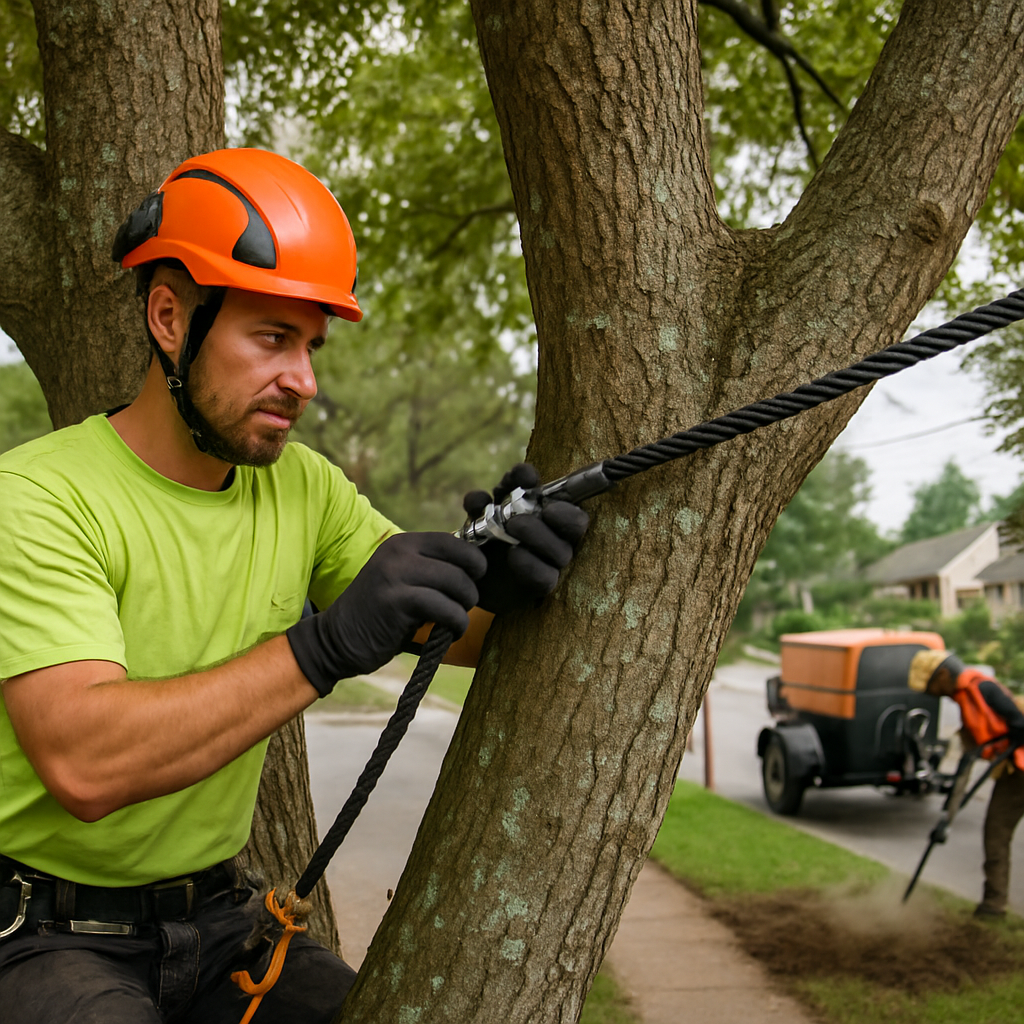
Cabling and bracing can buy measurable service life when structural defects are localized. Use steel or synthetic systems to reduce movement at weak attachments or between codominant stems while you pursue longer-term remedies like targeted pruning and monitoring. These systems reduce immediate failure risk but do not halt internal decay or root failure; expect inspections every 1–3 years and potential hardware replacement over time.
- When to consider: trees with good root stability but weak branch unions, or valuable specimen trees where removal is undesirable
- When to avoid: trees with extensive trunk heart-rot, active root plate decay, or where access constraints prevent safe anchor placement
- Practical trade-off: cabling lowers short-term risk but increases your maintenance obligations and can make eventual removal more complex and costly
Soil and root system work is often underused but highly effective for decline caused by compaction or poor nutrition. Air-spade root excavation, structural soil replacement, deep-root fertilization, and mycorrhizal inoculation improve root health and drought resilience. These treatments help trees recover vigor, which in turn reduces limb failure, but they will not repair a mechanically failed root plate and they take seasons to show benefit.
Targeted pest and disease interventions are narrow tools with strict windows of usefulness. Systemic injections and bark sprays can suppress specific insects or pathogens when detected early and when the tree still has significant live crown. They are expensive per treatment and require an ongoing monitoring plan; treating a tree past the point of recovery wastes money and delays the safer choice of removal.
Transplanting and staged removal have their place but are often over-promised. Moving a large, mature tree has low success rates, high cost, and substantial logistics; it works best for small to mid-size specimens with healthy root systems. Staged removal (retaining a portion of the canopy or a large limb as a habitat snag) can preserve some ecological value while eliminating the primary hazard, but plan for continued monitoring of the retained portion.
Real-world example: A neighborhood property had a 40-inch sugar maple with a partially decayed lower trunk but reasonable root stability. The arborist installed a two-point cable, removed the highest-risk limbs in a staged prune, and performed deep-root aeration and fertilization. The tree stayed in place and remained safe for a decade of monitored use; the homeowner accepted biennial inspections and a replacement plan for when decline accelerated.
Practical judgment: if the preservation path requires repeated major interventions, or if soil/root repairs cannot be performed safely, removal and replanting will usually be the more durable, cost-effective solution. Decide with a multi-year maintenance budget in hand, not just the upfront price.
8. Homeowner Checklist and Questions to Ask an Arborist
Start prepared. A short, organized pre-inspection packet saves time, reduces surprises in quotes, and stops you from being sold on unnecessary removal. Bring documented facts, not diagnoses — the goal is to let the arborist focus on hidden defects and realistic options.
What to prepare before the arborist arrives
Photos and short video: walk a full circle around the tree and capture the trunk base, canopy gaps, and any nearby targets (house, garage, play area). Video is more informative than single photos because it shows lean and context.
Simple measurements: measure trunk circumference at roughly chest height and convert to diameter (circumference / 3.14). Note canopy diameter roughly in feet. These numbers let the arborist estimate size-based rigging needs before arriving.
Site notes: mark buried services, recent grading, or construction, and list any past treatments (injections, cabling, pruning dates). Record when problems started and whether damage increased after storms.
Safety flags: point out nearby service drops, fences, or narrow access gates. If children or frequent foot traffic use the area, say so — that raises the required safety standard and affects cost.
Questions to ask — and how to read the answers
| Question | What the answer should tell you | Red flags |
|---|---|---|
| Are you insured and can I see the COI? | Confirms liability and worker protection; contractor should list policy limits and carrier. | Vague insurance claims, delayed COI delivery, or pushing price without documented coverage. |
| Will a certified arborist inspect the tree and provide a written recommendation? | Shows technical assessment will guide the scope: pruning plan, removal triggers, monitoring intervals. | Only a verbal opinion or refusal to put recommendations in writing. |
| Do you handle permits and utility coordination or expect me to? | Clarifies who will pull tree permits and contact the utility company — important for timing and liability. | Contractor says permits are optional or leaves all approvals to the homeowner. |
| How is the estimate itemized (assessment, rigging, removal, stump grinding, disposal)? | Separates predictable fees so you can compare bids accurately. | Single lump-sum with no breakdown or materials/hours unspecified. |
| What is the expected remaining service life if we choose preservation instead of removal? | Gives a realistic lifecycle view and inspection cadence to budget for future work. | Answers like maybe many years without timeline or inspection plan. |
| Do you offer warranties or guarantees on pruning or cabling work? | Explains workmanship expectations and follow-up options. | No warranty discussion or promise to return for problem work. |
| If you recommend removal, what are the staging and timeline constraints? | Reveals whether the crew needs permits, crane access, or utility windows and the likely schedule. | Ambiguous timelines or refusal to discuss coordination requirements. |
Practical judgement: the cheapest bid often omits permit pulls, utility coordination, or stump grinding. Favor clarity over low price — a detailed, conservative scope reduces change orders and hidden cost after work begins.
Concrete example: A homeowner sent a 90-second video and trunk circumference to a local crew before the visit. The arborist used that to pre-qualify the job, brought a resistograph on the first visit after spotting a cavity in the footage, and recommended removal with a line-item quote that included permit handling and stump grinding. That avoided a second site call and a mid-job surprise fee.
Bring documentation, not a diagnosis: photos, a simple measurement, and clear notes on nearby hazards let the arborist spend their time on diagnostic tests, not trying to recreate the situation.
Next consideration: when you get estimates, require a written diagnostic that lists the feasible options (prune, cable, or remove), projected costs over five years, and who will handle permits and utility coordination. That single demand separates honest bids from risky low-ball offers.
0 Comments