


Complete Tree Removal + Stump Grinding: Why Bundling Services Saves Time and Money
Choosing a single contractor for tree removal and stump grinding near me typically reduces cost, limits duplicate mobilization, and gets your site back to use faster. This post explains exactly how bundling saves time and money, breaks down line-item estimate comparisons for common scenarios, and lists the safety checks and permit questions to include in any written quote. You will also get a practical morning-of checklist for homeowners and clear red flags to reject in lowball bids.
Why Bundling Tree Removal and Stump Grinding Is More Efficient
Key point: Bundling tree removal and stump grinding near me into one contracted job cuts downtime and coordination friction because the same crew stages once, uses the same access points, and handles debris in a single workflow. See a sample scope at Mr Tree Inc. tree removal for how crews scope combined work.
How crews actually save time on site
- Single mobilization: equipment and crew travel once instead of multiple trips, which removes duplicate travel and setup charges.
- Combined rigging and staging: rigging plans, crane placement, and chipper positioning are optimized for both tasks at the same time rather than reset later.
- Fewer heavy passes over turf: coordinated sequencing reduces the number of times heavy machines cross the lawn, lowering repair needs.
- Streamlined debris handling: limbs, chips, and stump material are routed together to chippers or trucks, saving handling labor.
- Consistent responsibility: one crew signs off on cleanup and restoration, avoiding finger pointing between separate contractors.
Practical insight: Bundling is not a universal win. If access constraints prevent bringing the stump grinder onto the same axis used for tree removal, crews may need additional time or different equipment. In those cases, insist that estimates show the extra access work so you do not get surprised by a second charge later.
Concrete Example: A homeowner with a 30-inch maple by the driveway had crews remove the crown and section the trunk in the morning, then grind the stump in the afternoon. Because the crew staged mats and chippers once and used the same traffic plan, the job finished in a single day with minimal driveway scraping and the homeowner avoided a second site visit fee.
Tradeoff to weigh: Immediate grinding can compress schedules and require larger crews on site the same day. If you need time to confirm permits or want to inspect the root plate before grinding, separate scheduling adds flexibility but increases total cost. Ask contractors to show both combined and separate pricing on the estimate so you can choose deliberately.
Coordinated crews reduce risk of rework and lower the chance of turf damage from repeated equipment passes.
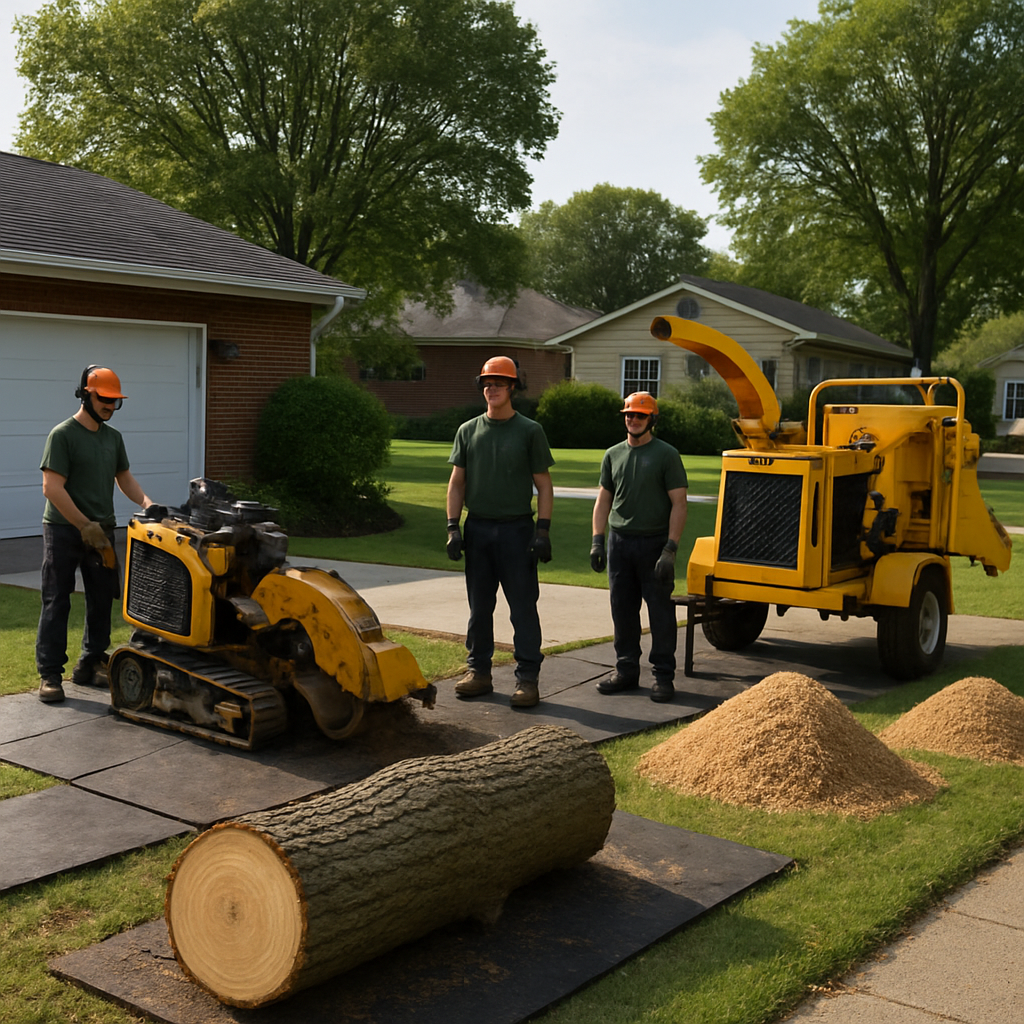
Next consideration: When you get quotes from nearby contractors, request the bundled option explicitly and verify how they will protect access, locate utilities, and handle chips. That single question separates competent bids from lowball estimates that hide real costs.
Cost Breakdown: Bundled Job Versus Separate Contracts
Direct point: Bundling tree removal and stump grinding usually trims the obvious costs — mobilization, duplicated labor, and separate disposal fees — and that is where most real savings appear on a written estimate.
Cost comparison for tree removal and stump grinding near me
Use the national cost guides from HomeAdvisor and Angi as a baseline for ranges, then expect local variation. Below are two illustrative scenarios with line-item logic you should demand on every quote. Numbers are examples to show where bundling reduces duplicate charges; they are not guarantees.
| Line item | Small tree (20 in maple) — separate | Small tree — bundled | Large tree (40 in oak near structure) — separate | Large tree — bundled |
|---|---|---|---|---|
| Tree removal (labor + equipment) | $600 | $600 | $2,200 | $2,200 |
| Stump grinding (hourly / rental) | $350 | $350 | $900 | $900 |
| Mobilization / travel / setup | $150 (x2 = $300) | $150 | $300 (x2 = $600) | $300 |
| Debris disposal / hauling | $200 | $150 | $500 | $350 |
| Permit / traffic control | $0 – $75 | $0 – $75 | $150 – $400 | $150 – $400 |
| Site protection / driveway mats | $75 | $75 | $200 | $200 |
| Illustrative total | $1,325 | $1,325 – $175 savings | $4,050 | $3,750 – $300 savings |
Practical insight: The largest, consistent saving is avoided duplicate mobilization. In the small-tree example above, the bundled job eliminates a second travel/setup charge and slightly lowers disposal handling — that is the pattern you will see across competent local bids.
Limitation to watch: Bundling can concentrate work into a single day, which may require a larger crew or different equipment (for example bringing a larger grinder or crane). That increases same-day disruption and sometimes the day-rate, so ask contractors to show a combined quote and the per-hour or per-day equipment rates used to calculate it.
Concrete example: For a 20-inch yard maple with driveway access, one reputable local crew quoted $1,400 when scheduled as separate jobs and $1,150 when bundled. The $250 difference came almost entirely from a single mobilization fee and a lower disposal line because chips were routed to the chipper once rather than loaded twice.
- Ask for these line items: mobilization, stump grinder hourly rate, labor hours, disposal per ton or per haul, permit fees, and site protection costs.
- Request unit pricing: if the estimate lists a stump grinder rate and crew hours you can compare true apples-to-apples between contractors.
- Get both quotes: insist the contractor provides both bundled and separate pricing so you can weigh cost versus flexibility.
Itemized mobilization and disposal lines are where bundling converts into measurable dollars — emphasize those two lines in every estimate.
Judgment: Bundling is the cost-conscious default for most residential jobs — it removes friction and duplicate fees. But it is not blind savings: when access, permits, or root complications are uncertain, demand transparent contingency line items and both combined and separate totals before signing.
Safety, Logistics, and Property Protection When Jobs Are Bundled
Direct point: Bundling tree removal and stump grinding near me reduces coordination overhead because one crew owns rigging, traffic control, and cleanup. That simplifies safety briefings and reduces handoffs, but it also concentrates risk: if that single crew misses a utility locate, or a weather delay forces a multi-day job, you face a bigger disruption than with staggered contractors.
What a bundled crew should plan and document
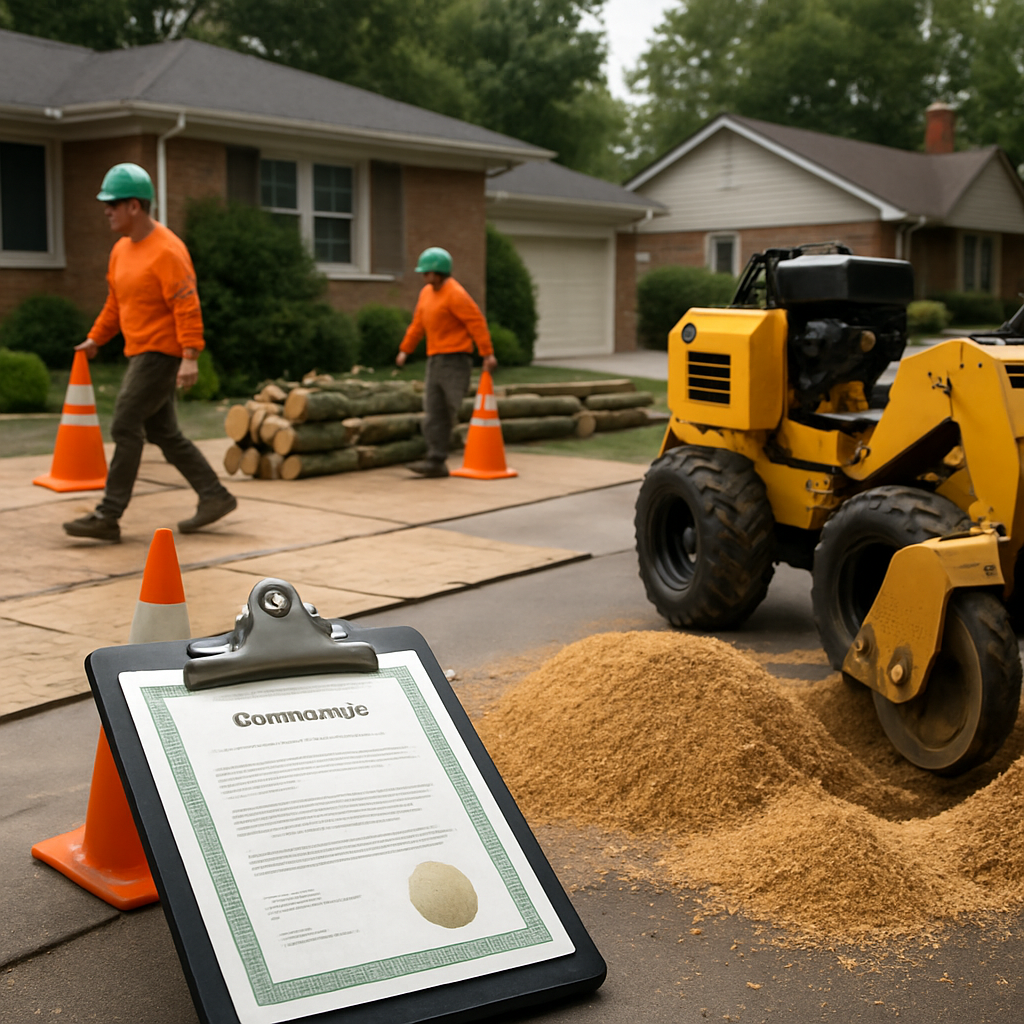
Key items to demand in writing: a site-specific safety plan, proof of general liability and workers compensation insurance, utility-locate confirmation, and a map of protected zones on the property. Ask the contractor to include the exact equipment they will bring (for example stump grinder model or crane type) and the mitigation measures they will use if heavy machinery must cross lawns or driveways.
- Traffic and pedestrian control: signage, cones, and a clear staging area to keep neighbors and passersby safe
- Neighbor and HOA communication: written notice if work will block street parking or create noise beyond normal hours
- Erosion and sediment controls: temporary silt fencing or mulch socks when work is near slopes or gardens
- Documentation for claims: before/after photos of structures, irrigation heads, and paved surfaces to support insurance or HOA questions
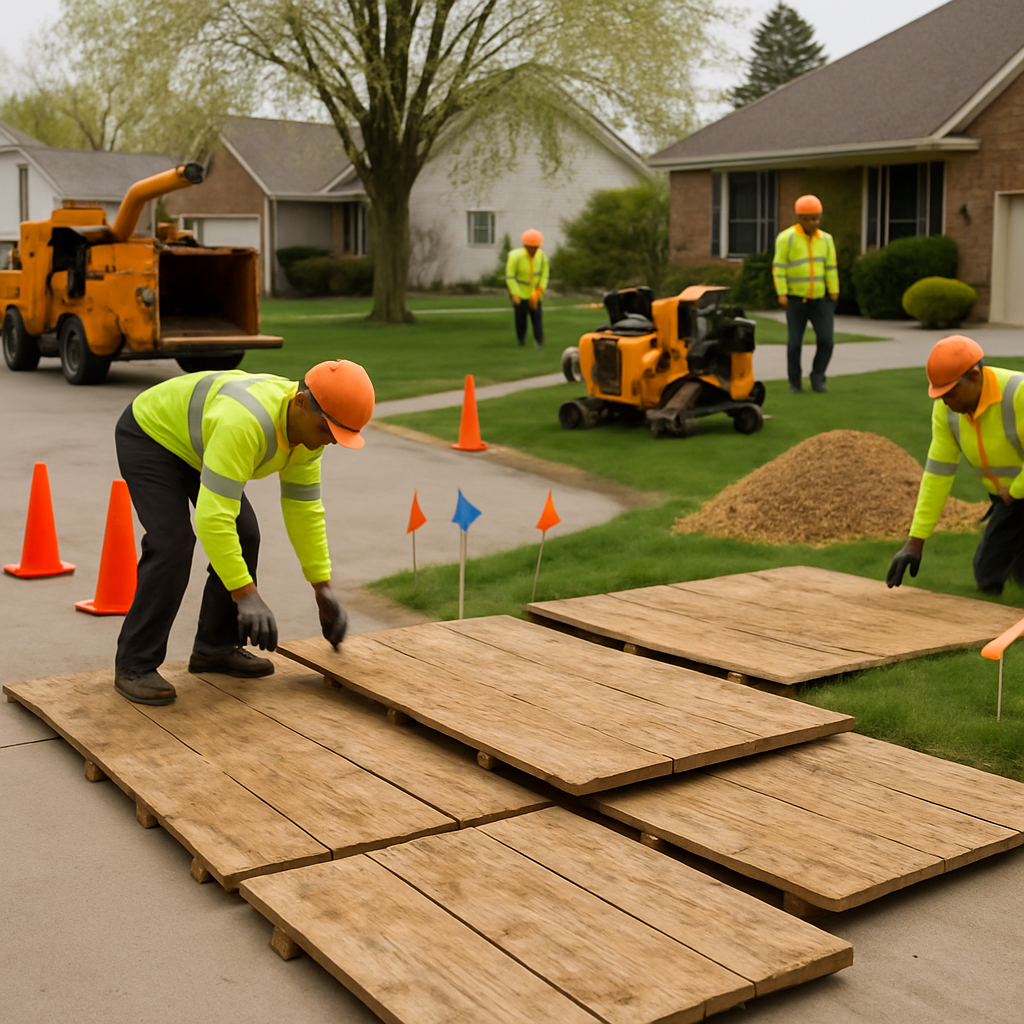
Practical insight: Protective mats and timber platforms reduce turf damage but they are not foolproof. Mats distribute weight but add labor and delivery cost, and they can still compress root zones when used repeatedly. If preserving a lawn or specimen shrubs matters, insist the estimate show matting as a separate line item and include a post-job restoration allowance.
Limitation to consider: Bundling speeds the overall project but makes contingency planning critical. Expect contingency language for unexpected root plates, hidden irrigation, or septic setbacks. A competent contractor will show their contingency rates; a lowball bid that omits contingencies is the real hazard.
Concrete example: A property manager needed a 36-inch oak removed near a private road and buried irrigation. The selected contractor scheduled a single crew, documented utility locates, staged timber mats to protect the road, and ground the stump the same week. Because the crew photographed the irrigation prior to grinding and kept chip piles off the paved shoulder, the HOA accepted the work without follow-up complaints and the owner avoided two separate permit inspections.
Ask contractors for a single PDF that bundles the scope, safety plan, equipment list, insurance certificates, and a clear contingency rate. If they cannot produce it, do not hire them for a bundled job.
When comparing bids, use Mr Tree Inc. tree removal and Mr Tree Inc. stump grinding pages to verify the equipment and services listed in proposals, and consult Tree Care Industry Association guidance for industry safety expectations.
Environmental and Permitting Considerations
Direct point: Local permits and environmental rules often set the real timeline for any job searched as tree removal and stump grinding near me. Do not assume bundling speeds everything up if a municipal approval, protected-species clearance, or HOA sign-off is required first.
What to check before you schedule a bundled job
- Tree permit requirements: city or county codes that limit removal by species, diameter, or location
- Protected or heritage trees: mandatory mitigation planting or replacement ratios
- Right-of-way and street-tree rules: utility and public-works permissions when work affects sidewalks or roads
- Environmental overlays: critical root zones, wetlands buffers, or bird-nesting seasons that pause work
- Waste and disposal rules: local green-waste rules, burn bans, and tipping fees
Practical insight: Having the contractor handle permit applications is convenient but ask for specifics: the exact permit type, application timeline, and who pays for re-inspections. A competent crew will cite the municipal code or include the permit number on the quote; a vague yes-we-do-it answer is a red flag.
Tradeoff to weigh: Some jurisdictions will allow tree removal but require the stump to remain until an inspection confirms mitigation plantings or arborist signoff. That forces separate mobilizations and removes the main advantage of bundling. If you value single-day completion, demand written confirmation from the permitting authority before committing to a same-day grind.
Concrete example: In a mid-sized city, a homeowner contracted removal of a protected willow. The permit required replacement plantings and an on-site inspection before grinding could proceed. The crew submitted the planting plan, waited for the inspector, then ground the stump the following week. Bundling still saved one set of mobilization fees, but the schedule extended because of permit conditions and mandatory documentation.
Environmental options and consequences: On-site chipping into mulch is usually the lowest-cost disposal and beneficial for planting beds, but some municipalities prohibit leaving chips on public ROW or require separation if chips contain invasive species. Full stump extraction reduces future root decay and is often required for construction or septic work, but it increases soil disruption and hauling costs. Choose based on future site use, not convenience alone.
For technical guidance and local best practices consult an arborist and check resources like Tree Care Industry Association and University extension materials. Also request an arborist report via Mr Tree Inc. arborist consulting if your job touches protected trees or complex regulations.
Final note: Permits and environmental rules are the practical limiter on same-day bundling; plan for paperwork and verification up front or accept the likelihood of separate mobilizations.
What to Expect: Timeline, Stages, and Typical Job Day
Straight answer: most bundled residential jobs for tree removal and stump grinding near me finish in a single working day, but that outcome depends on access, permits, and what the crew finds underground. Plan for a window — not a clockwork hour — and for contingencies that can convert a one-day job into a two-day job.
Typical job-day stages
- Pre-job setup (30–90 minutes): crew arrival, utility locates, marking the work zone, and laying protective mats or ramps if driveways or turf must be preserved.
- Tree work and rigging (1–6 hours): sectioning the crown, controlled lowering or crane operations when needed. Time varies by tree size and proximity to structures.
- Chipping and staging (30–120 minutes): limbs processed, wood stacked or loaded for removal. Chipper throughput and haul distance drive this phase.
- Stump grinding (15 minutes to several hours): depends on stump diameter, root density, soil moisture, and whether grinders must remove down to a specific depth for construction or plantings.
- Site cleanup and grading (30–90 minutes): spreading chips where requested, backfilling hollows with topsoil, raking, and final checks for debris and damage.
- Final inspection and sign-off (10–30 minutes): homeowner walk-through, documentation, and any agreed punch-list items.
Practical insight: soil condition is one of the biggest hidden drivers of time. Wet, clay-heavy ground and root-encased stumps slow grinders dramatically and can double or triple grinding time. Ask contractors how they adjust rates or time estimates when sub-surface conditions are poor, and insist on written contingency pricing for rock, roots, or buried utilities.
Concrete example: A homeowner scheduled removal of a 30-inch oak that had good driveway access. The crew removed the crown and staged chippers in the morning, but while preparing to grind they uncovered a shallow irrigation main. The crew paused, documented the line, and returned the next morning with a smaller grinder and hand tools to avoid damaging the irrigation — the bundled approach still saved a mobilization, but it added an unexpected day and a documented contingency charge.
- Morning-of checklist for homeowners: move vehicles out of the work area and along the planned access route; secure pets and children away from the site; flag private irrigation, septic, or electrical features if you know their locations; clear gates and driveways so mats and trucks can be positioned easily.
- Communication tip: confirm the crew lead's cell number and expected arrival window the evening before; ask them to text if delayed.
- Permit display: if a permit or inspection is required, have the paperwork or permit number available on-site for the crew and inspector.
Judgment: a transparent contractor will give you a realistic arrival window, list what will be done that day, and explicitly state what will force a second mobilization. If a bid promises same-day grind without contingency language or an on-site verification step, treat that as an optimistic estimate, not a guarantee.
How to Choose a Contractor and What to Require in the Estimate
Start with the estimate — not the handshake. When you search tree removal and stump grinding near me, the bids you get are the best predictor of how the job will go. A tight, itemized estimate shows whether the contractor understands access, equipment, permits, and contingency risk; a vague one hides them.
What a strong written estimate must include
Scope clarity matters. The estimate should name the tree(s) by location and trunk diameter, list the exact services (for example: crown removal, sectioning, grind to x inches below grade), and state the final disposal plan. If stump depth or root removal is required for future construction, that must be explicit.
- Sample clause — Scope of work: Remove specified tree(s), haul described debris, grind stump to a minimum of 6 inches below grade unless otherwise requested, and remove chips unless homeowner elects to keep them.
- Sample clause — Payment & holdback: 30% deposit, 60% due on substantial completion, 10% holdback released after homeowner walk-through within 7 days to verify cleanup and restoration.
- Sample clause — Permits and inspections: Contractor will obtain required municipal permits, provide permit numbers on the invoice, and notify homeowner of any inspection dates and results.
- Sample clause — Contingency/change orders: Any work outside the written scope (hidden roots, irrigation, or septic conflicts) requires a written change order with pre-agreed hourly and equipment rates.
Practical trade-off: Paying a slightly higher day rate for an experienced crew often saves money overall. In the real world, skilled crews avoid surprises, move faster, and leave less damage — but they will allocate time and contingency in writing. The cheaper bid that skips contingency language is the one that creates surprise invoices.
Watch for these red flags: contractor refuses to show current insurance certificates; the estimate uses fuzzy language like work as needed without unit prices; there is no equipment list or specified stump grind depth; and the payment schedule demands a large upfront cash payment with no holdback.
Concrete example: A homeowner compared two nearby bids: Bid A listed the stump grinder model, a $150 mobilization line, and a $75/hour contingency for unexpected root work; Bid B had a single lump-sum and asked for 50% upfront. The homeowner chose Bid A. When the crew hit a buried irrigation line, the contractor used the documented contingency rate and provided a written change order — no surprise bill and a clear repair plan.
Next consideration: Use the written estimate as your negotiation tool — request both bundled and separate totals, a documented contingency process, and a modest holdback tied to an on-site sign-off. If a contractor resists putting those items in writing, move on and call the next result for tree removal and stump grinding near me.
Preparing Your Property and Aftercare Options
Direct point: The choices you make before crews arrive and the aftercare plan you specify determine whether the yard is back to usable in weeks or months. Proper prep reduces damage, and the right aftercare eliminates repeated contractor visits.
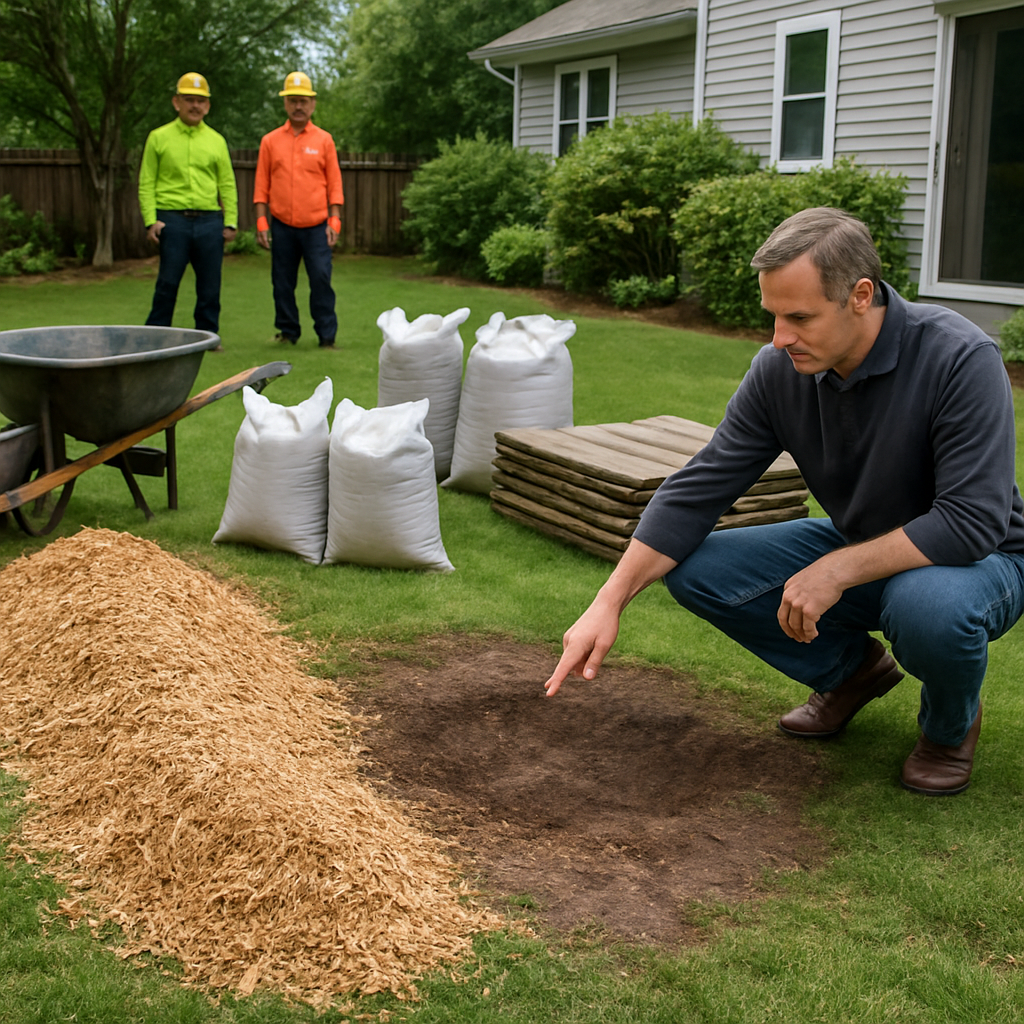
Site-prep tasks that actually matter: mark hidden features (septic cleanouts, irrigation mains, invisible fences), move portable planters and furniture out of staging areas, identify where trucks can park and where chips may be piled, and note any specimen shrubs you want protected. Ask the crew to photograph and mark fragile items before work begins so you have a documented baseline.
- Protect this first: HVAC condensers, masonry steps, low-hanging power lines near access, and drainage inlets — these are the items that get damaged when crews improvise.
- Chip destination decisions: keep chips on-site for mulch or pathways, have the crew haul them off, or request staged piles you can inspect before removal.
- Wood disposition: instruct the crew if you want firewood split and stacked, donated, or removed; this changes haul and labor lines.
Aftercare trade-offs: leaving chips saves hauling costs and provides free mulch, but fresh chips can tie up nitrogen if mixed into planting beds and they can harbor pests if piled against foundations. If you plan to replant quickly, request screened chips or have the crew haul them away. For beds, apply 2–3 inches of aged chips; for paths, a thicker layer is fine.
Turf repair and soil work — practical steps: for small hollows after grinding, top with 1–2 inches of screened topsoil before seeding. For larger compaction from heavy equipment, expect to bring in 3–6 inches of topsoil or do mechanical aeration/vertical mulching; sod is the fast option but costs more. If the site will be built on or used for playgrounds, grind deeper or plan full stump extraction and backfill with compacted aggregate.
Limitation to accept: even the cleanest grind leaves root remnants that rot over time. That decay can cause settling over months or years. If immediate structural work or precise grade is required, stump grinding alone may not be sufficient — budget for deeper removal or sub-surface compaction.
Concrete example: A homeowner had a backyard stump ground to 8 inches below grade and chose to keep the chips for garden paths. The crew left chips in a windrow; the homeowner spread chips on paths two weeks later but brought in 2 inches of screened topsoil to level the lawn areas before overseeding. Result: usable paths within days and lawn recovery in six to eight weeks, without a second contractor visit.
Practical judgment: if your priority is quick replanting or construction, pay a little more up front for a deeper grind or full stump extraction and compacted fill. If cost is the priority and you plan only light landscaping, accept the slower natural decay route and budget for soil topping and reseeding.
SEO tip: when you save contractor responses, store a photo and a short note that includes your city name plus the phrase tree removal and stump grinding near me. That makes later searches and warranty follow-ups faster when you compare local bids. For guidance on mulch and wood-chip use, see the University extension resources like University of Minnesota Extension. For service specifics, check Mr Tree Inc. stump grinding.
How Mr Tree Inc. Handles Bundled Tree Removal and Stump Grinding
Clear ownership: Mr Tree Inc. assigns a single project manager to every bundled job who handles the arborist assessment, permit filings, crew scheduling, and final sign-off. That reduces finger-pointing and gives you one person to hold accountable if scope, timing, or charges change.
Scheduling, documentation, and customer access
- Photo intake and triage: customers upload 2 to 5 site photos when requesting a quote so the arborist can flag obvious access or utility concerns before the site visit.
- Live timeline: once booked you get an online job timeline with an ETA window, crew-lead contact, and a visible checklist of required homeowner tasks.
- Permit tracking: Mr Tree files permits electronically and posts application status in the customer portal so you see inspection dates instead of chasing paper.
Equipment match matters: the project manager picks grinder size, chipper capacity, and rigging based on the site survey, not a one-size-fits-all approach. That decision trades off speed versus turf impact – larger grinders finish faster but need wider access and cause more compaction, while smaller grinders preserve tight yards but take longer.
Mr Tree bundles the scope into a single written estimate that shows both the combined price and the line-item split for tree work, stump grinding, mobilization, and disposal. The estimate also includes a documented change-order process in the customer portal so any surprises are approved in writing before extra work proceeds. For service details see Mr Tree Inc. tree removal and Mr Tree Inc. stump grinding.
Practical limitation: when municipal rules or inspections require waiting between removal and grinding, Mr Tree will still prepare the site and hold the grind slot, but the job may split into separate dates. That preserves bundled pricing on paperwork but can delay physical completion.
Concrete example: A customer booked removal of a 28-inch ash near a detached garage. An arborist visited, measured the trunk and noted a shallow irrigation main. The project manager scheduled the crew, filed a local permit electronically, and completed crown removal and stump grinding in the same week using a compact grinder to protect the driveway. The recorded outcome: one approved permit application, photographic documentation of irrigation, chips donated to a neighbor, and the final invoice showing the bundled discount on mobilization.
Judgment: bundling through a provider that documents every step reduces real risk but shifts a new requirement to you – be available to approve change orders and confirm permit constraints. Bundling saves money in most residential cases, but only when the contractor provides transparent contingency pricing and online documentation you can inspect before crews arrive.
0 Comments