

Compare Tree Removal Services in Your Area: A Practical Checklist for Homeowners
Shopping for tree removal services in my area can be confusing when quotes, credentials, and safety practices differ widely. This practical checklist walks you through what to ask on the first call, how to verify insurance and certifications, how to compare written estimates side-by-side, and which red flags to drop. Use it during phone screening, on-site inspection, and before you sign a contract to keep the job safe, legal, and cost-effective.
1. Confirm the Reason for Removal and Consider Alternatives
Start with the problem, not the solution. If the tree is primarily an eyesore, lightly interfering with a driveway, or suffering from a treatable disease, removal is often the expensive option rather than the required one. Conversely, active structural failure or clear root plate movement is a legitimate, immediate removal case.
Alternatives to full removal
- Targeted pruning and crown reduction: Remove specific limbs to reduce weight and hazard without killing the tree; cheaper now, requires followup maintenance.
- Cabling and bracing: Structural support for split trunks or heavy limbs when preservation is worth the cost; good for high-value specimen trees.
- Disease or pest treatment: Root injections, topical fungicides, or targeted removals of infected limbs can save trees where the issue is contained.
- Replacement planting and selective removal: Remove only the hazardous portion or one tree now, then schedule replanting to preserve canopy cover over time.
Practical trade-off: Preservation keeps canopy and reduces replacement costs but usually requires ongoing maintenance and monitoring. Removal ends the immediate risk and future maintenance but raises immediate costs and creates a stump/disposal task that may require separate services like stump grinding services.
Concrete Example: A 30 inch maple with a single longitudinal trunk crack leaning slightly toward the garage was evaluated by a certified arborist. The arborist recommended sectional removal of the cracked stem and cabling remaining trunks – saving two-thirds of the canopy and avoiding full removal costs. The homeowner accepted the hybrid approach and scheduled later stump grinding for the removed stem.
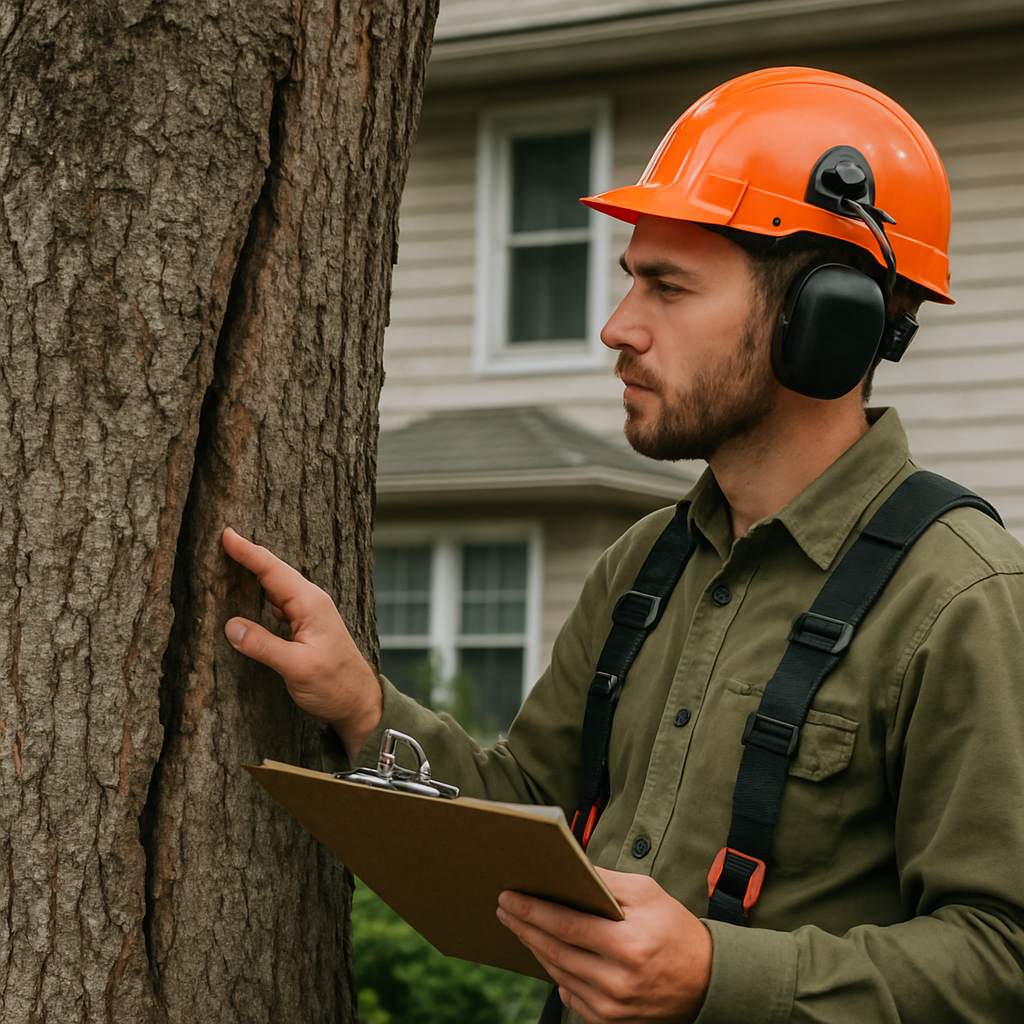
When to call an arborist: Bring in a qualified evaluator when you see visible trunk cracks, root plate heave, fungal conks at the base, or recent major limb drop. Ask for a certified arborist inspection and a written risk assessment – search for a certified arborist near me or consult ISA guidance.
Reality check: Many contractors will default to removal because it eliminates liability and is straightforward to price. That is not the same as acting in your best long-term interest. Prefer local tree removal experts who deliver a documented assessment and explain why removal is chosen over alternatives.
2. How to Find Local Pros and What to Ask on First Contact
Practical fact: the first phone call separates competent local tree removal services in my area from the ones you should not invite onto your property. Screening for availability, insurance, and whether they require an on-site inspection will save you false lowball quotes and weekend surprises.
Where to look (quick, reliable sources)
- Google My Business and recent reviews: prioritize firms with recent job photos and replies to complaints.
- Municipal contractor lists and public works recommendations: use these for vetted vendors on public jobs but verify current credentials.
- Trade directories like the TCIA member search: a faster way to find licensed tree cutting services near me with industry standards.
- Referrals from neighbors or local arborists: ask for photos of the completed job and a reference you can call.
- Company service pages such as tree removal and emergency services: useful for understanding offered services and stated credentials.
Trade-off to expect: companies that promise immediate arrival often do so by cutting corners on documentation. If you need quick tree removal solutions after a storm, accept that the safest path is a same-day hazard assessment followed by a scheduled full removal with verified insurance and a written scope.
Six essential questions for the first call
- Are you insured for this job? ask for a certificate of insurance and policy numbers before booking.
- Will a certified arborist inspect the tree? confirm ISA certification or TRAQ qualification if risk is high.
- Do you handle permits and utility notifications? find out who applies and who pays permit fees.
- Is stump grinding included or separate? get clarity on disposal and low-cost stump removal options.
- What equipment will you use and is a crane needed? equipment signals capability and cost implications.
- What are payment terms and lead time? avoid contractors demanding large cash deposits.
Call script (use verbatim): Hello, my name is [Name]. I need an estimate for tree removal at [address]. Can you confirm: are you licensed and insured for tree work in this city and can you email a certificate of insurance? Do you have an ISA Certified Arborist or TRAQ-qualified staff who will inspect the tree? What's your estimated lead time and approximate price range for a 24–30 inch hardwood near a house? Do you handle permits and stump grinding, and what's your payment policy?
Concrete example: A homeowner called three nearby tree removal companies after a storm. One offered a same-day tow-away with no COI and requested cash; the second scheduled a paid inspection by an arborist and provided an emailed certificate; the third sent a generic quote over the phone. The homeowner chose the second — paid a modest inspection fee, received a written scope, and avoided a contractor who later attempted to add hidden fees.
If a company refuses to provide a certificate of insurance or an arborist on request, treat that as a disqualifier.
3. Credentials and Verifications Checklist
Start here: documentation, not promises. The single best filter when comparing tree removal services in my area is verifiable paperwork. Ask for certificates and credential proofs before anyone sets a price or schedules a crew. If a contractor resists or emails blurry photos, move on.
Printable verification checklist
- Certificate of Insurance (COI): Request a COI with policy numbers, effective and expiration dates, and the named insured. Confirm the description covers tree removal or arboriculture work at your address and look for an additional insured endorsement when possible.
- Workers compensation: Make sure WC is listed or that the insurer confirms coverage for all on site personnel. If the company claims exemption, ask for written proof and verify with the insurer.
- Typical policy minimums: Aim for at least $1,000,000 per occurrence general liability and $2,000,000 aggregate or umbrella for high-risk jobs; higher limits are reasonable for crane or commercial work.
- Certifications and training: Ask for the ISA credential or TRAQ proof and verify names in the ISA directory at ISA Certified Arborist Directory. For rigging or crane work request manufacturer or operator certifications.
- Subcontractor and equipment coverage: If subcontractors, cranes, or rental gear are used, confirm those parties appear on the COI or that the primary contractor accepts responsibility in writing.
- References and recent photos: Get two recent job references for similar work and photos showing site protection, rigging, and cleanup.
Practical tradeoff: Smaller local operators can be experienced and cost effective but may carry lower policy limits. If the tree is near a house, powerline, or garage, prefer vendors with higher limits and named additional insured status to avoid being on the hook for damage.
How to verify quickly: Call the insurer using the phone number you find independently, not one supplied by the contractor, and say: Hello, I am calling to confirm policy number [x] for [named insured] is active and covers tree removal at [your address]. Is there an additional insured endorsement or waiver of subrogation? Note the agent name and time of call.
Concrete Example: A homeowner scheduled a large maple removal and accepted a COI by email. When they called the insurer the agent said the policy had lapsed two weeks earlier. The contractor canceled and the homeowner hired another firm that provided current COI and an ISA certified arborist assessment before work began.
If the insurer cannot confirm coverage for the job or names differ, stop the process. An emailed COI without phone verification is an avoidable risk.
4. Reading and Comparing Written Estimates
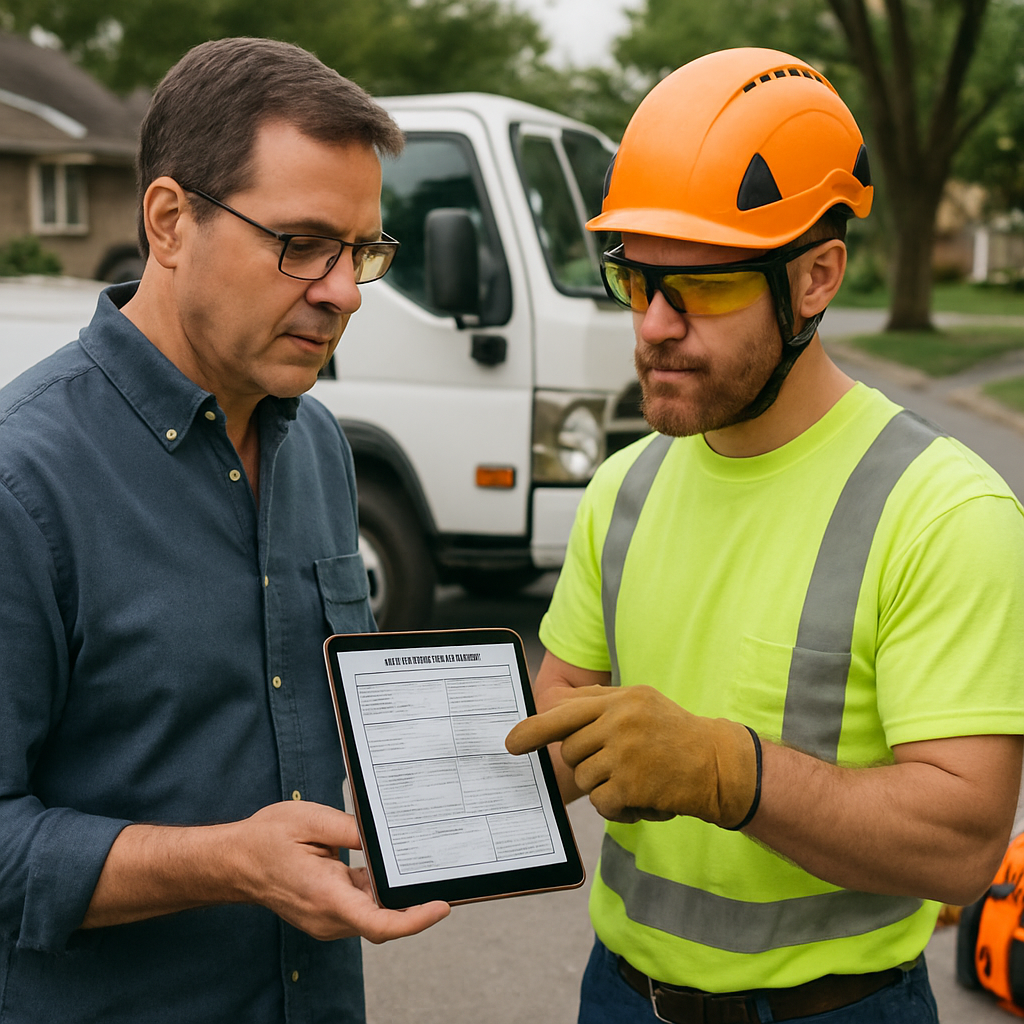
Plain fact: the written estimate is where verbal promises either become enforceable or stay useless. When you search for tree removal services in my area, insist on a signed, line item estimate before crews arrive. A vague total is a negotiation starting point, not a contract.
Key line items every competent estimate should include
| Line item | Why this matters |
|---|---|
| Tree identification and DBH (diameter) | Charges depend on species and trunk diameter; vague descriptions hide upsells |
| Removal method (sectional, crane, full drop) | Method drives crew size, equipment rental, and liability exposure |
| Stump grinding or stump left | If omitted, stump disposal becomes a surprise cost after the job |
| Debris handling and disposal plan | Specifies chip haul, on-site chipping, wood reuse, or landfill fees |
| Site protection and cleanup standard | Defines what counts as completed work and limits claims for damage |
| Permit responsibility and fee estimate | Avoids last-minute permit bills and delays from missing approvals |
| Insurance reference and COI note | Should list insurer, policy number, and that the policy covers arboriculture |
| Schedule, crew size, and equipment on site | Clear timing reduces same-day change orders and helps protect plants/vehicles |
| Payment terms and cancellation policy | Prevents pressure for large cash deposits and defines final payment timing |
| Warranty or guarantee on work and cleanup | Short-term guarantees reduce follow-up hassles for missed debris or damage |
Practical insight: low initial price frequently comes from missing line items, not better efficiency. When one bid separates stump grinding and disposal as add-ons and another bundles them, you must normalize totals before deciding. Ask each contractor to rewrite their bid into the exact same scope so you compare apples to apples.
Sample Estimate A: Removal of 28 inch oak – sectional removal; includes on-site chipping and haul-away of chips; stump left at 6 inch height; crew of 4, chipper and bucket truck; permit not included; total $2,400; 30 percent deposit; insurance on file upon request.
Sample Estimate B: Remove 28 inch oak – full removal and stump grinding to 6 inch; includes chip spreading as mulch on site; permits and disposal included; crane not required; crew of 5; total $3,150; 20 percent deposit; COI provided with estimate.
40 word comparison summary: Normalize by adding stump grinding and disposal to Estimate A or removing them from Estimate B. Compare final totals, then weigh site protection, crew size, and COI clarity. The cheaper raw number is meaningless until scopes match.
Concrete example: A homeowner received two nearby quotes. The low quote excluded permit fees and listed stump grinding as a separate line at time of service. On workday the contractor billed an extra 450 for stump removal. The homeowner paid the higher bundled quote from a different provider and avoided surprise billing and an extra site visit.
Judgment you need: prioritize an estimate that documents risk controls and permit responsibility even if its total is higher. In practice, clarity and accountability reduce cost overruns and post-job disputes far more than shaving a small percentage off the headline price.
Next consideration: if you want examples of how a detailed scope looks from a local provider, compare sample pages on the tree removal and stump grinding services pages before you accept a verbal quote.
5. Safety, Equipment, and Site Protection Expectations
Hard requirement: a professional crew arrives with a written plan for how they will protect people, structures, and landscaping. A verbal assurance is common but meaningless on its own; demand a short, on paper rigging and traffic control plan before work begins. The plan should identify fall zones, where chips will be placed, how vehicles will be staged, and who is responsible for temporary barriers or sidewalk closures.
What you should actually see on site
- Pre-job walkthrough with homeowner: crew points to drop zones, temporary fencing, and equipment staging area
- Marked utilities and clearance proof: visible markings or a locator ticket for buried lines and a plan for overhead lines
- Personal protective equipment and trained crew: helmets, eye protection, chaps, and at least one trained lead who can explain the lowering method
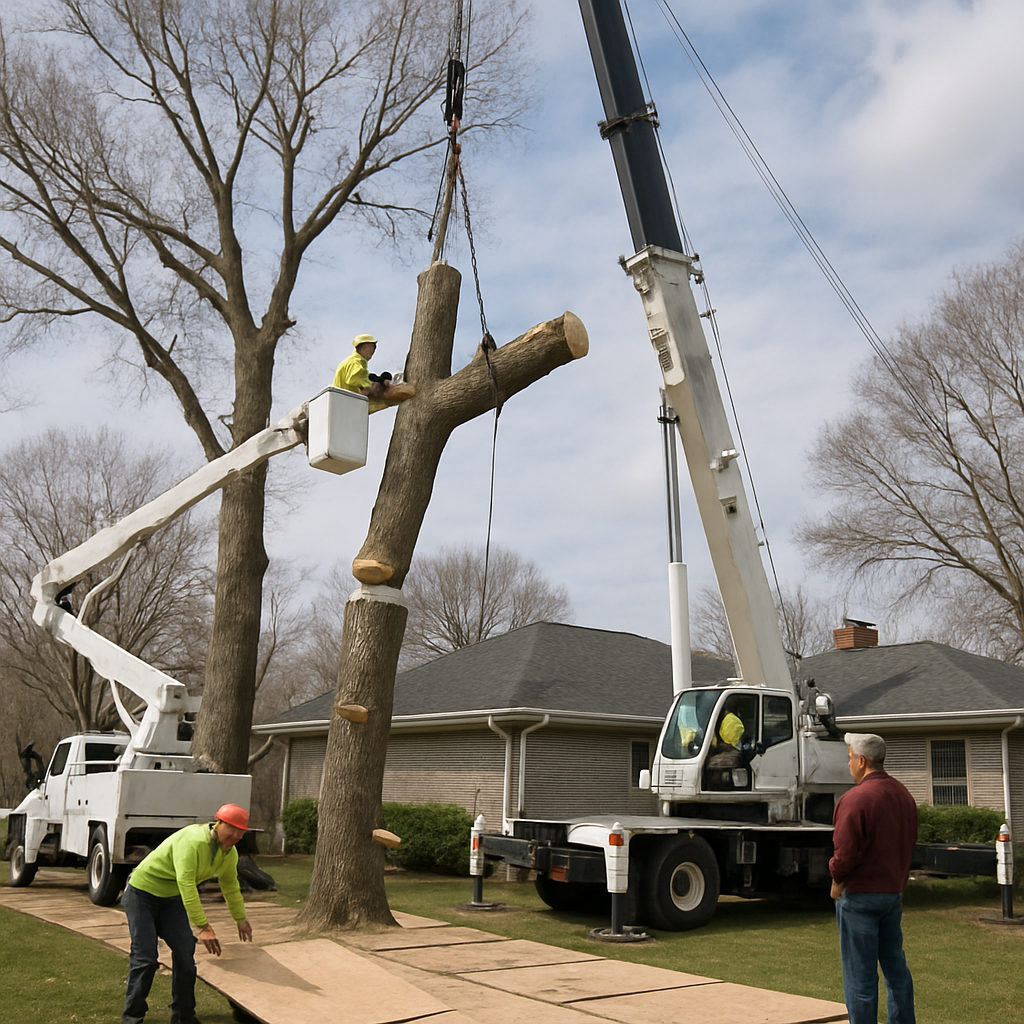
- Ground protection: plywood, track mats, or steel plates where heavy gear or stump grinders will operate to protect lawns and irrigation
- Rigging and lowering plan: labeled rigging points, taglines, and a designated signaler for any crane or bucket truck lifts
- Debris handling plan: where chips go, whether wood will be left for reuse or hauled and any fees for disposal
Equipment is a capability signal, not a luxury badge. A chipper, stump grinder, and a bucket truck indicate routine residential capability. A crane signals the company handles tight removals near structures. Ask for operator certifications for cranes and bucket trucks and for evidence the crew has run the exact equipment being proposed on similar jobs.
Trade-off to understand: cranes reduce risk to structures but add substantial cost and logistics – permits, crane pads, and flagging. Insist the contractor itemize crane rental, operator fees, and setup time. If the quote hides the crane as a vague line item you will see a big surprise on invoice day.
Emergency work reality check: when you need quick tree removal services in my area after a storm, expect a two-step approach. A reputable crew can do temporary hazard reduction the same day – pulling the limb off the house or blocking access – but full sectional removal or crane work usually comes on a scheduled follow up with a documented scope, COI, and full site protection in place. Do not accept a same day full removal without seeing insurance proof.
Concrete example: A homeowner had a large oak leaning toward a porch after a wind event. One contractor offered immediate sectional cuts using a climbing crew and drop zones that grazed the porch trim; another proposed a crane lift staged on plywood to lower 600 pound sections directly onto a truck. The crane option cost about 1,700 more but avoided structural repairs and saved weeks of cleanup and patching.
Practical judgment: prioritize companies that treat site protection as line item work. Cheaper bids that skip mats, ground protection, or a clear lowering plan often lead to expensive repairs to lawns, irrigation, fences, or siding. Ask to see photos of prior jobs showing the exact protections you expect, and link their proposed protections to the line items in the estimate.
For reference on safety standards see OSHA guidance on arboriculture and check examples of professional practice on the ISA site. If stump grinding is part of the job, review typical protections and finish expectations on the stump grinding services page.
6. Permits, Utilities, and Neighborhood Rules
Make responsibility explicit before any crew arrives. When you compare tree removal services in my area, one of the fastest ways to avoid fines, delays, and surprise bills is to get permit and utility responsibilities in writing. Don’t accept a verbal promise that someone else will handle it.
Why this matters: many municipalities require permits for removals above a certain diameter, for street or parkway trees, or for protected species. HOA covenants and municipal street-tree rules can also require replacement planting or mitigation fees. If a public right-of-way is involved, the city—not the homeowner—often controls the outcome and will stop private crews.
Two-step homeowner checklist
- Step 1 — Confirm permit ownership and cost: Tell the contractor you need written confirmation of who applies, who pays any permit fee, and the expected processing time. If the contractor applies, ask for the permit number and proof of approval before work begins.
- Step 2 — Verify utility clearance: For underground lines, call Call 811 or your local one-call center and get a ticket number. For overhead lines, request a written confirmation from the utility (or scheduled de-energize/inspector visit) before cutting near conductors.
Practical trade-off: having the contractor handle permits simplifies the process but shifts risk to you if their paperwork is late or incorrect. Insisting they apply and providing the permit number protects you, but it can add a week or more to the schedule—plan around municipal lead times, not the contractor's calendar.
Utility nuance most homeowners miss: utility companies will not always de-energize on short notice and may charge for a crew. Some utilities only allow their crews to work within a defined safe distance; otherwise a certified operator or crane and special rigging are required. Expect coordination fees and schedule constraints, and have the contractor produce the utility clearance confirmation as part of the scope.
Concrete example: A homeowner hired a low-cost local crew and assumed the crew would pull the city permit. Work began and a municipal inspector halted the job because the tree sat in the parkway. Crew left, the homeowner paid a fine, and the contractor billed extra to re-mobilize. Had the contract specified permit responsibility and required a permit number before mobilization, the stop-work and fine would have been avoided.
Emergency removal reality: an immediate hazard may allow contractors to work before a permit, but expect an after-the-fact permit or inspection. If the job is billed as emergency work, require a written post-job submission of permits and utility coordination proof. That limits your exposure to fines and ensures insurance will cover any later claims.
Don’t sign or pay until you have either a permit number on file or written contractor commitment that clearly assigns permit and utility responsibilities.
Template email to send contractors (40 words): Hello, please confirm in writing whether your company will apply for and pay required municipal permits for tree removal at [address], and provide the expected permit processing time and an estimated permit fee. Please attach proof when available. Thank you.
If you want a local example of how contractors document permits and coordination, review a sample scope on the tree removal page and cross-check with your municipal permit site starting at USA local governments.
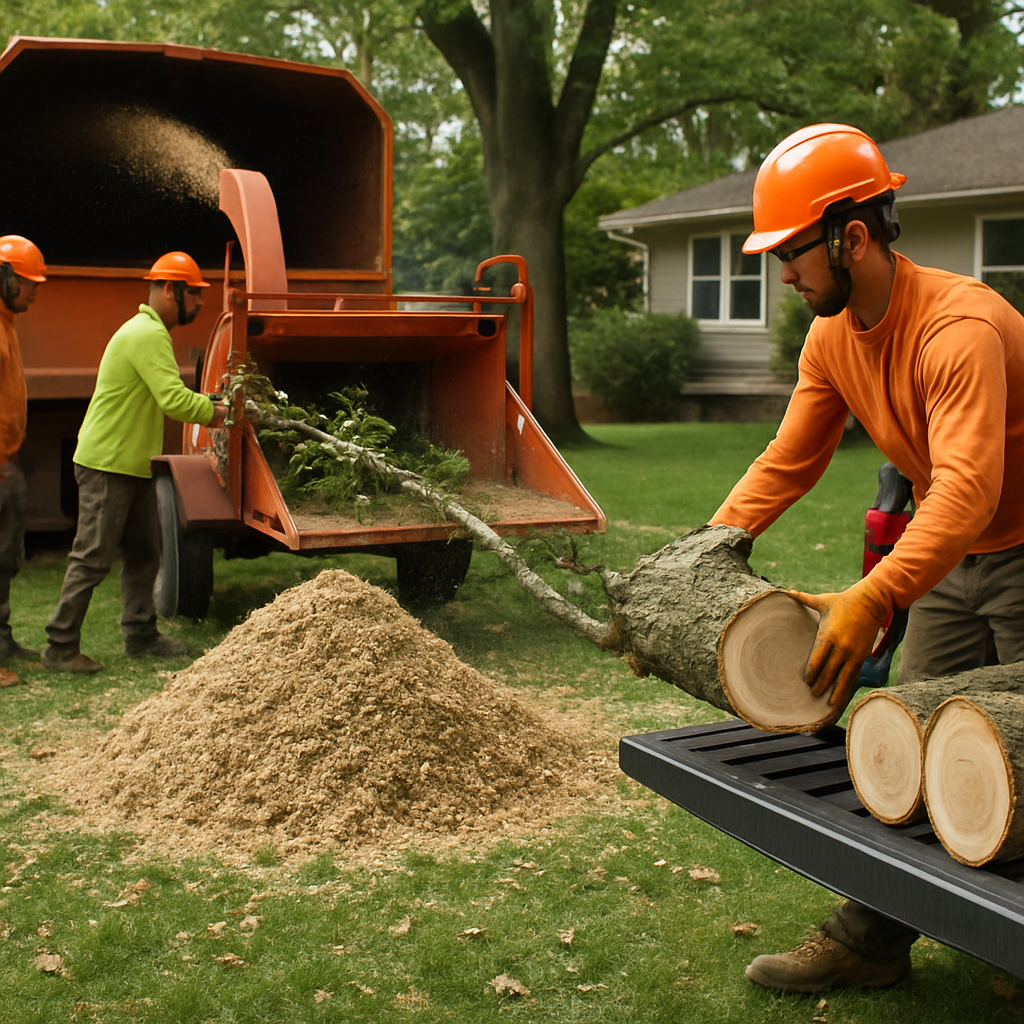
7. Environmental Practices, Wood Disposal, and Reuse Options
Direct point: how a contractor disposes of removed wood changes the project cost, your post-job workload, and your property risk profile. Choose disposal deliberately rather than letting the crew decide on the day of work.
Major disposal pathways and their trade-offs
- Haul to landfill or transfer station: fastest for crews but usually the most expensive option and the least sustainable; it eliminates pest and disease concerns quickly but can incur tipping fees and hauling charges.
- On-site chipping and mulch production: lowers hauling costs and gives you free or low-cost mulch; trade-offs are potential contamination if the tree had disease, and a messy short-term staging area that crews must manage.
- Donate or reuse logs and firewood: socially and ecologically beneficial when coordinated; the downside is liability and pest transfer risk, plus extra labor for splitting, stacking, and arranging pickup.
Practical insight: some contractors prefer hauling to a landfill because it reduces their liability for pests or homeowner misuse. That choice raises your bill. Conversely, free mulch can save money but is not always appropriate after a disease or insect infestation. Ask for written confirmation that chips from diseased material will be removed, not spread back into your beds.
Disease and pest limitation: certain pathogens and pests survive in chips or logs. For guidance on what to avoid reusing, consult Penn State Extension and the ISA. Contractors should be able to explain when they separate and haul diseased material versus when they safely recycle it into screened mulch.
Concrete Example: A homeowner had an elm with Dutch elm disease. One nearby crew offered on-site chipping and spreading; the arborist declined and required the wood be hauled away to a licensed facility. A second company produced screened mulch from healthy limbs and donated leftover logs to a local community garden. The homeowner paid slightly more for the hauled option but avoided risk of spreading disease in their landscape.
How Mr Tree Inc. handles reuse (real-world practice): when possible we chip clean material and produce screened mulch for customers or local reuse; diseased or insect-infested material is documented and either hauled to a processing facility or separated for safe disposal. See examples on the stump grinding services and tree removal pages for how that is recorded in the scope.
Actionable script to use on quotes: Please confirm the disposal method you plan to use for this job: landfill haul, on-site chipping with mulch retained, or log/firewood donation. If chipping, will diseased material be removed or screened? What are the fees and who retains title to the wood or mulch?
8. Red Flags and Deal Breakers When Comparing Contractors
Start here: walk away, or lock it down. When you compare tree removal services in my area, a few contractor behaviors reliably predict trouble: vague promises, missing proof of coverage, and high-pressure tactics. These are not negotiable quirks — they are signals that the crew either can not or will not meet the risk and documentation standards a safe job requires.
Top anti-patterns that should end the conversation
- Handshake estimate only: gives you no enforceable scope. If the worker won’t provide a signed line-item quote, they plan to upsell on site.
- No verifiable insurance proof: if they email a blurred image or refuse to give a policy number you can call, treat them as uninsured for your purposes.
- Large cash demand up front: a small deposit is normal; a large, nonrefundable cash demand is a classic scam trigger.
- Same-day pressure without inspection: contractors who insist you accept work immediately without a proper on-site risk assessment are avoiding liability, not helping you.
- No local footprint or references: no business address, no recent job photos, and no comparable references mean no accountability if something goes wrong.
- Refusal to commit to cleanup, protection, or a warranty in writing: if they promise to fix damage later but won’t sign it, you will struggle to collect.
Practical trade-off: in a real emergency you may accept temporary hazard reduction from a rapid-response crew, but insist on a signed short-form scope and a promise to follow with a full, documented removal that includes proof of insurance. Do not let urgency erase documentation — get at least a digital COI and a scheduled return date for the permanent work.
Concrete example: After a storm, one homeowner hired the lowest bidder who arrived same-day and demanded cash to remove a fallen limb. The crew did partial work, left debris, and refused to return. The homeowner had no COI, no written estimate, and paid again to finish the job. A second company later provided a signed scope, current COI, and handled stump grinding as a single contract.
Immediate actions if you spot an anti-pattern: stop the quote process, request a written estimate and policy number now, call the insurer to confirm coverages, and ask for two local references for similar work. If the operator is unlicensed or unsafe, report them to your municipal consumer affairs or building department and avoid on-site negotiation.
Judgment to apply: cheaper is not a win if it leaves you liable for damage or uncompleted work. Prioritize contractors who are upfront about permit handling, provide verifiable insurance, and will put the scope and cleanup details in writing — even if their headline price is higher.
If a contractor fails one major verification step, assume more problems follow. Your next move should be to pause and get the documentation or hire someone else.
Next consideration: if you need help vetting a written COI or want an independent arborist assessment before committing, schedule an expert consultation so you are comparing verified, apples-to-apples offers rather than relying on salesmanship.
9. Final Selection, Scheduling, and Preparing Your Property
Decision point: when two bids line up on price, pick the crew that documents how they will protect your property and delivers a reliable start window. A slightly higher bid that nails schedule, COI, and a site protection plan usually saves money and stress later.
Practical scheduling and contract items to insist on
Make schedule commitments specific. Ask for a start date range (for example: arrive between 8:00 and 11:00 on 2026-06-15), a backup date in writing, and the contractor's re-mobilization policy. Weather and permit delays are normal; the contract should state who pays for extra mobilizations and how many calendar days the price holds.
Assign a single point of contact. Name one homeowner contact and one crew lead for the day so decisions and damage reports are clear. Require photo updates if work is staged across multiple days and insist the contractor logs any scope changes in writing before performing them.
- Pre-job checklist (printable): mark buried utilities with flags or paint as shown on your 811 ticket
- Move vehicles: clear the driveway and nearby street parking for trucks and trailers
- Secure people and pets: keep pets indoors and let the crew know where children will be kept
- Protect delicate plants and beds: relocate potted plants and cover vulnerable shrubs with tarps
- Designate crew parking and equipment zone: choose a spot that minimizes lawn damage and gives crews room to stage
- Clear access routes and unlock gates: remove obstacles, prop open gates, and trim low branches on access paths
- Turn off irrigation systems and expose valve boxes: label or flag irrigation heads that could be damaged
- Remove breakables and outdoor furniture: store grills, ornaments, and kids play equipment out of drop zones
- Photograph property condition: take wide and close photos of structures, fences, and landscaping for post-job comparison
- Confirm permit number and COI on site: contractor must present permit approval or permit number and an active certificate of insurance before work begins
Concrete example: A homeowner chose a low-cost crew and did not move a parked trailer from the driveway. The crew could not stage the crane and billed a re-mobilization fee plus extra labor to complete the job later. In contrast, a neighbor who followed the checklist avoided delays and paid only the contracted price.
Trade-off to weigh: paying for an earlier slot can be worth it when storm forecasts increase failure risk — you buy reduced hazard exposure. The downside is potentially higher mobilization costs and short-notice scheduling, so confirm refund or reschedule terms if weather cancels the crew.
Payment timing and sample clause: Aim for a small deposit to hold the date with final payment after inspection and signed acceptance. A reasonable contract clause to request is Client will pay a 15% deposit to secure the scheduled date; final payment due within 3 business days of job completion and homeowner sign-off; any re-mobilization after cancellation billed at $250 per return visit.
10. After the Job: Inspection, Warranty, and Follow Up Care
Final inspection matters more than the price you paid. When you hire tree removal services in my area the work is not complete until you verify the contract was followed, damage was not introduced, and follow up needs are scheduled. Treat the crew leaving as the start of your warranty period, not the finish line.
Post-job inspection checklist
- Stump and grade: Confirm stump height, horizontal grind depth if performed, and that leftover root collars will not create tripping hazards.
- Debris handling match: Check that chips, logs, and sawdust were removed or placed where the estimate specified and that any diseased material was hauled off as promised.
- Property condition: Inspect lawn, irrigation heads, fences, roofline, gutters, and hardscaping for new damage and take timestamped photos for your records.
- Utilities and irrigation: Verify irrigation lines and buried utilities were not disturbed; cross-check with your 811 ticket and any utility clearances.
- Documentation provided: Ensure you received a final invoice that matches the signed estimate, a disposal receipt if material was hauled, and the crew sign-off sheet.
- Follow up schedule: Get calendar dates for stump grinding, root remediation, or replanting and a single contact who will handle follow up.
Practical trade-off to plan for: Grinding a stump the same day reduces trip charges and speeds replanting but can require heavier gear and extra ground protection. Waiting a few weeks may lower immediate cost and avoid fresh soil compaction, but it keeps pests and roots active longer and can make grinding harder. Choose based on site access and whether adjacent trees need assessment.
Follow up services to consider and when they make sense: If the removed tree had disease or insect infestation, insist on documented disposal and schedule stump grinding promptly; if the tree was removed for storm damage, prioritize root management and soil remediation to avoid future heave; if you plan replanting, allow soil settling and order replacement trees from a reputable nursery in advance and ask for an arborist consultation.
Concrete example: After removing a large ash with emerald ash borer symptoms a homeowner required that the crew haul all wood to a licensed facility rather than chip on site. The contractor provided a disposal receipt, then returned two weeks later for stump grinding and a paid arborist visit to assess nearby maples for secondary stress. That sequence prevented local pest spread and kept the replacement planting window open.
Warranty clause example: Client will retain 7% of the contract price until a 30-day post-completion inspection confirms cleanup and no new damage; contractor will correct covered defects at no cost within 14 days of notice.
Final judgment: A clear, short warranty and documented disposal are worth paying a little extra for. Cheap final invoicing without receipts or a return visit plan is where costs and disputes compound. If you want a professional follow up or an expert arborist consultation, use the arborist services page as a reference and insist the contractor attach disposal receipts or a grinding confirmation to the final invoice. For typical stump procedures see stump grinding services and for industry guidance check the ISA hiring guidance.
0 Comments