
When to Hire Pruning Services: Best Practices for Shape, Safety, and Tree Health
Homeowners and property managers often wait to call pruning services until a limb is already a hazard or a tree shows obvious decline. This guide helps you decide what needs immediate attention versus routine maintenance, explains seasonal and species timing tied to specific objectives, and shows what a professional pruning job should include to preserve shape, reduce risk, and support long term tree health. You will also get practical checklists for emergencies, contractor vetting, and follow up care.
Why professional pruning matters for shape, safety, and long term tree health
Professional pruning is preventive care, not cosmetic work. Done correctly, targeted pruning guides a tree to a strong form, reduces the likelihood of hazardous failures, and limits the slow spread of decay—things a one-off DIY trim rarely achieves.
Shape: set structure early, avoid costly fixes later
Young-tree structural pruning matters more than late-stage corrections. A certified crew will remove competing leaders, set permanent scaffold branches, and control branch spacing so the tree develops load-bearing geometry instead of included bark or narrow crotches that require heavy corrective pruning down the road.
Safety: reduce imminent risk without creating new hazards
Safety pruning is a risk-management decision. Professionals evaluate defect type and probability of failure, then choose the least invasive cut that reduces hazard. That tradeoff is important – aggressive crown reduction may lower immediate risk but often produces weak regrowth and long-term maintenance burdens.
Concrete Example: A homeowner scheduled structural pruning on a 4-year-old red oak after noticing two co-dominant leaders. The crew removed one leader and redirected growth to set a single central leader. Five years later the tree required only routine maintenance instead of a costly crown reduction after crotch separation would have developed.
Health: target disease control and conserve vigor
Correct pruning limits decay and helps trees compartmentalize wounds. Removing deadwood, thinning a congested crown to improve airflow, and cutting out localized cankers are medical interventions when done to ANSI standards. Random or flush cuts increase decay and can make some diseases worse.
Practical limitation: pruning cannot compensate for a failing root system or chronic soil compaction. If roots are compromised, expect follow-up work – mulching, targeted fertilization, or a root collar inspection – rather than a single pruning visit solving the problem.
- What professionals add: structured assessment, precision cuts to the branch collar, and a safety plan for working near structures or lines
- Tradeoff to watch: reducing canopy density reduces wind sail but too much opens wounds and stresses the tree
- When to prefer pro services: significant crown work, large-diameter limb removal, or any situation near roofs or powerlines
If a tree is mature and defective, a licensed arborist who follows andGuidelines/ANSI_A300.aspx target=_blank>ANSI A300 reduces your liability and gives the tree the best chance of long-term recovery.
Next consideration: when you call a crew ask for a written assessment noting objectives and expected follow-up. For a site-specific evaluation, see Mr Tree Inc. Arborist Services or review practical pruning standards at TreesAreGood.
Signs you should hire pruning services now rather than later
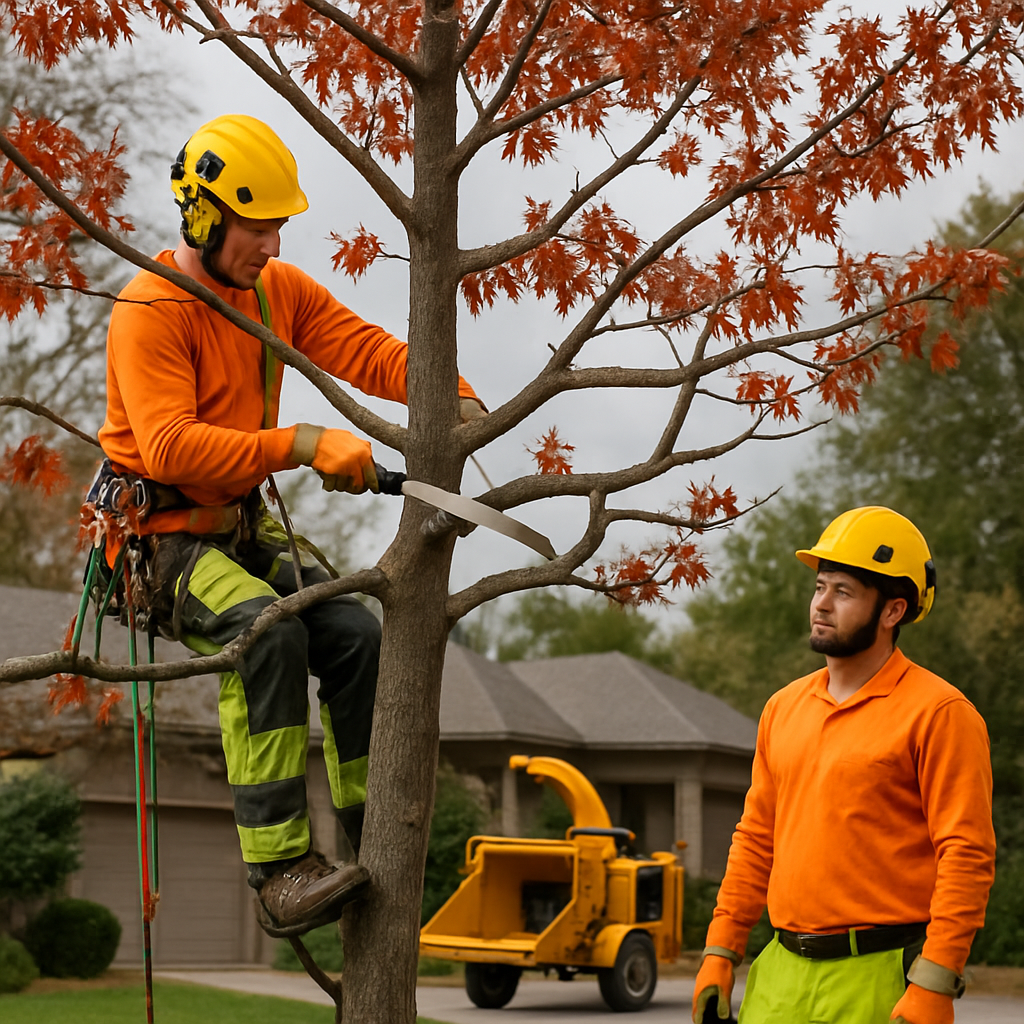
Immediate action needed: when a limb shows fresh failure or the tree is creating a clear hazard, call professional pruning services right away. Waiting increases liability and can convert a single failed limb into multiple failures or structural collapse.
Red-flag indicators: look beyond dead twigs. Prioritize work when you see sagging major limbs, longitudinal trunk splits, exposed root plates after soil washout, visible fungal fruiting bodies at the base, or multiple branches leaning toward a structure. Also treat repeated small failures on the same scaffold as an indication of deeper structural problems.
Homeowner triage checklist
| Condition | Recommended action |
|---|---|
| Large cracked or hanging limb over driveway, roof, or play area | Call emergency pruning services now – do not attempt removal yourself |
| Recent storm damage with multiple broken branches or split trunk | Schedule a professional assessment within 24 to 48 hours |
| Fungal conks, root decay indicators, progressive crown dieback | Book arborist services for a tree health assessment within 1 to 2 weeks |
| Crossing branches, congested crown, co-dominant stems with included bark | Plan pruning with tree trimming services within the next maintenance cycle |
| Minor shaping, hedge trimming, or seasonal light pruning | Routine garden pruning services can be scheduled in the normal maintenance window |
- Professional-level signals: Visible root heave near walkways, epicormic sprouts signaling stress, and insect exit holes combined with canopy thinning usually require an ISA-level diagnosis rather than a DIY cut.
- Tradeoff to weigh: Removing a large limb reduces immediate danger but creates a big wound that can expose the tree to decay; a skilled crew balances risk reduction with long-term tree preservation and will recommend follow-up treatments such as targeted fertilization, cabling, or staged removals.
- When removal is the better choice: If more than 50 percent of the crown or the primary support structure is compromised, replacement is often safer and cheaper over five years than repeated risky repairs.
Concrete Example: A homeowner found a 10-inch lateral split on a mature maple leaning toward the garage after a late-winter storm. The arborist crew from a certified firm performed a targeted limb removal, inspected the trunk for decay, recommended cabling for nearby weak limbs, and left a short follow-up plan for monitoring – averting immediate roof damage and giving the tree a clear recovery path.
If a limb threatens people, vehicles, powerlines, or the building envelope, prioritize a certified crew with emergency response capability rather than attempting a DIY fix.
Practical judgment: homeowners commonly underestimate progressive risks. A single visible crack is rarely an isolated problem – it usually indicates altered load paths or internal decay. Hiring arborist services early lets you choose a measured intervention – targeted pruning, structural support, or removal – instead of paying more later for emergency removal or property repairs.
Pruning timing and objectives by species and season
Timing must be driven by what you are trying to accomplish and by species biology. Structural pruning, sanitary cuts, and aesthetic shaping each have different optimal windows; getting the timing wrong increases stress, stimulates unwanted regrowth, or opens the tree to pests and disease.
Practical rule: schedule structure work on young deciduous trees during late dormancy, do spring-flowering shrubs immediately after bloom, and reserve summer pruning for corrective cuts and vigor control. That is shorthand only – species differences and local pest risks change the right answer.
Species-season snapshot
| Species | Best season / window | Primary objective | Regional caveat |
|---|---|---|---|
| Oak | Late dormant to early spring (when safe) | Structural pruning and deadwood removal | Avoid pruning during beetle-active months in oak wilt zones – consult local guidance |
| Maple | Late winter to early spring; avoid heavy shaping during peak sap flow | Structure and clearance | Prune carefully to limit excessive sap bleeding and weak regrowth |
| Crabapple / Flowering ornamentals | Immediately after flowering | Preserve next season bloom and correct deadwood | Late pruning removes flower wood for next year |
| Walnut | Late winter to early spring | Crown thinning and removal of low limbs for clearance | Juglone concerns for underplanting – coordinate with landscape pruning |
| Elm / Ash | Late dormant to early spring | Sanitary cuts and risk-reduction | Pest outbreaks may require off-season interventions – get an arborist diagnosis |
| Crape myrtle | Late winter for shape (avoid hard pruning that causes weak regrowth) | Formative shaping and removal of deadwood | Avoid wholesale topping – promotes weak, fast shoots |
| Fruit trees | Late winter for structure; light summer pruning after harvest | Balance fruiting wood retention with canopy health | Summer pruning can improve light and reduce biennial bearing |
Tradeoff to weigh: summer pruning reduces sap loss and can suppress vigorous shoots, but it also removes leaf area when trees need it most for carbohydrate production. In drought or heat, summer cuts increase stress. Conversely, dormant pruning reduces insect and disease pressure but often stimulates strong spring growth that may require follow-up shaping.
- Structure-first vs. aesthetics-only: prioritize early pruning for scaffold selection on young trees – delaying structural cuts turns a simple job into repeated corrective work.
- Sanitary work is exception-driven: remove active cankers and infected limbs immediately – do not wait for the preferred season if disease is spreading.
- Hazard vs. ideal timing: if a limb threatens people or property, hire pruning services immediately; optimal seasonal windows are secondary to safety.
Concrete Example: A homeowner with mature crabapples wanted cleaner form but loved the spring display. The arborist did formative thinning immediately after bloom, removing dead branches and opening the crown while preserving next year flower buds. A follow-up light summer thin kept suckers down without sacrificing spring flowers.
Check local extension or pest alerts before scheduling major cuts; regional disease vectors and insect activity often override textbook timing. See Penn State Extension and TreesAreGood for region-specific guidance.
Safety, liability, and legal considerations that require a professional
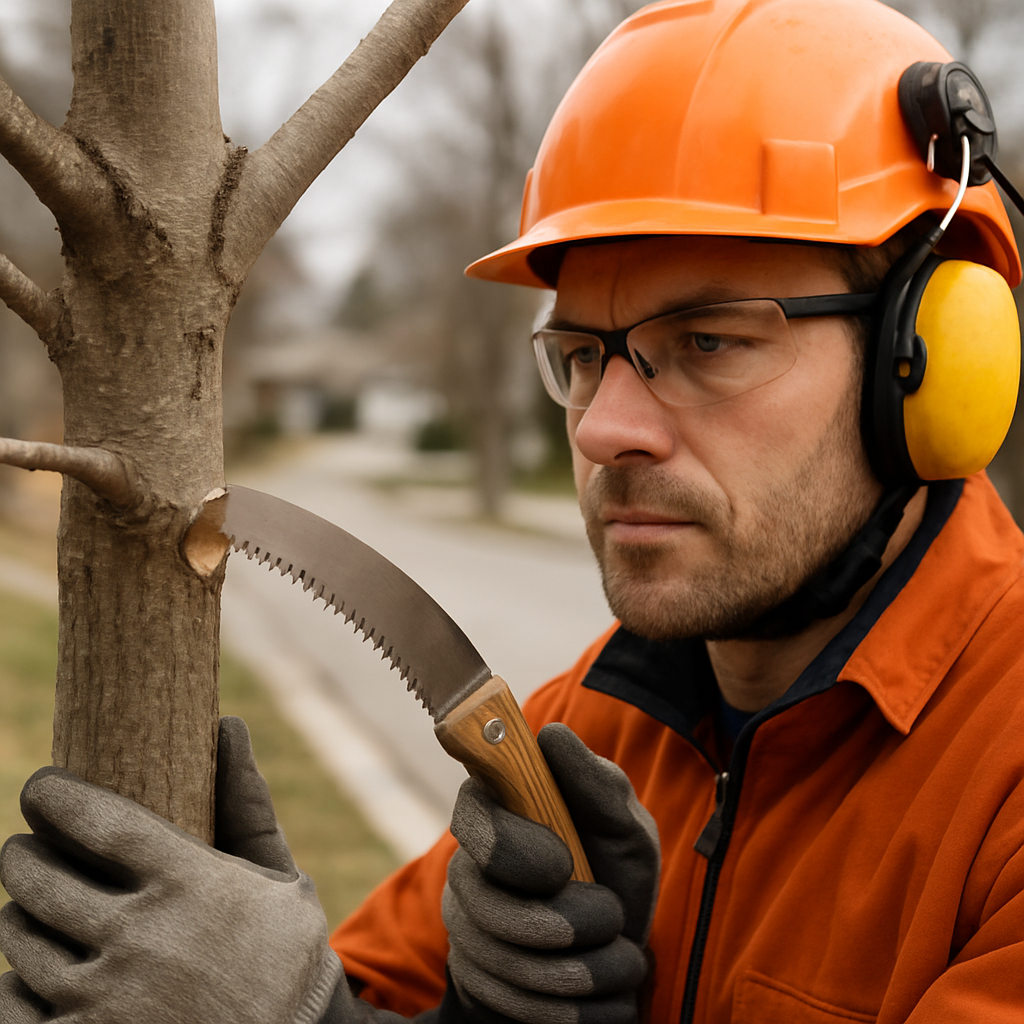
Straight fact: any pruning that involves significant vertical access, heavy rigging, or utility interaction should be treated as a professional job, not a weekend DIY task. Working from ladders under tensioned limbs, using climbing systems to remove large-diameter wood, or coordinating with a utility on line-clearance exposes you to real injury and legal risk.
Who bears the risk and what to verify
Liability sits where the paperwork does. If a crew member is hurt on your property and the contractor lacks workers compensation, you can face a claim. If a contractor causes damage to a neighbor structure or severs a service line and has no general liability, recovery becomes messy and slow.
- Insurance to insist on: general liability and workers compensation with limits appropriate to the job size; ask for a current certificate of insurance rather than verbal confirmation
- Permit and utility coordination: confirm who will pull city or county permits and who will contact the utility for powerline work; some municipalities require the contractor to be listed on the permit
- Credential checks that matter: ISA certification or TRAQ indicate technical knowledge, but they do not substitute for documented safe procedures and recent references
Practical tradeoff: startups or cheap landscapers often cut costs by skimping on insurance and permits. That lowers your upfront price but increases your downside. Paying more for a properly insured and permitted crew is an insurance policy against an unpredictable loss.
Concrete Example: A homeowner hired a neighborhood crew to remove a large limb over a driveway. The crew did not have workers compensation; a worker slipped and was injured. The homeowner was initially named in the claim until the contractor produced retroactive coverage, creating weeks of legal exposure and out-of-pocket hassle. The same job done by a certified arborist with proper insurance and a written safety plan would have closed that exposure at the start.
Common legal red flags: contractors who refuse to provide a certificate of insurance on request, insist on all-cash payment with no contract, or claim permits are never required. These are operational shortcuts that transfer risk to you.
Sample wording to send when requesting proof: Please email a current Certificate of Insurance showing general liability and workers compensation coverage; indicate policy limits, effective dates, and whether my property can be named as additional insured. Also confirm whether you will obtain required permits and coordinate with the utility for any work within the utility clearance zone.
If work touches utilities, roofs, or involves large rigging loads, a certified crew with documented insurance and a permit plan is not optional — it is the minimal professional baseline.
Next consideration: when in doubt about permits or utility rules, ask the contractor to show the permit application or utility notification before work begins. If they cannot, do not proceed until you get those documents or a written plan from a certified arborist. For professional handling and site-specific coordination see Mr Tree Inc. Arborist Services and review permit standards in ANSI A300 via andGuidelines/ANSI_A300.aspx target=_blank>TCIA.
What a professional pruning service does and what should be included in the scope of work
Start with the outcome, not the tool. A professional pruning service delivers a documented workflow: an on-site assessment that identifies objectives and hazards, a written scope describing methods and limits, the field execution using appropriate rigging and cutting techniques, safe debris management, and post-job documentation that lets you track what changed and why. Expect the crew to reference standards such as andGuidelines/ANSI_A300.aspx target=_blank>ANSI A300 and to be able to explain how each cut supports the stated objective.
A complete scope of work should include an explicit objective for each tree – for example structural pruning, crown reduction for clearance, deadwood removal, or sanitary pruning for disease control – plus the maximum percent of live crown to be removed in that visit, the cut types to be used, and the planned staging if more than one entry is needed. This prevents surprise heavy cuts and clarifies maintenance cadence. Professionals typically limit large live-crown reductions and prefer staged interventions to avoid forcing weak regrowth.
What you should receive before crews arrive
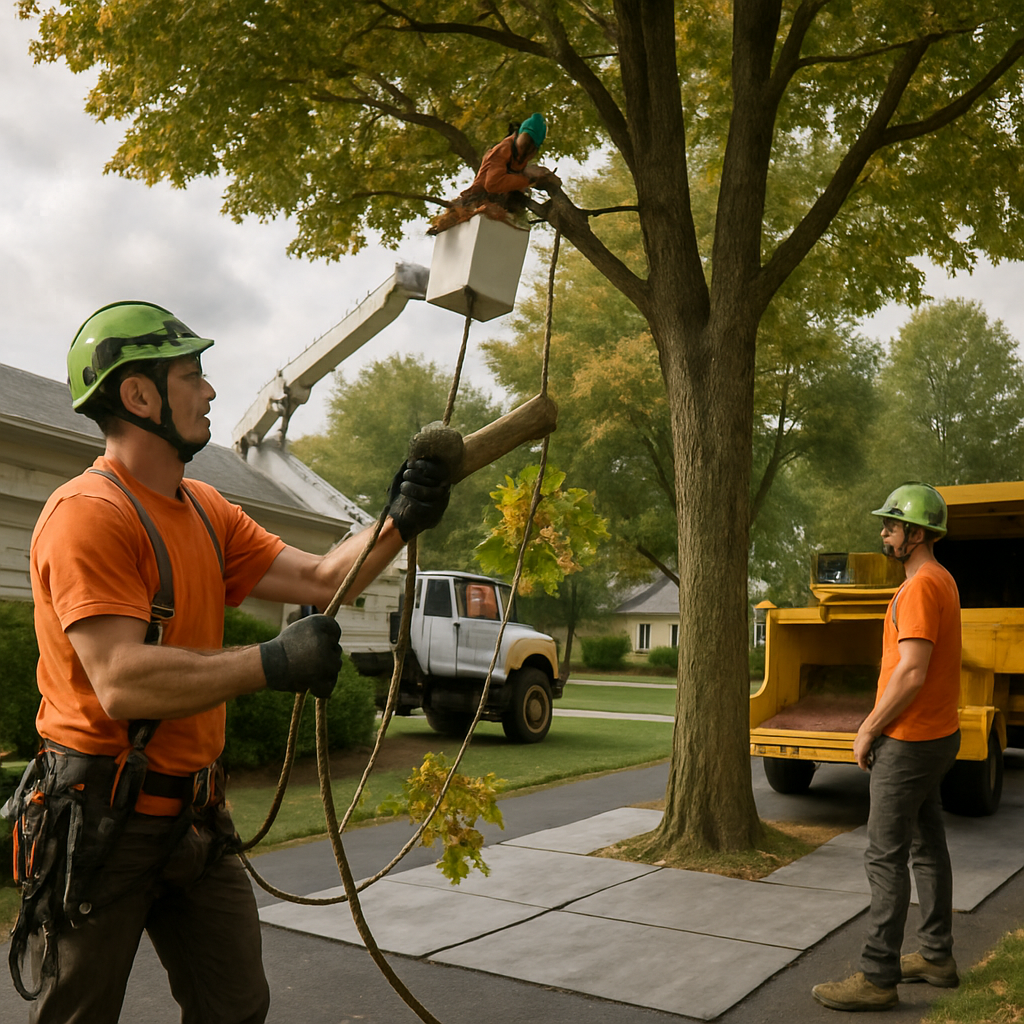
Before any work starts you should get a written estimate and a short method statement. The method statement explains crew size, equipment (aerial lift, rigging, chipper), access plan for driveways and lawns, traffic or pedestrian control if required, and disposal options – chip and spread, chip and haul, or full haul-away. Also require a current certificate of insurance and a clear answer about permit responsibility when municipal rules apply. If you want proof of professional oversight, ask for the name of the supervising arborist or for documentation of ISA credentials.
Practical tradeoff to understand. Removing a lot of canopy at once reduces immediate hazard but commonly triggers vigorous epicormic sprouts and weak regrowth that increases maintenance costs over the next few years. A staged cut or selective thinning often costs more up front but reduces follow-up pruning and long-term liability. Similarly, leaving large cut logs on-site benefits habitat but raises neighbors concerns and can complicate cleanup.
Concrete Example: Example job sheet for a medium sugar maple near a driveway. Scope: remove three low laterals and one 6-inch co-dominant limb, thin upper canopy by 15 percent, rig and lower large pieces, chip all branch material on site and haul chips to town compost facility, protect driveway with plywood, crew of three, estimated time 4 hours. Safety measures: traffic cones, harnessed climber, and spotter for chipper discharge. The sheet should also list follow-up recommendations such as monitoring for epicormic sprouting and scheduling a light maintenance prune in 18 months.
A useful judgment most homeowners miss: vague phrases in a bid like trim, tidy, or crown lift are liability traps. Insist on concrete language – for instance pruning to a lateral at least one third the diameter of the removed stem, or specific limits on crown reduction – and refuse to accept open-ended descriptions. If a contractor balks at writing methods, that is a red flag.
Ask for a cut map and before/after photos. Those two items document work, support future bids, and reduce disputes.
Next consideration: when you request estimates, compare the scopes more than the bottom-line price. A low bid that omits method details, insurance verification, or disposal plans is a cost that often becomes yours later.
How to choose a pruning contractor and key questions to ask
Start with competence, not price. The quickest way to a bad outcome is to hire the cheapest crew that promises to trim your trees. Look for evidence the contractor understands objectives (structure, safety, or health), has a repeatable method, and documents work — those three signals matter more than a low hourly rate when you need pruning services.
A three-step vetting framework
Step 1 – Credentials and risk controls: Confirm current general liability and workers compensation, ask who will be listed as the supervising arborist, and verify on-site safety practices. Insurance protects you from downstream claims; credentials tell you they know what cuts to make.
Step 2 – Method and scope: Require a written scope that names the objective for each tree, details cut types (thinning, reduction, pruning to a lateral), and states limits on live-crown removal or staged work. Contractors who give vague promises like trim or tidy are dodging responsibility.
Step 3 – Evidence and value: Ask for recent before/after photos of similar jobs, client references, and a clear cleanup plan. The best balance of cost and long-term value is a bid that explains tradeoffs: immediate hazard removal versus staged pruning to avoid weak regrowth.
Eight practical questions to ask every bidder
- How will you achieve the stated objective for this tree and which cuts will you make (for example, prune to a lateral at least one-third the diameter of the removed limb)?
- Which industry standards and best practices guide your crews (name the standard and a recent training) and how do you document compliance on site?
- Can you provide a current Certificate of Insurance and confirm whether my property can be added as an additional insured for the job?
- Who will supervise the work, what are their qualifications (ISA, TRAQ, years of experience), and will that person be on site?
- Describe your access and protection plan: how will you protect turf, hardscape, and underground utilities during rigging and chipper operations?
- What is your cleanup and disposal option (chip-and-spread, chip-and-haul, full haul-away) and what extra costs might apply?
- Do you expect permits or utility coordination for this scope and who will obtain them and notify the utility if needed?
- What follow-up do you offer — post-job inspection, monitoring for epicormic shoots, or a written maintenance cadence — and how is payment structured around milestones?
How to compare bids in practice. Line up bids by scope, not price. A good bid names the objective, lists cut types, shows crew size and equipment (aerial lift, rigging), and includes a safety plan and disposal option. If one estimate lacks method detail while another is 30 percent higher but shows a step-by-step plan, the higher bid is usually the better value for professional tree care.
Concrete Example: A property manager received three quotes for crown thinning of mature elms. The low-price crew planned a single-day rapid removal and left heavy scuffing on the lawn. The selected contractor charged more but used rigging, driveway protection, and staged thinning. Result: no lawn repair claims, cleaner cuts that reduced reshoot, and a documented maintenance schedule tied to tree health assessment.
If a contractor avoids answering how they will protect your property or declines to show insurance paperwork, treat that as a decisive fail — cheap work can cost you far more later.
Sample email to request estimates and documentation:
Subject: Request for estimate and documentation - 3 trees at 123 Main St
Hello, please provide a written estimate that includes: the specific pruning objective for each tree, the cut methods you will use, crew size and equipment, your plan for protecting lawn and hardscape, cleanup/disposal options, and a list of recent similar jobs with before/after photos. Please attach a current Certificate of Insurance showing general liability and workers compensation, and name the supervising arborist who will be on site. Also confirm who will obtain any required permits and whether utility coordination is required. Thank you.
Cost drivers, scheduling, and typical maintenance cadences
Start here: pricing and scheduling for pruning services are driven by a handful of visible constraints and several hidden ones. Visible constraints you can see on a site visit; hidden ones show up as extra crew time, special equipment, or permit work. If you treat cost as just an hourly rate you will miss the big budget inflection points – access, height, and proximity to utilities are the ones that jump the price.
Primary cost drivers
- Tree scale and complexity:
DBHand vertical reach determine whether a single climber or a lift/crane is required; taller trees often trigger step-function increases in time and equipment. - Species and wood density: dense hardwoods or trees that fracture unpredictably increase labor and rigging time compared with soft-wood ornamentals.
- Site access and protection needs: narrow gates, steep slopes, or the need to protect lawns, patios, and irrigation systems add labor and materials.
- Proximity to structures and utilities: work near roofs, cars, or powerlines requires extra safety measures, permitting, and sometimes utility coordination.
- Waste handling and travel: chip-and-spread is cheaper than haul-away; distance from the crew yard and disposal costs are real line items.
- Timing and urgency: emergency or same-week storm response costs more than planned maintenance because crews reallocate resources and accept safety premiums.
- Regulatory and insurance overhead: jobs requiring permits, traffic control, or specialized insurance coverage will be quoted higher to cover administrative risk.
Practical tradeoff: a low upfront price that skips driveway protection, rigging, or permits looks attractive but shifts cost and risk to you later. Paying up front for proper protection almost always saves money compared with repairing a compacted lawn, a chipped driveway, or settling a claim.
Booking windows and scheduling reality
Crews book seasonally. Late winter through early spring is busiest for structural work on deciduous trees; mid-summer windows are useful for corrective cuts when crews can thin and reduce vigor. If you need work in a narrow seasonal window, book early: high-quality arborists often fill calendars weeks in advance and will prioritize emergency calls at a premium.
- Young trees (formative work): schedule annual to biennial visits during dormancy for scaffolding and leader selection; light touch-ups in summer are optional.
- Mature landscape trees (maintenance): a planned cycle every 3 to 5 years usually balances cost and health for most species; faster-growing species need shorter cycles.
- High-value specimens: plan inspections annually and light maintenance every 1 to 3 years, depending on tree vigor and landscape value.
- Hedges and shrubs: typically on a 1-year or 2-year cadence, depending on species and aesthetic goals.
- Storm or hazard response: immediate scheduling; expect emergency rates and expanded safety measures.
Judgment call that matters: more frequent, light pruning is almost always less expensive and less stressful for the tree than infrequent heavy cuts. In practice, owners who adopt a light-and-regular approach pay less over a decade than those who wait for a major correction.
Concrete Example: On a suburban lot with five specimens – two young maples, one mature oak, one ornamental cherry, and a line of hedges – an efficient plan looks like this: year 1 winter formative prune the young maples; spring sanitary prune the cherry after bloom; year 2 scheduled crown thinning on the oak (if needed) and hedge trimming in late spring; repeat light touch-ups every 3rd year for the oak and annual hedge trims. Staging work this way keeps each visit scoped and predictable and avoids a single costly, disruptive crew day.
Book proactive maintenance. It costs less, reduces emergency interventions, and preserves long-term tree value.
Follow up care after pruning and integrating pruning into broader tree health programs
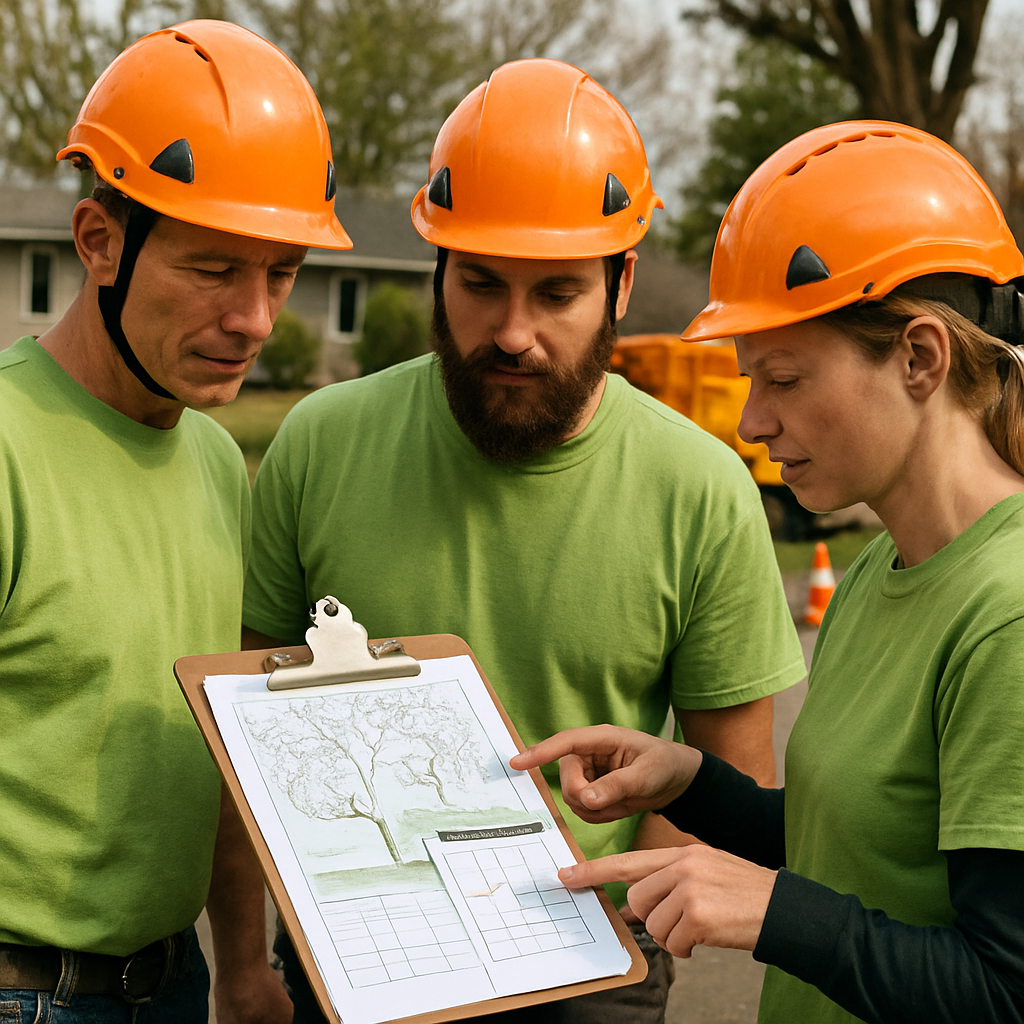
Follow-up is where a pruning job pays off or becomes a recurring problem. After cuts are made, the next 3 to 12 months determine whether the tree compartmentalizes wounds, produces controlled regrowth, or develops secondary issues that demand more work. Require your contractor to schedule at least one post-job inspection and to deliver written follow-up recommendations tied to observable triggers.
Core follow-up actions to integrate into a tree health program
- Soil test before blanket fertilizing: get a soil and nutrient analysis and follow targeted amendments rather than a default fertilizer application.
- Mulch correctly: 2 to 3 inches of shredded mulch, kept 3 to 6 inches away from the trunk; avoid volcano mulching that suffocates roots and invites rot.
- Monitor wounds and pests: inspect pruning cuts for boring insects, fungal fruiting bodies, or resin flow at 3 months and again at 12 months; treat only when a diagnosed pest or pathogen is present.
- Root and collar work if indicated: if pruning reveals root problems or trunk flare issues, plan root collar excavation or remedial mulching rather than more crown work alone.
- Structural support where needed: install cabling or bracing for compromised scaffolds as an alternative to heavy removal; treat these as medium-term wait-and-see measures with scheduled reviews.
- Adjust irrigation and soil biology: correct watering patterns after pruning and consider mycorrhizal or organic soil amendments based on the soil test.
Practical tradeoff to note: immediate, heavy fertilization after a major crown reduction commonly triggers a flush of weak, fast-growing shoots. That regrowth raises future maintenance and failure risk. In most cases a targeted soil amendment guided by test results and modest watering adjustments produces better structural outcomes than blanket feeding.
Concrete Example: After a certified crew removed a 14-inch co-dominant limb from a mature sugar maple, they performed a soil test and applied a thin mulch ring, then scheduled a 6-month inspection. When the tree put up epicormic shoots, the crew removed only selective shoots and installed a short-term cable on a nearby scaffold instead of doing a large crown reduction. The staged response preserved the tree and avoided the downward spiral of repeated heavy cuts.
Homes often treat pruning as a one-off cosmetic fix. In reality pruning should be a module inside a wider program that includes periodic tree health assessment, pest and disease management, targeted fertilization, and structural support where necessary. If root decline or chronic soil compaction is present, expect the follow-up program to prioritize soil remediation and monitoring over more crown work.
Do not assume a single pruning session ends the job. Insist on a documented follow-up plan with inspection dates, thresholds for additional action, and who will perform the checks.
0 Comments