

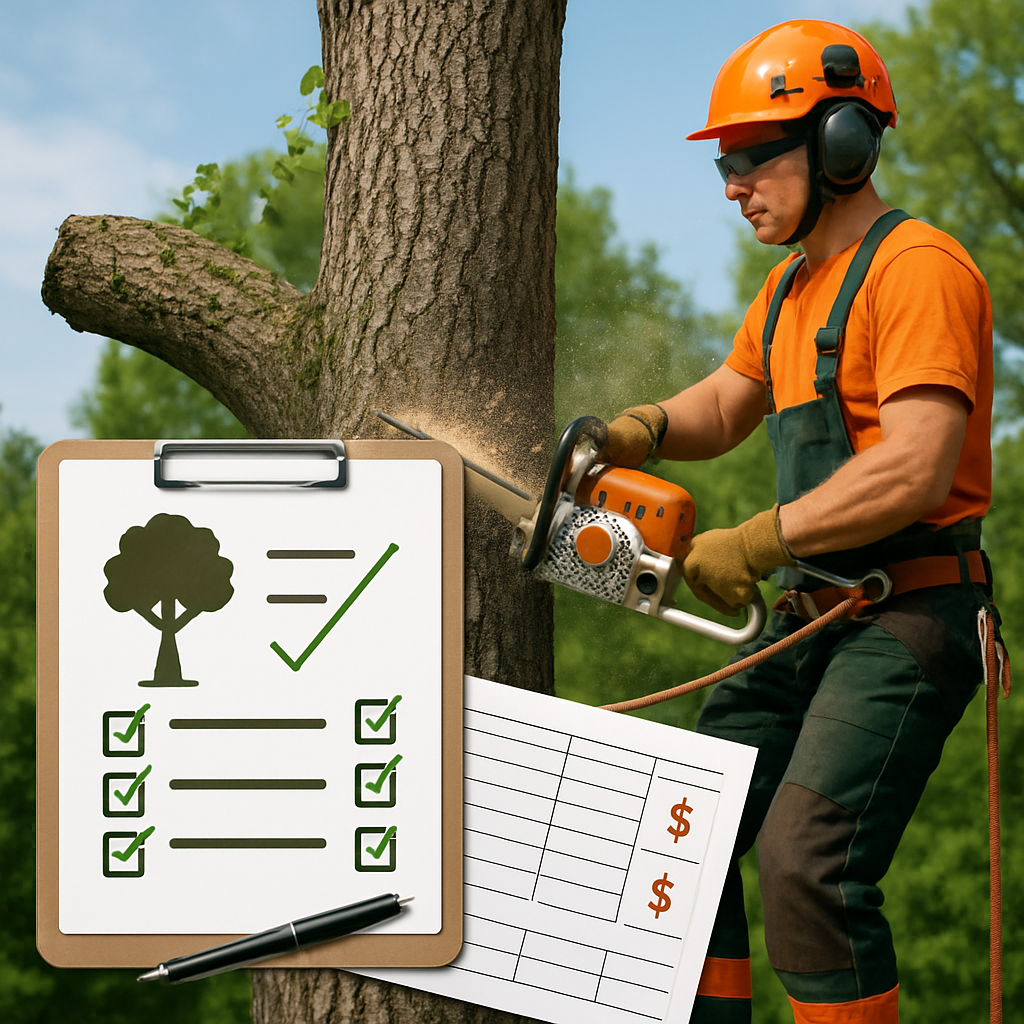
How to Get an Accurate Tree Removal Quote: Checklist and Comparison Tips
Getting a fair tree removal quote can feel like guesswork – contractors often give wildly different numbers for the same job. This guide shows which photos and measurements to collect, which line items to demand on a tree removal quote, and how to compare bids apples-to-apples so you pick a safe, insured provider without overpaying. You will also get a printable pre-quote checklist, sample scripts to request itemized estimates, red flags to watch for, and a worked example comparing real quotes.
1. Why an Accurate Tree Removal Quote Matters and Typical Cost Drivers
An inaccurate tree removal quote costs more than money. Under-scoped estimates create surprises: extra invoices for stump grinding, permit fees, utility coordination, or emergency rigging are common causes of disputes and delays.
What really moves the price
- Tree size and species: trunk diameter and wood density drive labor and disposal weight which increases the tree removal estimate substantially for large hardwoods.
- Proximity to structures and power lines: close work requires rigging, sectional felling, or a crane which raises the tree felling cost and the safety premium.
- Site access and equipment needs: narrow yards, stairs, or overhead obstacles add hours and special equipment rentals altering the tree cutting service cost.
- Stump handling and disposal: stump grinding is frequently optional on a base quote; including it changes the final invoice by a few hundred dollars to over a thousand in hard-to-reach sites.
- Permits and utility coordination: local permit fees and required utility locates add time and line items; some companies include them, others bill separately.
- Timing and urgency: emergency work carries a premium; expect higher emergency tree removal quote pricing for same-day service.
Practical insight: a low headline number from an online estimator or a drive-by verbal quote is only useful if you verify the scope. Ask for an itemized tree removal quote that lists labor, equipment, stump work, disposal, permits, and contingencies.
Tradeoff to accept: paying more for appropriate equipment – crane use, certified arborist oversight, or traffic control – reduces risk to structures and liability exposure. If the job is high risk pay for the work; choosing the cheapest bid to save up front often creates costly damage later.
Concrete example: a vague quote of $700 often covers minimal labor and basic cleanup only. An itemized conversion might look like this: labor and crew $500, chipper and disposal $100, site cleanup $100 = $700. If stump grinding is added +$300, permit and locates +$150, and a crane is required for sectional removal +$1,500 then the adjusted total becomes $2,650. That is the real world: the initial number can more than triple once proper scope and risks are accounted for.
Real-world use case: a two story maple leaning toward a garage received a low online quote. After an on-site assessment the crew required sectional dismantle and utility coordination. The approved quote that included crane lift and certified arborist oversight was 2.8 times the online estimate but prevented structural damage and a utility outage.
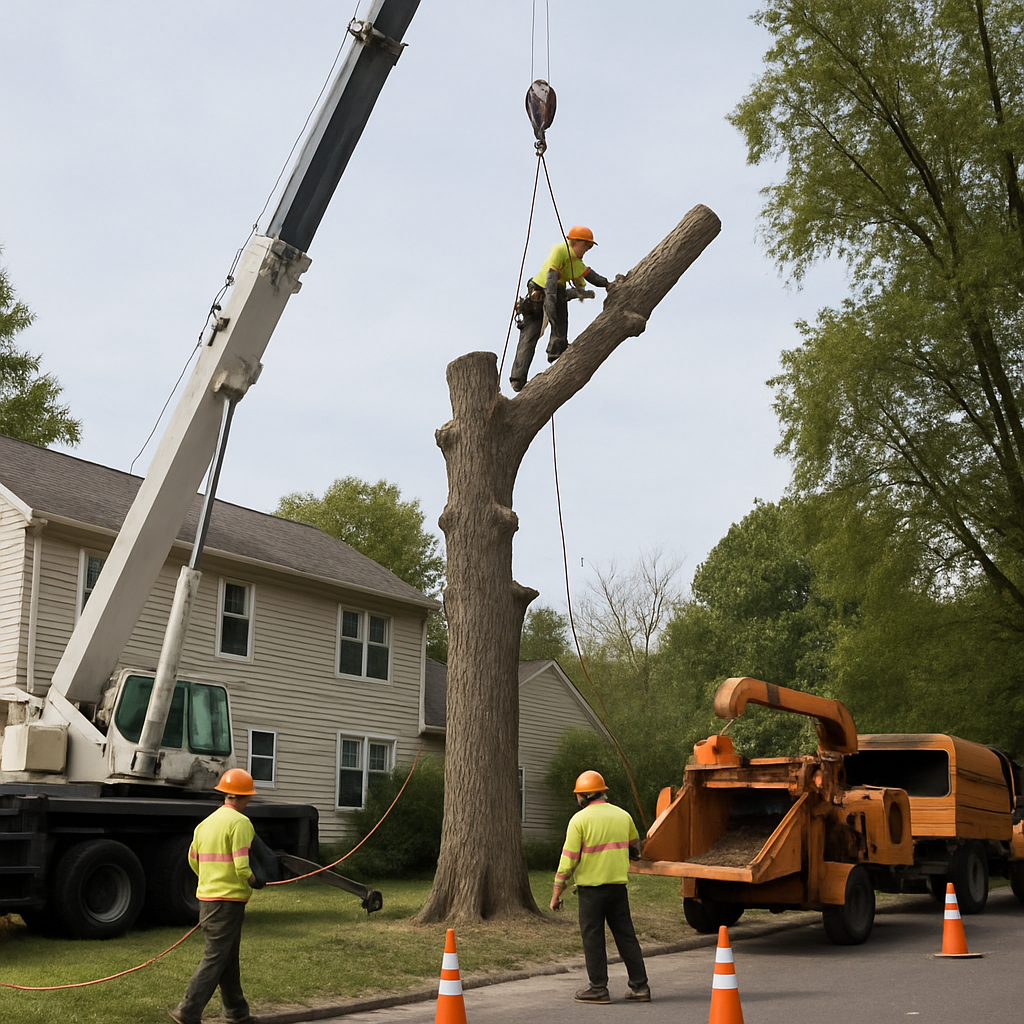
For more on when permits matter and what to expect from certified assessments see treesaregood and for regional price context check a cost guide like HomeAdvisor. If you prefer an example of how these line items map to a provider, review Mr Tree Inc services at Tree Removal and Stump Grinding.
2. Pre-Quote Homeowner Checklist to Collect Consistent Information
Start with the same packet for every contractor. Supplying consistent photos, measurements, and constraints forces bids to reflect the same scope and exposes lowball offers quickly.
Essential items to gather before you request a tree removal quote
- Address and access notes: gate widths, driveway slope, nearest parking, and whether heavy trucks can reach the work area.
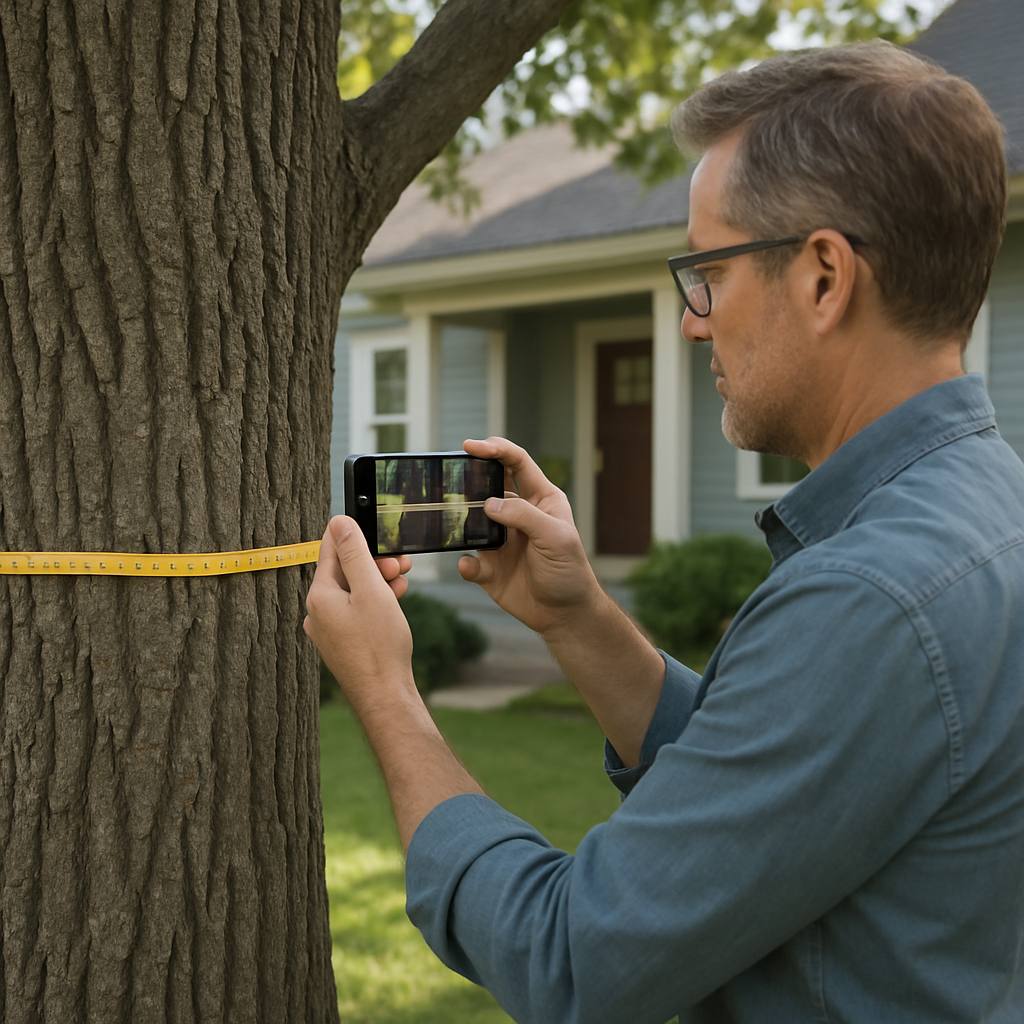
- Photos and a short video: four angles plus one walk-around showing the tree relative to buildings, fences, and power lines. A 20 second phone video is often more informative than extra stills.
- Trunk measurement: wrap a tape at 4.5 ft above ground, record circumference in inches and convert to diameter using
diameter = circumference / π. Example: 94 in circumference ÷ 3.14 ≈ 30 in diameter. - Distances: approximate distance from trunk to the nearest structure and to any overhead wires – a quick paced estimate is fine.
- Stump preference and disposal: state whether you want stump grinding, full stump removal, wood left on site, or hauling away.
- Timing and constraints: date range, HOA rules or permit holds, and whether this is a storm or insurance-related job.
- Underground concerns: irrigation, septic, or buried utilities in the drop zone.
Practical tradeoff: detailed owner-supplied data narrows quote variance but does not replace an on-site safety assessment. If the tree is close to houses, power lines, or on a steep slope, expect the contractor to require a site visit before firm pricing.
How to use what you collect
Give the same packet to every bidder. Attach the photos, measurement, and a one line access note. Ask each contractor to confirm whether their quote assumes stump grinding, permit pulls, and debris haul. That forces written, comparable scopes instead of vague totals.
Concrete example: A homeowner included a 28 in trunk diameter, three photos showing a garage 12 ft away, and a note that the side gate is 30 in wide. Two contractors quoted within 10 percent of each other; the third quoted 60 percent higher after an on-site inspection revealed the gate would not allow machinery – a cost the homeowner could have anticipated if they had noted gate clearance earlier.
Limitation to accept: if a contractor refuses a firm written price based on your packet alone, that is reasonable for complicated or high-risk removals. Insist they explain what unknowns remain and how those unknowns would be priced.
- Subject: Request for itemized tree removal quote — [your address].
- Body: Attached are photos, trunk circumference, gate width, and permit/HOA notes. Please confirm whether your quote includes stump grinding, permit procurement, disposal, and any required traffic control. Provide an itemized written estimate and expected availability.
- Attachment checklist: 4 photos, 20 second walk-around video, trunk circumference (in), nearest structure distances (ft), access width (in).
3. How Professionals Calculate a Quote: What Each Line Item Means
Straight to the point: professionals price removals as a package of discrete cost drivers, not one flat number. An accurate tree removal quote breaks the job into assessment, labor, equipment, permits, stump handling, disposal, and risk premiums so you can see where money is actually spent and why prices diverge.
| Line item | What it covers | When this pushes cost up |
|---|---|---|
| Site assessment / inspection | On-site evaluation, measurements, photos, hazardous-tree notes; sometimes a written arborist report | Needed for trees near structures, utilities, or when a municipal permit is required |
| Labor (crew hours or flat per-tree) | Crew time for climbing, rigging, sectional felling, chipping, and cleanup | Large diameter trees, tight access, or slow, careful rigging increase hours |
| Equipment rental and fleet use | Chipper, stump grinder, crane, lift, tow trucks, trailers | Crane lifts, heavy grinders, or hauling equipment add significant one-time rental fees |
| Rigging / sectional dismantle | Specialized ropes, blocks, slings, and time to lower sections safely | Always required when drop zones include buildings, vehicles, or line-of-sight constraints |
| Permits, traffic control, and utility coordination | Permit application fees, lane closures, traffic cones, utility liaison | Urban jobs, street trees, and any work near power lines require these services |
| Stump grinding or removal | Grinding depth, root removal, and patching or backfill | Deep grinding, root systems under driveways, or full stump extraction cost more |
| Debris hauling and disposal | Chip hauling, green waste tipping fees, or logs left for homeowner | If disposal requires a transfer station or specialty recycling, expect higher fees |
| Arborist consultation / special treatments | ISA assessment, pest mitigation, or preservation recommendations | Added for hazardous or protected-species trees and commercial projects |
| Emergency or after-hours mobilization | Rush scheduling, overtime pay, immediate hazard mitigation | Storm damage or same-day service will carry a premium |
Practical tradeoff: bundling simplifies the invoice but can hide where costs sit. Hourly crew-plus-equipment often gives a tight final price on straightforward jobs; bundled per-tree pricing can be cleaner but may include a risk premium. Choose the structure that matches the job complexity and your tolerance for change orders.
- How this should look on the estimate: line-by-line entries with units and rates (for example, crew hours at X/hr, crane rental flat fee, stump grinder per stump).
- Contingency and unknowns: a clear contingency rate or per-hour change order policy so you are not surprised when a hidden problem appears.
- Who pays for permits/utilities: explicit statement whether the contractor will pull permits or you will, and whether utility locates are included.
Concrete example: a 60 ft oak with a canopy over a garage typically requires sectional dismantle and either rigging or a crane. Using a crane shifts cost from extra crew hours to a large rental line item, for example adding a mid-range crane rental and operator fee that can exceed local stump grinding pricing. The crane increases the quote significantly but reduces both time on site and the odds of siding or roof damage.
Judgment that matters: low headline prices often omit the explicit safety margin experienced crews add for risk and liability. If bids are clustered but one is dramatically lower, that is not a bargain — it is either an error, an omitted line item, or a team that shortcuts safety. Pay attention to how the contractor prices safety controls and insurance-related work; that is where value shows up in real-world removals.

4. How to Request Quotes: Exact Questions to Ask and Information to Require
Start with a written checklist and refuse vague answers. Tell every bidder you will only accept a written, itemized tree removal quote that names line items, responsibilities, and contingencies. If a contractor balks, that tells you more about their business practices than their price.
Demand these specific items on the written quote
- Itemized costs: separate entries for assessment, crew hours (rate and estimated hours), equipment (chipper, stump grinder, crane), permitting, disposal, and contingency/change-order hourly rate.
- Stump terms: grinding versus full removal, grinding depth in inches, per-stump rate, and whether chips are left or hauled.
- Permits and utilities: who pulls permits, permit fees included or billed separately, and whether utility coordination or a utility escort is required (with cost).
- Schedule & scope sketch: proposed start and finish dates plus a simple sketch or photo annotated with the drop zone and work sequence.
- Insurance & credentials: COI with policy number and carrier phone, workers comp confirmation, ISA certification or arborist name, and business license/registration.
- Cleanup and disposal standard: define what tidy means (driveway swept, chips left in piles, full haul-away) and any tipping fees.
- Payment terms & lien waiver: deposit amount, progress payments, final payment trigger, and requirement for a final lien waiver upon full payment.
Practical tradeoff: asking for this detail takes contractors longer and may reduce the number of quick online bids you receive. That is intentional: detailed quotes lower your change-order risk. If you need speed, accept a preliminary estimate marked as such and require a firm on-site revision before work begins.
Exact questions to ask on calls or site visits
- Who is the ISA certified arborist who signed this estimate and will they supervise the job?
- If a crane is required, is the crane rental shown as a separate line and who is the operator?
- If you encounter unknowns (root hollows, rot, underground lines), what is your change-order process and hourly rate?
- Who will obtain permits and provide the municipality with the required documentation?
- How will you coordinate with the utility company and what fee will be billed if the utility requires a standby?
How to verify insurance quickly: ask for the COI with policy number and carrier. Then call the insurer using their main number (not a number the contractor provides) to confirm policy limits, effective dates, and that workers comp covers the crew. If they cannot produce a certificate promptly, treat that as a red flag.
Scripts you can use right away
- Phone (initial): I need a written, itemized quote listing labor, equipment, stump work, disposal, permits, and any contingency rates. Can you email that and confirm availability windows?
- Phone (verification): Please give me the insurer name and policy number on that COI now so I can confirm coverage before we schedule.
- On-site (closing): Before you start, I need the signed contract with the sketch of the drop zone, the permit responsibility clause, and the payment schedule.
Concrete example: A homeowner asked two companies the same question about utility coordination. Company A included utility liaison and a $250 line item; Company B did not list it and later billed $420 after the utility insisted on a standby. The upfront line item saved time and prevented a billing dispute.
Insist on unit prices or per-hour rates for major items (crew hours, crane rental, stump grinding). Lump-sum quotes are fine for simple jobs but hide the mechanism that creates change orders on complex removals.

Next consideration: once you have itemized quotes, align identical line items side-by-side before you compare totals. If you want an example of a fully itemized professional scope, see Tree Removal and check technical safety expectations at treesaregood.
5. Apples-to-Apples Comparison: How to Compare Two or More Quotes
Direct point: the only reliable way to choose between competing tree removal quotes is to convert them to the same scope and then compare the underlying unit prices and risk allocations – not the headline totals.
Normalize scope, then compare the drivers
Start by forcing each quote into a common checklist of items: same trees, same stump grind depth, same disposal outcome, same permit responsibility, and the same safety controls (crane, traffic control, utility standby). Differences in multi-tree discounts or staging windows should be normalized to the same timeframe so labor and equipment comparisons are meaningful.
- Step 1: Align scope – list every included and excluded line item for each quote so you can see omissions at a glance.
- Step 2: Convert variable pricing – change per-hour or per-day estimates into comparable units (for example, crew hours and crane rental days).
- Step 3: Add missing required items – compute what a quote would cost if it included the same safety and permit work as the most complete bid.
- Step 4: Inspect unit rates – if a contractor survives the adjustment but has unusually low crew-hour or equipment rates, ask how they staff the job and verify their safety plan and insurance limits.
Worked numeric example
Concrete example: three bids for a 30 in trunk diameter tree near a garage. The table below shows what each bid lists and the adjusted totals when we add the missing safety and permit items so all quotes reflect the same scope.
| Item | Bid A ($) | Bid B ($) | Mr Tree Inc ($) |
|---|---|---|---|
| Assessment | 150 | 150 | |
| Labor (crew) | 600 | 900 | 900 |
| Crane rental | 1,200 | ||
| Stump grinding | 350 | 350 | |
| Disposal / chipping | 100 | 150 | 150 |
| Permits / utility liaison | 200 | ||
| ISA oversight / arborist | 150 | ||
| Contingency / change order allowance | 200 | 200 | 200 |
| Original total | 900 | 1,750 | 3,300 |
| Adjusted to match Mr Tree scope | 2,800 | 3,300 | 3,300 |
After adjustment Bid A rises from 900 to 2,800 because we added crane, stump grinding, permits, and ISA oversight. Bid B ends up matching Mr Tree when the crane and permit items are added. Judgment: a bid that remains significantly cheaper after matching scope deserves scrutiny – it may be understaffed, skimping on safety, or misestimating the work.
Practical tradeoff – when to pay the premium: if the removal involves close proximity to a structure or power lines, the extra cost for craning, certified arborist oversight, and higher insurance limits is usually worth it. If the job is simple and all bidders provide identical, verifiable unit rates and COI, the lowest adjusted bid is reasonable.
Real-world use case: on a small commercial lot with three street trees to be removed, normalizing bids per-tree revealed one contractor offering a large multi-tree discount but charging higher per-hour crane fees. When adjusted, their effective per-tree price was higher than a competitor who included crane days in a flat per-tree price. The client chose the clearer, slightly higher-priced quote to avoid change orders during a tight schedule.
Important: compare unit rates (crew $/hr, crane $/day, stump $/each) and the liability terms on the COI – clarity and risk allocation matter more than a low headline number.
6. Verifying Credentials and Recognizing Red Flags
Do not assume paperwork equals competence. A neat, printed tree removal quote looks reassuring, but the real question is whether the company has the right coverage, experience, and safety practices to do the job without creating liability or property damage.
Five-minute verification checklist
- Certificate of insurance (COI): get the carrier name, policy number, coverage types and limits (CGL, auto, workers comp). Call the insurer on their public number to confirm the policy is active and covers tree work.
- Confirm workers comp: if the contractor lacks workers comp you can be on the hook for injuries. Ask the insurer to confirm crew coverage for the listed policy period.
- Check credentials quickly: request the ISA certified arborist name or state license number and verify it on the ISA directory or your state licensing portal.
- Search reviews and complaints: a quick BBB or local court records check will flag patterns of claims about damage, liens, or nonpayment to subcontractors.
- Verify local registration: some cities require contractor registration or permits. Call the city building or public works department with the contractor name.
- Get references and photos of similar jobs: ask for one recent removal similar in size and risk and call the client to confirm scope, schedule, and cleanup.
Practical tradeoff: higher insurance limits and an ISA-certified arborist add cost but reduce your exposure. For a high-risk removal near a house or power line, prioritize adequate limits and certified oversight even if the bid is higher. For simple, small yard cuts you can accept standard limits but still demand a valid COI.
Concrete example: A homeowner accepted an otherwise reasonable tree removal quote after the contractor emailed a COI. After a chipper accident, the homeowner discovered the policy had lapsed the month before. The homeowner's insurer covered immediate damages, then pursued the contractor; the recovery was slower and messier than if the COI had been verified up front.
- Evasive or hurried behavior: refusing to leave a written estimate, pushing for a big cash payment, or pressuring you to sign immediately.
- No physical address or permanent vehicle ID: legitimate outfits keep records, trailers, and marked trucks; check photos on their site or Google Street View for consistency.
- Unclear disposal plan: if stump removal, chipping, and hauling are vague, expect surprise fees for tipping or specialty disposal.
If something feels off: pause the contract. Ask for a second inspection, call your city about permits, or hire an independent ISA arborist for a one-off assessment. Escalate to the carrier if the COI details do not check out; do not let work start until coverage and permit responsibilities are clear.
7. After the Job: Final Walkthrough, Invoice Reconciliation, and Next Steps
Inspect before you pay. The moment the crew declares the job finished is the moment to verify scope, documentation, and any agreed change orders — not later when memories and receipts blur.
Final walkthrough: step-by-step
- Match scope to invoice: confirm every tree and service listed on the written estimate was completed (tree removal, stump grind depth, root excavation, debris haul).
- Document defects immediately: take timestamped photos of any property damage, unremoved root balls, or missed cleanup spots and attach them to the final invoice paperwork.
- Verify permit closeout: request proof that required permits were signed off or inspected by the municipality; do not release full payment until permit-required work is confirmed complete in high-risk jobs.
- Confirm disposal and wood disposition: confirm whether wood was left for homeowner use, stacked neatly, or hauled away and that any tipping fees were accounted for in the final bill.
- Check restoration promises: if the quote included backfill, turf repair, gravel replacement, or driveway patching, verify the work to the standard in the quote and note unfinished items.
- Collect paperwork: final signed change orders, a certificate of insurance showing the job date, and a final lien waiver tied to final payment must be on file before you clear the invoice.
Practical tradeoff: holding a short retention (commonly 5-15 percent) until post-job items are closed gives you leverage to fix punch-list items but extends contractor cashflow needs. For small, low-risk jobs waive retention; for anything involving structures, permits, or renters keep it until inspections and repairs are done.
Concrete example: A homeowner withheld 10 percent pending driveway patching and a municipal inspection certificate. The crew completed the patching within five days and uploaded the permit closeout; the final payment and lien waiver were issued the next business day, avoiding a formal dispute.
When to escalate: if damage is significant or the contractor cannot produce a valid COI for the job date, pause payment, document everything, and contact the insurer and local code enforcement. Small cosmetic disagreements are normal; major safety or structural issues require immediate escalation.
Sample dispute email (concise, factual)
Subject: Discrepancy on final invoice for [job address] — action requested
Hello [contractor name],
I inspected the completed work on [date]. Per our signed estimate dated [date], the agreed scope included: [brief list]. The final invoice (invoice #[number]) includes charges that do not match the signed estimate: [list differences]. Attached are dated photos showing the issues. Please provide either (a) a corrected invoice reflecting the signed scope, or (b) a written explanation and signed change order for the additional charges within 7 business days. If we cannot resolve this, I will open a claim with your insurer and the city permit office. Thank you, [your name] — [phone].
Final acceptance form (use before you hand over the last payment)
Simple template fields: Job address — Work completed (list line items) — Stump grind depth verified (in) — Permit/inspection status — Wood/disposal disposition — Remaining punch-list items and deadline — Final payment amount authorized — Lien waiver required: yes/no — Homeowner signature / date — Contractor signature / date. Keep one signed copy each.
Final judgment: paying in full without documentary proof is convenience, not prudence. Use retention and documented closeout only on the simplest jobs; require permits, COIs, signed change orders, and a lien waiver for higher-risk removals. That protects you and puts risk where it belongs — with the contractor who accepted the work.
0 Comments