
Tree Spraying Companies Explained: How to Treat Pests and Diseases Safely and Effectively
When your maples, oaks, or landscape shrubs start showing decline, tree spraying companies are often the first call, but not all treatments are the same. This guide explains how qualified professionals diagnose pests and diseases, the common application methods and their safety tradeoffs, and what to look for when choosing a provider so you get effective, responsible tree care.
How professionals diagnose tree pests and diseases
Start with the symptom, then work backward. Professionals do not guess based on leaf wilting or general decline alone. A proper diagnosis ties host species, seasonality, visible evidence, and recent site history together before recommending tree spraying services or other interventions.
Typical diagnostic workflow used by arborists
- Interview and site history: look for recent stressors such as drought, construction, or pruning that mimic pest symptoms
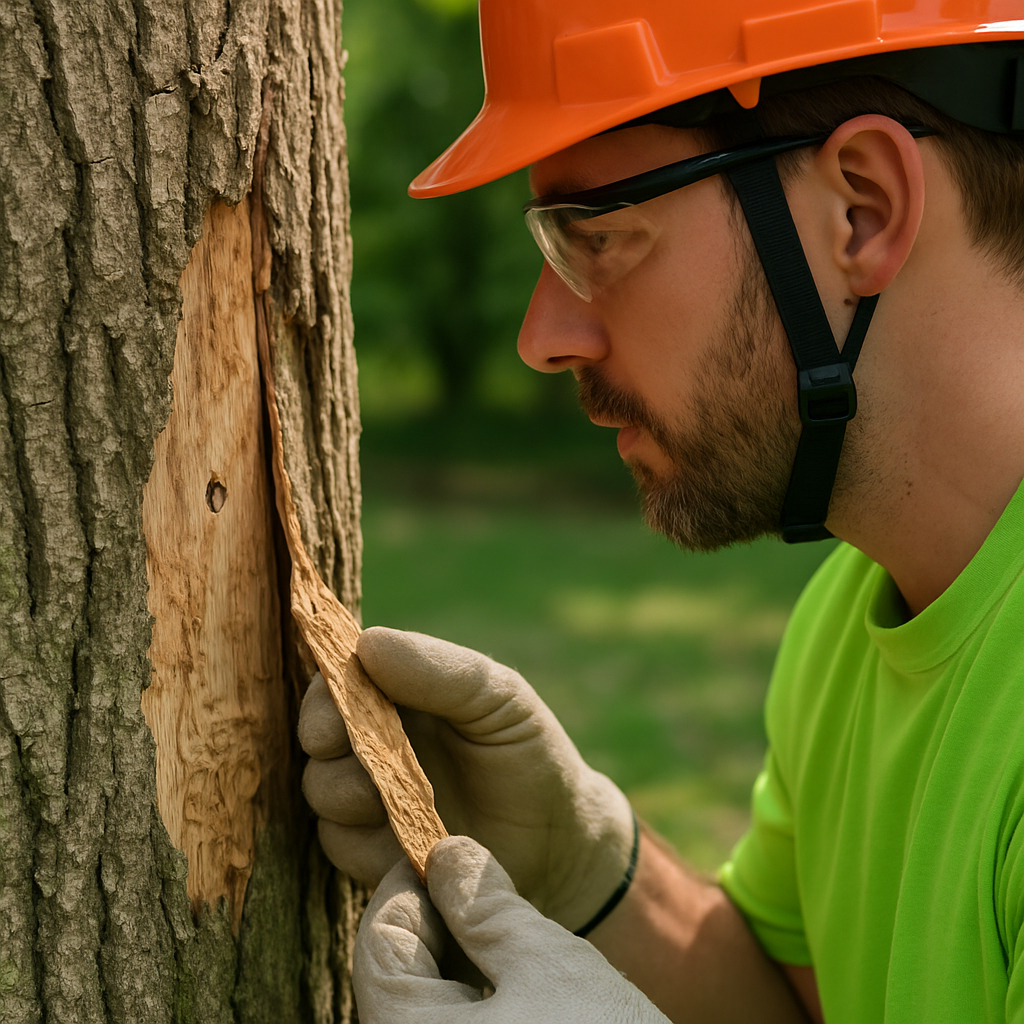
- Canopy and bark inspection: note pattern of dieback, discoloration, fruiting bodies, D shaped exit holes, frass, or S shaped galleries under bark
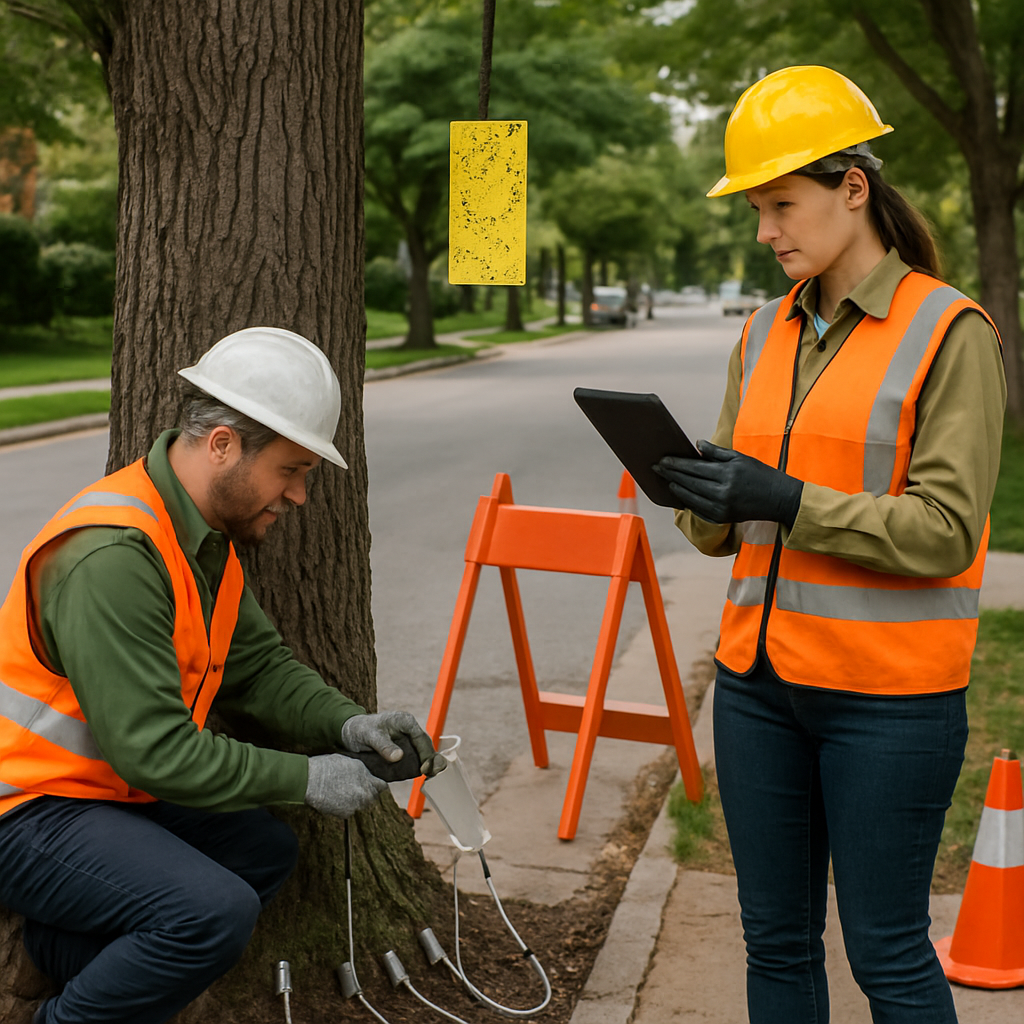
- Targeted sampling: remove small bark sections, collect twig or leaf samples, set pheromone or sticky traps when appropriate
- Basic lab tests: fungal cultures or PCR when symptoms are ambiguous or for regulated pathogens
- Soil and tissue tests: nutrient or soil compaction problems often co-occur with pest pressure and change treatment priorities
- Document and map: photos, severity mapping, and a written diagnosis that links evidence to recommended treatments
Practical tradeoff: field diagnosis is fast and often correct for obvious pests, but ambiguous cases require lab confirmation. Lab work adds cost and a 1 to 3 week delay; that delay can be acceptable if it prevents an unnecessary pesticide application or selects a markedly different treatment method such as trunk injection versus foliar spray.
Concrete Example: an ash tree with thinning crown, D shaped exit holes, and S shaped galleries under peeled bark is classic emerald ash borer. That diagnosis points to systemic trunk injection with products containing emamectin benzoate or a documented IPM program rather than a simple foliar spray. By contrast, a maple covered in sooty mold and honeydew usually indicates heavy sap feeder activity like scale or aphids; treatment often starts with targeted horticultural oil or biological controls plus monitoring rather than broad spectrum spraying.
What many people miss: foliar symptoms frequently lag behind the actual problem. Waiting for leaves to brown before investigating often moves the tree beyond recovery. Conversely, overreacting to a single sign without a life stage assessment leads to wasteful blanket spraying that increases off target risk.
Actionable demand: before any work, request a written diagnosis that lists observed signs, what further tests (if any) are recommended, the proposed treatment with active ingredient and application method, and a monitoring schedule. Reputable providers such as those offering integrated tree health management or arborist services supply this as standard — see services for an example of a documented assessment workflow.
Insist on a diagnosis that connects specific evidence to a treatment choice and explains the tradeoffs between speed, efficacy, and environmental exposure.
Treatment methods used by tree spraying companies and when to use each
Key point: application method determines speed of control, non target exposure, and whether the chemical reaches the insect or pathogen where it lives. Companies choose method based on pest biology, tree size and value, site constraints, and environmental risk — not on what product is cheapest.
Common methods and how they trade off effectiveness and risk
| Method | When to use | Pros | Cons |
|---|---|---|---|
| Foliar spray (airblast or hand wand) | Fast knockdown for chewing caterpillars, aphid outbreaks, heavy defoliation events | Quick effect; treats large canopy surface | High drift; pollinator exposure; short residual; often needs repeat applications |
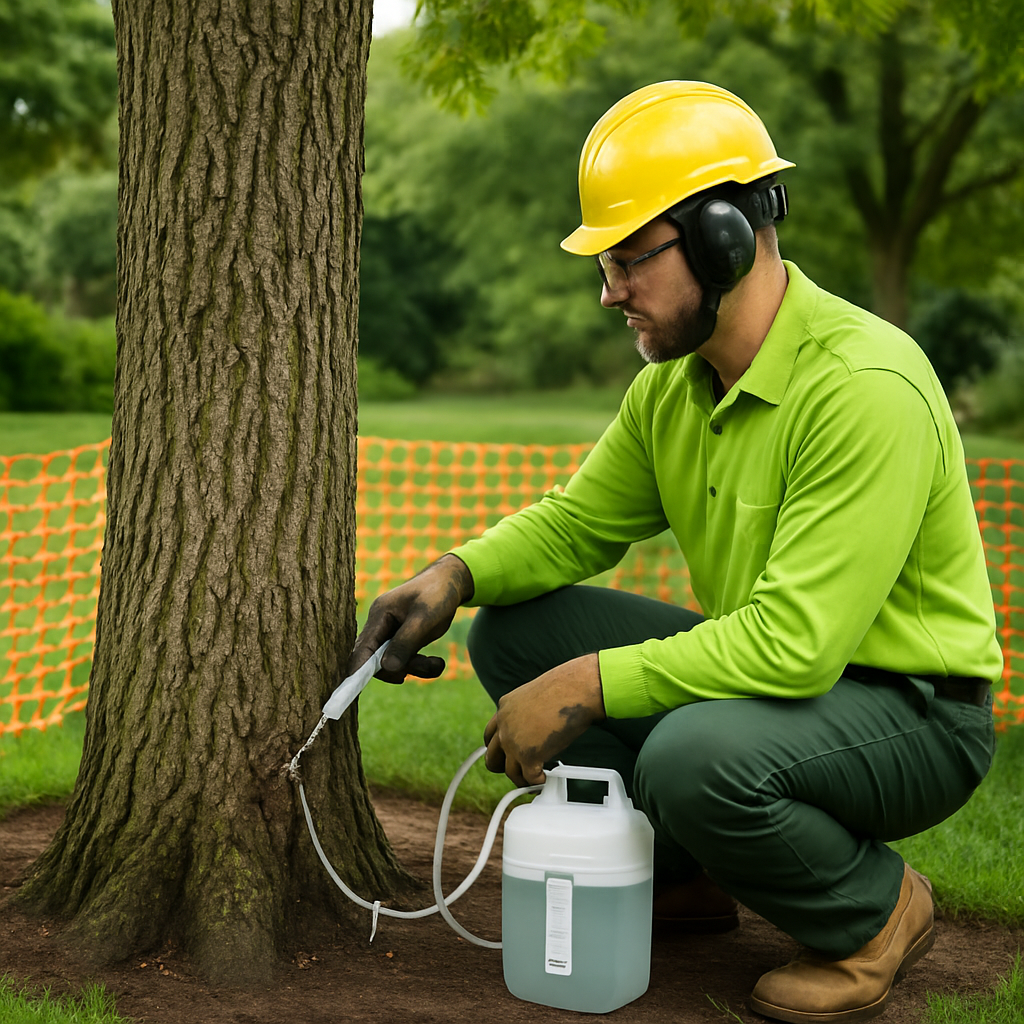
| Trunk injection | Systemic borers and vascular-invading pests (example: emerald ash borer), high-value specimen trees | Minimal drift; targeted delivery; long residual for some actives | Slower onset; efficacy depends on species, season and sap flow; requires trained applicator |
| Soil drench/injection | Sap feeders and systemic treatments for small to medium trees | Non aerial application; good for young trees or confined root zones | Potential movement to groundwater; root uptake variable; pollinator risk if nectar-producing understory present |
| Bark spray / basal bark | Scales, bark-boring insects, and overwintering adults on trunk | Targets pests on trunk; lower canopy drift than foliar | Surface residues can still contact non targets; limited penetration for deep wood borers |
Practical insight: trunk injections reduce neighborhood drift and pollinator incidents, but they are not a universal fix. Transport of systemic actives relies on tree physiology; drought-stressed or root damaged trees may not translocate the product effectively, so injection can fail if underlying stressors are ignored.
Concrete Example: for emerald ash borer, arborists commonly use emamectin benzoate via trunk injection because the beetle feeds under bark and systemic uptake gives season-long control. For an urban oak with a sudden caterpillar outbreak, a properly timed bifenthrin foliar spray delivers rapid suppression but requires buffer zones and neighbor notification to manage drift.
- Rule of thumb: choose trunk injection or soil systemic for borers and sap feeders that live under bark or in the vascular system.
- Rule of thumb: pick foliar sprays for external feeders and when immediate canopy protection is needed.
- Consideration: use bark sprays when pests are concentrated on trunks or when canopy access is limited.
- Regulatory note: some products are restricted-use and legally require a state-licensed applicator; ask to see licenses and the product label before work begins.
Judgment: blanket, calendar-based spraying is sloppy practice. Effective programs pair the right method with life-stage timing and cultural fixes (pruning, watering, fertilization). The cheapest immediate spray often costs more later if it ignores species transport limits or misses the pest life stage.
Integrated Pest Management steps professionals follow before spraying
Core point: Reputable tree spraying companies run a formal Integrated Pest Management workflow before they reach for a spray tank. The goal is to reduce chemical use, target treatments where they actually matter, and document a defensible decision path that matches the pesticide label and local regulations.
IPM checklist professionals run before any application
- Survey and baseline monitoring: record species, size, vigor, canopy loss percentages, photographed symptoms, and set up traps or timed visual checks to establish pest pressure.
- Action thresholds: define measurable triggers that justify treatment – for example sustained adult counts on traps, progressive canopy dieback above a set percentage, or confirmed presence of an invasive pest like emerald ash borer.
- Sanitation and cultural controls: prune and remove infected material, correct irrigation and compaction issues, adjust mulching and fertilization to improve vigor before relying on chemicals.
- Biological and mechanical options: consider predators, parasitic wasps, sticky bands, hand removal, or pheromone disruption where those controls are effective.
- Method and product selection: choose the least risky effective option – trunk injection or soil injection when it will work, foliar spray only when coverage and timing demand it, and products with appropriate toxicity profiles. Check the label and EPA pesticide labeling guidance before specifying an active ingredient.
- Timing, weather, and pollinator protection: plan treatments for life stage vulnerability, avoid bloom periods, require low wind and suitable temperatures, and set buffer zones near water and gardens.
- Pilot or spot treatment: treat a limited area first and monitor response rather than blanket treating an entire property.
- Documentation and communication: provide a written plan, product labels and MSDS, signage if required, neighbor notifications, and a monitoring schedule for follow up.
Tradeoff to understand: monitoring and targeted interventions cost time and often more up front staff labor, but they cut long term chemical use and collateral damage. The downside is a slower response when facing fast moving invasives – some situations require immediate, aggressive action rather than stepwise IPM.
Concrete Example: A property manager found early emerald ash borer signs on two street ash trees. The IPM route started with traps and gallery confirmation, followed by selective trunk injections on high value trees, removal of severely infested specimens, and a two year monitoring plan. That staged approach limited pesticide use, preserved unaffected ash, and provided records needed for municipal approvals.
Practical judgment: if a provider recommends season long blanket sprays on first visit without measurable thresholds, ask for their monitoring data, written thresholds, and a less chemical alternative. True professional tree care services build a treatment plan you can audit, not a recurring automatic service you cannot justify.
Safety, environmental safeguards, and regulatory compliance
Key point: Proper application is primarily governed by the pesticide label and state rules; failure to follow label directions is both illegal and the most common cause of off target damage. Companies that treat trees must operate within a web of federal label requirements, state pesticide laws, and local ordinances, and homeowners should expect to see the label and safety data sheets before work begins.
Worker safety, licensing, and liability
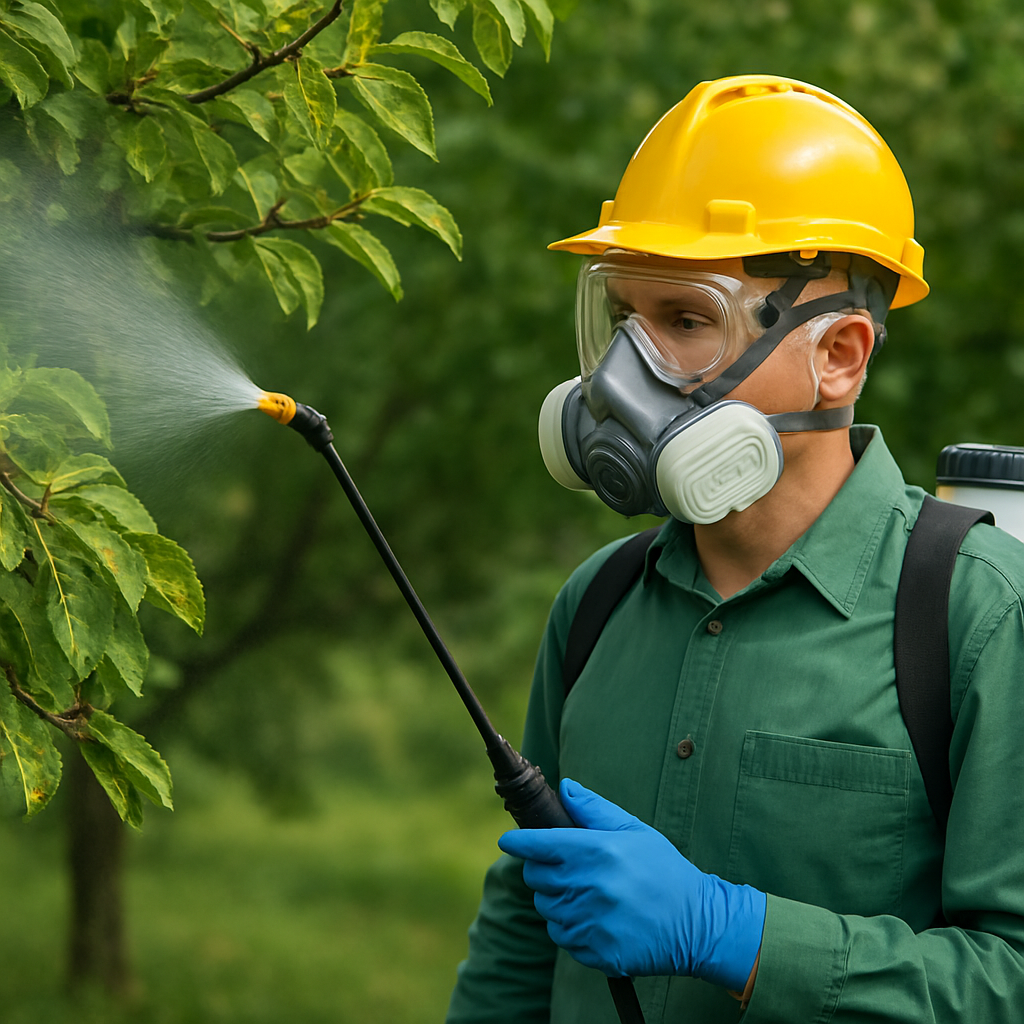
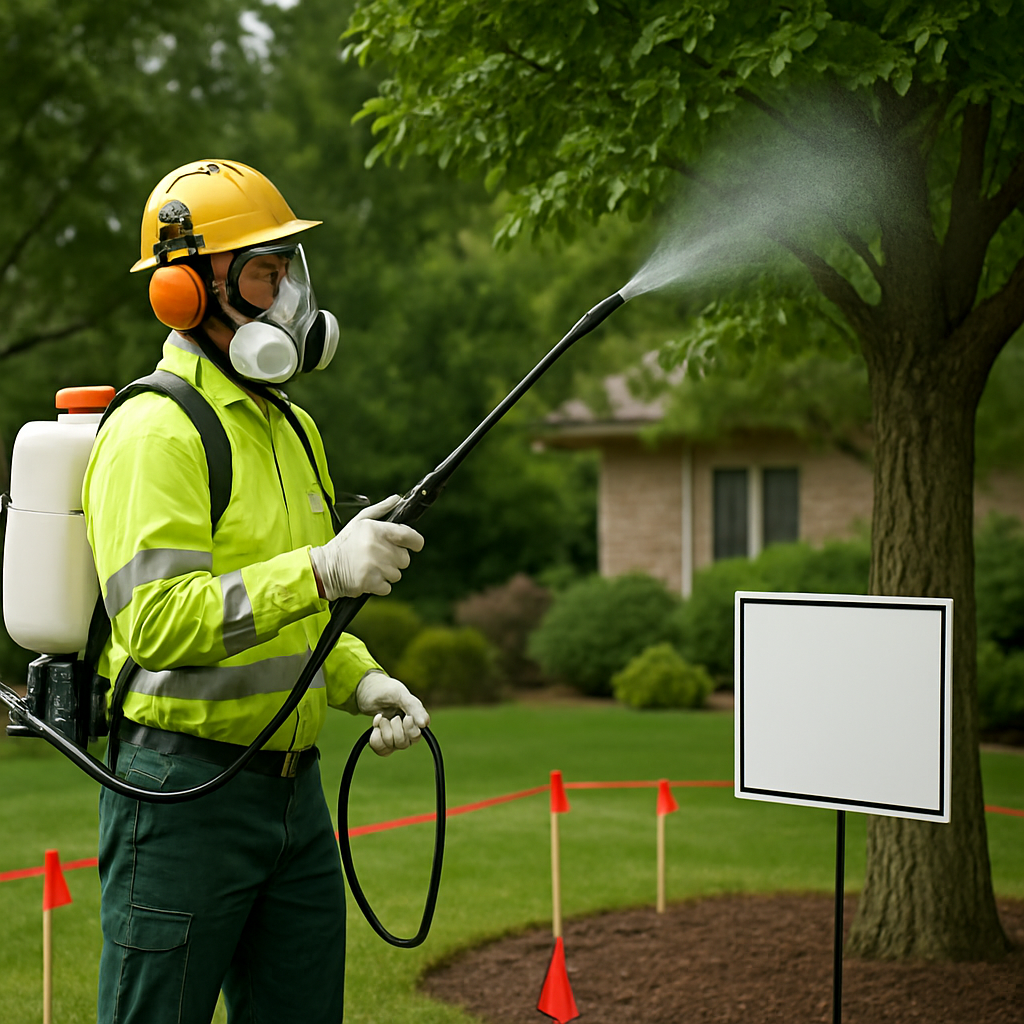
Worker protections: Licensed applicators follow PPE, training, and decontamination rules set out by EPA and state agencies. A business that sends uncertified crews or skips respirators and chemical resistant gloves is taking legal and reputational risk; if there is an exposure incident you as the property owner can be drawn into liability discussions unless the company provides evidence of insurance and training.
Tradeoff to accept: Higher competency costs more. Hiring a licensed applicator raises price but reduces risk of misapplication, drift, and regulatory citations. In practice, cheaper crews often use broad foliar sprays and drive higher long term costs through collateral plant damage or neighbor complaints.
Protecting pollinators, water, and neighbors
Environmental measures: Respectable tree spraying companies build in pollinator and water protections into the treatment plan: time applications when bees are not active, establish buffer zones near creeks and pools, use low drift nozzles or trunk and soil injections, and post notifications for neighbors. Those choices are practical mitigations, not marketing copy.
Limitation and consideration: Trunk injections greatly reduce spray drift but do not eliminate systemic residues moving into nectar or pollen in some species. That means injections are not an automatic pollinator free option for flowering ornamentals; competent applicators will advise based on species phenology and product translocation profiles.
- What to demand before treatment: Product label and SDS, applicator license, certificate of insurance, and a written description of buffer zones and timing.
- Recordkeeping you should get: Date, product name and EPA registration number, application rate, method, treated trees by address or GPS point, and follow up schedule.
- Local protections: Notification plan for neighbors and instructions for restricted access to treated areas until safe re entry interval expires.
Concrete example: A small commercial property had a creek 20 feet from a line of infected ashes. The contractor avoided foliar sprays, performed calibrated trunk injections, obtained a temporary discharge permit where required, and supplied the client with the product label, SDS, and post treatment monitoring schedule. The client documented the application for later follow up and for municipal inspectors.
Judgment: The single best indicator of a responsible tree spraying company is not clever marketing but process: visible licenses, product labels, written records, neighbor notification, and a safety plan tailored to the site. If a company resists giving you the label or an application record, walk away.
How to vet and hire a tree spraying company
Start with documentation, not a price. Ask for credentials and a written scope before you talk numbers. Companies that rely on verbal promises or lowball estimates usually skip diagnosis, skip follow up, or treat with blanket foliar sprays rather than a targeted plan.
What to request up front
- Proof of licensing: state pesticide applicator license for the person who will apply treatments
- Certified arborist: ISA Certified Arborist or equivalent listed on the estimate
- Insurance: current general liability and workers compensation with your property named if required
- Sample treatment plan: written diagnosis, recommended products (active ingredients), method, timing, and monitoring schedule
- Product info: product label and MSDS for each pesticide proposed (label is the law) — ask to see these before work begins
- References and photos: before/after photos from similar jobs and two recent local references
Key interview questions to ask on-site. Use them to force specifics: Which active ingredient and application method are you recommending and why? How will you protect adjacent plants and pollinators? What follow-up inspections are included and what does your warranty cover?
Practical trade-off to expect. A licensed applicator and certified arborist will cost more but reduce the risk of misdiagnosis and off-target damage. Cheap, one-time blanket spraying can provide a quick knockdown but usually fails long term and increases the chance of collateral harm to shrubs, pollinators, or stormwater.
Concrete example: A homeowner had a declining maple and three companies inspected the property. One quoted an annual foliar spray; the second proposed a trunk injection without confirming the cause; the third, an ISA arborist, performed a soil test, found nutrient imbalance and secondary scale infestation, recommended targeted injections plus corrective fertilization and a three-visit monitoring plan. The third option cost more but stopped decline and avoided unnecessary repeat sprays.
Red flags and vendor behaviors that matter
- No written plan or contract: any reputable firm will provide scope, timing, and price in writing
- Refusal to show labels or MSDS: if they won't, you shouldn't hire them
- Overreliance on one product: good operators tailor treatments; watch for the same solution for every pest
- No follow-up or monitoring: effective programs include inspection visits and recordkeeping
Expect deliverables. A professional proposal should include diagnosis, method, product labels, a schedule, expected outcomes, a monitoring plan, and an itemized price. Make sure the contract defines access, watering responsibilities, and who pays for disposal if pruning or removal is required.
Final consideration. After vetting, schedule an on-site assessment rather than accepting an estimate from photos alone; seeing root flare, mulch depth, and nearby hazards changes recommendations and cost more often than not. Book the assessment as your next step.
Costs, timing, and what realistic outcomes look like
Bottom line first: budget for diagnosis, treatment, and follow‑up — not a single one‑off spray. Professional tree spraying companies price work around tree size, species, method, and how entrenched the problem is; the cheapest quote is rarely the best value.
Cost brackets (realistic ranges): small ornamental foliar sprays commonly start under $100 per tree; trunk or soil injections for medium trees often fall in the $200–$800 range; large specimen trees or multi‑year protection programs can run several hundred to a few thousand dollars per tree. These are brackets, not quotes — expect variations by region and firm.
What drives price and how that affects outcomes
Major cost drivers: tree diameter and canopy volume (more product and labor), application method (trunk injection and soil injection cost more than a quick foliar spray), travel and access (cranes, traffic control), disposal of infected material, and the need for seasonal monitoring. Each driver changes the likely outcome: a correctly timed trunk injection costs more but often gives longer, targeted control with less non‑target exposure.
Practical tradeoff: foliar sprays give fast knockdown for leaf feeders but have higher drift and shorter protection; systemic injections reduce drift and may protect a tree through multiple seasons, but they take time to move through the tree and cost more. Choose based on the pest biology and the homeowner priority — immediate cosmetic relief versus durable protection.
- Timing windows matter: some treatments must be applied before adult emergence or leaf flush — miss the window and efficacy drops sharply.
- Multi‑year programs are common: pests like emerald ash borer typically require repeated treatments or alternating chemistries over several years.
- Situation where treatment is poor value: trees with greater than ~50% canopy loss or severe root failure often do not recover despite treatment and should be evaluated for removal.
Concrete example: An urban property had a medium ash tree infested with emerald ash borer and 20% crown thinning. A certified arborist recommended a spring trunk injection with emamectin benzoate and monitoring traps. Outcome: visible larval activity dropped within one season and canopy vigor improved over 12–18 months; the client budgeted injections every 2–3 years for ongoing protection.
| Treatment type | When results appear | Typical protection duration |
|---|---|---|
| Foliar spray (contact) | Hours–days for knockdown | Weeks–months (seasonal) |
| Soil drench/injection (systemic) | Weeks to months as uptake occurs | Seasonal–1 year |
| Trunk injection (systemic) | Weeks to months; biological control of wood borers visible next season | 1–3+ years depending on chemistry |
Judgment call: spending more on correct diagnosis and a targeted program usually beats repeated cheap sprays. Companies that push blanket foliar applications without diagnostics are selling convenience, not long‑term tree health. If your tree shows advanced decline, be skeptical of promises — removal and replanting may be the most responsible option for safety and budget.
Next consideration: when you get estimates, compare not just price but the recommended method, timing window, and the follow‑up plan — those three determine whether you buy a temporary fix or meaningful tree protection. For scope of services, see Mr Tree Inc.'s services page.
Common misconceptions and homeowner responsibilities after treatment
Straight talk: a professional application is a tool, not a magic cure. Many homeowners assume a single spray or injection ends the problem; in practice, treatment is one element of ongoing tree health management and often must be combined with irrigation, pruning, sanitation, or repeat applications timed to the pest life cycle.
Misconception: systemics are harmless to pollinators. Reality: application method matters. Trunk injection and soil injection reduce drift and non target contact, but some systemic compounds can move into pollen and nectar. If pollinator protection is important on your site, insist the company explain the active ingredient, show the label, and choose timing or methods that minimize exposure.
Practical limitation: uptake and efficacy depend on tree condition and site moisture. For soil drenches and trunk injections to work the tree needs functional roots and reasonable soil moisture. In drought stressed or heavily compacted soils uptake will be poor; sometimes the correct response is to improve root environment first, not immediately increase pesticide dose.
Homeowner responsibilities after a professional treatment
- Follow label and applicator directions: keep the product label and any reentry intervals; labels are legally binding. See EPA pesticide labeling guidance for background.
- Keep access and irrigation as instructed: allow equipment access, and if the applicator requests moderate watering to aid uptake, do it—unless the label says otherwise.
- Observe and document: take dated photos of canopy and bark, and note new symptoms or dead branches; provide these to your arborist at follow up.
- Control activities around treated trees: limit pruning, heavy traffic, or soil disturbance if advised; comply with any posted buffer zones until it's safe.
- Retain records: file the treatment report, applicator license number, product name and EPA registration, and the written plan for future decisions or warranty claims.
Concrete example: A homeowner had heavy scale on two maples. The company chose trunk injection plus targeted pruning of infested limbs and a root-dip transplant to reduce stress. The homeowner kept the irrigation schedule the applicator recommended and provided photos at three monthly checkups; within one season the scale population dropped and foliage vigor improved.
Trade-off to accept: insist on minimal off target impact, but understand it costs more. Choosing low-drift equipment, trunk injections, or timed applications to protect pollinators typically raises price and requires more planning. If you prioritize affordability over precision, expect higher ecological risk and a greater chance of needing repeat work.
Next consideration: before any treatment ask for the written follow-up schedule and what signs should trigger immediate contact. If the company will not provide that level of detail, look elsewhere; transparent post-treatment responsibilities separate reputable tree spraying companies from the rest.
0 Comments