
Why Hire a Certified Arborist in Portland, Oregon: Benefits, Certifications and Typical Services
Portland has heavy winter storms, compacted urban soils, and a dense street-tree canopy, so tree work carries more risk and regulation than many property owners expect. Hiring a certified arborist portland oregon ensures work follows industry best practices, meets local permit requirements, and reduces safety and liability exposure. This article explains which certifications matter, how arborist services in Portland handle pruning, removals, emergency response and permits, and provides a practical checklist for comparing contractors.
Why hiring a certified arborist matters in Portland
Safety and liability matter more than aesthetics. Large tree work in Portland is often a structural and legal problem, not just a yard chore. Trained arborists reduce the chance of property damage, personal injury, and insurance disputes because they plan lifts, use rigging and cranes correctly, and document hazards before cutting.
What a certified arborist brings that a landscaper usually does not
Risk assessment and documentation. A credentialed arborist will perform and record a formal assessment – often using TRAQ methods – that shows why a tree is a hazard, what mitigation was considered, and what work is recommended. That paperwork matters for the City of Portland, insurers, and future owners. See City of Portland Urban Forestry for permit and documentation expectations.
- Regulatory fluency: Certified arborists understand when permits are required and can prepare or sign off on the documentation needed for significant and street tree work.
- ANSI A300 and ISA best practices: Work follows accepted pruning and removal standards that protect long term tree health and reduce liability.
- Specialized techniques: Methods such as directional felling near structures, crane-assisted removals, cabling and bracing, and advanced root management are executed safely and to industry standards.
- Insurance and crew training: Properly insured crews and documented safety protocols limit homeowner exposure if something goes wrong.
Practical tradeoff to expect. Hiring a certified arborist costs more up front than an unlicensed crew, but the extra cost buys reduced downstream expense – fewer reworks, less risk of damage, and credible reports for permit or insurance claims. If your priority is low cost and cosmetic trimming on small ornamentals, a licensed landscaper might be acceptable. For any work near buildings, utilities, or public right of way, the safer choice is a certified tree care expert.
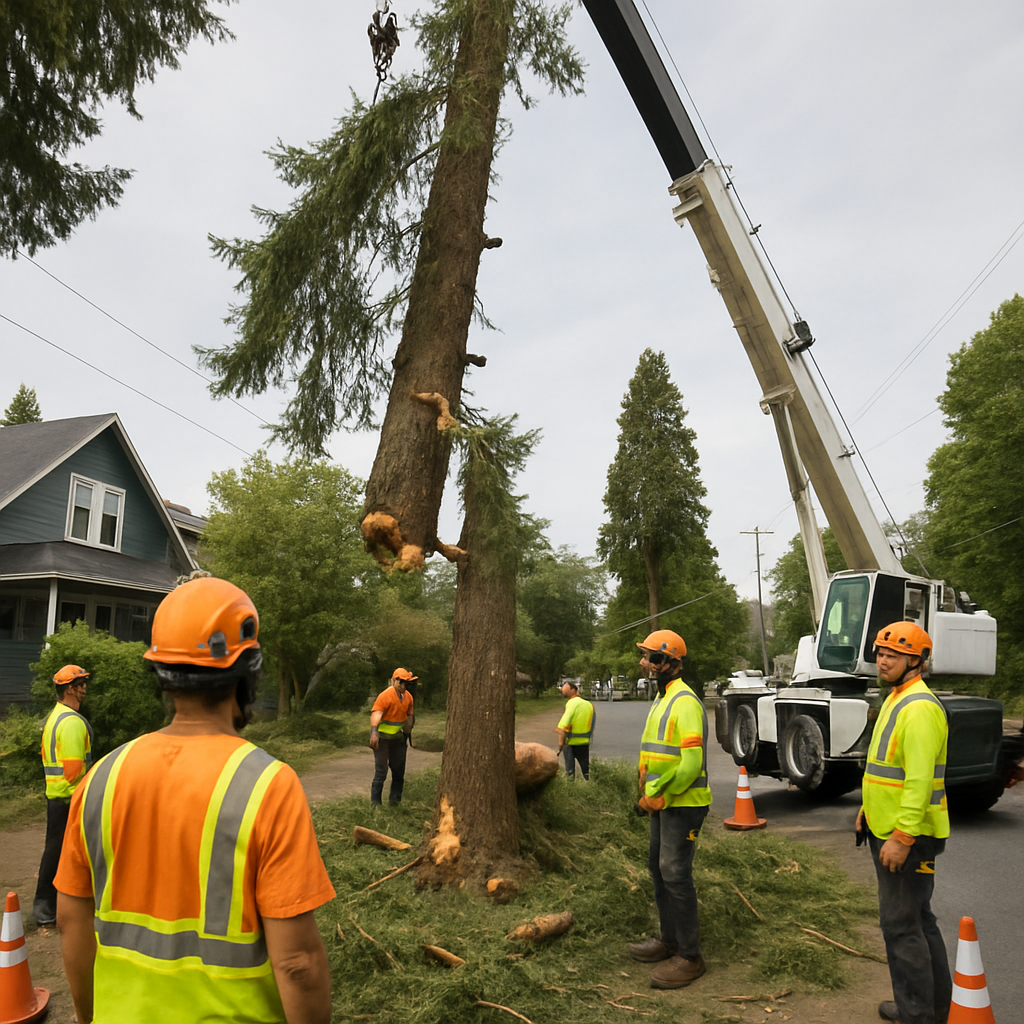
Concrete Example: After a November windstorm a northeast Portland homeowner had a Douglas fir with a large lateral crack over the roof. A certified arborist performed a tree health and risk assessment, installed temporary cables to stabilize the tree, secured a permit for partial removal from the City, and used a crane to remove the overhanging section safely. The homeowner submitted the arborist report to their insurer and avoided a denied claim for improper contractor practices.
One practical limitation to know. Certification proves knowledge but not guaranteed competence on every job. Experience on Portland soils, familiarity with local pests, and documented examples of similar work are the difference between someone who passed an exam and someone who can execute complex removals without collateral damage. Ask for ISA certification numbers and local references when you call.
Certifications to verify and what they mean
Verify credentials first. For work in Portland you want an ISA Certified Arborist at minimum, and TRAQ for any job that involves hazard evaluation or potential removal. The ISA credential shows formal arboricultural knowledge; TRAQ documents specific training in structured tree risk assessment. See the International Society of Arboriculture for verification.
Key certifications to look for. ISA Certified Arborist – basic professional credential covering tree biology, management, and safety. Board Certified Master Arborist – higher level, fewer local contractors hold this and it matters for very complex trees. Tree Risk Assessment Qualified (TRAQ) – essential when limbs or trunks are compromised and you need a formal risk rating. ISA Certified Tree Worker and Climber Specialist or Municipal Specialist – useful when work is in tight urban settings or involves street trees. Oregon Pesticide Applicator License – required if chemical treatments are part of the plan.
What certifications actually guarantee
Reality check. A certificate proves knowledge and continuing education, but it does not guarantee good judgment on every job. In practice, the most useful combination is ISA Certified Arborist plus documented experience on the specific species and site conditions you have in Portland – for example, experience with Douglas fir, bigleaf maple, compacted urban soils, and storm damage.
- How to verify: Ask for the arborist name and ISA certification number and check the ISA directory at ISA Certified Arborist Directory.
- TRAQ verification: Request the TRAQ certificate and date – TRAQ is not automatic with ISA certification and is worth insisting on for high-risk trees.
- Pesticide and business credentials: Ask for an Oregon Pesticide Applicator number if sprays are proposed and confirm business license and current insurance certificates.
- Permitting support: If work touches street trees or significant trees, confirm the arborist is familiar with City of Portland rules at Portland Urban Forestry and can prepare permit documents.
Tradeoff to consider. Higher credentials usually mean higher hourly rates and a longer, documented assessment process. That cost buys you formal risk documentation, a plan that will survive permit review, and better odds of avoiding improper cuts that cause long term decline. For small, low-risk pruning a certified arborist may be overkill; for anything adjacent to structures, utilities, or public right of way they are worth the premium.
Concrete example: After a severe winter storm a homeowner had a large Douglas fir with a partially split codominant stem. A TRAQ-qualified arborist performed a structured assessment, produced a risk rating and a written plan that recommended staged removal and cabling. That documentation was accepted by the city for a permit and by the homeowner insurance company for a claim.
Practical judgment: Prioritize ISA plus TRAQ for hazardous or permit-involved jobs; always pair certification checks with local experience and proof of insurance.
Typical services offered by certified arborists and when to use them
Start here: certified arborists offer a defined set of services beyond generic landscaping — each has specific goals, constraints, and timing. Knowing which service fits your problem saves money and prevents harm done by the wrong intervention.
- Tree pruning (structural and corrective): Use for improving tree structure, reducing weight on hazardous limbs, correcting storm damage, or removing deadwood. Proper pruning follows ANSI A300 standards and extends useful life; cosmetic trimming by untrained crews often causes long-term decline.
- Tree removal and emergency tree services: Use when a tree is dead, unsafely leaning toward structures, or after storm damage. Emergency response requires trained crews, rigging, and sometimes cranes — not a DIY job.
- Tree risk assessment and inspection: Use when you need documented risk levels for insurance, permitting, or deciding between mitigation and removal. Ask for a written risk report; a qualified assessor (TRAQ or equivalent) is worth the fee for high-value or hazardous trees.
- Stump grinding and root management: Use when you want usable space, reduce tripping hazards, or cut off root-suck problems. Note: grinding removes the stump but not all roots — full excavation is more disruptive and expensive.
- Tree health care and pest/disease management: Use for early-stage pests, fungal infections, nutrient deficits, or chronic decline. Treatments are effective for many issues but have limits; advanced root rot or long-standing structural defects may be irreversible.
- Planting, species selection and soil improvement: Use when replacing removed trees or improving planting sites. Right species and proper planting technique save future removal costs in urban soils common to Portland.
- Cabling, bracing and preservation work: Use to stabilize valuable trees with poor crotch angles or decay. These are mitigation measures, not permanent fixes — they buy time and reduce short-term risk.
- Permit prep and representation: Use when work affects significant trees, street trees, or properties with Title 11 implications; certified arborists can prepare the documentation and liaise with the City of Portland.
Trade-offs, limits, and timing that matter
Key trade-off: removal versus mitigation.** Removing a hazardous tree eliminates immediate risk but also removes canopy benefits; cabling or progressive pruning keeps canopy but may require repeated work and inspection. Cost, long-term liability, and aesthetics should all factor into the decision.
Timing matters. Pruning windows and treatment effectiveness differ by species and pest; some interventions are seasonal and others ineffective once decline has progressed. Expect an arborist to propose a short plan and follow-up schedule rather than a single job in many health-care cases.
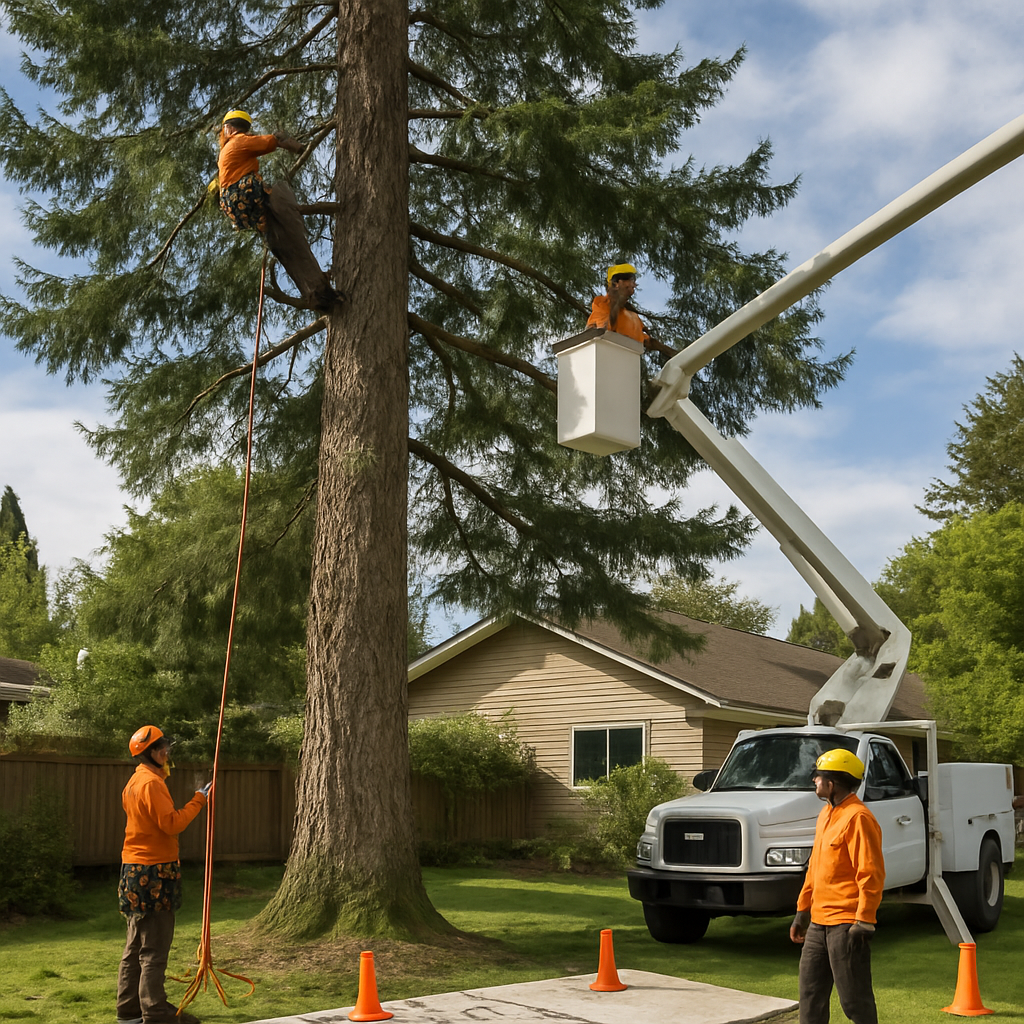
Concrete example: After a late-winter windstorm in Southeast Portland, Mr Tree Inc. performed a risk assessment on a leaning Douglas fir threatening a garage. The team staged a partial removal to protect the structure, supplied photos and a documented assessment for the homeowner's insurer and the City, ground the stump, and recommended a replacement species suited to the site.
Next consideration: when you request quotes, ask each company to identify the specific service they propose, seasonality constraints, permit handling, and whether the scope includes documentation for insurance or City review. That single distinction separates competent arborists from general landscapers.
How certified arborist work differs from general landscaping or unlicensed contractors
Key difference: certified arborists work to manage tree health and risk first; general landscapers or unlicensed contractors often focus on visible tidy appearance and short-term fixes. That difference affects pruning decisions, tool selection, crew training, and whether work creates long-term decline or solves the underlying problem.
Standards, objectives, and techniques
Pruning is not the same task across trades. Certified arborists apply pruning objectives based on tree biology and structure rather than only sightlines or hedge form. That means selective thinning, crown reduction with structural cuts, and preservation of branch collars when needed – techniques intended to reduce decay, maintain wind firmness, and avoid weak regrowth patterns that landscapers commonly cause with flush cuts or topping.
Documentation, permitting, and liability
Arborists deliver records that matter. A certified arborist provides written tree risk assessments, documented work scope, and can prepare or submit permit paperwork to the City of Portland when required. Unlicensed crews often skip formal reports and permits, which increases exposure to fines and weakens insurance claims after damage – a practical cost that often exceeds the initial price difference.
- Training & certification: arborists show credentialed knowledge and continuing education; landscapers rarely hold arboriculture credentials
- Equipment & safety: arborists use industry rigging, fall-protection, and certified crane operators for complex removals; many landscapers lack that equipment
- Risk assessment: arborist inspections include structural failure modes and documented mitigation; unlicensed opinions are often visual and undocumented
- Root and soil work: arborists assess root conflicts, compaction, and soil amendments; landscapers may damage roots while planting or digging
- Aftercare & monitoring: arborists provide follow-up plans for pest control, fertilization, or cabling; contractors focused on a single job may not plan long-term care
Tradeoff to consider: hiring a landscaper can be cheaper for small, low-risk jobs like routine shrub pruning or mowing. For mature trees, work near structures, protected trees, or any situation requiring a permit, the cheaper option often creates higher future costs and liability. Choose by risk profile, not by the size of the invoice alone.
Concrete Example: A Douglas-fir partially uprooted in a winter storm and leaning toward a house. A landscaper without rigging experience would likely remove large limbs quickly or attempt a direct fell – risking structure damage. Mr Tree Inc. performed a tree risk assessment, installed temporary bracing, used rope-and-block rigging to lower sections safely, obtained expedited permitting, and delivered a written report for the homeowner and insurer.
Common misunderstanding: many homeowners assume tree cutting skill transfers from hedge trimming to large-tree work. It does not. Work on trunks above about 12 inches DBH, anything near utilities, or protected trees requires arboricultural judgment, controlled rigging, and proper documentation to manage risk.
If you need help deciding for a specific tree, ask for a written risk assessment and a permit plan. If the contractor hesitates to provide those, you are comparing apples to oranges.
Portland permits, codes, and tree protection rules you need to know
Key point: Portland enforces tree rules that go beyond common-sense safety — removal, work in the right-of-way, and development near trees often require permits, inspections, and replacement or mitigation. Certified arborists familiar with Title 11 save you time and reduce the risk of fines or forced remediation.
Which jobs typically trigger City of Portland permits
- Significant tree removal or pruning: Trees above the City threshold (measured by diameter at breast height) commonly need permits; this is the rule that surprises most homeowners.
- Street tree or right-of-way work: Any work on trees in the planting strip or affecting the public right-of-way requires coordination with Portland Urban Forestry and separate permits.
- Development, grading, or building permits: Projects that alter soil, change drainage, or add structures within a tree's root zone prompt a tree review and often a Tree Protection Plan.
- Protected trees and special zones: Historic districts, environmental overlays, and certain native-species protections can impose extra restrictions or replacement obligations.
Practical insight: A permit is not just paperwork — the City inspects for tree protection fencing, limits on excavation in root zones, and proper pruning methods. Skipping permits or using an inexperienced contractor commonly creates delays at inspection and can result in rework or fines that exceed the cost of doing it right the first time.
How a certified arborist helps with Portland-specific requirements
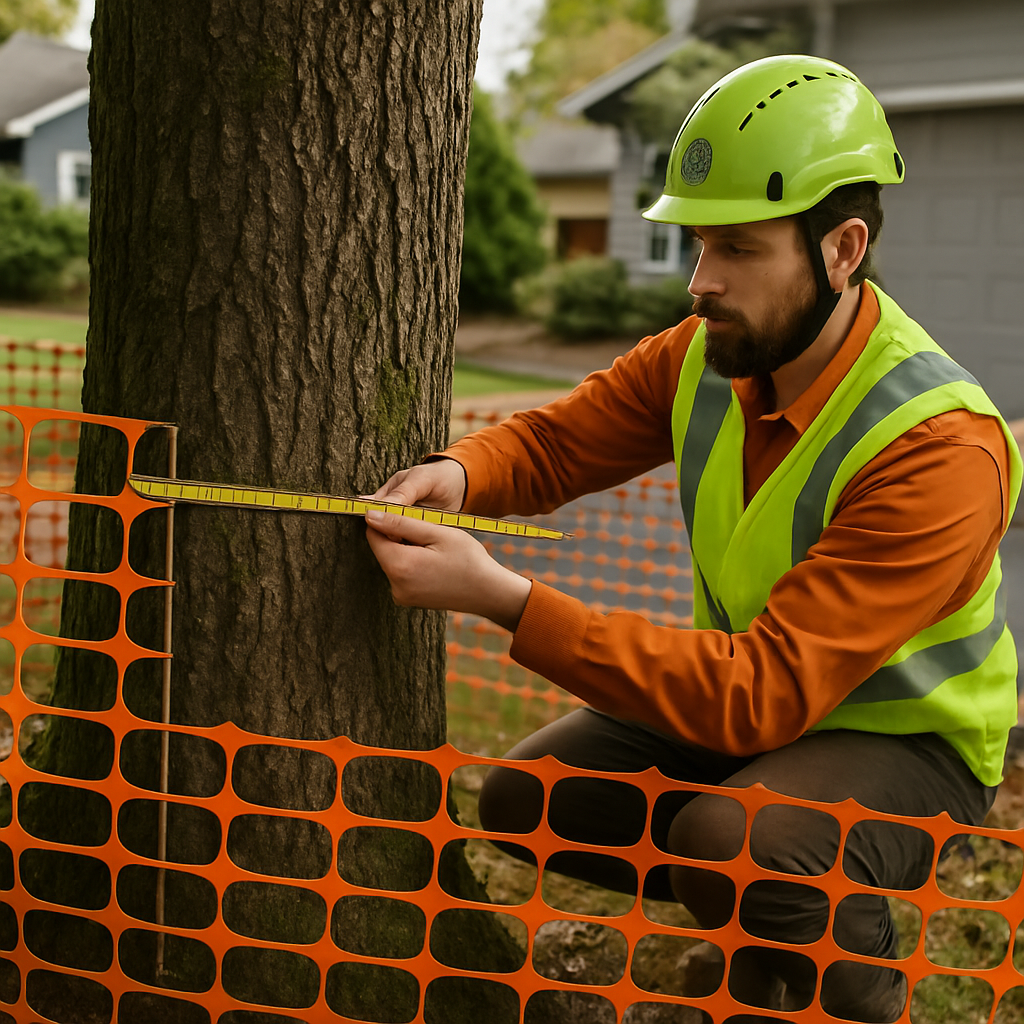
- Accurate assessment and documentation: Arborist reports, measured DBH, and site plans are commonly required; an ISA credentialed arborist prepares the documents the City expects.
- Permit application and representation: Certified arborists can submit applications, respond to City comments, and meet inspectors on site — this avoids back-and-forth that stalls construction schedules.
- Tree Protection Plans and construction monitoring: Arborists design fencing, root protection measures, and mitigation planting plans that pass inspections and reduce risk during construction.
Trade-off to consider: Removing a significant tree without accounting for replacement obligations or mitigation can increase total cost. Sometimes retaining and mitigating — through targeted pruning, cabling, or root-zone protection — is the lower-cost, lower-liability option once permit requirements are factored in.
Concrete example: After a winter storm, a homeowner called for removal of a leaning Douglas fir adjacent to their driveway. The crew declared it an immediate hazard and removed the portion threatening the driveway, but the City required a post-removal arborist report and replacement plan because the tree was within the protected size range. A certified arborist prepared the report and mitigation plan, preventing a fine and ensuring the replacement trees met City species guidance.
What most people misunderstand: Emergency removal exceptions exist, but they are narrow. Property owners who treat every post-storm cut as an emergency often face retroactive notices or penalties. In practice, document the hazard with photos, get a certified arborist assessment, and file or confirm the required notifications with the City.
Practical hiring checklist and questions to ask an arborist
Start here: a short, verifiable checklist separates a competent, insured crew from a risky, low-bid crew. Use these items when you call, compare estimates, and before any work starts.
Pre-call verification (what to confirm before you book an on-site estimate)
- Certification and ID: ask for the arborist name and ISA certification number and verify on the ISA directory at International Society of Arboriculture.
- Insurance specifics: request current certificates for general liability (at least $1M common), automobile liability, and workers compensation; call the insurer to confirm the policy is active.
- Local experience: request examples of similar work in Portland neighborhoods and whether they handle City of Portland permits (Title 11).
- Crew and supervision: confirm who will be on-site (crew leader vs subcontractors) and whether a certified arborist will inspect / sign off on the job.
- Safety equipment and methods: ask if they use aerial lift or crane for large removals, and whether crews follow ANSI A300 and OSHA safety protocols.
Questions to ask during the estimate
- Scope and objective: what is the pruning or removal goal? (hazard mitigation, clearance, health improvement) — avoid answers that only say take it down or cut it back with no plan.
- Work detail: exactly which cuts, removal methods, access plan, and damage prevention steps for lawn, driveway, and structures will you use?
- Permits and paperwork: who pulls required permits and provides the tree protection/mitigation plan for the City of Portland? Ask for examples of submitted permit forms.
- Estimate specifics: request a written estimate with scope, exclusions (utility coordination, stump grinding), payment schedule, and cleanup/disposal plan.
- Insurance and liability for neighbors: how will they protect adjacent properties and who is responsible for third-party damage?
- Warranty and follow-up: what, if any, guarantees are offered on pruning or pest treatments and what follow-up inspections are included?
Trade-off to recognize: the cheapest bid often omits critical items—like permit fees, traffic control, limb stabilization, or proper disposal—then charges change orders on-site. Paying a mid-market certified arborist typically buys documentation, safety equipment, and predictable outcomes.
Concrete Example: A Laurelhurst homeowner had a maple with a large included bark crotch after a storm. Using this checklist they rejected a low bid that offered same-day removal without permit review. They hired a certified crew that completed a TRAQ-style risk note, pulled the City permit, used a crane for safe removal, and supplied a signed report for the insurance claim.
Red flag: No written estimate, refusal to show insurance certificates, or insistence on full payment up-front.
Cost factors, typical price ranges in Portland and the value proposition
Key point: Tree work cost is not just labor hours. Size, access, location near structures or utilities, permit requirements, emergency response, and the level of arboricultural expertise all drive price. In Portland those factors interact with local rules and frequent winter storm damage, which pushes up rates for urgent work.
Primary cost drivers
- Tree size and weight: Larger trunk diameter and canopy volume increase rigging complexity, crew size, and disposal costs.
- Access and logistics: Narrow yards, overhead lines, steep slopes, or required crane use add substantial cost – sometimes more than the removal itself.
- Proximity to structures and risk: Work next to houses, fences, or power lines requires extra safeguards, slower cuts, and specialized rigging.
- Permits and documentation: City of Portland permits, protected tree mitigation, and inspection reports require time and paperwork – expect additional fees and longer scheduling lead times. See City of Portland Urban Forestry for details.
- Emergency vs scheduled work: Same job can cost 25 to 100 percent more if it is an immediate hazard response because crews and equipment are diverted from scheduled jobs.
Sample price ranges in Portland – practical guide
| Service | Typical Portland range |
|---|---|
| Basic pruning – small ornamental tree (under 20 ft) | $150 – $500 |
| Corrective pruning – medium tree (20 to 40 ft) | $400 – $1,200 |
| Large tree pruning or crown reduction | $800 – $3,000+ depending on complexity |
| Tree removal – small (under 30 in. circumference) | $500 – $1,500 |
| Tree removal – large or near structures | $1,500 – $6,000 |
| Crane-assisted removal for high-risk or limited access | $4,000 – $15,000+ |
| Stump grinding | $150 – $800 depending on size |
| Tree health assessment / written report | $150 – $600 |
| Emergency tree service – immediate hazard | Surcharge 25% – 100% on top of standard rates |
Practical insight: Those ranges are realistic starting points. Expect the low end only for straightforward, scheduled jobs with clear access and no permit work. If a provider quotes well below local market rates, ask what they are excluding – permits, cleanup, stump removal, or arborist fees are common exclusions.
Concrete example: A 60 ft Douglas fir on a SE Portland lot with a lean toward a neighboring garage required a certified arborist assessment. The inspector recommended removal with crane-assisted staging due to limited access and the structural risk; the final cost was about $9,000 including permit paperwork, crane time, and debris hauling. Choosing removal over temporary cabling avoided repeated emergency calls after winter storms.
- Tradeoff to consider: Preserving a large mature tree with corrective pruning and cabling can be cheaper over a five year horizon than repeated small removals and replanting, but only if the tree has sufficient remaining structure and the risk assessment supports retention.
- Value beyond price: Hiring a certified arborist portland oregon gives verifiable credentials, documented risk assessments useful for insurance claims, and compliance help with Portland permits – these reduce liability and future costs.
Final judgment: Price matters, but value matters more. For anything beyond a simple trim, prioritize verified credentials, insurance, and a written scope that includes permit handling and cleanup. That is where a certified arborist portland oregon will usually save you money and risk over the long run.
Local example: how a certified arborist handles a storm damaged tree
Immediate priority is safety. After a windstorm the certified arborist will treat the site like a triage: secure people and property, then assess the tree for failure modes that create immediate hazards.
On arrival: fast triage and the decision tree
First actions on site: establish an exclusion zone, check for live utility contacts, and photograph the scene for documentation. A certified arborist with TRAQ experience will perform a rapid risk assessment and classify the tree as immediate hazard, salvageable with stabilization, or candidate for removal.
- Immediate hazard: bowing trunk, large broken limbs resting on structures, or roots lifted and whole-tree lean. Removal or emergency limb drop is performed immediately for safety.
- Salvageable: partial failures, cracked codominant stems, or shallow root failure where cabling, bracing, or selective pruning can reduce risk and preserve canopy.
- Deferred work: minor branch loss or bark abrasions where stabilizing the tree and scheduling corrective pruning is appropriate.
Trade off to understand: saving a mature urban tree often costs more up front than removal, and stabilization can fail later if internal decay is extensive. Certified arborists will give a clear probability estimate for short term safety and expected useful life; accept that a sound recommendation sometimes will be removal to limit future liability.
Typical techniques and practical constraints
Methods used in Portland: rope-and-lower dismantling for tight access, sectional crane-assisted removal for large trees near structures, and temporary cabling and bracing to stabilize split stems. Work near power lines requires coordination with the utility and usually a utility crew on site.
Limitation worth noting: in saturated soils common after Pacific Northwest storms, fallen or leaning trees may have large, hidden root plate damage. Even correct bolting or cabling cannot restore lost anchorage. Expect honest boundary conditions from the arborist rather than optimistic promises of restoration.
Concrete example: A December windstorm left a 60 foot bigleaf maple with a split codominant stem leaning toward a garage. The certified arborist secured the area, removed the broken stem in controlled sections using rope-and-lower, installed a permanent cable between remaining stems, documented the risk assessment for the homeowner and insurer, and scheduled root collar inspection and soil remediation the following week.
Documentation, permits and aftercare
Documentation matters for insurance and permits. The arborist will produce photos, a written risk assessment, and a scope of work that can be submitted to the City of Portland if the tree is significant or a street tree. See City of Portland Urban Forestry for local emergency permit guidance.
After removal or stabilization: plan immediate soil and root zone work—mulch, decompaction, and targeted fertilization. If a tree is removed, the certified arborist will provide a replacement species list suited to Portland soils and utilities and a planting specification to avoid repeating the same problem.
Practical insight: during storm season expect slower response times and higher emergency rates; book a certified arborist early for proactive pruning on high risk trees rather than waiting for failure.
When to call Mr Tree Inc.: contact a certified arborist for any tree contacting structures or utilities, or if you see a significant lean or major cracked limbs. Mr Tree Inc. offers emergency response and written risk documentation to support insurance and permitting; see Emergency Tree Services Portland for service options.
Takeaway: a certified arborist blends fast hazard control with documented decisions about whether to stabilize or remove. The key question for homeowners is not whether help is needed, but what level of intervention reduces future risk most cost effectively while meeting city requirements.
Next steps for readers: how to find and hire a certified arborist in Portland
Start with the decision that matters: prioritize safety, permit compliance, and a clear written scope over the lowest bid. Use a short list of local, certified firms and book on-site assessments rather than accepting estimates from photos alone. For permit questions consult the City of Portland Urban Forestry pages City of Portland Trees and verify credentials on the ISA directory International Society of Arboriculture. For local service options see Mr Tree Inc. services.
Quick triage: first 48 hours
Immediate hazard or not: if a tree is threatening structure or life, call an emergency specialist immediately. If it is damaged but not an immediate hazard, take photos, note lean and exposed roots, and schedule at least two on-site assessments within a week to compare recommendations.
- Book on-site assessments: insist on seeing the tree in person so the arborist can evaluate access, rigging needs, and permit impacts.
- Request a scope document: ask each firm for a one page scope that lists exactly what will be done, equipment to be used, disposal plan, and timeline.
- Clarify who handles permits and inspections: note any additional fees and estimated permit lead times for significant or street tree work.
A simple scoring grid to compare bids
| Criteria | Why it matters | Sample weight (0-10) |
|---|---|---|
| Scope clarity | Shows whether bids are apples to apples and reduces change orders | 10 |
| Safety and rigging plan | Indicates competence on complex jobs and potential damage risk | 9 |
| Permitting support | Avoids code violations and rework for protected or street trees | 8 |
| Local Portland experience | Familiarity with urban soils, native species, and city inspectors | 7 |
| Price transparency | Breakouts for labor, disposal, and permit fees prevent surprises | 6 |
Tradeoff to consider: faster response usually costs more. Emergency crews command premium rates and may prioritize removal over preservation work. If the tree is not an immediate threat consider stabilizing and scheduling full corrective work during allowed permit windows to reduce cost and increase long term benefit.
Concrete example: a homeowner in North Portland had a large maple with multiple cracked limbs after winter wind. Three firms were called. The lowest bid proposed a quick removal with minimal documentation. A certified firm provided a written risk assessment, permit plan, and staged pruning strategy that saved the tree and avoided a street tree permit. The selected contractor balanced response time and a clear permit path and produced a better long term outcome for less total cost when permit and cleanup were included.
0 Comments