

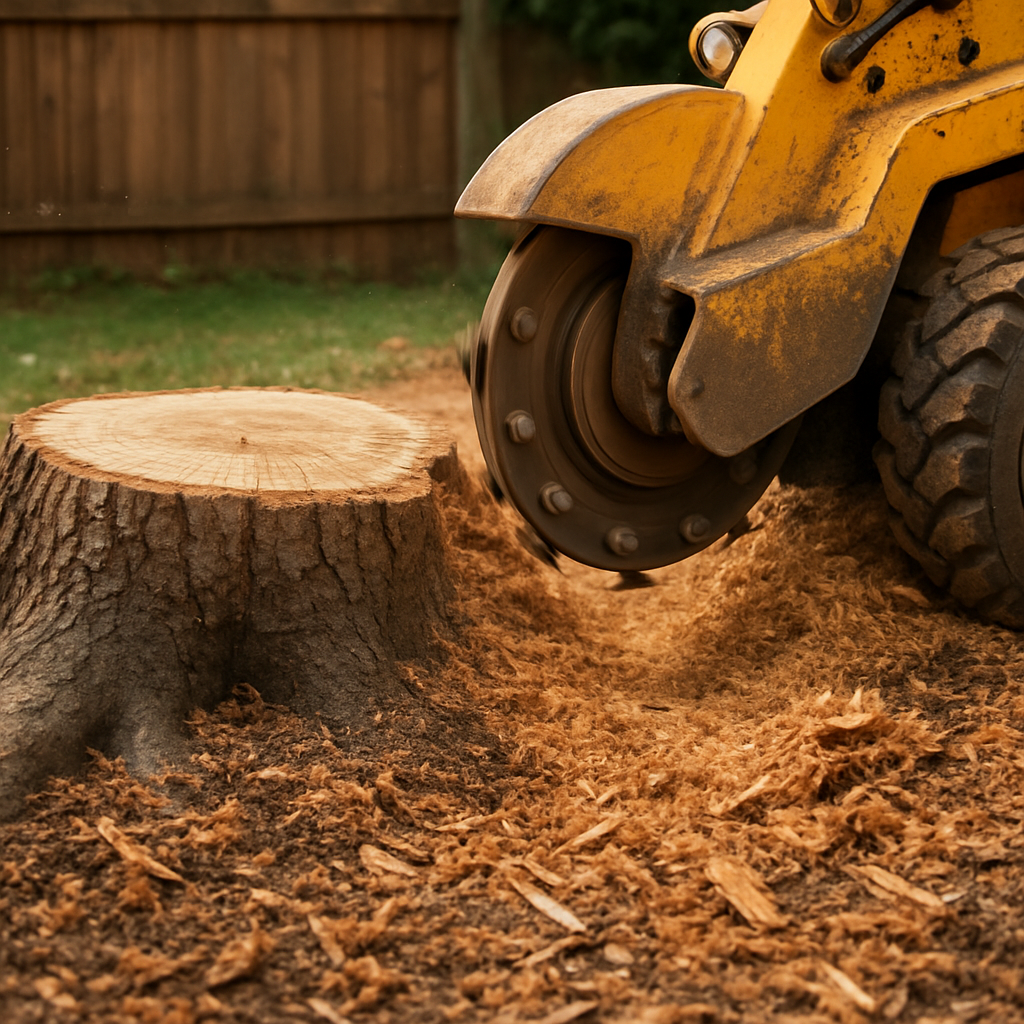
A leftover stump is more than an eyesore; it creates mowing hazards, can invite pests, and often blocks future landscaping plans. When you search stump removal services near me you face a wide range of prices, methods, and contractor claims. This guide shows which removal method suits your situation, what realistic price ranges and line items look like, and a practical vetting checklist so you can compare bids and hire with confidence.
1. Start Local: How to Search and Use the Keyword stump removal services near me
Start with intent, not just keywords. Use stump removal services near me to locate candidates, then switch to targeted phrases that reveal capability and price such as stump grinding near me, stump removal cost near me, and backyard stump grinding service to surface contractors who handle the exact job you need.
Where to search and what to expect
- Google Local Pack / Maps: best for immediacy and driving distance; check review counts, recent photos, and the business profile for licensing details.
- Nextdoor and local Facebook groups: useful for neighborhood photos and firsthand recommendations; beware of small sample sizes and friendly bias.
- Yelp, Angi, Thumbtack: aggregate reviews and often show project photos and offered services – use these to compare service descriptions and price signals.
- Direct contractor websites: look for service pages like stump grinding and proof of insurance or certifications.
Mini workflow you can copy. Follow these steps on your phone or desktop to turn a generic search into a usable shortlist.
- Search
stump removal services near mein Google and open the Local Pack. - Filter results by review recency and click profiles that include job photos.
- Open each contractor profile or website to confirm a phone number, physical address, and a visible statement of insurance or certification.
- Save three candidates and call each using the same short script to request an itemized written estimate and available dates.
- Compare estimates side by side focusing on grind depth, chip disposal, and any travel or minimum fees.
- If a contractor refuses to provide written details or insurance proof, remove them from the list.
Practical tradeoff to accept up front. Platforms with lots of reviews often include national chains and heavy advertising; small local outfits show fewer reviews but better example photos of nearby yards. Do not overvalue star rating alone – prioritize recent project photos and clear insurance evidence.
Concrete example: A homeowner with a 20 inch oak stump used stump grinding near me in Google Maps, filtered to results with photos, and shortlisted three companies. The chosen contractor had recent pictures of similar suburban yards, an ISA credential listed on the profile, and emailed an itemized quote that separated chip hauling from grind depth – which made comparing final price simple.
Tip: Sponsored listings and ads pay to appear. Look past position – open the profile and verify photos, licensing, and written estimate availability.
Where people go wrong. Many homeowners assume a high overall rating equals competence for stump work. In practice stump grinding is equipment and access sensitive; a five star rating from landscaping jobs does not guarantee safe stump grinding near driveways or under low limbs. Ask for photos that match your situation and verify equipment brands when access is tight.
Next consideration – use your shortlist to demand itemized quotes that list grind depth, chip removal, and any extra fees. If you want a benchmark for how a vetted contractor presents that information, see the service layout on Mr Tree stump grinding and consult industry guidance at TCIA consumer resources.

2. Compare Methods: Stump Grinding Versus Full Stump Removal Versus Chemical and Manual Options
Direct point: pick the method that matches your next use for the spot, not the cheapest headline price. Stump grinding, full excavation, chemical decomposition, and manual removal solve different problems — they are not interchangeable.
How the methods differ in practice
Key distinction: stump grinding removes the above-ground trunk and chips the bulk of the stump down to a depth you specify but leaves the root network in place. Full stump removal excavates the stump and major roots, which is the only reliable option when you need to build, lay a patio, or eliminate root interference. Chemical and manual methods are slower, often incomplete, and best reserved for constrained budgets or very small stumps.
| Method | When to choose | What it leaves behind | Practical trade-offs |
|---|---|---|---|
| Stump grinding | Restore lawn quickly, prevent trip hazards, maintain mature tree roots for soil stability | Wood chips and root mass below grade (roots remain) | Fast and cost-effective for landscaping; roots can rot slowly and interfere with heavy construction later; contractors offering quick stump grinding often list grind depth options |
| Full stump removal (excavation) | Site prep for construction, patios, pools, or when roots damage sewer/structures | Hole that requires backfill and compaction; most roots removed | More disruptive, higher cost, needs heavy equipment and proper backfill; choose for hardscape or new foundation work |
| Chemical decomposition | Remote sites with no machinery access or when budget forces patience | Partially decayed wood over months to years; roots may persist | Slow, sometimes ineffective; chemicals can affect nearby plants and may be restricted by local rules |
| Manual removal (pry and dig) | Very small stumps in open yards where you can dig safely | Roots cut by hand; labor-intensive with physical strain | Low equipment cost but high labor and risk of incomplete root removal; not practical for large or woody-rooted species |
Practical insight: many homeowners search for stump removal services near me and assume grinding equals permanent removal. In real-world jobs, grinding is the best balance of speed and cost for lawns, but it will not remove roots that interfere with footings or buried utilities. If you plan to install a patio or build within a few feet of the stump, insist on full removal on the estimate.
Limitation to consider: chemical methods sound cheap but they are slow and unpredictable. Expect months to multiple seasons, and factor in the cost of revisiting the stump for follow-up treatment or eventual grinding. Many contractors consider chemical treatment only as a last-resort or as part of long-term vegetation control.
Concrete example: a homeowner planning a 10 by 12 foot paver patio removed a maple stump by full excavation because the root flare extended under the planned slab. They paid more up front, but avoided future soil settling and root pockets beneath the patio — the contractor also compacted and backfilled the pit to engineering standards. For the same property, grinding would have left root channels that caused uneven settling within a season.
Judgment call most homeowners miss: contractors advertising extremely low upfront prices frequently omit chip hauling, grind depth, or backfill. When you compare bids from local stump removal or tree stump services, demand those line items. A realistic quote will show whether the job is a quick grind for lawn use or a full excavation for construction.
Where to read contractor guidance: for industry best practices on method selection and safety consult TCIA consumer resources and when evaluating bids review local providers pages such as Mr Tree stump grinding to see how professionals itemize grind depth, chip disposal, and excavation options.
3. Vet Contractors: Insurance, Certifications, Equipment, and Red Flags
Start with insurance, not price. Before you discuss grind depth or scheduling, confirm a contractor can produce a current certificate of insurance naming their business, policy limits, and an expiration date. If a contractor cannot email a COI or refuses to show it in person, treat that as an immediate disqualifier.
What the COI should show. Look for at least $1,000,000 general liability and either workers compensation or a state-specific waiver. The certificate should list the business name that matches their website or invoice and include the insurer contact so you can verify it directly. This protects you from third party claims if someone is injured or a machine damages property during a stump grinding job.
Seven-point vetting checklist you can use on the first call
- Insurance: Can you email a current COI showing general liability and workers comp or a waiver?
- Written estimate: Will you provide an itemized quote listing grind depth, chip hauling, backfill, and any travel or minimum fees?
- Certifications: Do you have an ISA certified arborist on staff or TCIA membership for complex removals?
- Equipment: What grinder model and size will you use? Do you bring a mini excavator for full removals?
- References: Can you share two recent before/after photos and a contactable reference for a similar job?
- Permits and locates: Will you handle an 811 locate and check local permit requirements if excavation is needed?
- Payment and contract terms: What deposit is required, cancellation policy, and do you accept card or only cash?
Short script to use verbatim on the phone. Hello, I found you in a search for stump removal services near me. I need a written estimate for a [size] stump at [address area]. Can you email a COI and two recent job photos showing similar access conditions? Also tell me the grinder model you will bring, whether chip hauling is included, and your availability this week.
Practical tradeoffs and what actually matters. An ISA credential is useful for tree health and complex removals, but for straightforward residential grinding an operator with solid equipment, current insurance, and local references is often a better hire than an uncertified outfit with a flashy certification badge. Equipment brand names like Vermeer or Bandit matter because they indicate capacity and build quality, but confirm the machine fits your access constraints rather than assuming brand alone equals capability.
Red flags that should stop the conversation. Cash only, no written estimate, refusal to supply a COI, unusually low bids well below local market rates, and evasive answers about equipment or disposal. Another frequent problem is a COI that names a different company or an expired policy date; those are real warning signs of sloppy business practice or worse.
Concrete example: A homeowner shortlisted three companies after searching stump removal services near me. One quoted far below others and promised same day service. When asked to email a COI the contractor sent a photo of a cancelled policy and no job photos. The homeowner hired a different bidder who provided a current COI, a Bandit grinder listed on the estimate, and two local before/after photos. The job finished on schedule with no damage to the driveway.
Important: certifications and shiny websites do not substitute for valid insurance and a clear written scope. Insist on both before scheduling work.

4. What It Should Cost: Realistic Pricing, Line Items, and Sample Estimates
Straight fact: stump removal quotes vary because contractors use different pricing models — per-inch rates, per-stump minimums, or flat-job pricing — and those choices hide real differences in scope. Ask for the math behind the total, not just a bottom-line number.
How contractors typically break down an estimate
Key line items to expect: most credible estimates separate the grind charge (per-inch or per-stump), chip hauling or onsite chip spreading, grind depth or below-grade root grinding, backfill/turf restoration, travel/minimum fees, and any permit/811 locate costs. If a quote glues these together you cannot compare apples to apples.
| Line item | Low-end Quote (Contractor A) | Mid-range Quote (Contractor B) | Comprehensive Quote (Contractor C) |
|---|---|---|---|
| Assumptions | Per-inch $2.50; job minimum $125; homeowner removes chips possible | Per-inch $4.00; includes chip hauling and standard 6 inch below-grade grind | Per-stump pricing; deeper grind, root grinding, backfill, and turf restore included |
| Grinding subtotal (all 3 stumps: 8, 20, 30 in = 58 in) | $145 (58 x $2.50) | $232 (58 x $4.00) | $800 (small $125 + med $225 + large $450) |
| Chip hauling / disposal | $75 | Included | Included |
| Backfill / turf restoration | Not included (DIY) | Optional add-on | $150 |
| Root grinding / deeper depth surcharge | Not included | Not included | $100 |
| Travel / minimum fee / permit | $50 | Included | $75 |
| Total (example job) | $270 | $232 | $1,125 |
Practical insight: the cheapest total often reflects unpaid work for you later — spreading chips, refilling the hole, or regrading. The highest total may be appropriate when you need construction-grade removal and compaction. In most suburban lawn restorations the mid-range quote that includes hauling and a reasonable below-grade grind delivers the best value.
Concrete example: a homeowner with an 8 in, 20 in, and 30 in stump wanted to seed lawn afterward. The low-end quote saved money up front but excluded hauling and backfill; the homeowner would have spent a weekend spreading heavy chips and buying topsoil. The mid-range contractor ground deeper, removed chips, and left the site ready for sod — slightly higher upfront, but lower total time and hassle.
Get an itemized estimate showing grind depth in inches, total inches measured, who hauls chips, and whether backfill/turf restore is included. Without those four items you cannot compare bids reliably.
Final judgment: treat grind depth and chip handling as the two most consequential variables. If you plan to put new hardscape or a foundation where the stump sits, pay for full excavation and compaction. If you only want a lawn restored, pay a little more for hauling and a deeper grind to avoid repeat work.
5. Day of Service: What to Expect and How the Job Is Done
Straight to the point: the day the crew shows up is where estimate detail meets reality. If your written quote specified grind depth, chip hauling, and backfill, those three items will determine how the crew stages equipment, how long they stay, and what the final invoice looks like.
Typical on-site workflow: the crew will perform a quick site walk, confirm locate marks from 811 if excavation is needed, lay down turf protection where equipment will travel, position the stump grinder or mini excavator, complete the grind or excavation, remove chips and roots as agreed, backfill and compact the hole if included, and then do a homeowner walkthrough for sign-off.
What the equipment and operations look like
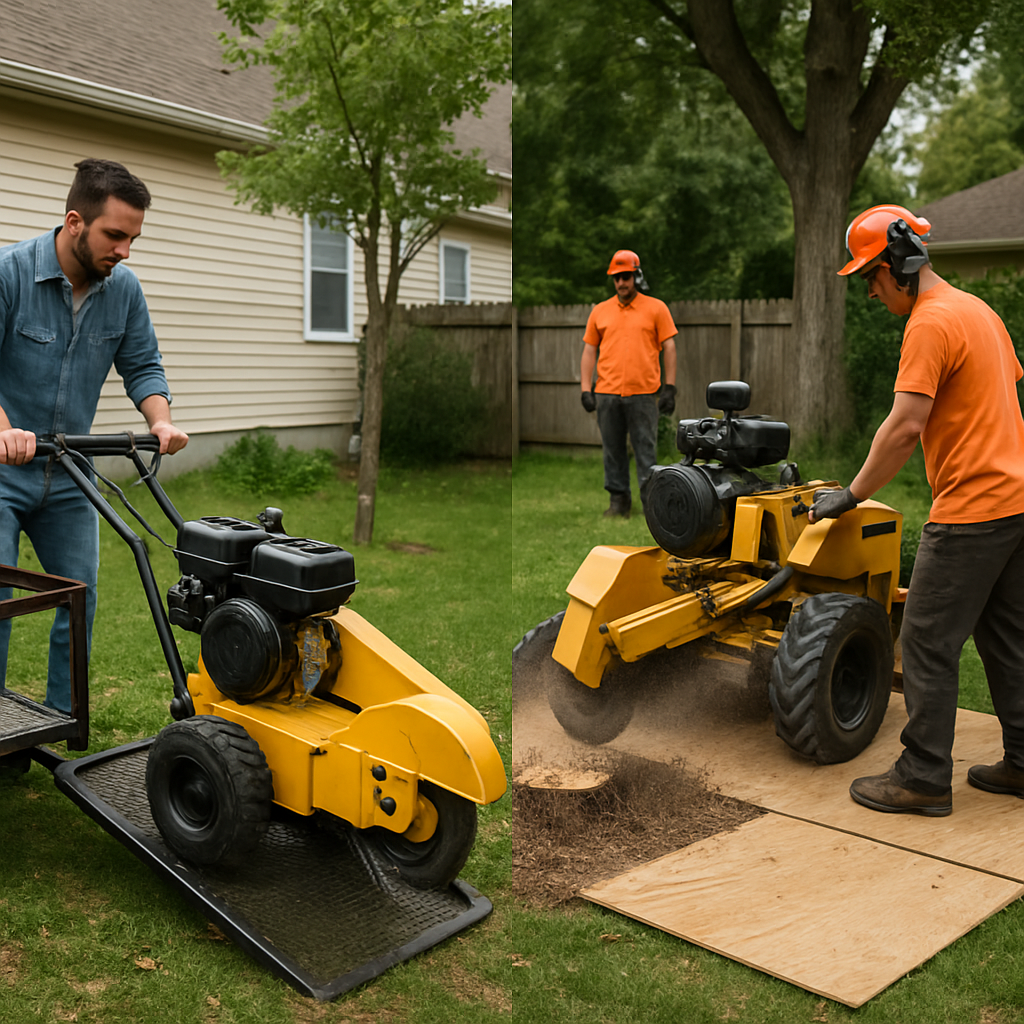
What you might hear or see: modern machines such as a Bandit or Vermeer grinder chew aggressively and throw chips; expect loud noise and flying chips within a short radius. Contractors who dampen dust with a light water spray and place plywood over sensitive turf are doing the right small things that protect your yard. If the crew skips protective measures to save time, expect scuffed grass and possible driveway scratches.
- Arrival to completion timeline: for a straightforward residential job with 1 to 3 medium stumps plan on 1 to 4 hours total – smaller jobs can be under an hour, large or hard-to-reach stumps take longer.
- Homeowner preparatory tasks: clear the access path, move vehicles and planters, shut off nearby sprinkler zones, and secure pets indoors so the crew can work without interruptions.
- Site protection specifics: contractors should use plywood over lawns, tarps to catch chips when working near hardscape, and flag or cover shallow irrigation and low-voltage lines to avoid accidental damage.
- Acceptance and documentation: do a walkaround with the crew and confirm grind depth, chip removal, and backfill meet the written scope before you sign the job completion.
Practical tradeoff: same day stump removal services near me are convenient, but accelerated scheduling sometimes means crews accept shorter grind depths to clear more calls. If you want a deeper grind for lawn restoration or a construction-grade excavation, insist it be written on the estimate and verify depth before chips are hauled away.
Concrete example: a suburban homeowner scheduled a three-hour window for a 20 inch oak and two small stumps. The crew arrived, verified the 811 locate marks, protected a nearby irrigation manifold with plywood, used a 36 inch commercial grinder to grind the oak to 8 inches below grade, hauled chips to a chip truck, backfilled the pit with screened topsoil, and handed the homeowner before and after photos. The job matched the written quote and took 3.5 hours.
What most people underappreciate: post-grind root fragments can continue to rot and sink, causing minor settling over months. If you plan to lay pavers or build a structure where the stump was, grinding alone is not a permanent fix. Require full excavation with compaction on the estimate when future construction is planned.
811 locates are visible, verify the grind depth on the invoice matches the quote, photograph the site before work begins, note where chips will go, and only sign off once the agreed restoration tasks are complete. For a typical professional scope see Mr Tree stump grinding and industry expectations at TCIA consumer resources.
Final point: demand the written scope be visible on-site. Verbal promises mean little once chips are hauled and the hole is filled.
6. Permits, Environmental Rules, Disposal, and Aftercare
Start with the local rules — not the lowest bid. Municipal permits, street-tree ordinances, and disposal restrictions are real sources of extra cost and delay. Some cities treat grinding and full excavation differently, and work on the public right-of-way or under a protected tree can require a permit, mitigation fee, or an arborist report.
Sample municipal check (action step): Call your city permit office or parks arborist and ask: I have a stump at [address]. Is a permit required to grind or excavate it? Are there any protection zones, required inspections, or disposal rules? Record the clerk name, permit number (if any), and any required documents. For procedure guidance see TCIA consumer resources.
Disposal options and trade-offs. You can usually choose onsite chipping, hauling to a municipal green-waste facility, donating cut wood for firewood, or hauling to a commercial compost/biomass facility. Onsite spreading is the cheapest but creates a zone of wood decay that can tie up nitrogen and slow planting. Hauling costs money but avoids decomposition problems and possible municipal fines for improper disposal. If the stump shows signs of disease or invasive insects, disposal destination matters — some composting facilities will not accept infected material.
- Disposal checklist to include on the estimate: Who hauls chips and to what destination? (city green-waste, commercial compost, landfill)
- Pricing details: flat haul fee or per-truckload / cubic yard rate and estimated truck count
- Onsite spreading terms: maximum depth to spread chips, area limits, and whether chips will be screened
- Contamination rules: will the contractor separate diseased wood or treated timber and how will that material be handled
- Donation option: whether wood can be cut and left for firewood pickup and whether any fee applies
Aftercare, realistic timelines, and a common misconception. If chips are removed and the pit is backfilled with screened topsoil or engineered fill after full excavation, you can generally plant within weeks. If the job is stump grinding and chips remain or are tilled into soil, expect biological settling and possible nitrogen drawdown; wait several months before planting a new specimen or amend heavily with compost and starter fertilizer. Many homeowners assume grinding is immediately ready for replanting — that is the misconception that causes failed transplants and uneven lawns.
Practical limitation: Local regulations sometimes restrict chemical stump treatments and open burning; contractors may need to transport treated stumps to a facility that accepts chemical residues, which adds cost and paperwork. Also, public right-of-way work often requires proof of insurance and a permit before hauling materials offsite — clarify responsibility in writing.
Concrete example: A homeowner requested a deep grind and wanted a new sugar maple in the same spot. The contractor removed chips, backfilled with screened topsoil and compost, and recommended waiting four months before planting to allow compaction and organic matter to stabilize. The homeowner avoided a failed transplant and reduced the need for repeat watering and soil corrections.
Next consideration: Before you sign, get disposal and aftercare commitments written into the estimate — who pays for permits, where chips go, and the suggested wait or soil treatment before replanting. Those three items are the common triggers of disputes and surprise bills; clarify them up front and you avoid most of the follow-up headaches.
7. Cost Saving Strategies and When DIY Might Make Sense
Practical point: the biggest, real savings come from changing the job scope, not from haggling over the final line item. When you search for stump removal services near me, think in terms of scope choices you can control: bundle work, accept onsite chip spreading, stagger nonurgent stumps, or choose a shallower grind with the understanding you may pay later for rework.
Each saving tactic has a trade-off. Onsite chip spreading usually cuts the invoice but creates a zone of decaying wood that can lock up soil nitrogen and complicate planting. Shallower grinds save time but raise the chance of root-related settling and repeat visits. Know which trade-off you accept before you sign an estimate.
When DIY or a rental grinder is reasonable
DIY works when the stump is small, in open space, and there are no nearby utilities, structures, or irrigation to damage. Rental grinders can handle modest residential stumps, but they demand respect: the machines are heavy, noisy, and throw chips. If the site is tight, the stump is near a driveway, or you cannot guarantee safe footing, hire a pro.
- DIY risk-check: Stump size and species matter — dense hardwoods are harder to grind.
- Access check: Can a pickup and trailer reach the site without crossing fragile turf or a fence?
- Liability check: If you or a hired helper is injured, homeowner insurance may not cover negligent equipment operation.
- Permit check: Some locales restrict equipment use or require a permit for excavation — confirm before renting.
Concrete example: A homeowner considered removing a 16 inch ash stump in a back lawn. They could rent a small grinder for a day (rental + fuel and pickup fees) and do the work themselves with a neighbor helping — total outlay was noticeably lower than the professional quote. The trade-off: the homeowner spent a full day, left coarse chips over the planting zone, and later had to buy topsoil to properly backfill. The pro quote included hauling and a smoother finish, which saved them time and eliminated follow-up cleanup.
In practice, DIY saves money on single, isolated stumps when you already have basic mechanical aptitude and safe access. It fails as a cost-saver when you factor in risk of damage, lost time, potential injury, or when the job needs a deeper grind or excavation for future construction.
Hiring tactics that cut cost without increasing risk: combine tree removal and stump work in one visit, ask for a weekday slot (lower demand), accept onsite chips but specify they will not be spread where you plan to plant, and solicit bundled pricing for multiple stumps. Always get those concessions written into the estimate.
If time, warranty, and site protection matter to you, the small savings from DIY are often outweighed by the cost of fixing problems later.
Next consideration: when you get estimates, ask each contractor to show a priced option that uses onsite chips and a priced option that removes chips and backfills. That single comparison reveals whether apparent savings are genuine or simply cost-shifted to you later.
8. How Mr Tree Approaches Stump Removal and What to Ask When Requesting an Estimate
What Mr Tree treats as the job baseline: every stump removal is managed like a small site project — measured, photographed, scoped, and priced to the degree the homeowner intends to reuse the spot. Mr Tree separates quick lawn-grade grinding from construction-grade excavation in the estimate, and that distinction changes equipment, time on site, and the follow-up obligations they include.
How they scope work up front: technicians start with a remote review of photos and then offer either a free quick quote or a paid site inspection for complex jobs. For anything near utilities, hardscape, or with suspected disease, an ISA-certified arborist review will be flagged on the estimate. That assessment drives the choice of grinder size, whether a mini excavator is needed, and the crew size quoted.
Pricing philosophy and trade-offs: Mr Tree uses a practical mix of unit pricing and packaged options — per-inch pricing for small, scattered stumps and flat per-stump or job pricing for bigger, difficult extractions. Judgment: per-inch pricing is more transparent when you only need surface grinding, but flat pricing often better reflects the real cost for a large stump that requires extra time, traffic protection, or root grinding.
Estimate elements you should see and why each matters
Must-have line items: grind depth in inches, who hauls chips and to where, backfill type and compaction method (hand-tamp vs mechanical), equipment model or class, and a stated window for completion. Those specifics determine whether the quote delivers a tidy ready-to-sod lawn versus a cheaper job that leaves you doing the cleanup.
Services Mr Tree commonly lists: stump grinding, root management or below-grade root grinding, hauling to green-waste or onsite spreading, site restoration (screened topsoil and seeding or sod), arborist assessment, and emergency stump response. For service details see Mr Tree stump grinding and Mr Tree arborist services.
- Practical question to include in your estimate request: Do you include mechanical compaction for backfill, or is it hand-tamped? Mechanical compaction prevents future settling but adds cost.
- Warranty and follow-up: What is your workmanship warranty on settlement or regrading, and do you charge to return for minor settling within the first season?
- Timing trade-off: If I want same-day service, will that limit grind depth or require an extra visit for backfill?
Concrete example: A property manager called after a storm and needed an urgent stump cleared from a driveway approach. Mr Tree dispatched a crew for emergency removal and provided a temporary compacted backfill same day; because the client required a finished lawn rather than a quick patch, they scheduled a second visit two weeks later for screened topsoil and seeding. The two-visit approach cost more than a single full-service booking, but it avoided a rushed compaction job that would have required rework.
Copy-and-paste estimate request template
- Property address: [enter address]
- Contact: name, phone, email
- Stump count and diameters: list each stump and measure or estimate diameter at ground level (example: 1x 30 in oak; 2x 10 in maple)
- Species (if known): oak, maple, pine, etc.
- Access notes: gate width, driveway access, slope, overhead limbs, nearby hardscape or irrigation to protect
- Disposal preference: haul to green-waste, leave chips onsite (specify max spread area), or donate firewood
- Desired timeline: earliest acceptable date and whether you need same-day or scheduled service
- Scope request: itemized quote showing grind depth in inches, chip hauling fee, backfill type and compaction method, equipment class/model, labor hours, permit or 811 locate fees, and any warranty on settlement
- Documentation request: email photos of similar completed jobs and a copy of current insurance certificate
How to use this template: paste the block into an email or the contractor messaging field when searching stump removal services near me. A professional reply will return a line-item estimate and photos or ask to schedule a short site visit to confirm measurements — evasive answers are a legitimate reason to move to the next bid.
0 Comments