

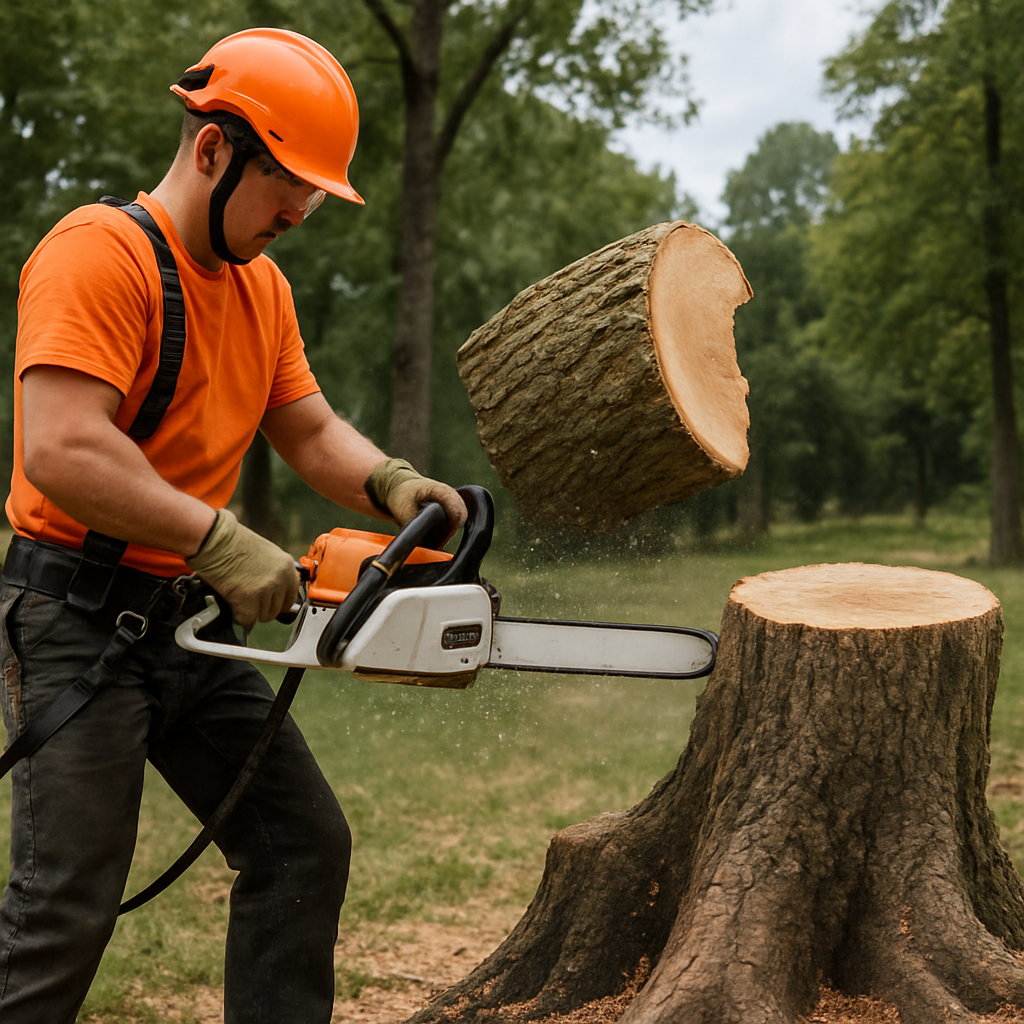
One-Call Solutions: Combining Tree Cutting and Stump Removal for Faster Property Cleanup
When you need a property cleared quickly, booking tree cutting and stump removal together is the fastest way to shrink debris, avoid repeat mobilizations, and reduce overall cost and risk. This practical guide walks homeowners and property managers through the one-call workflow, safety and permitting musts, realistic cost ranges, and simple prep and cleanup steps so you know exactly what to expect from a combined job.
Why combining tree cutting and stump removal saves time and money
Straight to the point: scheduling tree cutting and stump removal as a single job eliminates repeat travel, duplicate equipment setup, and a second round of debris handling — and those three things are where most time and money leak on small projects.
Operational win: a crew that fells, sections, chips, and grinds in sequence uses resources continuously instead of repeatedly starting and stopping. That reduces idle labor, lowers hauling trips to the green‑waste yard, and shortens calendar time before the site is ready for landscaping or construction.
Real tradeoffs that matter
Access and equipment limits: some properties physically prevent a stump grinder or chipper from reaching the work area. If the grinder must be brought in by crane or disassembled to fit a gate, the combined advantage drops and costs can rise. In those cases, staging work or using smaller crews might be the practical choice.
Permitting and project sequencing: when permits or inspection windows delay stump grinding, forcing crews to return later, the savings vanish. For properties with tree protection orders or complex utility locates, confirm permitting timelines before committing to a same‑day plan.
- Hauling consolidation: one pass with a chipper keeps disposal fees down and often reduces truck time by half compared with separate jobs
- Safer site control: removing the stump right away eliminates trip hazards and pest attractants that a lingering stump creates
- Material reuse: leaving chips on site as mulch or having the crew chip to a size suitable for composting cuts municipal disposal costs
Concrete example: a homeowner prepping a backyard for a new patio booked a one‑call job for three medium trees. The crew cut and sectionalized the trees, ran a Morbark chipper to clear limbs, then ground the stumps with a Vermeer grinder the same afternoon — the yard went from cluttered to graded in one visit, avoiding a second mobilization and a multi‑day closure of the work area.
Practical judgment: combining services pays almost always when access is straightforward, permits are clear, and you want the site usable immediately. It fails to deliver value when access forces special rigging, when roots must remain for later work, or when a permit forces a split schedule.
If you want a clean site fast, prioritize a one‑call approach — but verify access and permits before signing a single‑day commitment.
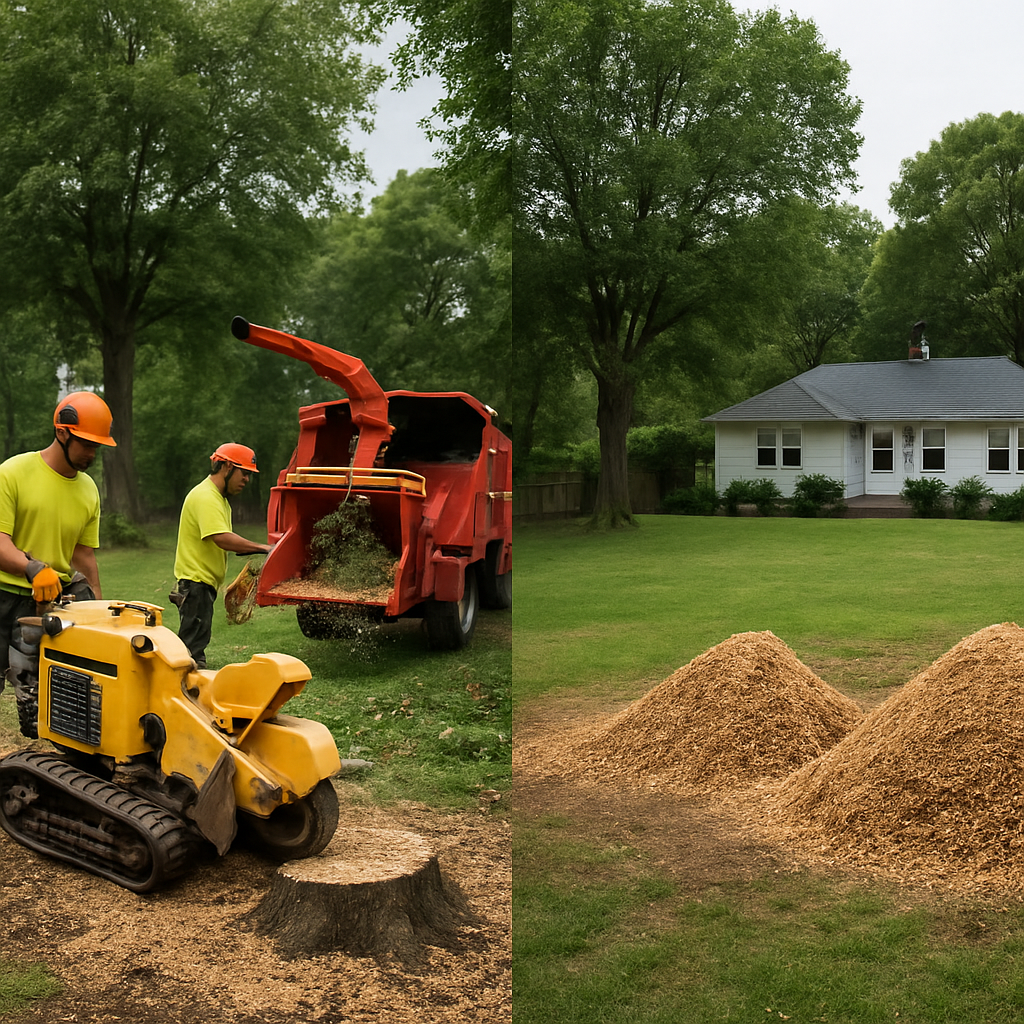
Step by step workflow for a one-call job
Start with a focused intake: a one-call job begins before anyone arrives on site. Provide clear photos, property boundaries, and desired outcomes so the estimator can size equipment (chipper, stump grinder, crane if needed), flag access obstacles, and flag permit needs. Good intake prevents surprises that force a return trip.
Pre-job actions the contractor must complete
- Digital estimate and scope confirmation: contractor documents tree species, DBH (diameter at breast height), stump diameters, and disposal expectations; ask for a photo-based quote or site visit confirmation.
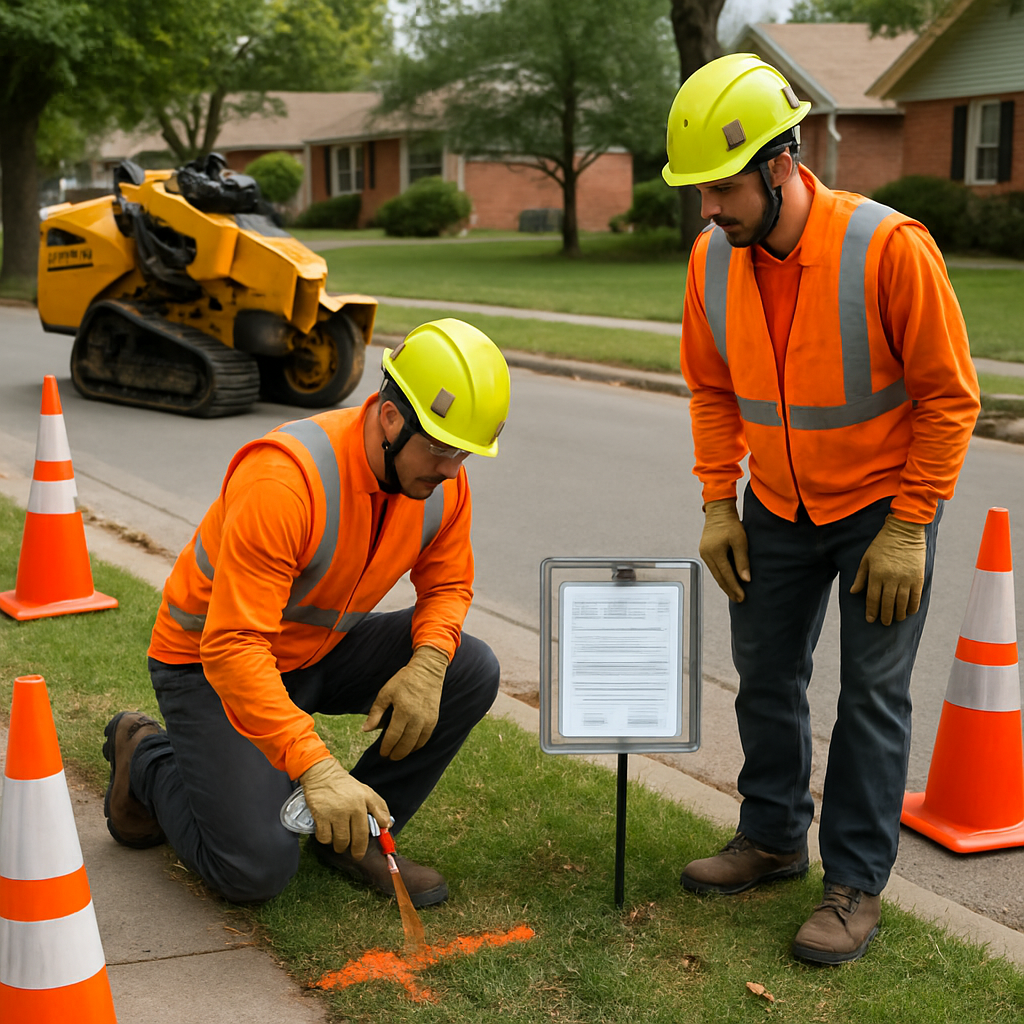
- Utility locates and permit checks: order locates and verify municipal rules — the crew should not mobilize until underground utilities and permit windows are clear.
- Crew briefing and equipment staging: assign roles (lead climber, grounds, chipper operator, grinder operator), confirm PPE and emergency plan, and decide whether a crane or sectional lowering will be required.
On-site assessment and final adjustments: the lead arborist or crew lead does a quick risk map: identify overhead lines, buried irrigation, driveway access width, and safe drop zones. If access prevents the grinder from reaching the stump, the team switches to a staged plan rather than forcing unsafe rigging.
Execution sequence most crews follow
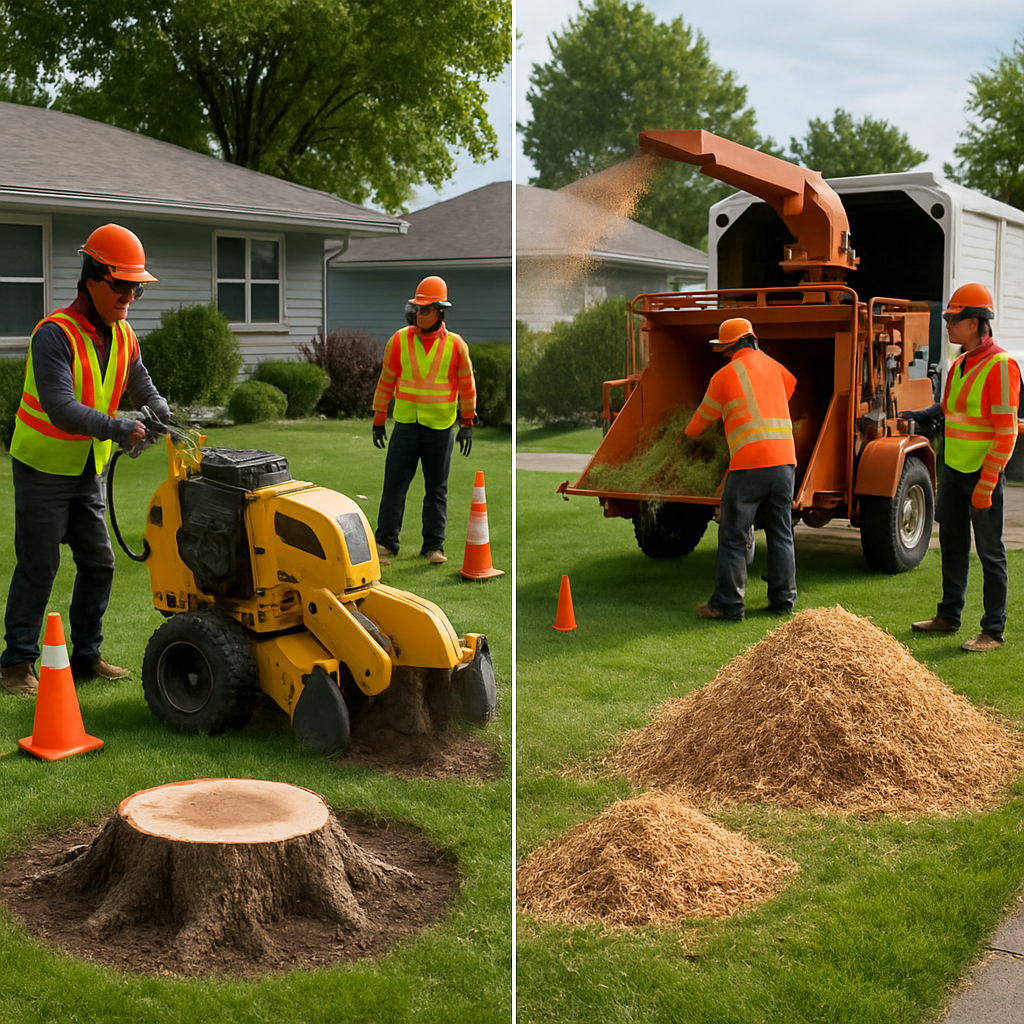
- Traffic and perimeter controls: secure the work area, notify neighbors, and place traffic cones or signs if the street is affected.
- Safe tree cutting and sectional lowering: remove limbs, then fell or sectionalize the trunk using crane assistance or rope techniques when near structures or lines.
- Chipping and haul planning: run a commercial chipper (e.g., Vermeer, Morbark) and consolidate chips near access points for reuse or removal; this clears the work area for grinder access.
- Immediate stump grinding: grind the stump to the agreed depth; crews adjust height depending on future plans (deeper for planned foundations, shallower for lawn restoration).
- Backfill and final grading: crew mixes topsoil or reuses grindings to fill the hole and lightly grade the spot; offer reseeding or sod as a separate line item.
Practical tradeoff: plan grinding timing against soil moisture. Wet, clay soils slow grinders and create heavy, hard-to-move slurry. If the soil is saturated, grinding may be slower or left until drier conditions — that can force a second visit but preserves equipment and avoids a poor finish.
Concrete example: a property manager needed five ash trees removed along a retail lot before paving. Mr Tree Inc. completed a photo estimate, secured the municipal permit, ran utility locates, and used sectional removal around power lines. The crew chipped limbs for mulch piles, ground the stumps to 6 inches below grade the same day, and delivered documentation required for the paving contractor.
What often gets overlooked: customers assume cutting then grinding later is always cheaper. In practice, repeated mobilizations and re-clearing chip piles usually cost more than a planned one-call visit. The exception is when roots must be preserved for transplanting or when permits explicitly delay grinding — in those cases, staging is the right choice.
Safety, permits and regulatory checklist
Regulatory oversights and missed utility locates are the fastest way to turn a single visit into multiple returns and a liability problem. For combined tree cutting and stump removal jobs, treat compliance as part of the scope rather than an afterthought.
Who does what, and when
- Homeowner / property manager: Provide accurate property photos, show property lines, mark irrigation and visible underground features, and grant access windows. If you fail to flag a buried septic lateral or an invisible irrigation main, expect delays and extra charges.
- Contractor (one-call provider): Secures job-site permits, schedules public-right-of-way approvals, and books utility marking. The contractor should supply proof of insurance and a certified arborist or ISA-qualified assessor before work begins — insist on those documents in writing.
- Municipality / utilities: Mark public utilities (call
811in the U.S.), issue any required tree removal permits, and sometimes require inspection after removal for street or heritage trees.
Practical tradeoff: rushing to grind stumps the same day is sensible when locates and permits are already clear. When either is uncertain, pushing to force same-day work usually increases cost and risk. Accept staging if it guarantees legal compliance and protects infrastructure.
Common permit triggers and required evidence
| Trigger | Typical requirement | Typical lead time |
|---|---|---|
| Street or park trees | Municipal permit and notification; often requires a city inspection | 3–21 business days depending on city |
| Protected or heritage species | Special permit and mitigation plan; sometimes tree replacement obligation | 2–6 weeks, can be longer in sensitive zones |
| Work affecting sidewalks or roadways | Traffic control plan and lane-closure permits | 3–10 business days; emergency permits faster but costlier |
| Close proximity to utilities | Utility mark and written clearance; private utilities require owner contact | Utility marks same day to 5 business days; private lines vary |
Real-world example: A homeowner in a midtown neighborhood scheduled tree cutting and stump removal for a large maple next to the sidewalk. The city required a street-tree permit and an inspection before stump grinding could occur; Mr Tree Inc. handled the permit application and coordinated 811 locates, but the inspection window pushed stump grinding to the following week. The result: legal compliance and avoided fines, but a planned one-day finish was postponed.
Clear judgment: never accept verbal assurances about permits or locates. If a contractor hesitates to submit permit applications or produce insurance and arborist credentials, that is a red flag. Faster is not better when it compromises legal or site safety obligations.
811) or confirmation.Next consideration: confirm permit timelines and utility marking before you lock in a same-day one-call appointment; if the calendar doesn't align, plan a staged schedule that protects you from fines, strikes against warranties, and unexpected recovery costs.
Cost breakdown and pricing examples for combined services
Direct point: combined estimates for tree cutting and stump removal are rarely a flat fee — they are built from clear line items you should expect to see and be able to compare across contractors.
- Tree cutting / removal: priced by complexity and DBH (diameter at breast height); includes sectional lowering or crane time when needed
- Stump grinding: quoted by stump diameter bands and depth required; deep root removal or full extraction is extra
- Mobilization and equipment: truck, chipper, grinder, and operator hours — long drives or forklift/crane time increase this
- Hauling and disposal: green‑waste tipping fees or hauling distance; leaving chips on site reduces this line item
- Permits and utility locates: some municipalities charge application fees or require traffic control
- Site restoration: backfill, topsoil, reseed or sod; optional but affects final price
How quotes are usually structured: contractors provide an itemized estimate (tree removal, chipper time, stump grinding by diameter, haul/disposal, permits, and optional restoration). Ask for DBH and stump diameter references on the estimate so you can compare apples to apples, and confirm whether chips are included or left on site. For scope clarification see tree removal and stump grinding.
Concrete pricing examples (realistic, conservative):
- Small yard job: one 12″ maple, accessible yard, chips left on site — tree cutting $350; stump grinding $150; hauling $0 (chips left); total around $500–$650.
- Medium job: three 18–24″ trees, standard access, chips hauled — tree cutting $1,200; stump grinding (three stumps) $600; hauling/disposal $300; total around $2,000–$2,500.
- Large/complex: single 36″ oak near structure requiring sectional lowering and grinder staging (possible crane) — tree cutting $2,500; stump grind or partial root removal $900–$1,500; mobilization/crane $1,200; hauling $400; total $5,000+ depending on rigging.
Practical tradeoff: leaving chips on site is the simplest way to reduce invoice totals, but it transfers labor to you if you expect the crew to spread them neatly; hauling saves you that work but adds a disposal line item. Also, grinders are hour‑based in hard or root‑dense soils — tight budgets can be blown by slow grinding in clay or after heavy rain.
Get an itemized quote that lists DBH, stump diameters, equipment hours, and disposal terms. Vague lump sums hide the most common change orders.
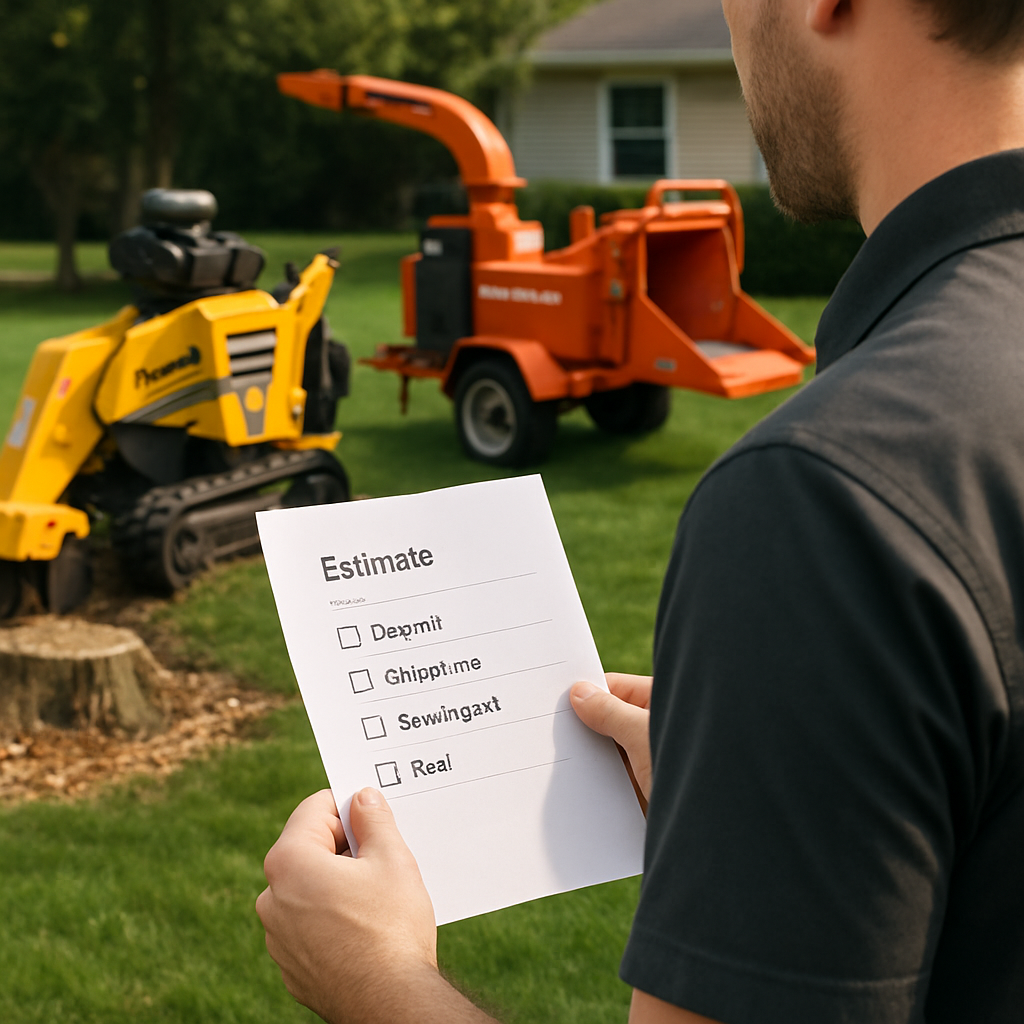
Judgment: if your priority is speed and a usable site, pay attention to access and grind depth rather than chasing the lowest headline price. The cheapest quote often leaves chips piled where the grinder later needs to return, or assumes perfect access and then charges for rigging. Prefer an itemized one‑call quote and confirm how the contractor handles permit delays before you sign.
When to combine services and when to stagger them
Default choice: schedule tree cutting and stump removal together when your objective is a cleared, usable site as quickly as possible. Combining reduces duplicate mobilizations, keeps crews and equipment productive, and clears hazards in one pass. That said, there are predictable cases where splitting the job is the smarter move.
Three practical criteria to decide
Access and equipment practicality: if a commercial stump grinder or chipper cannot reach the stump without special rigging, the cost and safety risk of forcing a same‑day grind often outweigh the convenience. Crane-assisted tree removal is expensive; if a crane is needed just to deliver the grinder, consider staging or a different removal strategy.
Project sequencing and downstream work: when you have upcoming excavation, utilities relocation, or landscaping that requires the root mass intact or access underneath the stump, delay grinding until after those trades complete. Removing a stump too early can complicate soil compaction and trenching for irrigation, drainage, or a new foundation.
Legal and permitting constraints: if the municipality requires inspections, replacement plans, or heritage-tree approval, you may be forced to wait. Do not let a contractor assume same‑day grinding until permits and utility locates are confirmed; that is a frequent reason a one-call job becomes two visits.
- Combine when: access is straightforward, permits are cleared, and you need the area available immediately for paving, landscaping, or sale.
- Stagger when: future trades need roots in place, a permit inspection is pending, or site access prevents safe grinder operation.
Concrete example: a homeowner planning a new in-ground pool elected to delay stump grinding after tree cutting. The crew removed the trees and left the stumps intact while the pool contractor mapped excavation lines. Once trenches and utility relocations were finished, Mr Tree Inc. returned with a Vermeer grinder to remove stumps without risking damage to the new pool plumbing or compacted base.
Tradeoff to understand: staging protects future work but increases total mobilization cost and prolongs the site disruption. Combining is cost-efficient and faster but can force expensive rigging or cause rework if underground work or permits are not finalized. Choose the option that minimizes total project friction — not just the immediate invoice.
Next consideration: if you prefer a one-call appointment, require the estimator to confirm grinder access and permit status in writing; that small contract addition is the simplest way to avoid an unexpected second visit.
How Mr Tree Inc. performs one-call jobs and what sets their process apart
Direct approach: Mr Tree Inc. treats a one-call job as a single operational unit rather than two separate tasks. That starts with a focused intake that identifies access constraints, permit risk, and the exact equipment match so the crew arrives prepared to cut, chip, and grind in one continuous flow — not to discover a locked gate or missing permit and send a crew home.
Pre-job rules that reduce surprises
Contract clarity up front: estimates include the DBH and stump diameters, a stated grind depth option, responsibility for 811 utility marks, and a permit contingency clause. If a permit or private utility delays grinding, Mr Tree documents the cause and offers a conditional return window and pricing so you do not absorb vague change‑order charges.
Equipment-to-site matching: crews are staged based on an equipment decision matrix. For straightforward yards they send a Vermeer grinder plus a Morbark chipper; for tight urban lots they prebook a small-track grinder or crane time. That prevents the common failure mode where a crew brings the wrong machine and has to reschedule.
Day-of logistics and role choreography
- Arrival and verification: lead arborist verifies permits, utility ticket, and homeowner preferences; this is logged with photos in the job app.
- Perimeter and traffic control: crew implements the agreed safety plan — cones, pedestrian barricades, or a police lane closure if needed.
- Sequenced execution: climbers or crane teams remove sections, chipper clears debris into manageable piles, then grinder operator completes the agreed depth while grounds crew prepares backfill.
- On-the-spot decisions: if access prevents the grinder from reaching a stump, the lead documents the constraint and switches to a staged plan with transparent fees.
Practical tradeoff: compressing everything into one day reduces total calendar time but concentrates disruption. For commercial properties that can mean after‑hours work and higher labor rates; for tight residential streets it may require temporary parking controls. Ask whether the bundle savings justify higher day‑of traffic or noise impacts.
Concrete example: a downtown boutique hotel needed a dying sycamore removed without blocking daytime deliveries. Mr Tree Inc. scheduled a night shift, coordinated a short crane lift to lower large sections, used a Morbark chipper to clear limbs, and ran a Vermeer grinder for stumps before breakfast. The hotel avoided daytime closures and received a digital job report with permit copies and disposal receipts the next morning.
Post-job accountability: every one-call job ends with a digital job packet: before/after photos, the utility mark ticket, municipal permit copies (if applicable), a grind-depth confirmation, and disposal manifests or mulch refusal forms. This documentation is the single best defense against later disputes about scope or damage.
Judgment that matters: small contractors sell low-price, flexible scheduling but often omit the paperwork and contingency planning that make one-call promises reliable. If you want the convenience of a single visit, insist on the permit/utility clause and the equipment‑to‑site match in writing; otherwise the one-call turns into multiple costly returns.
Next consideration: when you request a one-call quote, ask for a conditional scheduling addendum that spells out permit and access contingencies and whether mulch will be left on site or hauled. That single contract detail separates a reliable one-call from a convenient-sounding but fragile promise. For more on tree assessment practices see ISA and for Mr Tree Inc.'s arborist offerings see arborist services.
How to prepare your property and what to expect after the crew leaves
Start clean and you cut finish time. For combined tree cutting and stump removal jobs the difference between a smooth single visit and a return trip is almost always simple logistics. Clear access, visible site notes, and a single on-site contact save crews time and reduce the chance of damage.
Day-of homeowner preparation
- Give the crew a single point of contact: provide a phone number and an on-site contact who can make decisions about chip reuse, grind depth, and whether to haul debris.
- Open gates and clear routes: leave gates unlocked or provide keys, clear gates of obstructions, and fold up narrow lawn furniture or planters that might block equipment movement.
- Flag delicate items and buried features: use bright flagging to show irrigation heads, invisible dog fences, septic lids, and storage tanks so the crew does not accidentally expose them.
- Move portable cars and trailers away from driveways: not the same as parking further down the street. Give grinders and chipper trucks unimpeded staging room.
- Protect ornamentals and hardscapes: put plywood over fragile pavers or garden edging and mark trees you want retained so crews avoid them during sectional lowering.
Practical limitation: if a property requires the crew to disassemble or crane in a grinder because of narrow access, expect extra time and cost. Do not assume the crew will force equipment through a gate without prior authorization.
What you will see after the crew leaves – practical timeline
| When | Visible condition | Action or expectation |
|---|---|---|
| Immediate – end of day | Piles of chips, stump ground to set depth, backfill loosely compacted | Crew will leave chip piles where agreed and topsoil backfill may be loose. Walk the area with the lead to confirm grind depth and chip disposition. |
| 24 to 72 hours | Backfill settles 1 to 3 inches, chips start to dry and compact | Expect light settling. If the area will be sodded within a week, request an extra topsoil delivery and compaction prior to laying sod. |
| 2 to 8 weeks | Root decay begins, wood fragments break down, lawn recovery or weed flush depending on chip placement | If you left chips in place, spread them thin – 2 to 3 inches – to avoid preventing grass germination. Monitor for resprouts from species prone to suckering. |
| 3 to 12 months | Large roots soften and collapse, final grade may need topping for planting | For structural projects or new foundation work wait toward the longer end. For planting small ornamentals 3 months may be enough; for large trees allow longer or remove roots fully. |
Concrete example: a homeowner replaced three medium stumps before installing a patio. The crew ground stumps to 6 inches below grade, used grindings mixed with screened topsoil to lightly backfill, and left a 3 inch chip layer in the planting strip. The homeowner compacted the fill after 48 hours and the patio contractor began work one week later without encountering unexpected root mass.
Important tradeoff to understand: leaving chips on site saves hauling fees but can impede immediate lawn seeding or sod. Chips are fine for pathways and mulch beds when spread thin, but if you plan fast reestablishment of turf or precise grading remove or thin the chips before landscaping begins.
Judgment call: if your follow-up work includes heavy excavation, foundations, or pool plumbing do not accept deep grinding as a substitute for root removal. Grinding reduces the visible stump and trip hazard but leaves root mass that can interfere with trenching or compacted bases. Plan root excavation separately if those trades require it.
0 Comments