
Arborists in Portland, Oregon: When to Consult an Arborist and How They Protect Your Trees
Trees on Portland properties are valuable, but visible signs like leaning trunks, fungal conks, or root heave can hide serious hazards and long-term decline. This practical guide explains when to call arborists portland oregon, how professionals diagnose and treat problems in the Willamette Valley climate, and what to check when hiring and scheduling work under Portland rules.
1. Recognizing When to Call an Arborist
If a tree can damage people or property, call an arborist now. Homeowners in Portland frequently wait until visible failure — a fallen limb or a cracked trunk — before calling help. By then the options narrow and costs rise.
High‑risk signs that need a professional assessment
- Major lean or sudden change in lean: Trees that have shifted after storms or show a new tilt toward a structure.
- Trunk damage you can fit your fist into: Large cavities, open seams, or trunk cracks that expose rotten wood — especially when decay affects more than about one third of the circumference.
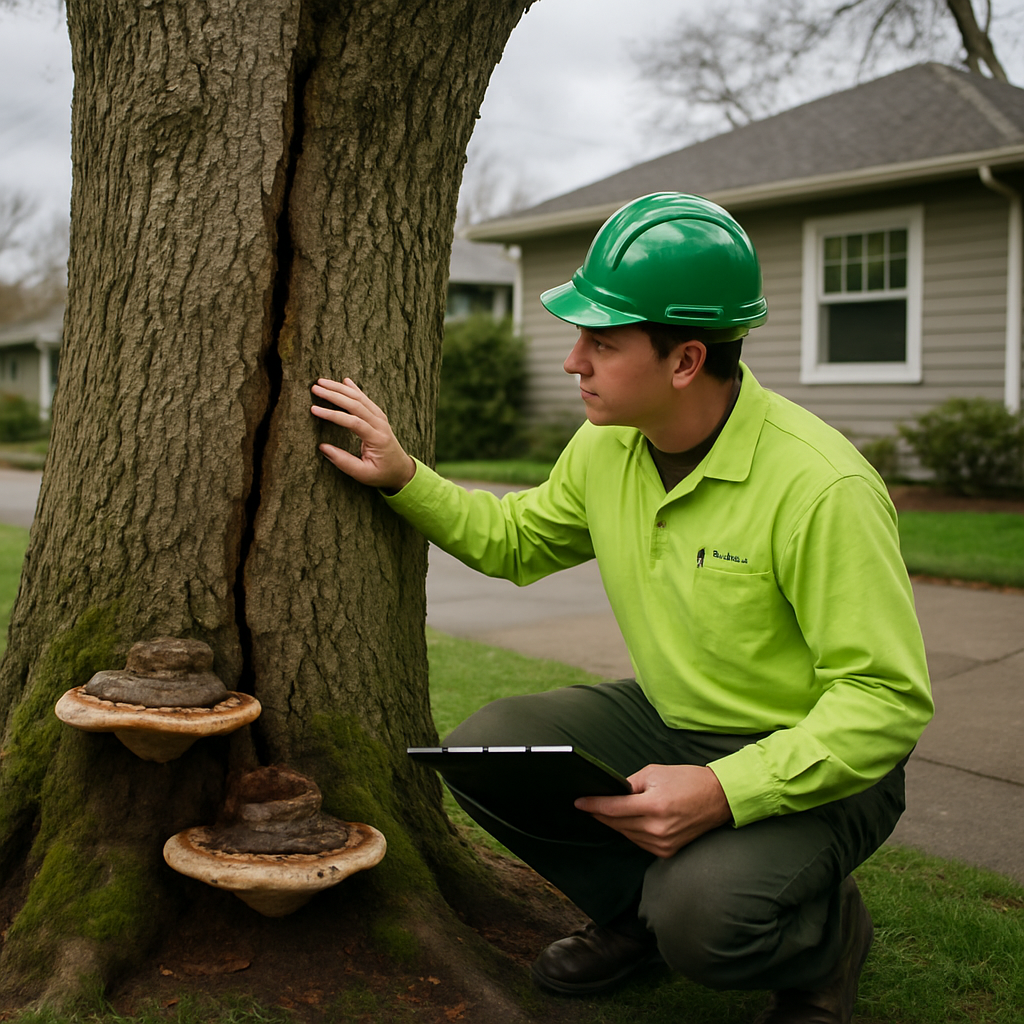
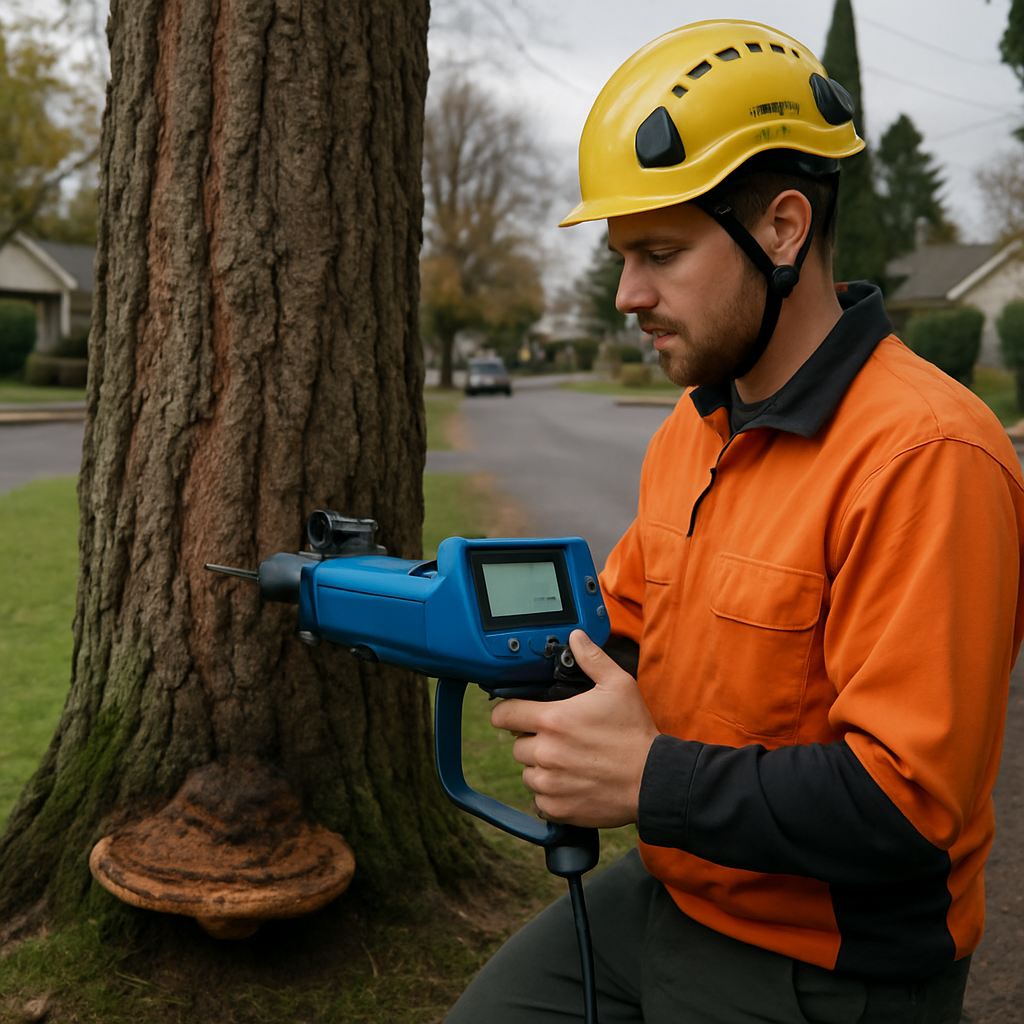
- Fungal conks at the base: Visible mushrooms or shelf fungi on the trunk or root collar usually mean internal decay and structural weakness.
- Progressive crown dieback: If live canopy loss exceeds about 20–30 percent over a season or keeps worsening, the tree is declining systemically.
- Root exposure or heave near foundations or sidewalks: When roots lift pavement or sink near the trunk, the anchorage and health of the tree are compromised.
- Branches repeatedly failing or hanging over occupied areas: Recurring breakage is a sign of internal defects or poor structure.
Practical trade-off: Calling early for assessment often saves money compared with emergency removal after failure, but not every defect requires immediate removal. Arborists balance risk, tree value, and cost — sometimes a stabilization (cabling/bracing) and monitoring plan is preferable to removal.
Lower‑risk signs you can schedule for routine maintenance
- Small dead branches or isolated deadwood: Cosmetic and often handled with scheduled pruning.
- Minor crossing limbs or light crown thinning: Structural pruning during late winter is usually sufficient.
- Surface mushrooms in mulched beds away from the trunk: Worth monitoring but not automatically a structural emergency.
Species and site context matter. Douglas‑fir and other conifers can hide laminated root rot until advanced; bigleaf maple is prone to crown rot that shows as early dieback; Oregon white oak suffers when root zones are compacted. A symptom that looks minor on a Japanese maple may be urgent in a mature Douglas‑fir.
Concrete example: A homeowner on a NE Portland street noticed shelf fungi at a Douglas‑fir base and a new lean after a windstorm. An on‑site arborist found significant root decay and recommended removal because cabling would not address the compromised root plate. Early assessment prevented a catastrophic fall onto the neighbor's garage.
Next consideration: If you identify a high‑risk sign, secure the area and arrange an on‑site assessment immediately; the next section covers emergency steps and who to call in Portland.
2. Emergency Tree Situations and What to Do Right Now
Clear priority: when a tree failure threatens people, buildings, or utilities, the clock matters more than perfect care. Your first job is safety, your second is evidence and contact information for responders — both reduce cost and liability later.
Immediate action plan (what to do in the first hour)
- Confirm immediate danger: if people are injured or power lines spark, call 911 first.
- Keep a firm safety perimeter: move people and vehicles well away from the tree and downwind from broken fuel or gas lines; do not attempt to touch or move the tree.
- Notify utility companies for any line contact: only utility crews should handle live electrical wires; do not assume a tree is de-energized.
- Document condition: take clear photos from safe locations (overall scene, trunk base, any visible root failure) for insurance and later arborist reports.
- Contact an emergency arborist or tree service: request a triage visit; ask whether they perform stabilization only or full mitigation and whether they have insurance and credentials.
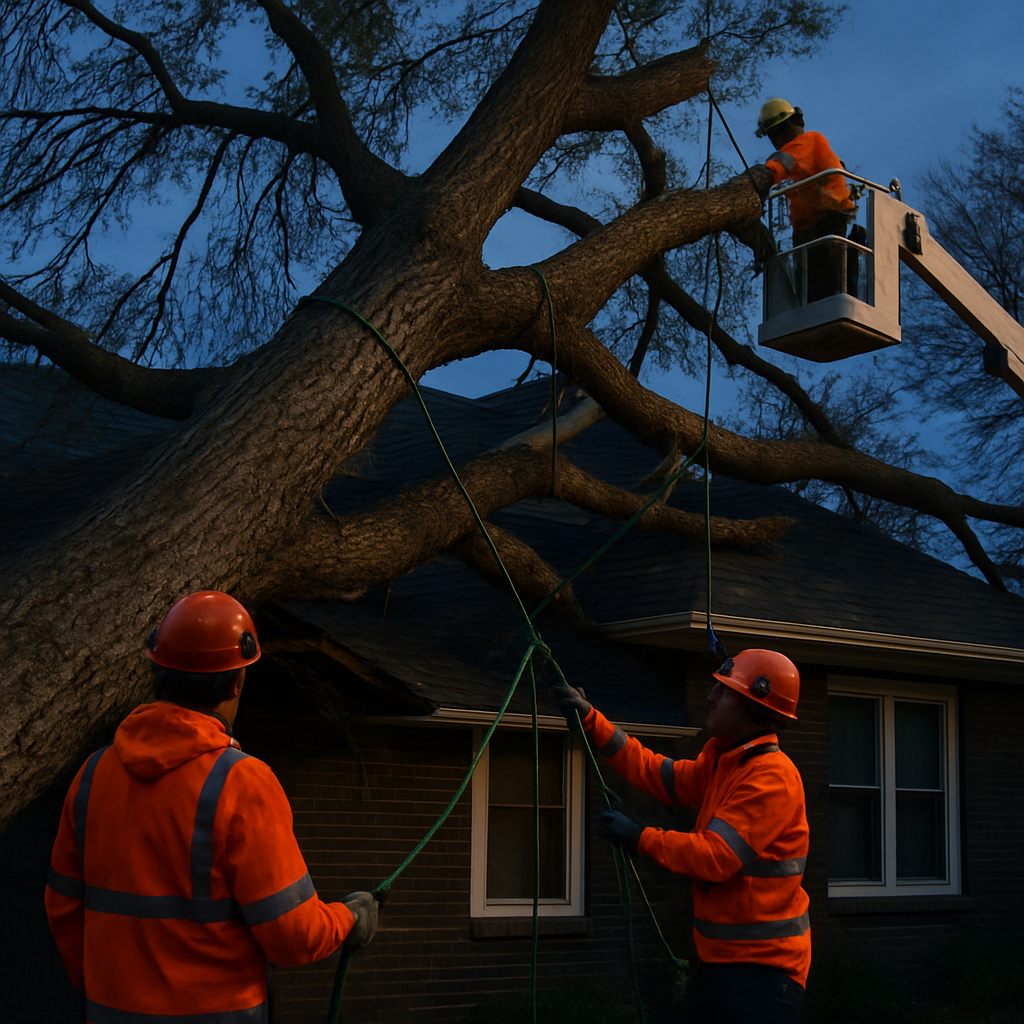
What emergency arborists do fast: crews will prioritize hazard control — removing suspended limbs, cutting bridging wood that could fall, and installing temporary anchors or rigging. These interventions stabilize danger quickly but often sacrifice aesthetics or growth structure; expect follow-up work to restore tree health or to remove compromised trees.
Trade-offs and limits you need to accept
Practical trade-off: emergency fixes are about reducing immediate risk, not long-term recovery. A temporary crown reduction or heavy flush cut may shorten a tree's useful life but prevents collapse. If preservation matters, plan for a later, more careful corrective program once the site is secure.
Regulatory and logistical constraint: if the tree is within the public right-of-way or a street tree, removal or repair often requires coordination with Portland Parks and Recreation; emergency crews can secure hazards but full work may wait for permits or city crews. See City of Portland Trees for when permits apply.
Concrete example: A large Douglas-fir split at mid‑height during a winter storm and lodged on a garage roof. The homeowner called 911 because the roof held people inside; after confirming no injuries, the utility crew de-energized nearby lines and an emergency crew from a licensed company cut the suspended, load-bearing limb into controlled sections and installed temporary bracing. The tree was later reassessed by an ISA certified arborist for permanent repair versus removal.
Do not attempt any cutting near power lines or to lift a tree off a structure yourself — that is where most injuries happen in post-storm cleanup.
3. How Arborists Diagnose Tree Problems
Clear point: Arborist diagnosis is a layered inspection that separates visible symptoms from underlying causes — you should expect a method, not a single glance. A proper visit identifies what is failing, why it is failing, and how urgent the response must be.
Typical diagnostic workflow
Step sequence: Arborists in Portland typically follow a reproducible sequence: visual crown and trunk survey, noninvasive testing, root zone and soil assessment, targeted excavation or sampling when needed, and optional lab diagnostics. That sequence matters because surface symptoms like sparse foliage can come from pests, compacted roots, or chronic water stress.
- Visual inspection: crown symmetry, branch attachment, trunk cracks, fungal conks at the base, and patterns of dieback.
- Sounding and decay mapping: use a mallet or tools like a resistograph to find internal decay without cutting large sections of wood.
- Root and soil check: examine the root crown, look for root heave, check for surface roots, and assess drainage and compaction; may use an air spade for careful excavation.
- Sampling and lab work: moist chamber fungal ID, soil tests for nutrients and pH, and insect traps or bark samples when pests are suspected.
- Risk assessment: apply an ISA-style tree risk assessment to translate defects into a recommendation — monitor, mitigate, or remove.
Tools and limits: Tools such as resistographs and air spades improve diagnostic accuracy, but they are not perfect. A resistograph gives a density profile yet can miss localized heart rot pockets; lab fungal cultures identify species but take time and cost money. The tradeoff is between acting quickly to reduce hazard and waiting for conclusive lab results that refine a long term plan.
Concrete Example: A homeowner reports progressive crown dieback on a bigleaf maple next to a driveway. The arborist will map the dieback pattern, sound the trunk, excavate the root collar with an air spade to check for girdling roots and root rot, and run a soil test. If a basal fungal conk is present, the report will show internal decay probability high and recommend removal or staged mitigation rather than cosmetic pruning.
Practical judgment: In Portland many people assume visible fungus is cosmetic; that is often false. A fruiting body at the trunk base usually signals significant decay and raises the threshold for preservation. Conversely, minor crown thinning without structural defects frequently responds to cultural fixes such as mulch, targeted fertilization, or improved drainage.
4. Specific Arborist Interventions That Protect Trees
Straight to the point: the right intervention protects the tree and the property; the wrong choice wastes money or accelerates decline. Arborists in Portland Oregon apply targeted mechanical, biological, and cultural fixes — not one-size-fits-all treatments.
Core interventions and what they actually do
- Pruning for structure and health: selective removal of competing leaders, thinning to reduce sail and wind-load, and careful crown reduction. Proper cuts reduce decay entry and re-distribute mechanical stress. Trade-off: aggressive reduction can increase epicormic growth and short-term stress, so follow-up inspections matter.
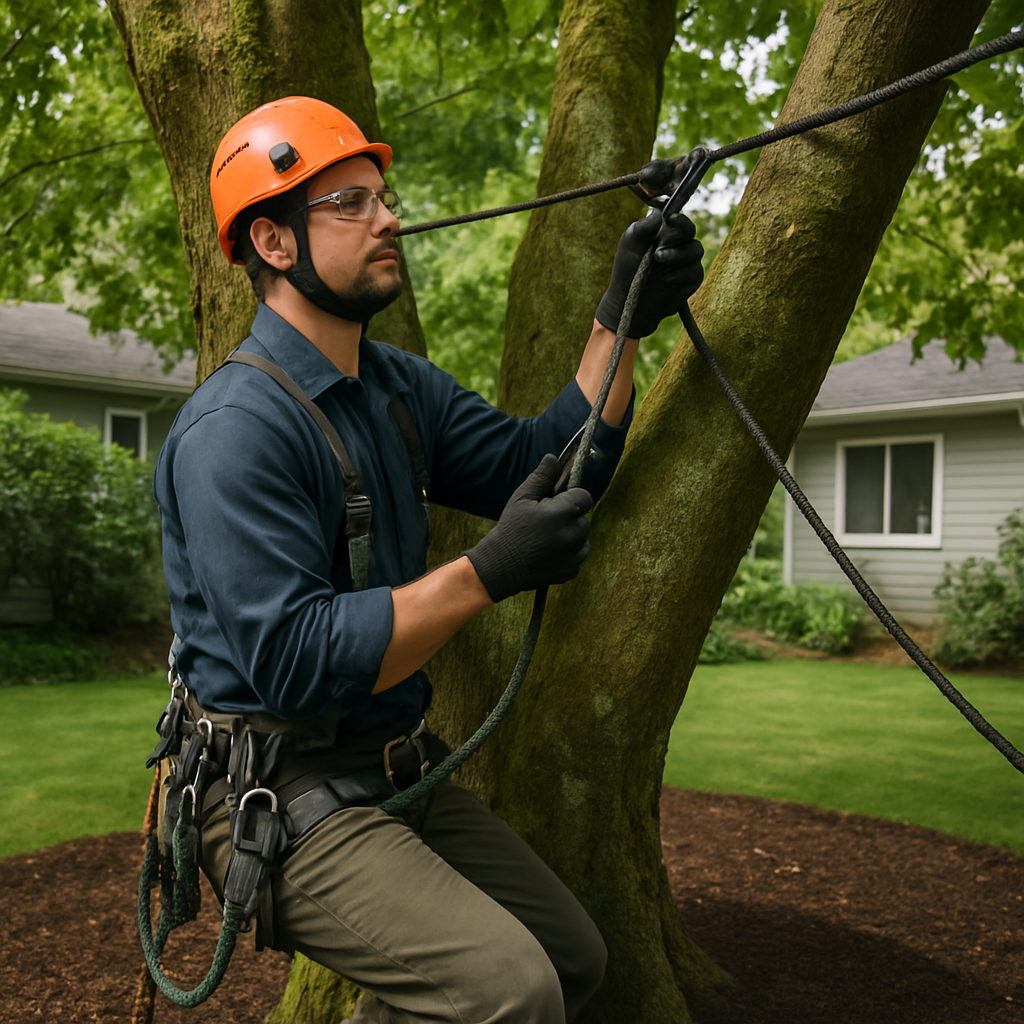
- Cabling and bracing: installed to limit movement between weakly attached limbs or co-dominant stems, preserving a tree that would otherwise be removed. Limitation: cabling manages risk but does not stop internal decay; expect scheduled maintenance and retightening over years.
- Root management and protection: root collar excavation to find hidden girdling roots, targeted root pruning for construction, and installing root protection zones to prevent compaction. Consideration: cutting significant roots reduces anchorage and may require compensatory stabilization.
- Disease and pest interventions: diagnosis-led treatments such as trunk injections, targeted pruning of infected wood, sanitation, and Integrated Pest Management (IPM). Reality check: fungicides and injections buy time; they rarely restore a tree with advanced internal decay.
- Soil and cultural work: mulching to proper depth, corrective aeration or vertical mulching in compacted sites, and fertilization based on soil tests. These reduce chronic stress and improve resilience but produce gradual results — not instant fixes.
- Removal, stump grinding, and replanting: used when risk is unmanageable or structural failure is irreversible. Follow with stump grinding and a replanting plan that considers native species and long-term site suitability.
Practical insight: prioritize interventions that reduce immediate risk while improving long-term vigor. For example, pairing structural pruning with soil remediation reduces the chance that the tree will return to hazardous decline a few years later.
Concrete example: an Oregon white oak in a backyard developed a large co-dominant union and visible heart-rot conks. The arborist performed selective reduction on the weaker stem, installed two dynamic cables, and improved the soil under the canopy with compost-amendment and mulching. The tree remained in place but was placed on a 3-year inspection schedule because cabling masked, not healed, the underlying decay.
Cabling and injections are tools, not cures — expect follow-up inspections and budget for recurring maintenance when you choose preservation over removal.
Local note: permit or street-tree coordination is often needed for work affecting the public right-of-way — a qualified arborist can handle that paperwork. For city guidance, see City of Portland Trees. For hiring local services, check scope and references on the Mr Tree Inc. services page.
Next consideration: when you get an estimate, ask the arborist to list expected lifespan extension, maintenance schedule, and failure modes for each proposed intervention so you can compare preservation versus removal on clear, long-term terms.
5. Seasonal Timing and Scheduling Tree Work in Portland
Seasonal windows matter: late winter for structural work, fall-to-spring for planting, and summer for only the least invasive tasks. In the Willamette Valley climate those windows exist for biological reasons and for calendar reasons — bark, sap flow, insect activity, and the City of Portland permit cycles all change how and when work should be done.
Typical seasonal calendar for Portland
| Season | Best tasks and why |
|---|---|
| Late winter (January–March) | Structural pruning, risk inspections, and most heavy pruning because crowns are bare, defects are visible, and wound closure is strongest; schedule major work now when possible |
| Spring (March–May) | Final pruning before leaf-out, pest monitoring starts; avoid heavy cuts once leaves are expanding because stress and bleeding increase |
| Summer (June–August) | Minor corrective pruning, fruit tree thinning after bloom, emergency work; avoid large cuts—heat and pests raise risk |
| Fall (September–December) | Planting and transplanting take advantage of fall rains; root work and soil remediation are effective before dormancy |
Practical trade-off: doing big pruning in dormant season reduces pest pressure and improves inspection, but it concentrates demand on January–March. That means higher prices and longer lead times; if a tree is a safety risk you cannot wait for the ideal month. Emergency or out-of-season work is more expensive and sometimes requires follow-up monitoring to catch stress or disease that shows up later.
- Booking tip: book nonemergency trimming or removals 4–8 weeks ahead for slow season and 8–12+ weeks ahead for peak late-winter slots.
- Permit lead time: if the job touches a street tree or protected tree, start permit conversations early; the City of Portland tree rules can add several weeks — see Portland Trees.
- Construction coordination: protect root zones before excavation; do root collar work and compaction remediation at least two weeks before heavy machinery arrives.
- Treatment windows: schedule pest treatments and injections according to OSU guidance — some fungicide or systemic treatments work only in narrow seasonal windows, so plan inspections before applications (see OSU Extension).
Concrete example: A homeowner needs a large Oregon white oak removed where the root plate is close to the sidewalk. An ISA certified arborist in Portland will perform an inspection, advise whether a street-tree permit is required, and estimate timeline: 1–2 weeks for assessment, 3–6 weeks for permit approval if needed, and another 1–3 weeks to schedule the crew. Expect total lead time of 5–10 weeks in a normal season; in heavy storm years that can double.
Common misunderstanding: summer pruning is not a harmless convenience. In practice it increases water stress and attracts borers on many species, and it prevents proper visual assessment of structural defects. If you hear a contractor push large summer cuts as a money-saving hack, treat that as a red flag.
6. How to Choose an Arborist in Portland: Checklist and Red Flags
Key point: Hiring an arborist in Portland is a risk-management decision, not a price-shopping exercise. Verify safety coverage, local permitting knowledge, and a clear written scope before you pick anyone.
Checklist — what to verify before you sign
- Insurance and workers coverage: Request a certificate of insurance showing general liability and workers compensation for the crew. Confirm the policy is current.
- Written estimate with scope: The estimate should list specific tasks (prune/crown reduction, cabling, removal, stump grinding), equipment, crew size, start/finish windows, and disposal fees.
- Credentials and verification: Ask for an ISA number and verify at Trees Are Good or the ISA directory. Experience with local species and urban conditions matters—look for ISA certified arborist Portland or demonstrated Oregon work history.
- Permits and right-of-way familiarity: Confirm whether the job touches a street tree or public right-of-way and that the arborist will handle permit filings with the City of Portland. See City of Portland trees for rules.
- Safety plan and traffic control: For work near streets, roofs, or powerlines insist on an on-site safety plan, traffic control if needed, and references for similar jobs.
- References and before/after examples: Ask for recent local references and photos; follow up with at least two homeowners or property managers.
- Payment terms and contract: Avoid large upfront cash payments. A reasonable deposit is normal; final payment after satisfactory completion is standard.
Practical insight: The cheapest bid often cuts corners on insurance, crew safety, or clean-up. A 10-20 percent higher estimate frequently reflects necessary overhead — proper insurance, certified climbers, and traffic control — which protects you from liability and makes the job faster and safer.
Red flags to act on immediately
- No written scope or contract: If they refuse to put work in writing, walk away.
- Cash-only requests or pressure for large upfront payment: These are classic signs of an unreliable operator.
- No proof of insurance or expired policy: You become financially liable if a worker is hurt or property is damaged.
- Pressure to skip permits or work on public right-of-way without filings: That can trigger fines and complicate insurance claims.
- Guarantees that sound unrealistic: Promises to save a severely decayed tree with a single injection or one pruning session are suspect.
- Offers to top trees or make excessive cuts: Tree topping is harmful and outdated practice.
Trade-off to consider: For marginally stable trees you can choose between full removal now or a phased mitigation plan (assessment, temporary bracing, monitoring). Safer but more expensive short-term work can preserve canopy value and avoid the higher cost and ecological loss of immediate removal.
Concrete example: A Portland homeowner had a large leaning bigleaf maple near the driveway. A low bid proposed immediate removal; a vetted arborist performed a risk assessment, coordinated a street-tree permit with the city, installed cabling to stabilize the canopy, and recommended phased pruning over two seasons. The higher initial cost avoided unnecessary removal and preserved the tree while addressing the hazard.
Next consideration: If you want an efficient route: request a written site assessment first, then compare two detailed bids that list permits, equipment, and disposal. For local services, see Mr Tree Inc. services (services, tree trimming, tree removal).
7. How Mr Tree Inc. Can Help Portland Property Owners
Direct support for real problems: Mr Tree Inc. provides on-site arborist assessments, emergency triage, and the full range of follow-up services (pruning, cabling, removal, stump grinding, and replanting) so Portland property owners don’t juggle multiple contractors or guess about permits.
How services map to common Portland needs
- Emergency tree services and storm response: fast hazard triage, temporary stabilization, debris removal, and coordination with utilities.
- Arborist consulting and tree health assessment: written risk assessments and treatment plans performed by ISA-certified staff to support insurance claims or permit applications.
- Tree trimming and pruning: structural pruning, crown reduction, and seasonal maintenance tuned to local species and Willamette Valley timing — see Tree Trimming – Mr. Tree Inc..
- Tree removal and stump grinding: full removal with debris hauling and stump grinding; we handle street-tree coordination and permit steps — see Tree Removal – Mr. Tree Inc..
- Soil, root, and pest interventions: mulching, targeted fertilization, root-collar excavation, and integrated pest management for local threats.
Practical trade-off to accept up front: preservation work (cabling, crown reduction, root remediation) costs more and requires ongoing inspections; removal plus replanting is more expensive now but often lower long-term liability. Mr Tree Inc. will spell out the cost-versus-risk options in the estimate so you can choose based on safety, budget, and long-term landscape goals.
Concrete example: After a winter storm a Douglas-fir leaned toward a house in SE Portland. Mr Tree Inc. performed immediate stabilization, coordinated with the utility company, and completed a full risk assessment. The written estimate recommended staged mitigation: temporary cables, monitored pruning, and later removal with a permit because root decay made preservation unsafe.
What to have ready for an on-site consult: property address, photos showing the tree and nearby structures, notes about utility lines or previous work, and any insurance claim numbers.
What you should expect in the written estimate
Estimates from Mr Tree Inc. break costs into line items: assessment fee, labor and equipment, disposal and stump grinding, permit fees or permit coordination time, recommended follow-up inspections, and clear schedule windows. The estimate also lists insurance coverage and the crew safety plan so there are no surprises on liability or on-site procedures.
Judgment most homeowners miss: a low bid that omits permit coordination or written risk assessment is rarely cheaper when you factor city fines or missed structural issues. Paying for a documented assessment and permit handling upfront usually saves money and liability down the road — Mr Tree Inc. integrates that work so the job complies with City of Portland tree rules.
Safety and logistics you’ll see on site: pre-job walkthrough, drop-zone barriers, traffic and pedestrian control if needed, utility notification, and a post-job report with photos. For projects near rights-of-way or street trees Mr Tree Inc. will file permits or give you the paperwork to file.
Next consideration: if you need service, request an on-site assessment and insist on a written scope that separates immediate hazard mitigation from longer-term preservation work so you can weigh cost, risk, and timing before authorizing full remediation. For service details see Mr. Tree Inc. services overview.
0 Comments