

Choosing a Tree Service in Oregon: Regional Regulations, Seasonal Advice and Budgeting Tips
Finding a reliable tree service oregon requires attention to local permits, seasonal care windows, and clear contracts – get those wrong and you risk fines, lingering hazards, or unnecessary costs. This guide walks through the municipal checks to run, when to call an ISA Certified Arborist versus a routine crew, regional timing for pruning and removals across coastal, Willamette Valley and eastern Oregon, and how to compare written estimates so you avoid surprises. Use the checklists and copy-ready questions to vet contractors, budget realistically, and decide when emergency response or a full-service crew makes sense.
1. How Oregon municipal rules and permits affect your project
Local rules change the job before a crew shows up. City ordinances can turn a routine prune into a permitted removal, add mandatory replacement trees, or require traffic control and inspections — all of which increase cost and timeline.
Key categories to watch for: street or public right-of-way trees, heritage or landmark trees, tree protection zones on development sites, and any tree conservation overlays in your zoning. Cities set these rules independently; Portland, for example, separates street-tree rules and permitting through its urban forestry page: City of Portland Trees.
Practical steps to avoid surprises
- Check jurisdiction first: locate your city or county urban forestry or public works page and search tree code.
- Confirm ownership: establish whether the tree sits on the public right-of-way (between curb and sidewalk) or private property.
- Ask about protected status: verify whether the species or diameter triggers heritage/landmark rules or replacement requirements.
- Clarify who pulls permits: get written confirmation whether the contractor will secure permits and pay fees or if that is the owner responsibility.
- Document decisions: require the estimate or contract to list permit tasks, fees, and expected inspection steps.
Trade-off to accept: having a contractor pull permits costs more up front but usually saves time and risk. If you try to pull permits yourself to cut cost, expect delays from incomplete applications and higher odds of missed inspection requirements that can produce fines or rework.
Concrete example: A homeowner in inner Portland wanted a dying maple removed near the sidewalk. The city classified it as a street tree, which required a removal permit and a replacement fee. The cheapest crew started work without checking and was stopped by city code enforcement; the homeowner paid the fine plus corrective planting. A contractor who handled permits from the start avoided that outcome and included the replacement planting in the final invoice.
Copy-ready question to city or urban forestry
Use this text when you email your city office: Hello – I own property at [your address]. There is a [species, approximate DBH] tree located [describe location – e.g., between curb and sidewalk / 6 ft from house]. Can you confirm whether this tree is municipally managed or requires a permit for removal or pruning, and point me to the application or fee schedule? Thank you.
Local resources and next step: Start with your city page (for Portland see City of Portland Trees) and ask potential contractors to state permit responsibilities in the estimate. Full-service vendors commonly list this on their services page, for example Mr. Tree Inc. services.
2. When you definitely need a permit and when you probably do not
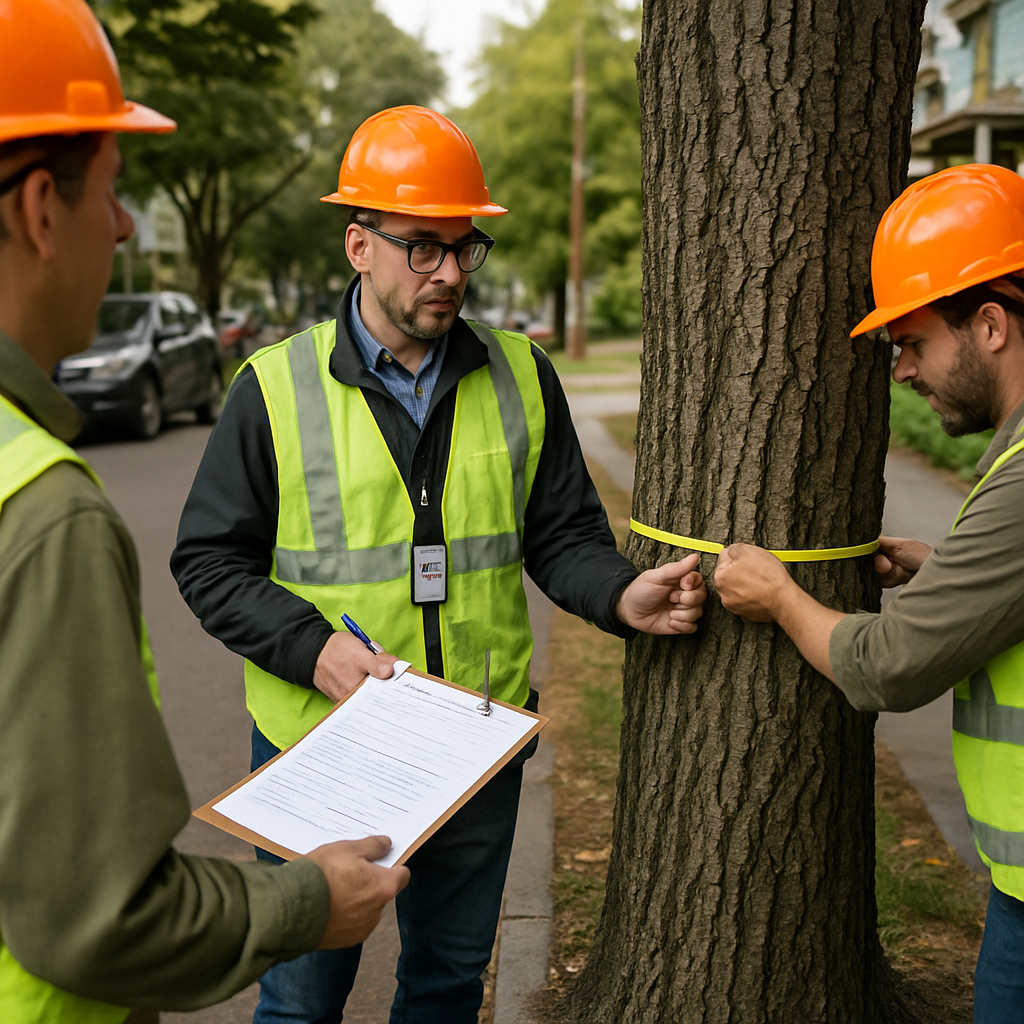
Clear rule first: remove or work on a tree that sits in the public right of way and you will very likely need a permit. Private-property work can be permit-free in many cases, but several common triggers push a job into the permit zone and cost and timeline implications are real when that happens.
Typical permit triggers
- Street or park trees: trees between the sidewalk and curb or on municipal land. See City of Portland Trees for a concrete example.
- Heritage, landmark or significant trees: species or specimens protected by local ordinances; removal often requires an application and review.
- Large removals or site disturbance: clearing more than a threshold number of trees or disturbing a slope or wetland buffer commonly needs a permit or environmental review.
- Work in a conservation overlay or historic district: even pruning can be restricted where preservation rules apply.
- Utility or safety coordination: any work that requires traffic control, lane closures, or coordination with utility companies (for example Portland General Electric) will often trigger permits or permits-for-work-on-public-right-of-way.
Situations that often do not require a permit
- Routine pruning on private property: standard tree pruning oregon jobs for maintenance and thinning are usually allowed without a permit, provided they are not in a protected area.
- Small tree removal: single small ornamental removals can be permit-free in some jurisdictions; verify local DBH or species thresholds before assuming.
- Stump grinding on private property: frequently permitted without extra paperwork if no soil disturbance triggers apply; confirm with your city.
- Emergency hazard mitigation: temporary action to remove immediate danger is often allowed with after-the-fact notification, but full removal or reconstruction may still need permits.
Tradeoff to accept: assuming a job is permit-free to save time can backfire. If a city requires a permit after work is done you may face fines, stop-work orders, or be required to replace the tree. Hiring an insured, licensed contractor who offers to handle permits upfront is usually cheaper than retrofitting compliance.
Concrete Example: a homeowner in southeast Portland asks a contractor for a quote to remove a large maple near the sidewalk. Because the tree is in the right of way the contractor must apply for a street tree removal permit and coordinate inspection. The permit added two weeks to the schedule and a small fee; the contractor handled the application, avoiding a stop-work risk for the homeowner.
Common misunderstanding: people assume emergency tree work never needs permits. In practice, emergency pruning or temporary stabilization is allowed quickly, but final removal, stump work, or regrading related to the emergency often still require city approvals and documentation. Treat emergency response and final permits as separate steps.
Ask this when you request a quote: Will you pull required permits and coordinate inspections? Please state this in the estimate and include permit fees as a separate line item. A reliable local vendor providing full-service options is an important signale.g. see Mr. Tree Inc. services.
3. Credentials, insurance and safety vetting checklist
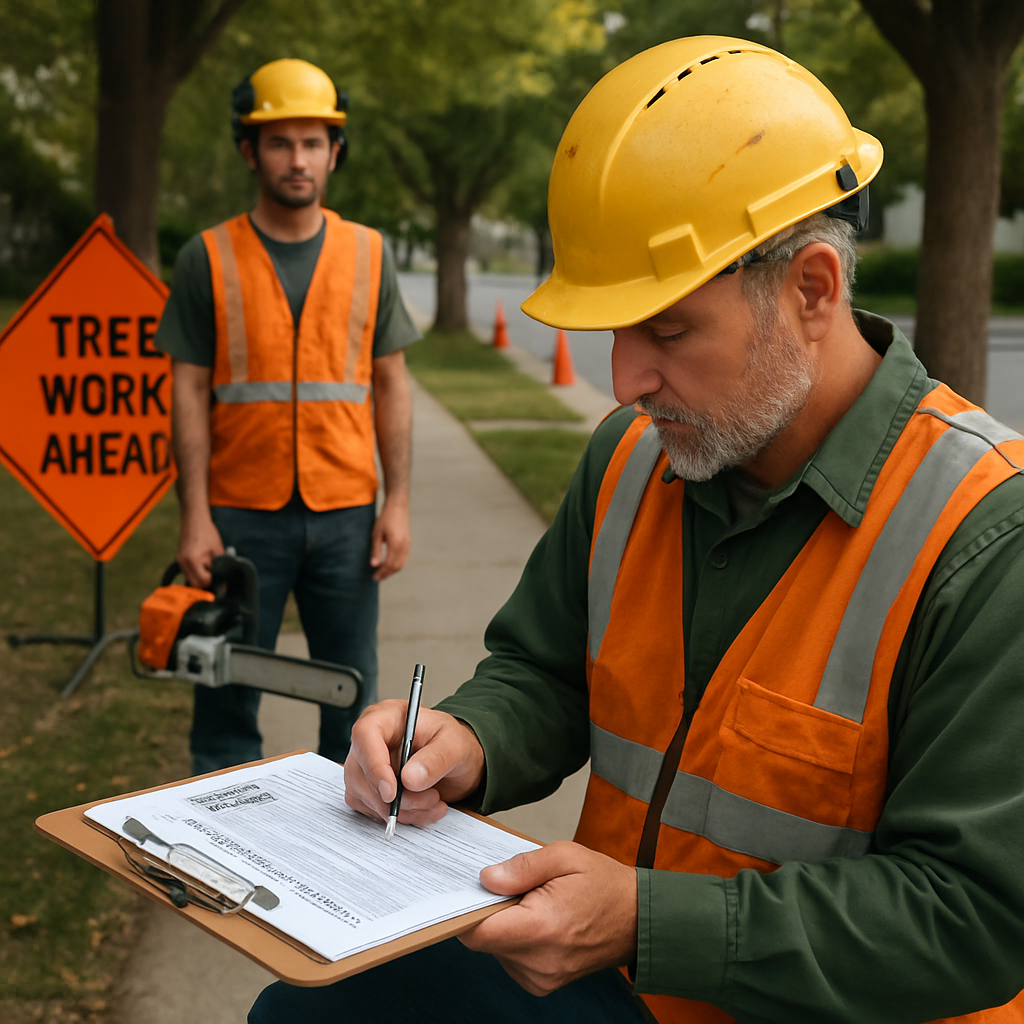
Start here: do not hire a crew that refuses to produce a certificate of insurance before work begins. For most homeowners, the single best risk control is written proof of active general liability and workers compensation that specifically covers tree work.
Concrete items to request and verify
- ISA certification: ask for the arborist name and ISA number and verify on the ISA website.
- Certificate of Insurance (COI): request a COI showing general liability with limits (minimum $1M per occurrence is common), policy dates, and the insurer name.
- Workers compensation: confirm the contractor carries it or you could be on the hook for medical costs if a worker is injured on your property.
- Oregon registration or license: confirm registration with the Oregon Construction Contractors Board if the job falls under their rules.
- Additional insured and endorsements: for high-risk or commercial jobs, ask to be added as additional insured – this matters if there is property damage or a claim.
- Equipment and safety proof: evidence of crane/aerial lift certification, rigging training, and current PPE standards for the crew.
- On-site supervision and qualifications: name a lead arborist who will supervise the job and confirm their credentials.
- Emergency response capability: if you need 24/7 tree services in Oregon, confirm whether the company maintains an on-call policy and how emergency pricing is handled.
Verification steps: get the COI before scheduling. Then call the insurer on the COI and confirm policy number and effective dates. Ask the contractor to provide the ISA certification number so you can cross-check. If the COI lists exclusions for aerial work or tree pruning, treat that as a red flag.
Copy-ready questions to include in estimate requests
- Please attach a current Certificate of Insurance showing general liability and workers compensation and the insurer contact.
- What are your general liability limits? Please state per occurrence and aggregate.
- Provide the ISA Certified Arborist name and certification number who will supervise this job.
- Will you add the homeowner as additional insured for this project if requested?
- Do you pull permits and include the permit cost in the estimate? If not, who is responsible?
- Describe your on-site safety plan for work near structures or power lines.
- Who is the on-site supervisor and what is their contact on the day of work?
- What are your emergency response terms and any premium for after-hours work?
Practical tradeoff: cheaper bids often mean lower overhead and sometimes weaker insurance or safety programs. Paying a moderate premium for an insured, certified crew removes most homeowner exposure – which matters more when a work area is close to a house, neighbor property, or utilities.
Example: a homeowner has a 60-foot Douglas-fir leaning toward a roof. A lowball company agrees to remove it immediately but will not provide a COI. Instead of accepting an on-the-spot cut, the homeowner asked for a COI and a named supervisor, then scheduled a stabilization and photo-based estimate. That short delay cost a few hours but avoided potential liability and ensured the crew had the right rigging plan for a safe removal.
If a contractor resists showing insurance or insists on cash only, do not proceed. You are assuming uninsured risk.
4. Seasonal timing in Oregon by region and species
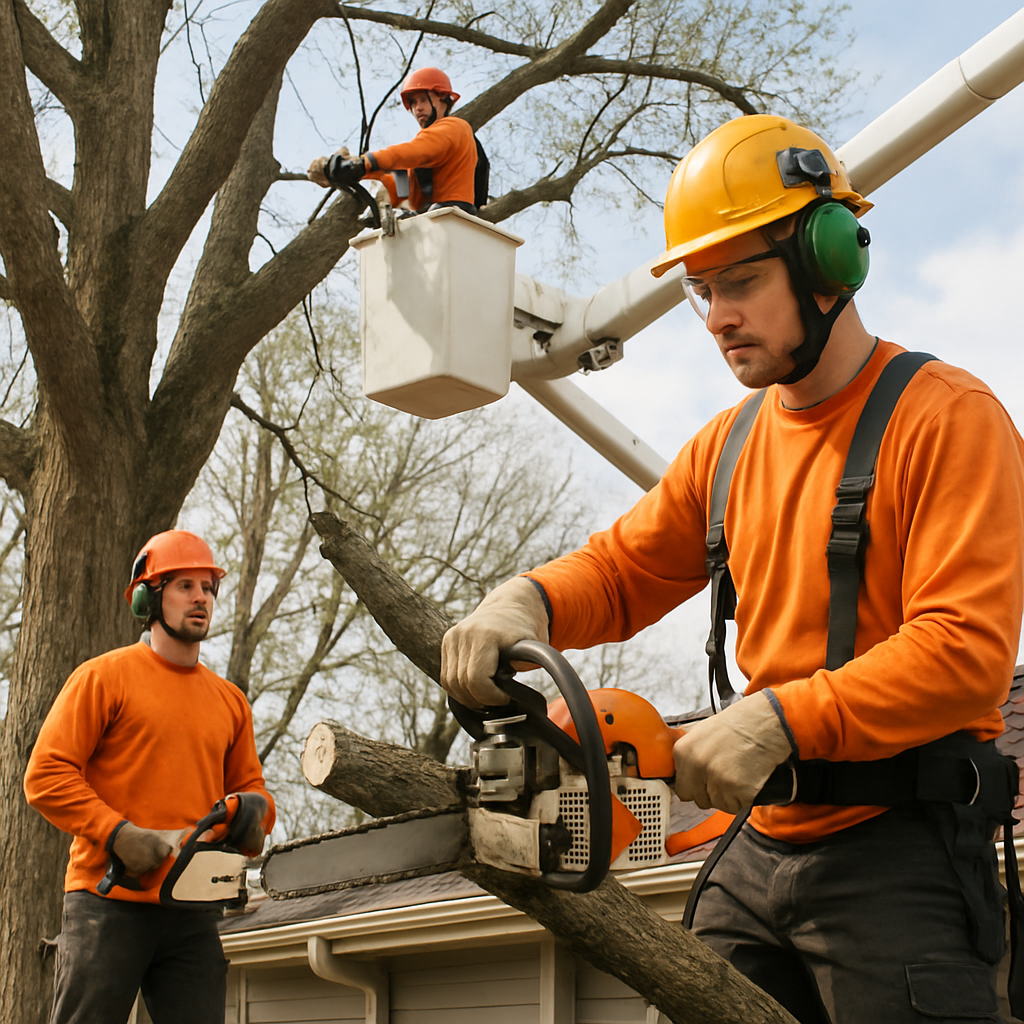
Seasonality is local, not statewide. Coastal, Willamette Valley and eastern Oregon follow different calendars because rainfall, temperature and disease pressure change the risk and optimal work window.
Region-by-region timing
| Region | Best pruning window | Best planting window | Removal considerations |
|---|---|---|---|
| Coastal Oregon | Late summer through early winter for most pruning; avoid pruning during wet, high-pathogen months | Fall for planting when soil is warm but rains return | Wet soils make rigging and stump grinding harder; schedule outside saturated winters when possible |
| Willamette Valley (Portland, Eugene, Salem) | Late winter to early spring for structural pruning; summer for corrective pruning and fruit trees | Fall planting preferred; spring is second choice | Winter removals are common and logistically easier with leaf-off visibility; check disease alerts first |
| Eastern Oregon | Late winter or early spring; avoid heavy pruning in hot, dry summer months | Spring or fall with irrigation plan – avoid midsummer planting | Short crews availability in shoulder seasons; removals often need extra rigging for steep, dry sites |
Tradeoff to accept. Pruning in dormant season reduces active growth stress but can increase exposure to pathogens in persistently wet areas. In coastal pockets, delaying nonessential cuts until drier months reduces infection risk even if it is not textbook dormant-season pruning.
Species-specific rules of thumb
- Douglas-fir: avoid heavy live-crown pruning; minor deadwood removal can be done year-round but late spring to early summer is best for small cuts
- Bigleaf maple: structural pruning in late winter is common, but expect sap flow; summer pruning reduces bleeding and can be chosen for cosmetic work
- Red alder: prune late winter to early spring; avoid large wounds during wet season because alder wood is prone to decay
- Oregon white oak: prune during dry summer months in areas at risk for Sudden Oak Death or follow ODF guidance to avoid spreading pathogens
- Ornamental cherry: prune immediately after flowering to preserve spring bloom and limit large wound exposure
Practical insight most homeowners miss. People schedule nonurgent pruning for spring because it looks easy and crews are available. That raises pest and disease exposure, creates more sap flow on maples, and increases debris management. If tree health matters, pick the window that fits species and regional disease cycles, not crew convenience.
Concrete example: A Portland homeowner with a bigleaf maple dropping heavy branches near a roof should treat immediate hazards regardless of season. For non-urgent structural work, schedule the prune in late winter; if oak disease alerts are active in their neighborhood, postpone until dry months or consult OSU Extension for species-specific adjustments.
When seasonality should not stop you. Hazardous trees or storm-damaged trees get priority regardless of calendar. Expect higher costs and faster mobilization for emergency removals, but do not delay work that threatens people or structures.
5. Budgeting and realistic Oregon cost ranges
Direct point: Budgeting tree work in Oregon is about knowing which variables move the needle — size, access, rigging needs, and whether the crew handles permits and disposal — not finding a single universal price for tree service oregon.
Cost drivers to watch: Tree height and canopy spread, proximity to structures or power lines, slope and access (alley, fenced yard, or tight urban lot), need for a crane or traffic control, stump grinding depth, and whether the job requires same-day emergency response.
| Service | Typical Oregon range | What usually changes the price |
|---|---|---|
| Small pruning / routine trim | $150 – $400 | Number of cuts, tree density, crew minimum call-out |
| Medium pruning / selective crown work | $400 – $900 | Height, limb diameter, access and debris volume |
| Small tree removal (under ~30 ft) | $400 – $1,200 | Stump included? distance to disposal site |
| Medium tree removal (30–60 ft) | $800 – $2,500 | Rigging complexity, nearby structures, crane needed |
| Large tree removal (60+ ft) | $2,000 – $6,000+ | Crane, multi-day crews, extra insurance/liability |
| Stump grinding (per stump) | $100 – $600 | Diameter, depth, root mass, access |
| Crane/rigging rental | $1,200 – $3,500+ (day) | Time on site, lift complexity, traffic control |
| Emergency / storm response premium | 25% – 100% surcharge or $150+ mobilization | Night work, immediate hazard mitigation, overtime |
| Land clearing (per acre) | $3,000 – $10,000+ | Density, grade, debris hauling, environmental constraints |
| Certified arborist report | $300 – $1,200 | Complexity, site visit, written documentation |
Practical trade-off: The lowest quote often omits important line items — hauling, stump grinding, permit pull, or traffic control — or it reflects a less experienced crew that raises your risk when trees are near homes or power lines. Paying 20–40% more for a fully documented, insured bid that includes permits and disposal is usually cheaper than dealing with secondary costs or damage claims later.
Three-quote comparison checklist
- Scope: exact trees, species, trunk diameter or height and method (sectional dismantle, crane, fell)
- Included/Excluded: stump grinding, wood removal, chip on-site, hauling to landfill or green waste
- Permits & coordination: who pulls permits and whether permit fees are in the price
- Rigging & safety: crane rental, traffic control, utility coordination, written risk plan
- Insurance & credentials: certificate of insurance on file, ISA Certified Arborist noted
- Timing & payment: start date, deposit percentage (avoid >30% unless justified), final payment terms
- Warranty/cleanup: site condition standard and damage-liability clause
Concrete example: A homeowner in southeast Portland has a 40 ft maple leaning toward a roof. Three estimates arrived: $1,200 from a local crew that planned manual dismantle and hauling by pickup (no crane, no permit line-item), $1,800 from a crew that included stump grinding and curbside traffic control, and $2,400 from a company that quoted a crane, permit handling, written arborist report and proof of insurance. The safest practical choice was the middle or high bid once the homeowner confirmed permit handling and insurance — the cheapest option carried hidden risk.
Next step: When you request quotes, send the same job description to each contractor and include a link to the tree location and any municipal rules you suspect apply (for Portland residents see City of Portland Trees). If you prefer a vendor who bundles permits and emergency capability, see Mr. Tree Inc. services and their emergency page to compare scope and documented pricing.
6. How to read and compare written estimates and contracts
Start here: treat the written estimate as the control document — it defines scope, responsibility for permits and utilities, who pays for disposal, the schedule and what happens if the crew damages something.
Key line items to insist on
- Scope with specifics: list each tree by location, species and approximate diameter; state whether crown reduction, removal, or pruning and the removal method (sectional, crane, climb and rigging).
- Stump and cleanup: say whether stump grinding, root removal, wood chipping service and debris hauling are included or priced separately.
- Permits and coordination: who pulls permits and pays fees; if the contractor will contact utilities (e.g., PGE) or traffic control, have it written.
- Insurance and credentials: require a statement that a certificate of insurance is attached and include the contractor's Oregon CCB number and
ISAarborist ID if relevant. - Pricing model and extras: unit prices (per stump, per linear foot, per tree) or an itemized hourly rate with estimated hours; list crane, traffic control or arborist report fees as separate line items.
- Schedule and milestones: start date window, estimated completion, and how delays (weather, permits) are handled.
- Payment terms and holdback: deposit amount, progress payments, final payment and retention for unresolved damages.
- Change-orders and warranty: how additional work is quoted and any workmanship or plant-health guarantees.
Trade-off to understand: fixed-price bids give cost certainty but require an accurate scope; time-and-materials bids are flexible for messy jobs but often exceed initial estimates. For hazardous tree removal near structures pay more for a firm scope and experienced crew — cheap, vague bids are risk.
- Red flag: estimates quoted only as a daily or hourly rate with no measured scope.
- Red flag: demand for large upfront cash payments (over 30%) or refusal to provide a certificate of insurance.
- Red flag: no written statement about who pulls permits or handles disposal.
Copy-ready clause: Please add to the contract: The contractor will obtain all required permits, name the City of jurisdiction on permit applications, provide a certificate of insurance listing the property owner as additional insured for work performed, and assume liability for damage to structures, underground utilities located and marked prior to work, and landscape features not listed as excluded.
Clarification language to send with a vague estimate: The estimate references a tree removal for the front yard maple. Please confirm: tree diameter at 4.5 ft, method of removal, stump grinding included (yes/no), disposal location, who will pull permits, and provide COI showing active general liability and workers comp.
Concrete example: In Southeast Portland I compared three quotes for a 30-inch maple leaning toward a garage. The lowest bid excluded stump grinding and listed permit responsibility as homeowner — it also lacked an attached COI. I chose the mid-tier quote that itemized crane time, included permit fees and provided the contractor's CCB and ISA numbers; it cost more but eliminated the common surprise line items.
7. Emergency tree work: vetting fast-response crews and what to expect
Straight to the point: emergency tree work is about triage first and tidy-up later. Fast crews can stop a collapse or clear a line of sight, but the first crew on-site will often perform temporary stabilization rather than full cosmetic removal — and that changes price, safety needs, liability and follow-up work.
Immediate vetting checklist for fast-response crews
- 24/7 availability: confirm the crew is genuinely on-call and not a subcontracted pick-up crew; ask for an estimated arrival window.
- On-call insurance: request a certificate of insurance that covers emergency response; verify policy dates and insurer by phone.
- Utility coordination: if the tree touches or threatens power lines, insist the contractor will coordinate with the utility — do not let crews work until the utility gives clearance. See City of Portland Trees for local contacts.
- Photo triage: ask for a preliminary photo-based assessment and a written stabilization plan before any cutting begins.
- Quoted emergency rate and scope: get a short written scope: stabilize (shoring/ties), partial removal, or full removal, plus estimated emergency premium.
- No large cash-upfront demands: common scam during storms — don't pay major deposits without a signed contract.
Trade-off to accept: immediate mitigation prioritizes safety over neatness. That means the quick fix (ropes, wedge cuts, temporary lowering) will leave debris and may require a scheduled follow-up for full removal, stump grinding, or cleanup. Expect a follow-up estimate and higher total cost if the crew must return for full removal.
Concrete example: A late-winter storm leaves a large maple leaning onto a home. The first crew secures the tree with rigging and removes the most dangerous limbs that threaten the roof. They leave a written stabilization report and a photographed condition log; a second visit, scheduled within 48–72 hours, completes the safe removal and stump grinding once permits or utility clearances are confirmed.
Insurance and insurance documentation matter more in emergencies. Insurers and homeowners both demand photos, timestamps and written scopes to process claims. If an insurer requires an arborist report for hazardous removal, ask the emergency crew if they can provide that documentation or recommend an ISA-certified arborist. Verify credentials at ISA.
Red flag in practice: crews that insist on finishing everything in one night without permits, written scope, or evidence of insurance are often cutting corners. Fast does not excuse lack of documentation — it increases your liability and can void insurance claims.
Next practical step: document the damage with photos, call one local emergency responder (for example Emergency Tree Services – Mr. Tree Inc.) for a photo-based triage, confirm they will verify insurance/utility clearance, and get a short written stabilization scope before any work begins.
0 Comments