
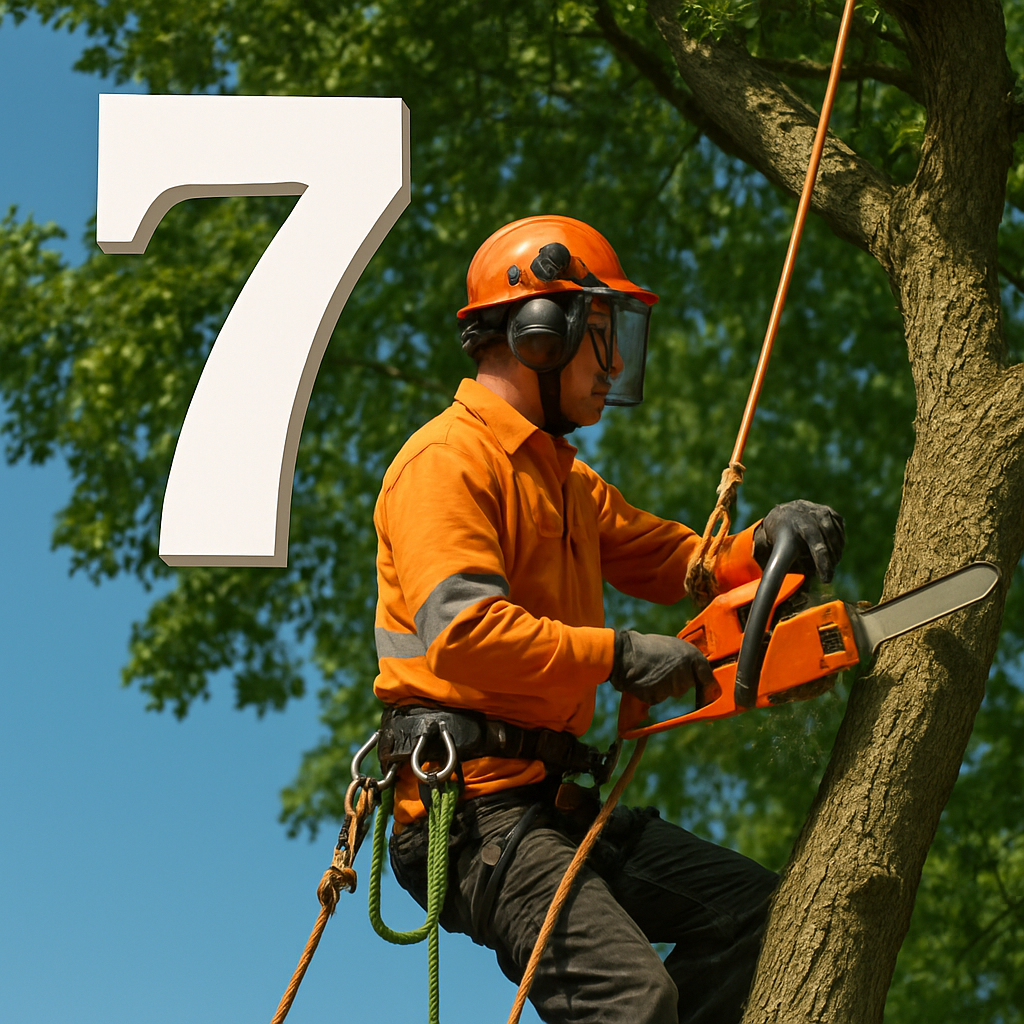
Top 7 Reasons to Hire a Professional Tree Trimming Company Near You (and How to Pick One)
Searching for a tree trimming company near me? This guide lays out the top seven reasons to hire a professional and gives a step-by-step checklist to help you choose the right contractor. You will learn how professionals reduce safety and liability risks, preserve long-term tree health with proper pruning, handle permits and emergency work, and what to insist on in written estimates so you can compare bids and hire with confidence.
1. Safety and liability reduction for people and property
Direct point: Hiring a professional tree trimming company near me shifts most of the real safety risk off you and onto trained crews and their insurers. Serious hazards are not subtle – falling limbs, saw kicks, unstable ladders, and lines contacting utilities create immediate exposure for people and structures. Professionals bring training, rescue plans, rigging, and insurance so you do not become the de facto responder or the liable party.
What you must verify before work starts
- Certificate of Insurance: Obtain a current Certificate of Insurance showing general liability and workers compensation. Ask for policy limits and insurer contact info and verify with the insurer – COIs are sometimes forged.
- Minimum coverage expectations: For residential jobs expect at least $1,000,000 per occurrence general liability; commercial work often needs higher limits.
- Names on the policy: Confirm the contractor and any subcontractors are listed. If they will use subcontractors, have the subcontractor named on the COI.
- Safety plan and equipment: Confirm the crew will use aerial lifts, proper rigging, traffic control, and site rescue procedures when required. Reference OSHA guidance OSHA tree care guidance for industry expectations.
- Contract clauses: Do not sign away indemnity rights or accept ambiguous payment penalties for safety stoppages. A clear scope and hold harmless language matter.
Practical tradeoff: The cheapest bid that removes risk controls or declines to show insurance is rarely a savings. Lower upfront price often shifts costs to the homeowner through property damage, medical claims, or permit fines. Paying more for documented safety practices and proper equipment reduces unpredictable downstream expense.
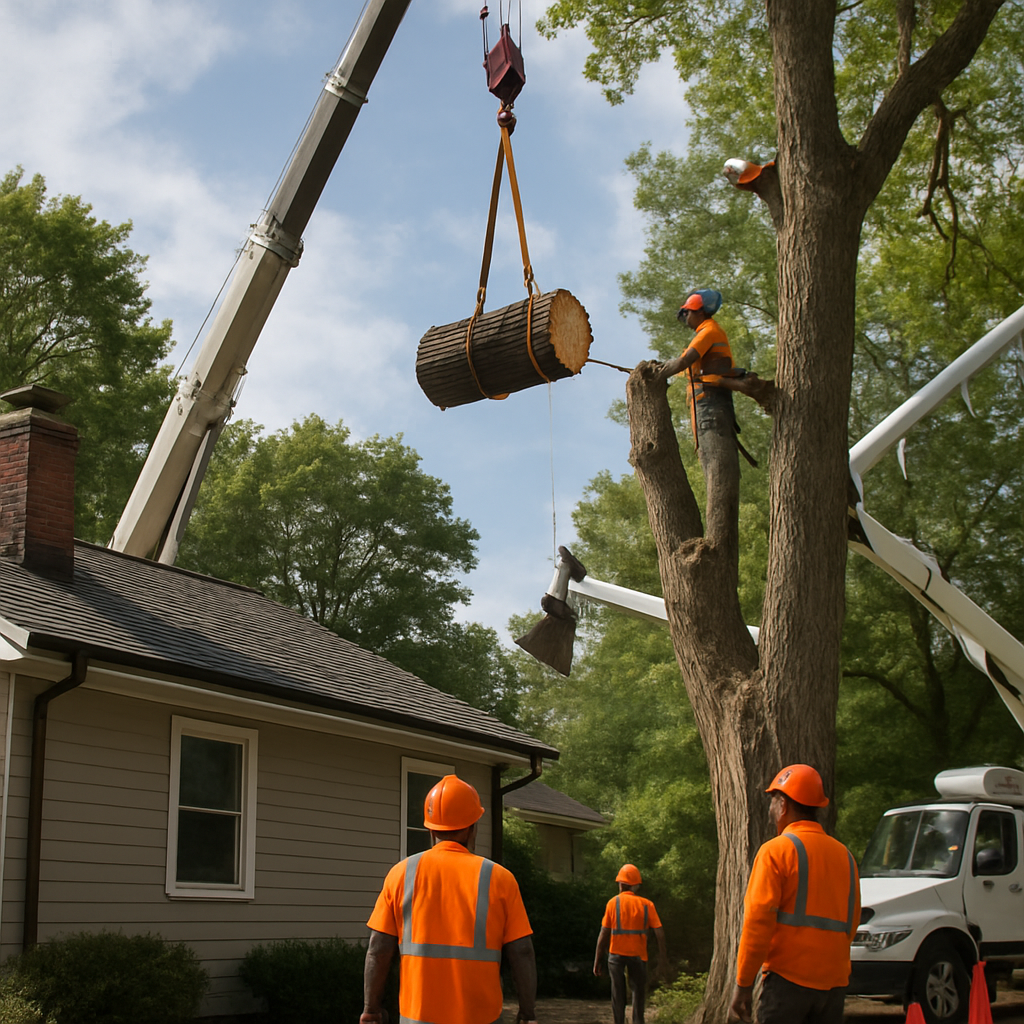
Concrete example: A homeowner had a large maple leaning toward the roof. A certified crew used crane assistance and controlled rigging to lower heavy limbs in sections, protecting the roof and nearby lines. Contrast that with an attempted DIY cut from a ladder where a missed weight calculation led to a limb swing that damaged siding and triggered a claim against the homeowner insurance policy.
What most people miss: Homeowner insurance may not cover contractor negligence or code violations, and local ordinances can assign responsibility for utility coordination to the property owner if the contractor lacks required credentials. Always confirm who will contact the utility and who files required notifications.
2. Proper pruning for long term tree health and reduced maintenance costs
Direct point: Correct pruning is an investment, not an expense—you pay now to avoid recurring failures, health decline, and larger removal bills later. A local tree trimming company near me that understands structural pruning will shape young trees to prevent codominant splits, reduce wind sail, and limit decay entry points that become expensive to fix.
Why professional pruning reduces long term costs
Key mechanics: Structural pruning targets leaders, scaffold limbs, and weak unions using precise cuts that leave the branch collar intact. Correct cuts close naturally and resist decay; poor cuts like flush cutting or topping create open wounds and vigorous, weak regrowth that needs repeated attention.
Tradeoff to understand: More pruning is not always better. Aggressive size reduction creates stress and heavy sprouting that raises maintenance for years. The sensible tradeoff is incremental pruning with a plan: initial structural work on younger trees, then light maintenance cycles. That reduces the probability of sudden catastrophic failure and spreads cost over time.
Concrete example: A homeowner had a 20 year old oak with two dominant leaders separated by a narrow angle. An ISA certified arborist from Mr Tree Inc performed targeted structural pruning and installed a temporary cable. Over five years the tree never developed the expected split; the homeowner avoided a removal and roof repairs that would have cost several thousand dollars. The follow up maintenance plan kept annual trimming minimal.
Practical considerations before you sign a pruning contract
- Ask for a pruning plan: Request a simple diagram or short report showing which cuts will be made and why; this separates cosmetic trimming from structural work.
- Timing matters: Many species tolerate pruning best during dormancy; others respond poorly to late season heavy cuts. Ask the arborist about species specific timing.
- Expect phased work for large trees: If you see a single one day, heavy reduction for an old specimen, get a second opinion—large trees often need staged interventions.
What people get wrong: Homeowners often hire for low price and expect professionals to simply cut back everything. That approach produces cheap-looking results and higher long term costs. A reliable local arborist treats pruning as part of an ongoing arboriculture plan—not a one time cosmetic job.
3. Risk assessment and hazard mitigation through certified arborist expertise
Direct point: When you search for a tree trimming company near me, the real value is rarely the saw work itself but the risk assessment a certified arborist provides before any cut is made. A qualified arborist turns uncertainty into a clear plan that balances safety, tree retention, and cost.
What a formal tree risk assessment covers
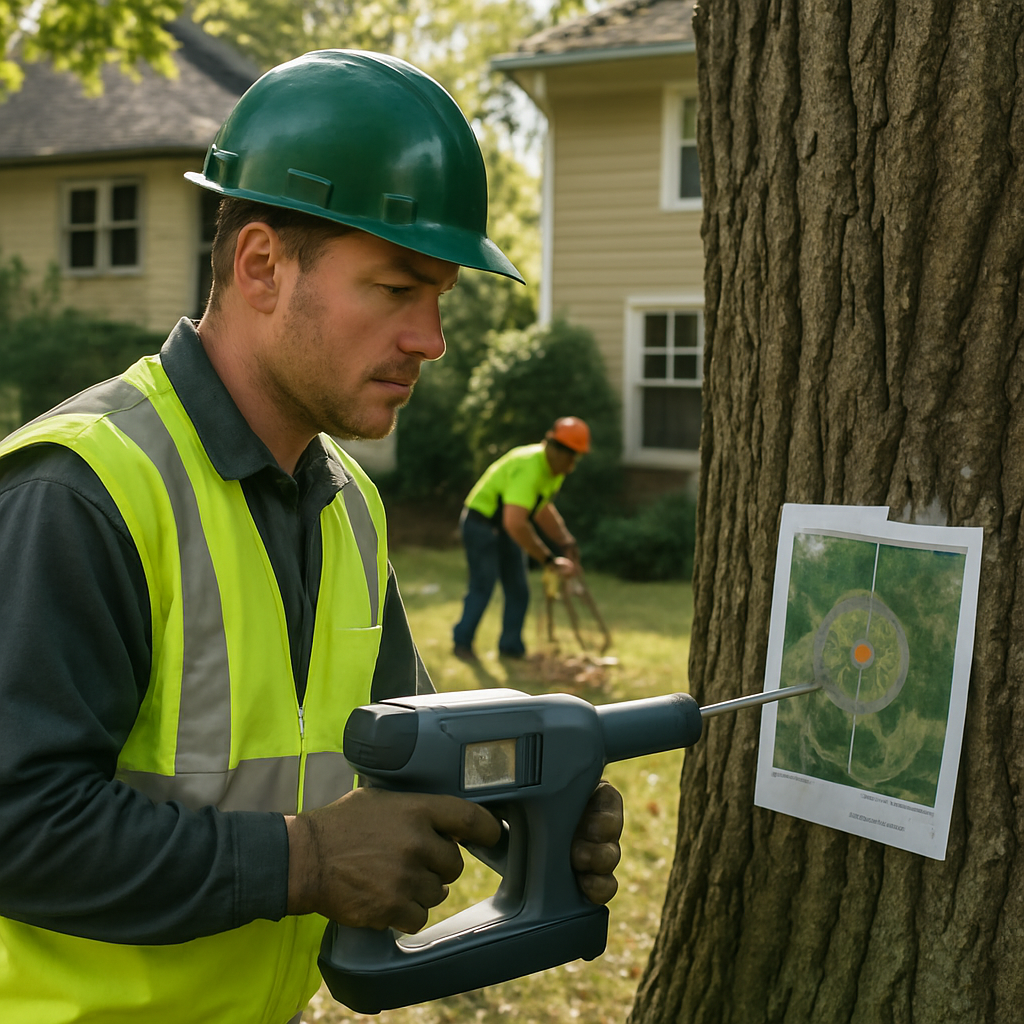
- Structural inspection: trunk wound mapping, decay pockets, and weak unions identified on a target map.
- Root and soil evaluation: visible root loss, heavy compaction, and signs of root rot that undermine stability.
- Diagnostic testing: use of tools such as resistographs, sonic tomography, or incremental borers when internal decay is suspected.
- Failure probability and consequence rating: separate what might fail from what it could strike so interventions match actual risk.
- Recommended mitigation ladder: from crown reduction or selective removals to cabling, bracing, or root management, with inspection intervals.
Practical insight: A visual check alone is not adequate when the tree stands over a structure, driveway, or public path. Certified arborists use objective measures and documented findings so you get a defensible recommendation rather than an opinion. If the contractor cannot produce a short risk report or target map, treat the estimate as incomplete.
Tradeoff to consider: Mitigation options like cabling and bracing are effective but not permanent. They reduce immediate failure probability and preserve canopy value, yet they require periodic inspection and may only delay removal for years not decades. Accepting mitigation means planning for ongoing monitoring and future costs.
Concrete example: An older maple near a sidewalk tested positive for internal decay on a resistograph during an arborist inspection. Instead of full removal, the arborist recommended a targeted crown reduction, two stainless steel cables, and annual inspections. The homeowner kept the tree and avoided immediate removal costs while accepting a documented maintenance schedule and a modest annual inspection fee.
What most people miss: Some contractors will propose cosmetic trimming or a quick removal without separating likelihood of failure from consequence. That approach increases unnecessary removals or creates false security. Demand that the estimator explain both elements and show how the proposed work changes the failure rating.
If a recommended solution is only a single sentence on the estimate, ask for a short, written risk note or a scanned arborist report that explains the diagnosis and inspection interval.
4. Compliance with local regulations and permit navigation
Quick reality: Permits, municipal tree protections, and HOA rules are frequent blockers. A local tree trimming company near me that understands permit pathways prevents delays, fines, and rework by handling paperwork and coordination so crews can work legally and on schedule.
How professionals solve permitting friction
What contractors actually do: Experienced contractors prepare the application package, submit required photos and site plans, follow up with urban forestry or planning staff, schedule municipal inspections, and coordinate utility notifications. They also know which jobs are exempt from permits and when emergency work simply needs a post-job report.
- Verify permit ownership: Ask who will be listed as the permittee on the application and request the assigned permit number so you can track the file online.
- Document mitigation obligations: Confirm required mitigation plantings or fees up front and who pays them – the homeowner or the contractor.
- Utility coordination: Ensure the company will contact the power company or other utilities when work is near lines and provide proof of notification.
- Inspection timeline: Get the estimated approval timeline and scheduled inspection dates so the job is not halted midwork.
- HOA and street-tree approvals: Ask whether the contractor will prepare the submittal for HOA review or street-tree permits and collect any neighbor consent forms if required.
Practical tradeoff: Paying a contractor a small fee to manage permits is usually cheaper than paying for work stoppage, replanting, or municipal fines. The tradeoff is time – permitting can add days to weeks. If you need immediate emergency removal after storm damage, expect faster temporary authorization but additional documentation later.
Practical example: A homeowner needed to remove a protected elm that straddled the property line. The chosen crew submitted the removal permit with photographs and a mitigation plan, secured the permit in eight business days, coordinated utility locates, and arranged the replacement planting required by the city ordinance. The homeowner avoided a stop work order and a civil penalty by using a contractor familiar with the local urban forestry office.
What many homeowners miss: Not all tree companies are versed in local codes. Some will promise to handle permits but submit incomplete packages or omit required inspections. Always ask for the permit number and check the municipal permit portal yourself – if the contractor resists, that is a serious red flag.
Next consideration: When comparing estimates, treat permit handling as a line item. Clarity here reduces legal exposure and keeps the project on schedule.
5. Efficient cleanup, disposal, and restoration planning
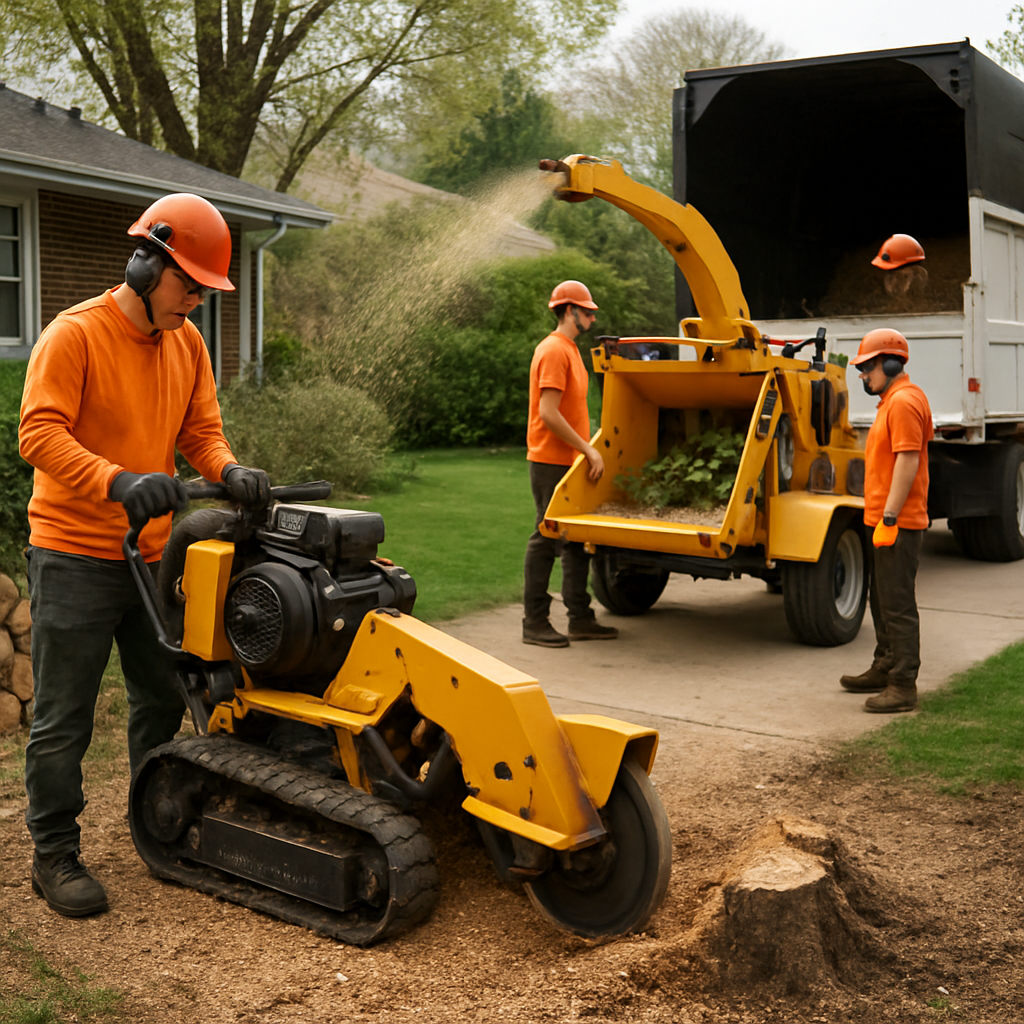
Cleanup and disposal are not optional line items — they change the real cost, schedule, and outcome of the job. A low bid that trims quickly but leaves a mountain of debris, an unreduced stump, and no site restoration often costs you more in hauling, pest control, and landscape repairs after the crew leaves.
What a professional cleanup plan should cover
A competent estimate breaks cleanup into clear choices: onsite chipping and spreading, stump grinding depth and disposal, haul away to green waste or landfill, and site restoration (mulch, topsoil, regrading, or replanting). Make sure the contract states who keeps the wood, whether firewood will be split and stacked, and how diseased material is handled.
| Disposal / Restoration Option | Pros | Cons / When not appropriate |
|---|---|---|
| Onsite chipping and spreading as mulch | Fast, low hauling cost, returns organic matter to site | Can inhibit replanting in the footprint; chips may harbor pests if wood is diseased |
| Stump grinding (specified depth) with root management | Removes tripping hazard and roots that interfere with landscaping | Adds cost; grinding depth affects future planting options |
| Haul to green-waste or biomass facility | Removes all debris, good for properties with limited space | Higher disposal fee and truck time; scheduling adds days |
| Cut and split for firewood / homeowner keeps wood | Value return to homeowner; removes bulky pieces | Requires agreement on split size, stacking location, and liability |
- Practical question to ask: Is chipping included and where will chips be placed? If chips are dumped over lawns, expect regrading later.
- Practical question to ask: Does the stump price include grinding to a specified depth? If you plan to replant, require a grinding depth in feet on the estimate.
- Practical question to ask: How is diseased wood identified and disposed of? For infected material insist on separate hauling or certified disposal to avoid spreading pests.
- Practical question to ask: Who is responsible for final grade, seeding, or mulch application and is that in the written scope?
Tradeoff to accept: Faster cleanup with onsite chipping lowers immediate cost but can complicate replanting or lawn restoration. Paying more to haul debris or to include deeper stump grinding often saves you a landscaper fee later. Decide based on whether you plan to replant immediately, seasonality, and neighbor impact.
Concrete example: A homeowner hired a low-cost crew that left the large stump and spread chips across the back yard. Two months later the homeowner paid a second contractor to grind the stump to 8 inches deeper so a new tree could be installed, plus a landscaping crew to remove the chips and regrade — total spent exceeded the price of a full-service job. By contrast, a neighbor contracted a local crew that included stump grinding, chip haul-off, and minor topsoil replacement in one visit; the job finished in a day and the new tree was planted three weeks later.
Insist on written line items for chip handling, stump grinding depth, disposal location, and any restoration work. Vague language about cleanup is where fees and disputes appear.
6. Emergency response capability and storm damage handling
Immediate contrast: When a major storm hits, the difference between a crew that can respond and one that cannot is not convenience — it is the difference between temporary fixes that protect property and delayed action that creates expensive secondary damage. A reliable tree trimming company near me should offer rapid triage, safe removal of imminent hazards, and documented next steps for permanent repairs.
What real emergency response looks like
Expect a staged approach: assess and make the site safe first, remove life-safety risks second, then schedule full remediation. Good crews coordinate with utilities, place zone controls for public safety, and use mechanical advantage – cranes or aerial lifts – when simple rigging would create new hazards.
- Rapid triage: A short on-site assessment within
24-72 hoursthat prioritizes tasks and documents immediate dangers; this is not a full pruning plan but a safety-first checklist. - Temporary stabilization: Measures such as limb support, targeted cuts to prevent further splitting, and tarping or boarding to protect roofs or openings until full removal or repair can be done.
- Safe removal of hazards: Controlled descent of large limbs, crane-assisted lifts near structures, and coordination with power companies where lines are involved — only trained crews should work within the utility exclusion zone.
- Follow-up remediation: A written scope for permanent repairs (full removal, stump grinding, replanting) and a timeline for when those will happen once permits or utility clearances are complete.
Practical tradeoff: Emergency calls cost more per hour and often include mobilization or overtime fees. That premium buys speed and specialized teams. If the hazard is life-safety, pay for the fast response; if damage is minor and the crew recommends staged work, confirm a clear timeline for the permanent fix so the temporary measures do not become indefinite.
Concrete example: During a windstorm a mature pine split at mid crown and leaned onto a roof. A local crew with a crane and an on-site certified arborist removed the compromised section in controlled lifts, tarp-protected the damaged shingles, and produced a two-page remediation plan for the homeowner. The crew also left a prioritized list for the insurer and scheduled stump grinding and restoration for the following week.
What most people miss: Many providers advertise emergency services but only offer a two-person crew with hand tools. That saves the company money and exposes you to risk. Verify the responder will include a supervising arborist, appropriate equipment, and written documentation you can provide to insurers or authorities.
If you need immediate help, ask for a documented arrival window, whether an ISA certified arborist will attend, and who contacts utilities. Insist on a short written triage note before any temporary work begins.
Next consideration: when you call a nearby crew, get the short triage note, an estimated timeline for permanent remediation, and a written estimate for emergency work plus follow-up services so the emergency response does not become an unresolved liability.
7. Access to full service solutions from a local company like Mr Tree Inc
Bottom line: hiring a single, local full service provider eliminates the classic vendor shuffle — one contract, one schedule, one crew that understands the property history. When you type tree trimming company near me you should prefer firms that combine field crews with on-staff arborists, stump grinders, and emergency response so work and liability don’t get passed between contractors.
What full service actually delivers
- Continuity of care: an on-site arborist documents the diagnosis and the crew executes the same plan, so follow-up treatments and inspections reference the original report.
- Single point accountability: one invoice, one warranty, and one party responsible for permits, utility coordination, and final sign-off.
- Operational efficiency: crews that own chippers, grinders, and lifts stage equipment once and reduce mobilization time and costs compared with separate subcontractors.
- Integrated scheduling: combining pruning, pest treatment, stump grinding, and replanting avoids repeated turf disruption and accelerates restoration.
Practical tradeoff: bundled services usually lower total project time and friction, but they can reduce price competition on individual line items. If you want the lowest possible price on stump grinding alone, sourcing a specialist might save a little; for most homeowners the time, warranty clarity, and simplified insurance paperwork offset that marginal saving.
Real-world use case: A property manager contacted Mr Tree Inc after noticing crown decline and active borers in a cluster of elms. Mr Tree performed an arborist inspection, applied targeted insect treatment, completed structural pruning, installed two stainless-steel cables, ground stumps from an earlier removal, and arranged replacement plantings on the same timeline. The manager had one estimate to send to the insurer and one crew to coordinate, which shortened the project by nearly two weeks compared with hiring separate contractors for each task. See Mr Tree Inc arborist services and stump grinding services for examples of bundled scopes.
What to watch for when a company claims full service: verify they actually perform the critical parts in-house. Ask who owns the equipment, whether the arborist is an employee or a subcontractor, and request recent job photos showing the crew and machinery. Firms that subcontract core tasks can become convenient but leave you with split warranties and confusing paperwork.
How to pick the right tree trimming company near me Step by step checklist
Start here: do the simple verification work before anyone climbs a tree. A quick check separates legitimate local crews from weekend operators and prevents the most common problems buyers discover after the fact.
Step-by-step checklist
- Confirm local footprint: verify a physical address and recent local jobs. Look for nearby photos or references so you can call a neighbor or the property manager who hired them.
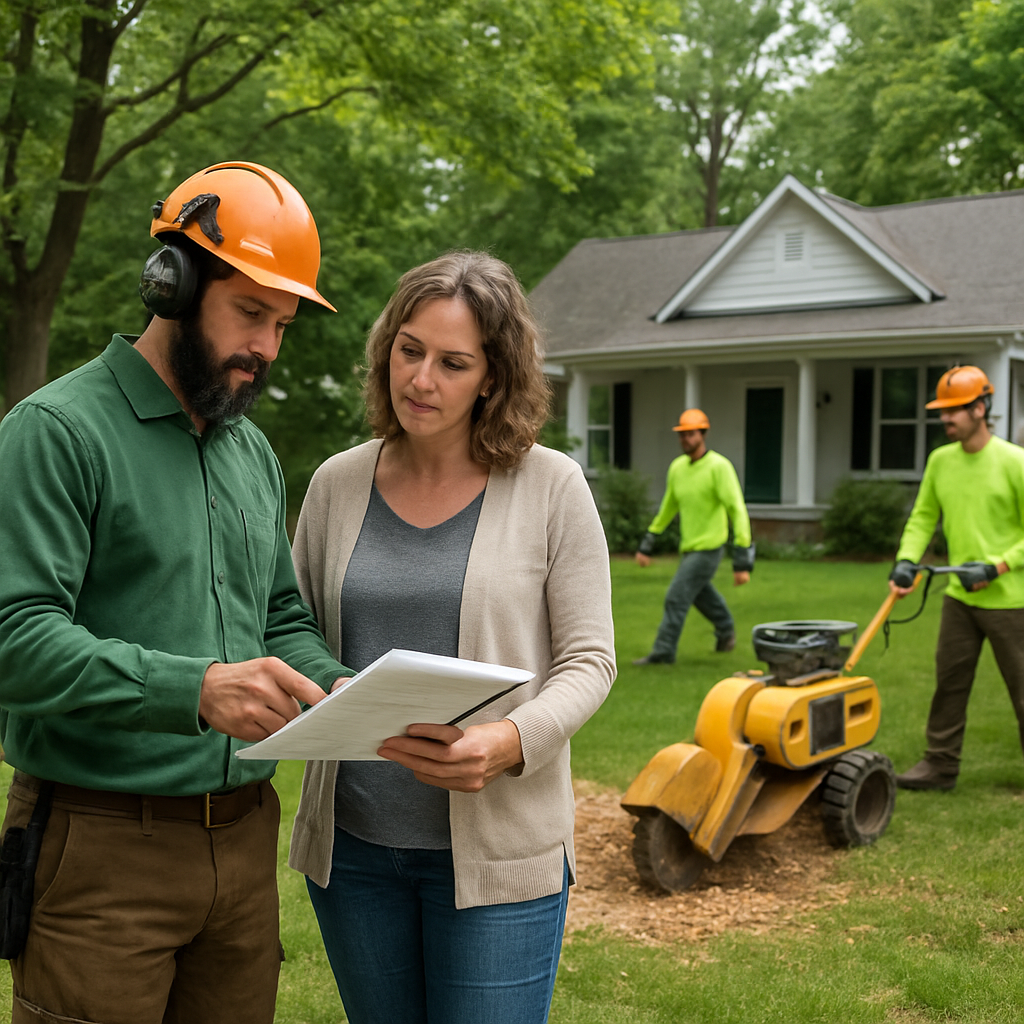
- Who owns the diagnosis: insist an on-site ISA certified arborist or equivalent will inspect the trees and sign the proposal. If the estimator is only a salesperson, treat the recommendation as preliminary.
- Insurance and accountability: get the insurer contact and policy number and ask who is named on the policy that day. Do not accept verbal assurances; verify coverage before work starts.
- Written, line-item estimate: require one document that lists each tree, the specific cuts, equipment hours, crane or lift charges, stump grinding depth, disposal method, and permit handling fees.
- Safety and logistics disclosure: ask what equipment and traffic controls they will use, who supervises rigging drops, and how they will protect structures and utilities during work.
- Contract essentials and payment holdback: have start/end dates, a cleanup standard, a warranty or follow-up inspection window, and withhold a final payment until you sign off on cleanup and agreed corrective items.
- Ask for proof of recent similar work: request photos from the last 6–12 months and two phone references for comparable jobs (size and site complexity).
- Compare apples to apples: when you have two estimates, align scope first, then price. Lower cost with missing line items is usually a deferred expense.
- Red-flag checklist during site visit: crew refuses to show ID, presses for cash-only payment, shows no PPE, or offers only a one-line price with no scope — walk away or get a second opinion.
- Schedule the final walkthrough: require the crew to mark the trees and the cuts on site and provide a short written pre-work note that you keep with the permit/estimate.
Practical tradeoff: paying more for a clearly documented scope and an on-site arborist generally reduces surprises. The trade is time and upfront cost; the reward is fewer change orders, clearer insurance claims, and lower long-term maintenance spend.
Concrete example: a landlord received two bids for pruning a row of mature lindens. The low bid listed a lump-sum price with no permit line and no arborist visit. The higher bid included a short arborist report, permit filing, and a specified 6 inch stump-grind depth. The landlord chose the latter; when the city required a street-tree permit the chosen contractor already had the file and the job finished without delay or extra fees.
What most people misunderstand: homeowners treat tree work like landscaping and negotiate only price. In practice, liability, permit compliance, and measurable scope determine value. If a company resists documenting these items, you are buying risk, not savings.
Next consideration: if the job is complex or near structures, schedule an on-site arborist assessment and get at least two detailed estimates. For local, integrated services and an arborist visit, you can request an assessment from Mr Tree Inc.
Comparing estimates and understanding typical cost components
Straight talk: the lowest number is only useful if the scope, safety controls, and cleanup match what you actually need. Estimates from a tree trimming company near me will look different not because companies are dishonest, but because they price different risks, equipment needs, and paperwork differently. Learn to read the line items — that is where value hides.
Core cost components to expect
Typical line items: site visit or assessment fee; crew labor (quoted per hour, per crew, or per tree); equipment charges (aerial lift, crane, stump grinder); rigging and ropes; disposal (chip-and-spread, haul‑off, landfill fees); arborist report or diagnostics; permit and utility coordination; traffic control; and emergency or after‑hours surcharges. How each item is quoted matters — a per-tree price hides hourly overruns; an hourly rate hides how many crew members you will actually get.
| Estimate item | What to verify on the written estimate |
|---|---|
| Assessment / arborist fee | Is the fee credited toward the job if you hire them? Does the report include a diagnosis and inspection interval? |
| Labor (per hour / per tree) | Which crew size and hours are assumed? Are overtime or travel hours extra? |
| Equipment (crane / lift / grinder) | Exact equipment listed, rental duration, and mobilization fees. |
| Disposal / chip haul | Where are chips placed? Is haul-away included or billed separately? |
| Permits / utility coordination | Who files and pays? Permit numbers or application responsibility should be listed. |
| Post-job cleanup / restoration | Depth for stump grinding, turf repair, and final site condition expectations. |
Ballpark ranges (very approximate): small ornamental trees often range from $150 to $500; medium yard trees commonly fall between $400 and $1,200; large specimen trees and difficult-access work typically start around $1,000 and can exceed $3,000–$6,000, with crane-assisted removals frequently running into the multiple-thousands. Local labor rates, disposal costs, access difficulty, and seasonal demand shift these numbers significantly — treat them as orientation, not a guarantee.
Practical tradeoff to judge: fixed-price per-tree bids reward efficiency but can incentivize shortcuts; hourly bids reward careful work but can balloon if the crew is small or the site is tricky. The better approach in practice is a fixed, line-item scope with agreed hourly caps and a predefined contingency rate for unexpected conditions. That combination gives you price certainty without removing incentives for safe, complete work.
Concrete example: a homeowner received two quotes to prune and remove a 40-foot ash. Bid A quoted $1,150 as a lump-sum with no permit line and a single sentence on cleanup. Bid B was $1,900 but included an arborist visit, permit filing, a 6-inch stump-grind, chip haul, and a brief risk note. When the city requested a street-tree permit, Bid A turned into $1,800 after add-ons; Bid B proceeded on schedule. The higher upfront price avoided surprises and extra days of work.
Next consideration: when comparing two bids, align the scope line-by-line first, then compare price. Any unexplained delta in the totals should map to a specific line item you can accept or reject.
Final selection checklist and next steps
Decide only when three things match: paperwork, scope, and timing. If the insurer, permit office, and your calendar all accept the plan, the crew should climb with minimal surprises. Anything else is a risk you are buying.
Printable selection checklist
- Insurance verified: obtain a Certificate of Insurance with the insurer contact, policy number, and effective dates documented.
- Named supervising arborist: confirm a certified arborist will inspect and sign the proposal or provide a short report after assessment.
- Measured scope: get a written scope that identifies which trees, which cuts, specified stump-grind depth, and exact disposal method.
- Permit and utility ownership: the estimate should state who files permits and who notifies utilities, plus any expected mitigation costs.
- Payment structure: sign a contract with a modest deposit, clear progress milestones, and a retained final payment until cleanup and agreed items are signed off.
- References and recent photos: request two phone references for comparable work and at least one recent job photo showing the crew and equipment on site.
- Timeline and contingencies: an agreed start window, estimated duration, and a plan for weather or permit delays (with cost implications) should be written down.
Practical tradeoff: if you need work fast after storm damage, accept a documented triage visit and a higher mobilization fee — but do not accept vague promises or a blank check. For nonurgent jobs, take the time to get at least two on-site assessments so you can compare how each provider manages risk and cleanup.
Concrete example: a homeowner took two steps before signing: they scheduled an on-site arborist assessment with one local firm and collected a second, competing written estimate. The chosen contractor provided a line-item scope, a 15% mobilization deposit, and agreed to hold 20% until the yard was cleared and the stump ground to the specified depth. That documentation sped the insurer review and kept the project on schedule.
If timing is critical: insist on a written triage note and an arrival window. Fast responses without documentation create downstream disputes with insurers and municipalities.
Next consideration: if you accept a single-provider convenience, verify which critical tasks are in-house versus subcontracted and get those responsibilities written into the contract. If they cannot name the equipment owner or supervising arborist, treat the convenience as a liability rather than a benefit.
0 Comments