
When to Hire a Professional Tree Removal Service vs. DIY: Safety and Cost Checklist
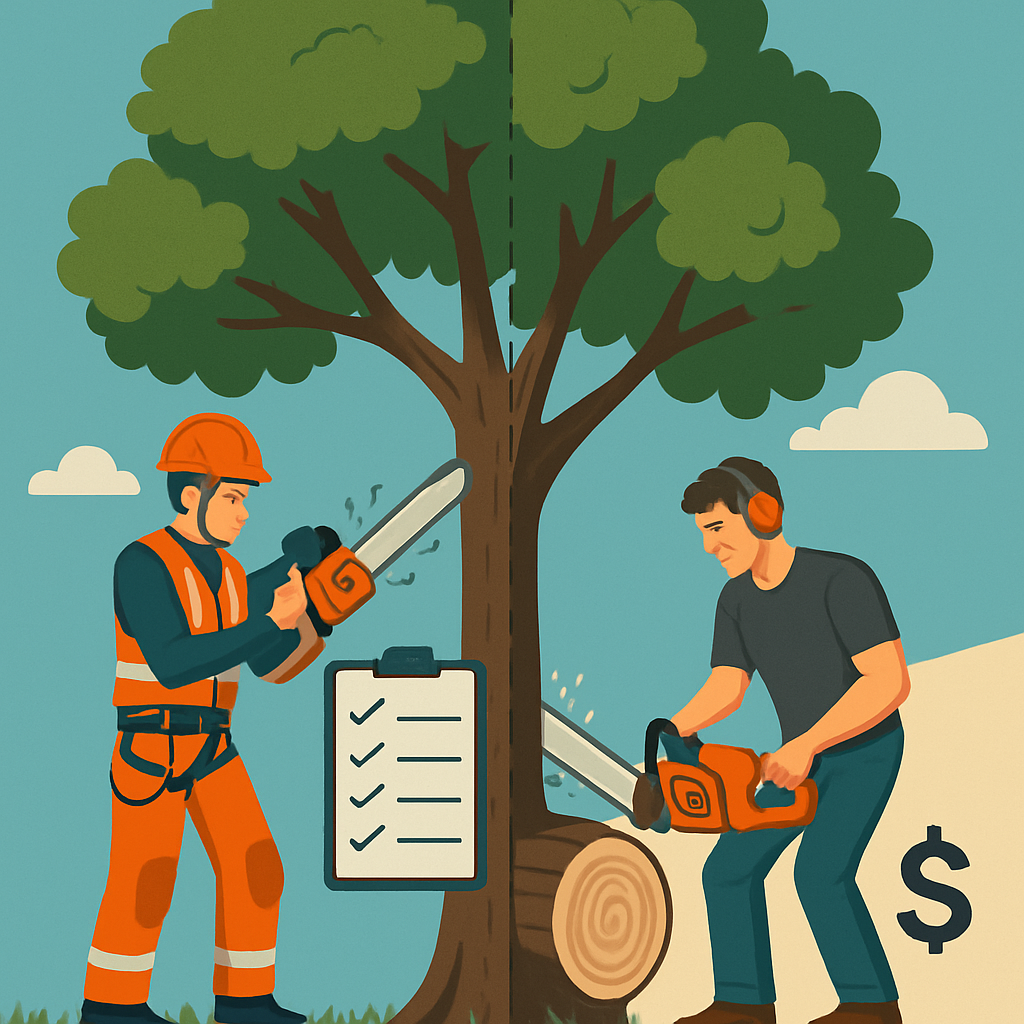
Deciding whether to hire a professional tree removal service or tackle the job yourself comes down to safety, cost, and local rules. This post gives practical thresholds, realistic cost ranges, permit and utility pitfalls, and a straightforward checklist so you can judge when DIY is reasonable and when to call certified help. The guidance is intentionally conservative—mistakes cost far more than a weekend and a saw—so you can make a confident, cost-aware decision.
Safety criteria that require a professional tree removal service
Immediate rule: hire a professional when the removal poses a real risk to people, structures, or utilities.** A homeowner with a saw and a helper can handle tidy, low-risk work. When trees are complicated—height, lean, proximity to houses, or power lines—the consequences of a mistake are expensive and sometimes catastrophic.
High-risk scenarios that demand pro crews
- Trees near power lines: any tree within about 10 feet of overhead lines needs utility coordination and a certified line-clearance crew or arborist; electrocution and secondary fires are not DIY problems. See International Society of Arboriculture and OSHA guidance.
- Overhanging structures or vehicles: trees that must be felled away from or over a roof, garage, deck, or car require controlled, sectional removals and rigging skills.
- Leaning or root plate failure: a tilted trunk with a lifted root flare signals unstable roots; felling paths are unpredictable and can pull out more soil or snap without warning.
- Dead or storm-damaged trees: brittle wood breaks unpredictably; storm-damaged crowns often store energy in odd places, creating dangerous snap points.
- Large trunks or tall trees: trunks thicker than a typical chainsaw comfortable cut (roughly above 12 to 18 inches) or trees over several stories high need equipment and two-person rigging plans.
- Poor access, slope, or tight urban lots: limited drop zones, steep terrain, or adjacent fences and sidewalks turn simple cuts into precision jobs.
Practical trade-off: hiring pros reduces risk but increases cost and scheduling complexity—cranes, sectional rigging, traffic control, and permit work drive price. The judgment call is not just size; it is how many moving parts the job has and how much you can tolerate a mistake costing more than the removal itself.
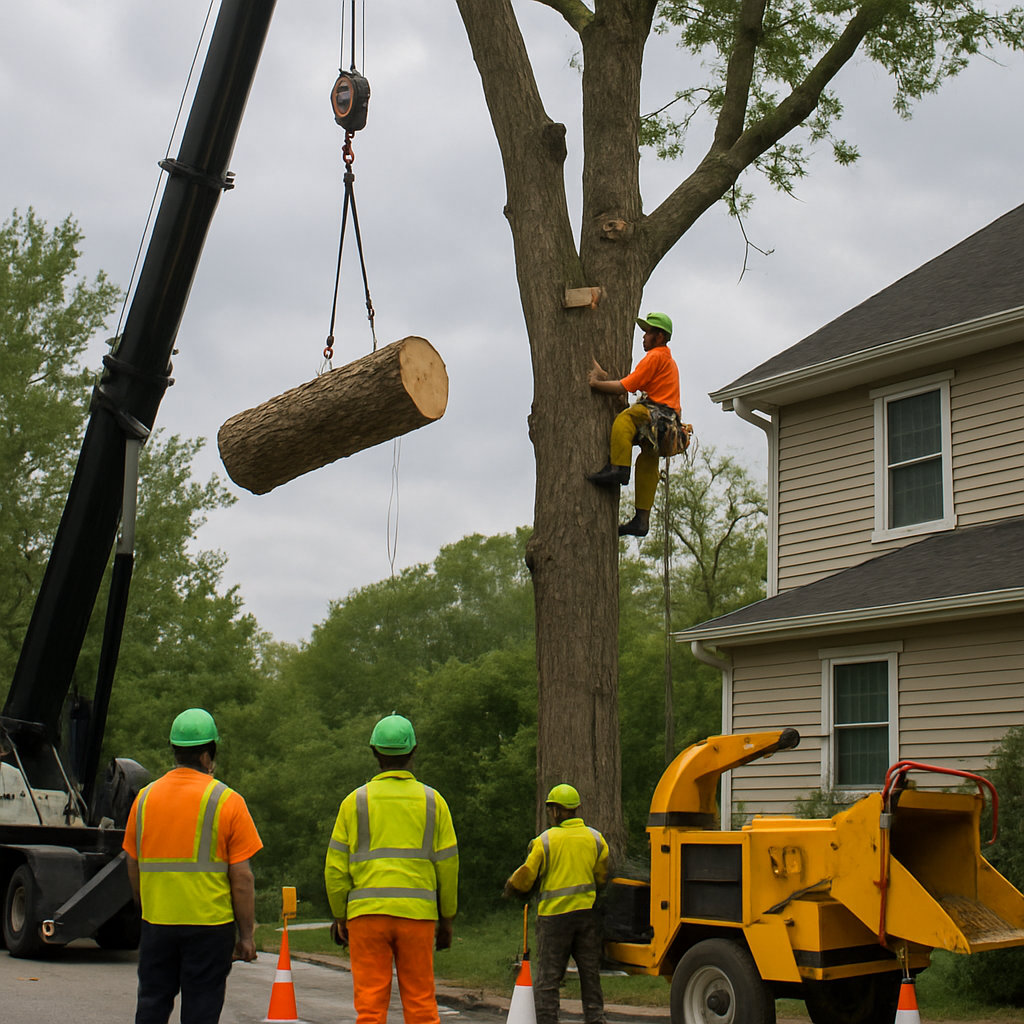
Concrete example: A 40-foot oak that started leaning after a storm and now sits 6 feet from a garage should not be cut down by an amateur. A professional tree removal service will secure a rigging plan, remove the crown in sections to avoid impact, and, if needed, use a crane or block-and-tackle to lower large pieces safely onto the street without hitting the garage.
Common misunderstanding: homeowners often assume a single helper and extra caution make a risky cut safe. In practice, unseen root failures, wind gusts, or internal decay change a predictable cut into an uncontrolled fall. If you cannot clearly visualize and control every landing zone, call a reputable tree removal company.
Key point: proximity to utilities, unstable roots, and work over structures convert an otherwise routine task into specialized hazardous work—those are the scenarios to hire professional arborist services or an insured tree cutting service.
Next consideration: if the job checks any of these red flags, get at least two itemized bids from insured crews and verify ISA certification and insurance before scheduling. For fast-response needs see Mr Tree Inc. emergency services.
Cost comparison and realistic price ranges for tree removal service vs DIY
Straight answer: DIY saves money only on small, low-risk trees with no overhead hazards. For anything with height, tight access, or proximity to structures and utilities, the professional price reflects real work: equipment, rigging, disposal, permits, and liability coverage — costs you cannot reclaim if something goes wrong.
Typical line items you should expect on a pro quote
| Line item | Typical range (US residential, ballpark) |
|---|---|
| On-site inspection & written estimate | $0 – $200 |
| Labor and crew (per tree) | $200 – $2,500 |
| Equipment (chipper, lift, truck) | $100 – $1,200 |
| Stump grinding (optional) | $100 – $600 |
| Cranes or specialty rigging (when required) | $1,000 – $7,500+ |
| Hauling and disposal | $50 – $600 |
| Permit fees and traffic control | $0 – $1,000 |
| Emergency or same-day surcharge | 20% – 100% premium |
Practical insight: the headline per-tree price conceals the single biggest cost volatility: access and complexity. A straightforward 25-foot backyard tree with a clear drop zone stays near the low end. Add a garage, power line, or limited street access and the same tree can double or triple in price because of extra labor, traffic control, or the need for sectional rigging.
Concrete examples: If you have a 20-foot maple with clear access, a professional removal plus basic stump grinding often falls into the lower hundreds and can be cheaper than buying and learning to use heavy equipment. A 40-foot oak within a few feet of a garage typically requires sectional removal and rigging; expect a mid-thousand-dollar job with higher risk if done DIY. A 60-foot leaning pine that must be lowered by crane is a multi-thousand-dollar specialty removal and is not suitable for household attempts.
- Hidden DIY costs to account for: tool rental, fuel, safety gear, chipper or dump fees, time lost from work, and the risk of property damage you will have to pay to fix.
- When DIY can be competitive: you already own suitable equipment, have experience, helpers, and the tree is small with a clear twice-height drop zone — otherwise the hourly labor and disposal tilt the math toward hiring pros.
- Negotiation lever: ask for itemized bids, separate the stump grinding line, and consider doing brush hauling yourself to shave labor hours off a pro quote.
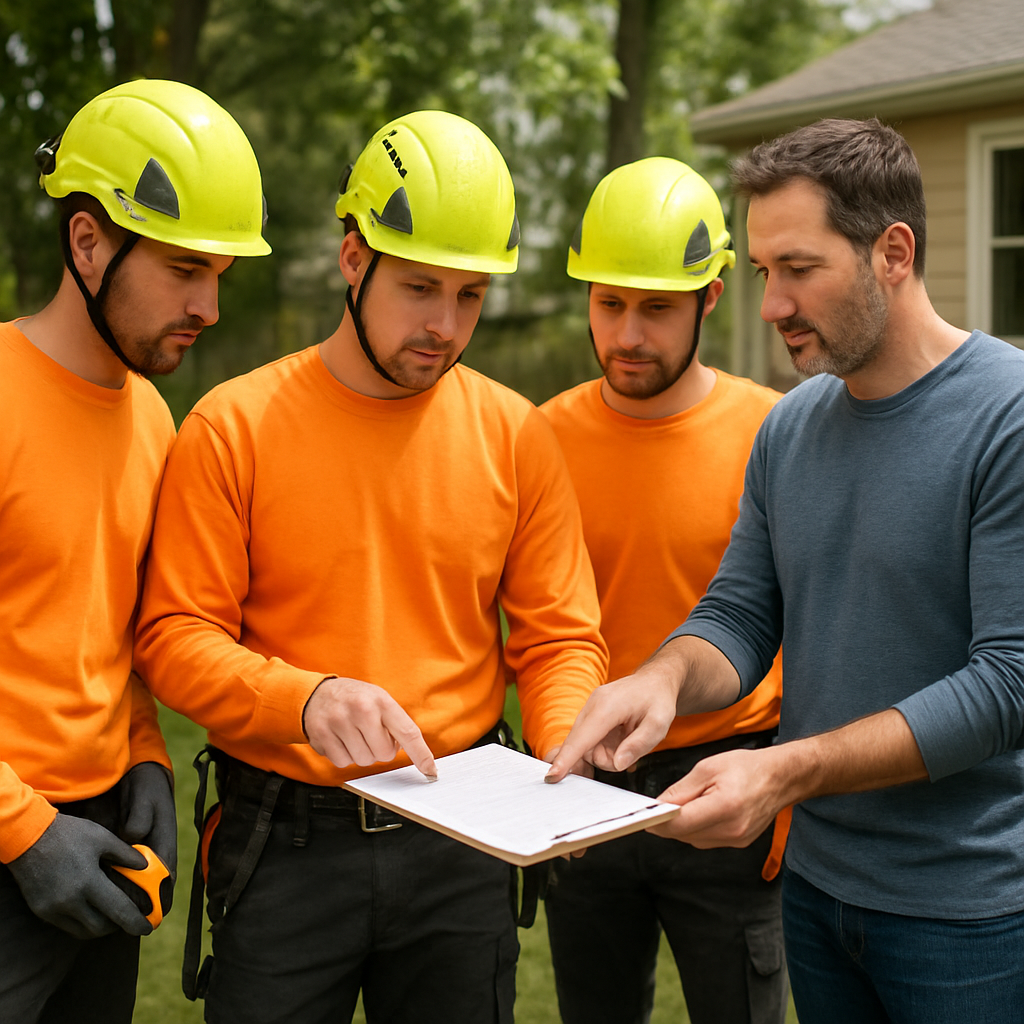
When comparing bids ask for a written, itemized estimate and verification of insurance — cheapest is rarely the best if it means no liability protection.
Next consideration: if cost is the primary limiter, get an on-site assessment from a licensed crew and compare that to a DIY plan that lists every rental, permit, disposal fee, and expected hours. For pro quotes and local options see Mr Tree Inc. tree removal and check market ranges at HomeAdvisor.
When DIY removal is reasonable and the exact prerequisites
Firm rule: DIY tree removal is appropriate only when risks are limited, predictable, and fully controllable. If any of the following prerequisites are missing, hire a professional tree removal service.
Exact prerequisites for a safe DIY removal
- Size and drop zone: tree under about 20 feet tall with trunk diameter under 12 inches and a drop zone at least twice the tree height clear of structures, cars, and people.
- No overhead or nearby utilities: no power lines within roughly 10 feet and no buried utilities in the immediate work and landing areas; if utilities are present, call professionals.
- Good access and footing: flat, stable ground with space for machinery or a pickup for debris; no steep slopes or unstable soil around the root plate.
- Helpers and experience: at least one competent helper who has used a chainsaw and followed escape routes before; the primary cutter must be comfortable with basic directional cuts.
- Tools, PPE, and disposal plan: available correctly sized chainsaw, wedge, rope, eye and ear protection, chainsaw chaps, helmet, a chipper or hauling option, and a plan to legally dispose of wood and chips.
- Permits and local rules checked: confirmed with city or county whether the tree is protected or requires a permit before any work begins.
Tradeoff to understand: saving money on a small, simple removal requires accepting all the work and liability. Renting a chainsaw and a chipper might look cheaper on paper, but lack of experience increases time and bump-up risks. If you already own the right equipment and have practiced controlled cuts, DIY can be efficient; otherwise permit delays, rental costs, and repair bills erase savings.
Minimum tools and sensible brands (practical list)
Essential kit: a mid-weight chainsaw (for example a Stihl MS 271 or Husqvarna 460 for heavier cuts), pole saw for small limbs, sturdy rope and basic rigging hardware, wedges, pruners, a wheelbarrow or small trailer, and PPE. Do not substitute thin home-garden blades for proper chainsaw chaps or a helmet.
- Site evaluation: walk every landing quadrant, flag hazards, and mark an escape path before the first cut.
- Set PPE and helpers: helmet, face shield, hearing protection, gloves, chaps; brief helpers on roles and the escape path.
- Cutting plan: remove crown and limbs working from top down only if you can lower pieces without crossing hazards; make a directional notch and back cut only when the landing is secured.
- Stop rule: if any cut behaves unexpectedly, cease work and call a professional tree cutting service.
Concrete example: a 15-foot ornamental pear behind a suburban fence with a clear 40-foot backyard and no power lines is a typical DIY candidate. The homeowner uses a rented mid-weight chainsaw, two helpers, and a trailer to haul branches; they notch and fell the trunk into the prepared landing zone, grind the stump later, and avoid working on windy days. That controlled scenario saves a few hundred dollars compared with hiring an insured tree removal company.
If you hesitate about any single prerequisite, treat that hesitation as a signal to hire professionals instead of improvising.
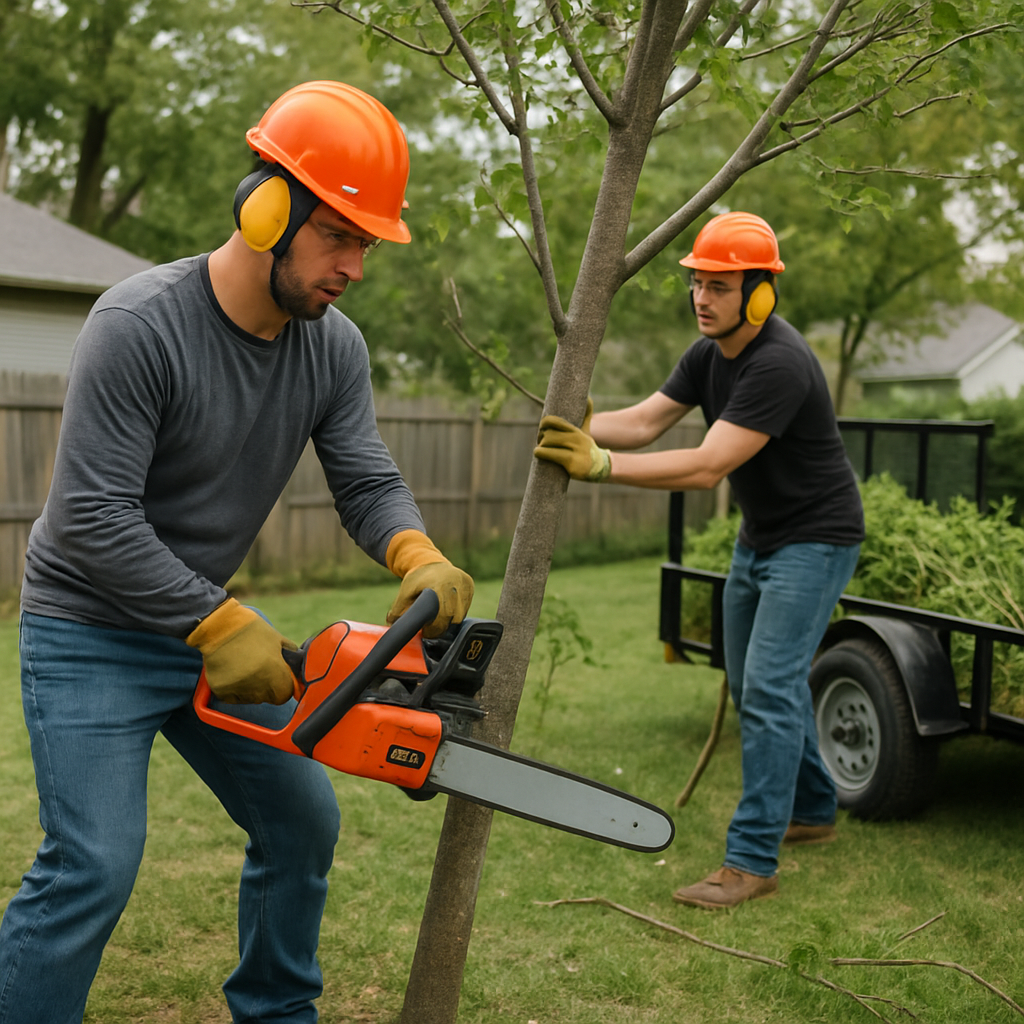
Next consideration: before you start, photograph the tree, confirm permits, and if anything looks borderline—height, root instability, or proximity to a structure—contact a certified arborist for an on-site assessment rather than guessing.
Scenarios where hiring a professional is required rather than recommended
Direct statement: Some tree problems are not negotiable — they create legal, electrical, or structural risk that cannot be mitigated with a weekend and a borrowed saw. In those cases a licensed, insured tree removal service is not a convenience; it is the correct risk management choice.
Utility contact and energized work: Any tree touching or plausibly contacting overhead or underground utilities requires coordination with the utility and a certified line-clearance crew or licensed arborist services. Electrocution and secondary fires are real outcomes; homeowners and general contractors lack the insulated tools, utility permits, and insurance that utility-coordinated crews bring.
Structural exposure and tight access: When the tree or large limbs are over a roof, garage, deck, parked car, or other vulnerable structure, removal must be sectional and controlled. That often means rigging, cranes, or block-and-tackle systems and an crew experienced in lowering heavy wood onto a constrained footprint without collateral damage.
Root failure, severe lean, and unstable soils: A tilted trunk or lifted root flare indicates unpredictable collapse patterns. Professionals assess the root plate, soil failure potential, and may use winches or cranes to stabilize before cutting. Amateur attempts commonly trigger sudden failure and greater property damage than the original issue.
Large-scale, commercial, or regulated removals: Multi-tree lot clearing, work in public right-of-way, or removals of protected/historic trees trigger permits, erosion controls, and often restoration obligations. Municipalities will fine or require mitigation if you proceed without the right permits and documentation.
Legal and insurance consequences that force the hire decision
Liability shifts: If an unlicensed crew or homeowner work causes injury or neighbor property damage, the homeowner can be personally liable even if the worker was helping. Contractors should supply current general liability and workers compensation certificates — call the insurer to verify. A professional tree cutting service with proof of insurance transfers much of that exposure off you.
Permit and code exposure: Removing protected species or street trees without permits can trigger restoration orders and steep fines. Even when no fine follows, insurance claims for storm damage may be harder to substantiate if you altered the site without documented professional assessment.
Emergency response considerations: An emergency crew performs triage first — stabilizing hazards, arranging utility shutoff, and creating safe landing zones before full removal. Emergency work often carries same-day surcharges and night-time safety premiums, but it stops immediate risk and documents the condition for insurers and municipal agencies. See Mr Tree Inc. emergency services for how pros handle triage and removal.
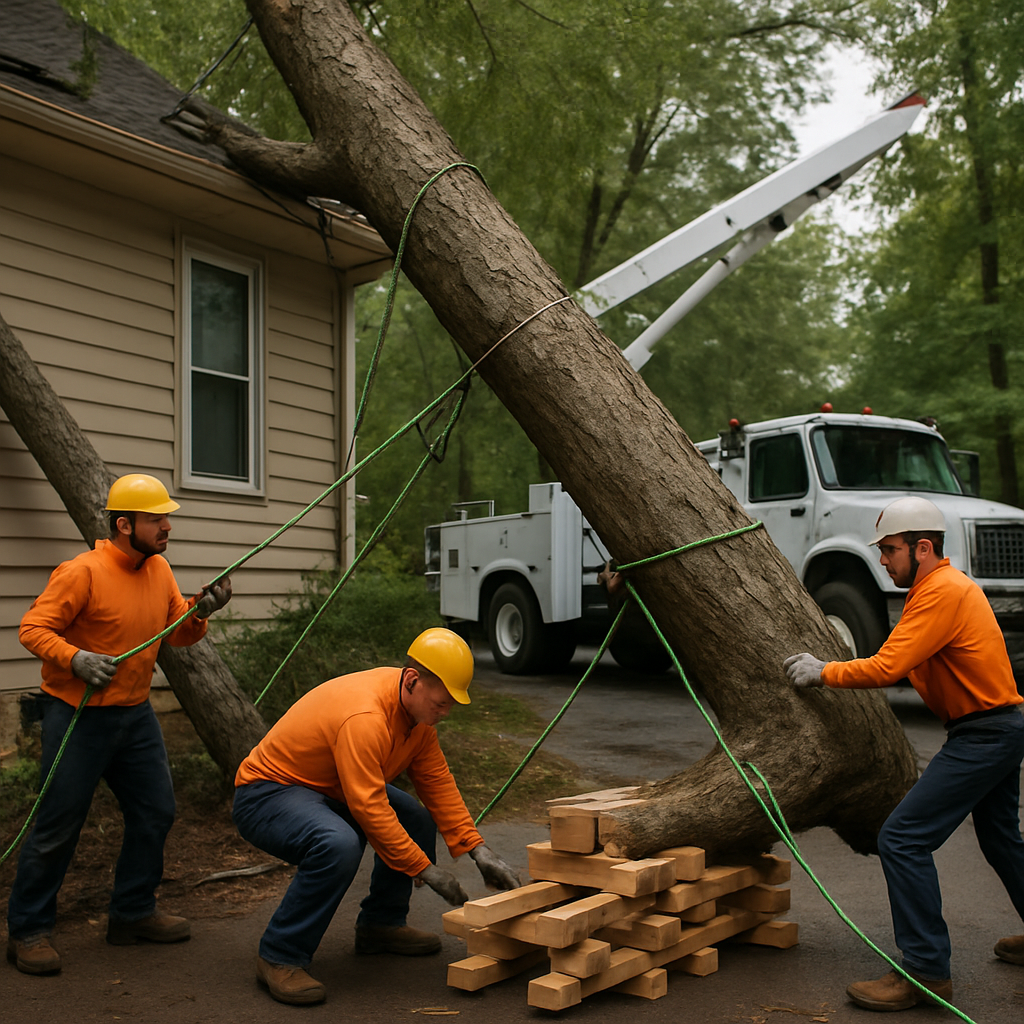
Concrete example: After a windstorm a large elm split and its main limb came to rest across a garage roof while also brushing against power lines. A professional tree removal service arrived, coordinated with the utility to de-energize the line, used rigging to support the limb, removed sections down to manageable sizes, and protected the roof with cribbing and controlled lowers — actions the homeowner could not safely replicate.
Practical judgment: If the likely repair or replacement cost of a structure, vehicle, or utility outage exceeds a significant fraction of the cheapest professional quote, treat the professional fee as insurance. Waiting or attempting a DIY fix often increases total cost and exposes you to liability that a certified crew and documented assessment would avoid.
What to expect from a professional tree removal service and how Mr Tree operates
Expect planning, not just cutting. A legitimate tree removal job is largely logistics: risk mapping, equipment selection, traffic and site protection, and documented liability coverage. Those front-end tasks are why a pro quote looks bigger than the cost of a rented saw.
Day-of workflow you will see on site
On arrival: crews establish safe perimeters, place cones or barriers if the street is involved, and run a quick updated assessment. Rigging and removal follow a plan: sections are cut to manageable sizes, rigged or lowered, chipped on site when practical, and the trunk is broken down last. Finish work typically includes stump options (grind or leave), hauling, and a homeowner walk-through with documentation.
- Questions to ask before you sign: Can you send proof of current insurance with policy contact? Who will supervise the crew and what are their credentials? Which removal method will you use if the tree is over a structure? How will you handle wood and chips and can I keep mulch?
- Operational details to confirm: expected start and finish times, traffic or driveway restrictions, required permits you will pull, and whether there is an emergency surcharge for same-day work
Practical trade-off: faster response and specialty gear like cranes or winches cost more, but they reduce the chance of collateral damage. If your priority is minimizing disruption rather than the lowest price, choose the crew that explains the plan and the fall-protection methods rather than the one with the cheapest headline number.
Real-world example: For a large maple leaning toward a detached garage, Mr Tree sends an ISA certified arborist for a written assessment, pulls any necessary permit, rigs a sectional removal plan, and uses block-and-tackle to lower heavy limbs onto tarps and cribbing to protect the roof. After the sections are removed they grind the stump to a depth agreed in the estimate and leave fresh mulch if the homeowner requests it.
What most homeowners miss: the value you get is risk transfer and documentation. A reputable crew will provide a written, itemized scope that limits surprises, record utility coordination when lines are involved, and deliver proof of insurance so your liability exposure is reduced. Cheapest bids often omit those items or use vague scopes that become change orders on the day.
Takeaway: expect a clear plan, an itemized price tied to methods, and documentation that shifts liability away from you. If a quote arrives without those three elements, treat it as incomplete and get another bid.
Cost saving strategies and hybrid approaches
Straight answer: you can cut costs without increasing risk by splitting the job into clearly separated tasks and assigning each task to whoever is best equipped to handle it safely. Hybrid approaches work when you avoid giving yourself the hazardous parts and focus on the low-risk, high-effort chores that actually move the needle on price.
Practical hybrid models that reduce price and preserve safety
- Top-down by pros, haul by owner: hire a certified crew for crown and trunk sectional removal while you or a contractor handle stump hauling and chip spreading afterward. This removes the dangerous, skill-heavy work from the equation but keeps physical cleanup costs lower.
- Staged removal: schedule the job in phases – emergency or hazardous pieces first, then nonurgent cutbacks in off-season months when crews have lighter schedules and sometimes lower rates.
- Bundle services carefully: ask for removal plus stump grinding as a combined line item rather than separate jobs scheduled weeks apart; bundling usually reduces mobilization time on site and the total labor charge.
- Exchange labor for discount: offer to clear brush piles or stack firewood on the same day the crew finishes to lower hourly cleanup charges. Do not offer to do any work aloft or that requires rigging.
Tradeoff to consider: savings from hybrid work are real but limited by the contractor willingness to split scope. Some crews will reduce hours, others will insist on full control for liability reasons. Expect a negotiation: a credible tree removal service will accept offloading nonhazardous tasks but will refuse anything that increases their risk exposure.
Concrete example: a homeowner had a 35-foot maple with a congested backyard. They paid a professional tree removal service to perform a sectional top-down removal and stump grind. The homeowner removed and hauled brush to a local green waste facility the next morning, saving several labor hours on the pro invoice while keeping the risky cuts in certified hands.
Negotiation tactics that work: ask for an itemized quote, propose keeping clean wood for firewood to reduce hauling, request an off-season or weekday start, and compare at least three bids. Verify that any discount does not come at the cost of removed insurance coverage or omitted safety steps.
A common mistake is assuming DIY cleanup always lowers total cost. In many markets disposal fees, trips to the landfill, and time lost add up fast. If you lack a clear plan to move chips and stumps, the saver becomes the spender.
Final consideration: never barter safety for savings. If any part of the job requires working near structures, utilities, or aloft, that portion belongs to a licensed, insured tree removal company.
Decision checklist and scoring tool for hire vs DIY
Use an objective score, not a hunch. Tally nine practical factors below to turn anxiety and guesswork into a defensible decision: if the total lands in the pro zone, call a licensed, insured tree removal service; if it is clearly low you can handle it with proper PPE and a plan. This tool is intentionally conservative—being cautious saves money and liability in the long run.
How to score
For each row in the table score 0, 1, or 2. Add the points. Use the thresholds after the table to choose a course of action. If any single criterion feels uncertain, add the higher score for that item; uncertainty is risk.
| Criterion | 0 — Low | 1 — Moderate | 2 — High |
|---|---|---|---|
| Tree height | Under ~20 ft | 20–40 ft | Over 40 ft |
| Trunk diameter | Under 12 in | 12–24 in | Over 24 in |
| Proximity to structures/vehicles | Clear twice-height drop zone | Within one tree height of structure | Overhangs or <10 ft from building/vehicle |
| Utilities (overhead/underground) | None nearby | Nearby but not contacting | Touching or within ~10 ft of power lines |
| Tree condition (decay/lean/storm damage) | Healthy, upright | Minor decay or slight lean | Significant decay, root lift, or severe lean |
| Access & terrain | Flat, vehicle access, easy chip hauling | Limited maneuvering or partial slope | Steep slope, tight urban lot, or blocked access |
| Homeowner skill & equipment | Experienced with chainsaw + proper gear | Some experience or partial gear | No experience or inadequate equipment |
| Permit/regulatory complexity | No permits expected | Possible permit or neighborhood rules | Protected tree/street tree or known permit required |
| Budget flexibility / timing | Can pay pro if needed | Tight budget but some flexibility | No budget buffer; must minimize spend |
Interpretation: totals 0–8 = typically suitable for DIY if you meet prerequisites and follow safe procedures; 9–14 = mixed risk — consider a hybrid approach or hire pros for the hazardous parts; 15–18 = hire a professional tree removal service. If utilities or structural exposure score 2, treat that as an automatic hire trigger even if the total is lower.
Practical tradeoff: a mid-range score usually means you can reduce cost by buying down risk, not bypassing it. For example, pay a crew to do a top-down sectional removal while you haul chips. That keeps the dangerous work with trained crews and still lowers your invoice compared with a full-service package.
Concrete example: A 40-foot oak leaning toward a garage (height = 2, diameter = 2, proximity = 2), touching a low wire (utilities = 2), with a steep yard (access = 2), homeowner inexperienced (skill = 2), permits not required (0), and limited budget (2). Total = 14 — this is at the upper edge of the hybrid band; due to utilities and proximity it should be handled by a certified arborist and insured tree cutting service rather than DIY.
Key takeaway: score conservatively; when in doubt add a point. If you need help interpreting a borderline score, request an on-site assessment from a licensed crew or an ISA certified arborist — see Mr Tree Inc. arborist services or call for a written estimate.
0 Comments