
Arborist Services Demystified: Assessments, Treatments, and Long-Term Tree Care
Homeowners and property managers often put off professional tree work because they do not know what arborist services include or how to judge risk, cost, and timing. This article breaks down how certified arborists assess tree health, common treatments from pruning to injections, and how to build a realistic long-term care plan with practical examples from Mr Tree Inc. Expect clear steps on inspections, likely treatment outcomes, permitting and safety issues, and the decision points that determine whether to preserve or remove a tree.
What Professional Arborist Services Cover and When to Call
Clear threshold: call a professional arborist whenever a tree creates a safety hazard, interferes with planned construction, or shows signs of disease or pest outbreak that you cannot confidently diagnose. Arborist services are not a single task — they are a package of assessment, targeted treatment, and follow-up that protects people, property, and the tree asset.
Common services and what each actually does
Common services: Below are the services you should expect from a professional arborist, with brief purpose statements so you can match needs to action.
- Tree health assessment: visual and documented inspection to identify decay, pests, root issues, and risk level — the roadmap for any treatment. See tree health assessment for what Mr Tree Inc includes.
- Pruning and tree trimming: removes clear hazards and improves structure; not cosmetic haircutting — timing and cut type matter.
- Tree removal and stump grinding: the last-resort safety fix; stump grinding prevents tripping and resprout issues.
- Emergency tree services: immediate triage, temporary stabilization, and debris removal after storms — often the difference between minor damage and a major claim.
- Cabling and bracing: extends life of structurally weak trees but requires monitoring and periodic hardware replacement.
- Soil and root treatments: mulching, decompaction, root aeration, and targeted fertilization to address underlying decline.
- Pest and disease management: diagnosis, integrated treatments, and follow-up — chemical and biological options are used selectively.
When to call now vs when to monitor: treat presence of cracked or hanging limbs, sudden lean after a storm, exposed or heaving roots, and active pest defoliation as immediate or urgent. For slow decline — thinning crown, minor dieback, or isolated bark wounds — schedule an assessment and a monitoring plan rather than rush into removal.
Practical trade-off: preservation work like cabling, injections, or root remediation can be cheaper over 5 years than premature removal of a large specimen, but those interventions require commitment to inspections and follow-up costs. If you do not intend to maintain the hardware and monitoring schedule, removal is often the safer long-term choice.
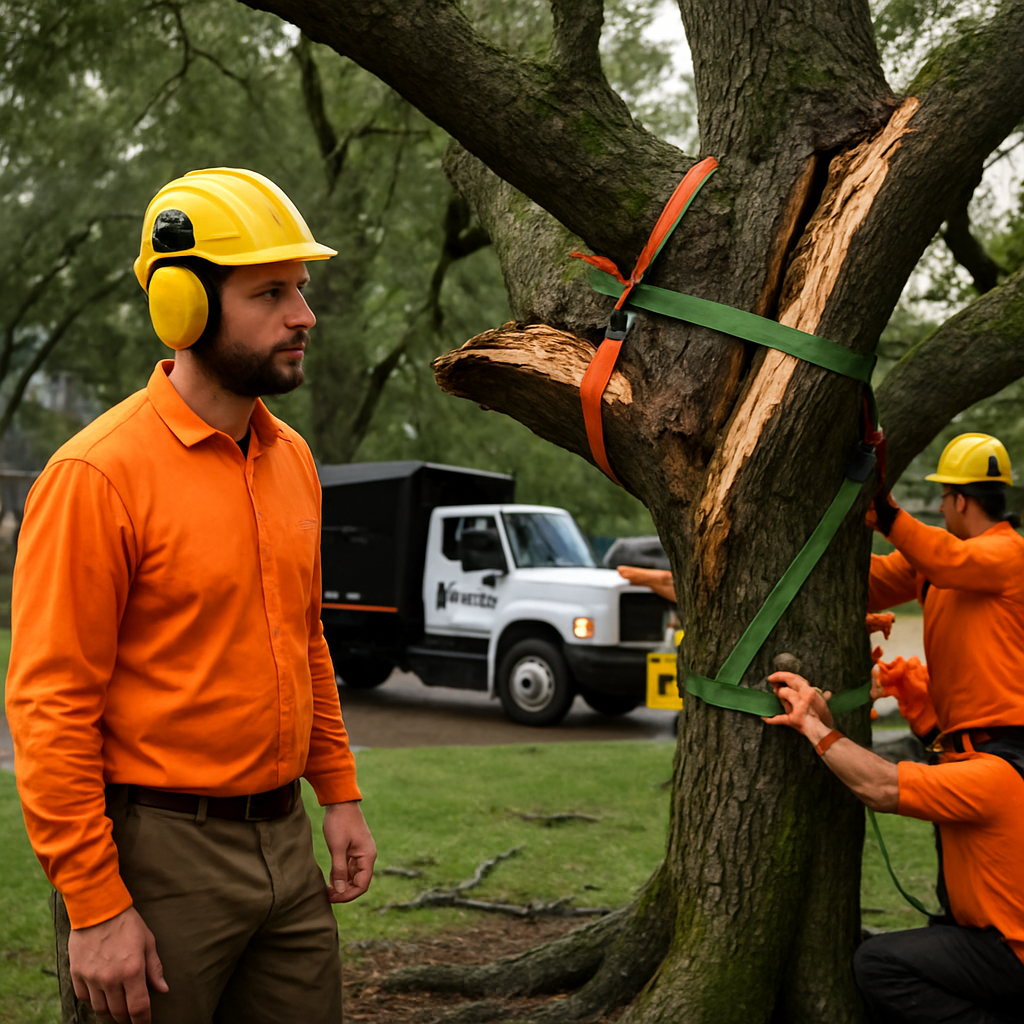
Concrete Example: Mr Tree Inc responded to a storm-leaning oak that had a split limb and root heave. Technicians performed an immediate safety triage (rope support and cordon), documented decay with photos, and returned within a week for a stabilization plan combining selective pruning, cabling, and soil remediation. The homeowner avoided emergency removal and saved roughly 40 percent over a reactive full removal scenario because the tree could be preserved with targeted work.
Judgment call most owners miss: people treat tree care like one-off fixes. In practice, trees are ongoing assets in an urban landscape — the right time to call is often before visible failure. Use assessments to prioritize interventions by risk and value rather than reacting only after damage occurs. For technical guidance on risk criteria see the ISA tree risk resources at ISA Tree Risk Assessment.
How Certified Arborists Conduct Tree Health Assessments
Straight answer: a credible tree health assessment is diagnostic, documented, and defensible — not a quick look and a quote. A certified arborist combines site history, visible signs, limited instrumentation, and risk judgment to produce an actionable recommendation, often on the same visit.
Assessment stages a professional will follow
Stage 1 – Context and history: the arborist records property changes, recent storms, construction, irrigation changes, and any past treatments. This background changes the meaning of symptoms — for example, recent grade changes usually point to root stress rather than canopy disease.
Stage 2 – Systematic inspection: the crown, trunk, root collar, and surrounding soil are examined in a sequence to find failure modes: decay, included bark, root issues, girdling roots, or pest activity. Inspecting the root collar and soil is often the most revealing step homeowners overlook.
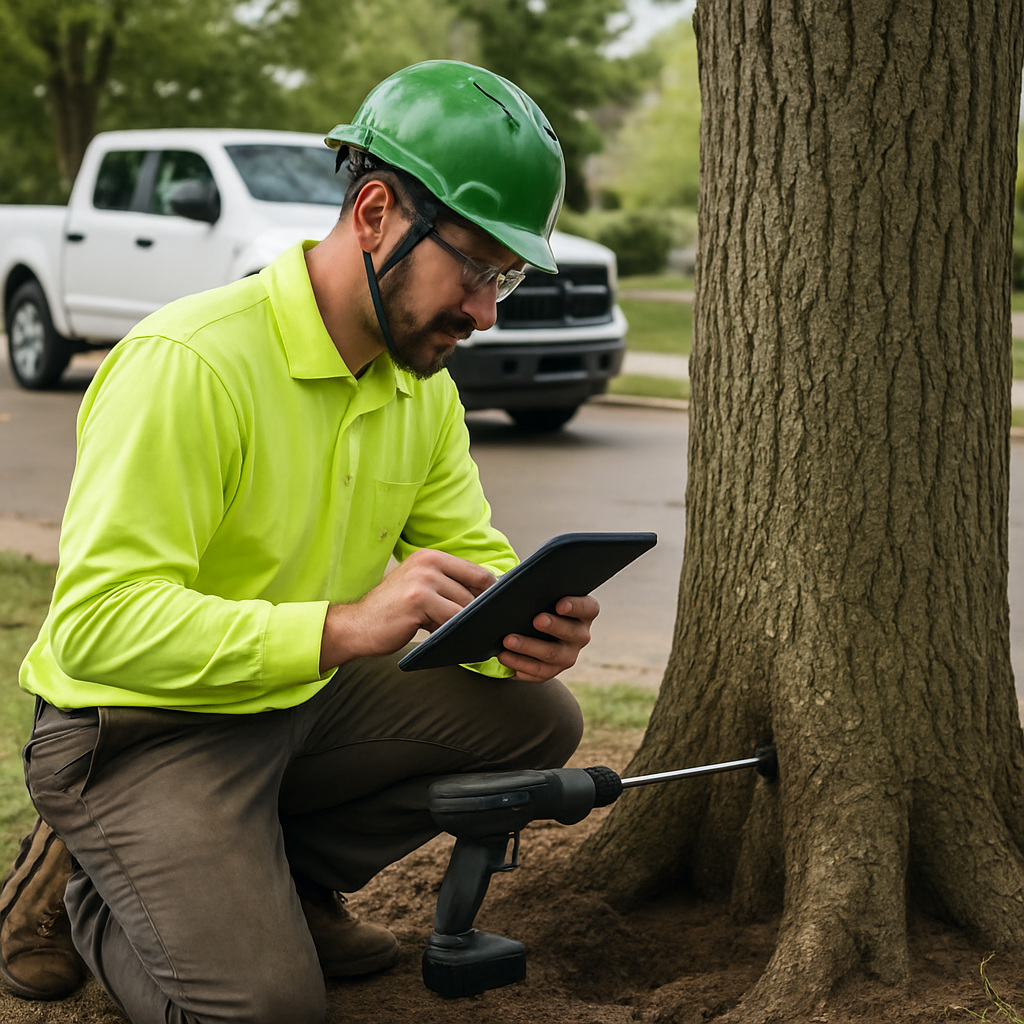
Stage 3 – Targeted diagnostics: when visual clues are insufficient, the arborist selects tools that match the question. Resistograph drilling gives a localized decay profile; sonic tomography maps internal voids without invasive cores; increment borer samples wood for lab analysis; soil probes and lab tests identify nutrient or contamination problems. Each test has costs and limits — more data rarely eliminates uncertainty entirely.
- Stage 4 – Risk assessment and rating: using ISA-informed criteria an arborist assigns a risk level and links it to recommended actions and inspection cadence.
- Stage 5 – Report and options: the written report explains observed defects, supported by photos and test results, presents options with expected outcomes and costs, and specifies follow-up timing.
Practical trade-off: invasive tests such as increment boring provide direct evidence but create wounds and add cost; noninvasive options like tomography cost more up front but avoid further stress to a declining tree. In practice, choose tests that will change the decision you need to make — do not test for curiosity.
Concrete Example: A homeowner reported repeated branch drop from a mature maple. Mr Tree Inc performed a root collar excavation and soil test, then used a resistograph on a suspicious trunk zone. The results showed limited central decay but viable anchorage, so the team recommended selective crown reduction and a two-year monitoring plan instead of immediate removal. The choice saved the homeowner the cost of removal while addressing the failure mode.
Key judgment: most assessments are probabilistic — expect a recommended plan with contingency checks rather than an absolute yes or no. Good arborist services document uncertainty and specify what to watch for and when to act.
Common Treatments and How They Work
Straightforward reality: treatments are risk management, not miracles. Most arborist services reduce the probability of failure, slow decline, or suppress pests long enough for follow-up work — they do not permanently restore a tree that has advanced structural collapse or root loss.
Mechanical and structural treatments
Structural pruning and crown work: targeted pruning removes weight and redistributes wind loads to reduce whole-tree failure. Thin and balance, do not indiscriminately top. Timing matters: winter or late dormant-season cuts suit many shade trees, while spring pruning can worsen some disease vectors. See practical scope and examples at tree trimming and pruning.
Stump grinding versus chemical removal: grinding eliminates the tripping hazard and resprouts quickly but leaves organic matter in place that decomposes over time. Chemical methods slow regrowth but require longer site exclusion and rarely speed property reuse. Choose grinding when you want usable root-free soil sooner; choose chemical only for very shallow budgets or where machinery access is impossible.
Support systems and root-zone fixes
Cabling and bracing: hardware redistributes loads across weak unions and can postpone removal, but it is a maintenance item. Expect inspections at least annually and after storms; fasteners fatigue and anchor points can fail if left unchecked. Cabling makes sense when the failure mode is mechanical and the root plate and trunk still have adequate capacity.
Soil and root remediation: addressing compaction, poor drainage, and depleted organic matter is often more effective long term than repeated fertilization. Techniques from targeted mulching to mechanical root aeration and deep root fertilization for trees improve root function. Prioritize root-zone fixes when symptoms include sparse leafing, repeated dieback, or new heave.
Chemical and biological interventions
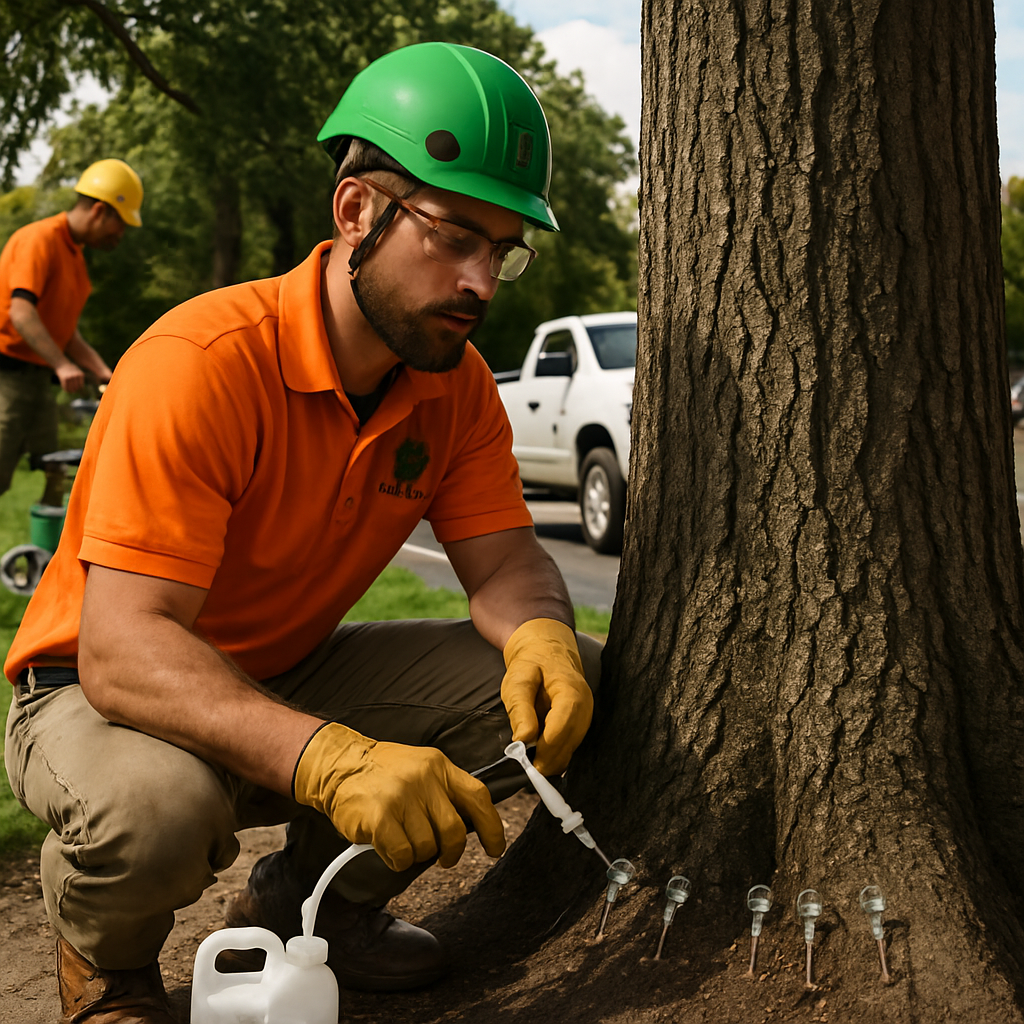
Injections and systemic treatments: trunk injections deliver active ingredients directly into vascular tissue and can be highly effective for certain pests like emerald ash borer when timed correctly. They require professional dosing, species matching, and follow-up. Foliar sprays work for some defoliators but lose effectiveness on large trees or late-season infestations — they are not a universal substitute for systemic control. For pest decision thresholds consult UC IPM.
Integrated pest management (IPM) judgment: treatment should follow diagnosis and a threshold for action. Overuse of broad-spectrum pesticides creates resistance and collateral damage; a professional arborist will prefer targeted, timed treatments combined with cultural fixes when feasible.
Concrete Example: A mature ash began showing canopy thinning with D-shaped exit holes. Mr Tree Inc confirmed emerald ash borer activity, performed trunk injections timed to local phenology, and applied localized root-zone aeration and mulch to improve vigor. The tree regained leaf density the following season and entered a two-year monitoring program with scheduled re-treatment as needed.
Key tradeoff: preservation treatments are cheaper short term than removal only if you accept ongoing inspection and retreat costs. No hardware or chemical is truly set-and-forget.
Tree Risk Assessment and Liability Management
Immediate point: a defensible tree risk assessment is the document that limits your legal and financial exposure after a failure, not just the work completed on the day. Professional arborist services that lack clear, timestamped findings leave homeowners exposed when neighbors, insurers, or municipalities dispute cause or timing.
What a usable assessment must contain
Essential elements: the report should map defects to specific locations, attach date stamped photos, record observable failure mechanisms and probability-consequence reasoning, list recommended mitigations with firm timelines, and state what to watch for next. A good report shows why a decision was made, not only what work was done.
- Risk rationale: short explanation tying observed defects to the assigned risk rating
- Action threshold: when to escalate from monitoring to intervention and who is responsible
- Permitting and notification needs: any local permit references and recommended notifications to utilities or neighbors
- Contract and insurance proof: contractor name, insurance limits, and a clear scope-of-work tied to the report
Practical tradeoff: conservative immediate interventions reduce short term liability but increase up-front cost and the chance of removing trees that could have been preserved with monitoring. More measured approaches save money now but increase the frequency and intensity of documentation and inspection you must perform.
Limitation to accept: risk ratings are probabilistic estimates. Even the best arborist cannot guarantee a zero chance of limb or tree failure. The management value of an assessment comes from reducing uncertainty and defining actions and timelines that a court or insurer can follow.
Concrete example: after a large limb fell onto a neighbor fence, Mr Tree Inc conducted a timed hazard inspection, produced a photo lined report with a two step mitigation plan, and coordinated an on site meeting with the adjuster. The documentation showed preexisting advanced decay in the limb union and limited the homeowner liability while the company completed immediate pruning and later cabling.
Documentation trumps memory – signed, dated assessments with photos materially change insurance and municipal outcomes.
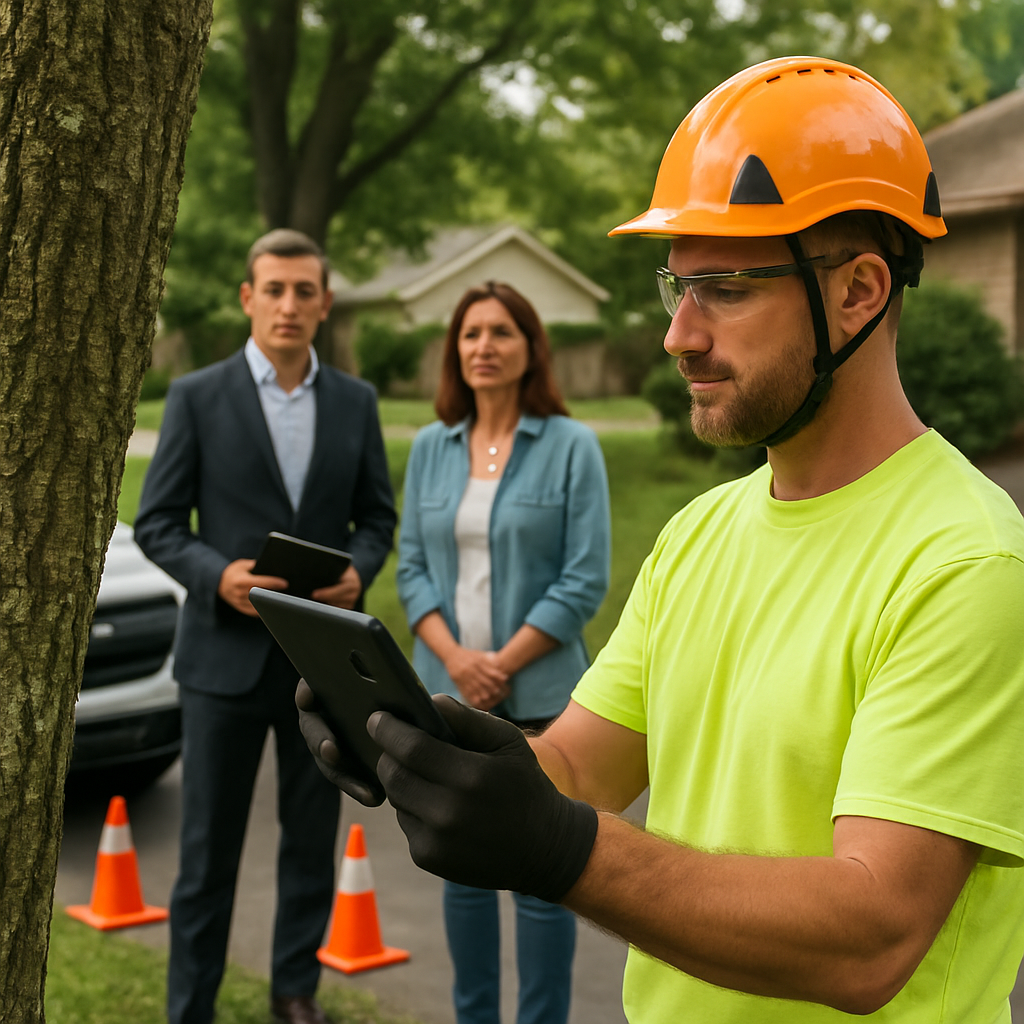
Final consideration: treat risk assessment as an ongoing administrative task. If you accept mitigation that is conditional – cabling, injections, or deferred pruning – budget for inspections and retain each follow up report. That chain of reports is what protects you long term; without it a one time invoice and cleanup are weak evidence in a dispute.
Emergency Response and Storm Damage Protocols
First priorities: keep people and property safe, then preserve evidence. After significant storm damage the two actions that change outcomes are rapid hazard isolation and disciplined documentation — everything else flows from those steps.
What a professional arborist does first on arrival
On-site assessment: a certified arborist immediately identifies active hazards (downed powerlines, suspended limbs, unstable trunks), isolates the danger zone, and records the scene with timestamped photos and notes. Temporary stabilization techniques follow when needed: sling supports, guying, or removing specific hanging limbs to prevent an imminent collapse.
- If you are on site: do not climb, cut, or move large debris unless a professional tells you it is safe.
- Secure the area: move people and vehicles out of the drop zone and mark it so no one re-enters.
- Document everything: take wide and close photos from multiple angles, capture video of unstable limbs, and note times — adjusters and courts value sequence and timestamps.
- Notify utilities: if lines are involved call the utility first; do not attempt to remove branches from powerlines.
Cost and decision trade-off: emergency call-outs carry a premium, but short-term stabilization usually costs a fraction of full removal and can prevent secondary damage (roof, vehicles, fences). That said, stabilization is a stopgap. If root or trunk failure is extensive, stabilization merely postpones the inevitable and adds ongoing inspection costs.
Real-world application: after a windstorm a large pine crashed onto a garage roof. Mr Tree Inc isolated the area, removed the portion of the limb that threatened collapse, placed temporary shoring on the roof to prevent water intrusion, and created a photo-lined estimate for the adjuster. The documentation sped the insurance approval and prevented interior damage while a permanent plan was developed.
Practical limitation to accept: you cannot reliably know the full structural condition of a storm-damaged tree at first glance. Hidden root plate failure, internal decay, and hairline splits become apparent only after staged removals or seasonal monitoring. Plan for a 3-to-12 month follow-up inspection cadence after any stabilization work, and budget for escalation to removal if subsequent checks reveal progressive failure.
Takeaway: prioritize safety and records first, use professional temporary stabilization to reduce immediate cost and damage, then commit to a documented follow-up plan with an ISA certified arborist — start with a timed inspection and signed estimate at Mr Tree Inc Emergency Services.
Designing a Multi Year Tree Care Plan
Priority-first planning: build the multi year plan around what poses the biggest risk or value to the property, not around neat calendars. That means start with an inventory that ranks trees by safety, species value, and replacement cost, then allocate your first-year budget to actions that reduce immediate liability or preserve high-value specimens.
Core components of a practical multi year plan
Five essentials: a baseline inventory and condition report; a scheduled inspection cadence; a prioritized treatment schedule (pruning, root work, injections, or removal); a maintenance and monitoring log; and a contingency reserve for storm or pest events. Include permit and utility coordination as line items so surprises do not derail the budget.
| Year | Typical actions | Primary objective | Estimated Mr Tree Inc cost range |
|---|---|---|---|
| Year 1 | Comprehensive inspection, selective structural pruning, root-zone aeration, mulch | Reduce immediate hazards and fix root limitations | $600 – $3,000 per large specimen |
| Year 2 | Cabling/bracing if needed, targeted injections or IPM treatments, follow-up inspection | Stabilize structure and suppress pests while monitoring response | $300 – $2,500 per specimen |
| Year 3 | Re-assessment, additional treatments or staged removal, stump grinding if removed | Decide preservation vs removal based on documented response | $500 – $6,000+ depending on removal |
Practical trade-off to accept: preservation buys time and often equity, but it introduces recurring costs – inspections, hardware maintenance, re-treatments. If you are unwilling to pay for annual checks or possible re-treatment, allocate budget toward safe removal instead of interim fixes.
Concrete Example: A homeowner with five mature maples received a three-year plan from Mr Tree Inc that began with root-zone remediation and winter structural pruning for two high-priority trees, scheduled targeted insect monitoring through spring, and budgeted one specimen for removal in year three if canopy recovery lagged. By year two the two preserved trees had improved leaf density and the homeowner deferred the fourth-tree removal, saving roughly 25 percent compared with immediate full removals.
- Inspection cadence guidance: newly planted trees – first-year quarterly checks, years 2-3 – biannual, established large trees – annual safety inspection; increase frequency after storms or pest detection.
- Seasonal task rhythm: winter for structural pruning, spring for pest scouting and fertilization decisions, summer for irrigation checks and minor corrective pruning, fall for mulching and soil amendments.
- Budget rule of thumb: set aside 10-20 percent of annual tree care spend as a contingency for emergency response or unexpected escalation.
Key rule: fund monitoring before you fund hardware or chemicals; without consistent follow-up the initial investment loses most of its value.
Next consideration: once you have the three-year plan, schedule the first annual inspection and record all findings. Good plans are living documents – treat the plan as governance that guides when to escalate to removal, not as a one-time shopping list.
Choosing an Arborist and What to Expect from a Professional Service
Bottom line: hire an arborist for the combination of technical judgment, documentation, and predictable follow-up, not just for the lowest sticker price. Good arborist services shift uncertainty onto the contractor by tying recommendations to measurable follow-up actions and clear timelines.
What a professional engagement looks like: an on-site inspection by an ISA certified arborist, a written diagnosis with photos and a risk rating, an itemized proposal that separates inspection, mitigation, and monitoring costs, and an agreed inspection cadence after work is complete. Expect the proposal to name who will perform each task and how change orders are handled.
Practical buyer checklist
- Scope clarity: scope stated in plain terms (what is being removed/pruned/treated), measurable endpoints (percent crown reduction, cable locations), and cleanup expectations.
- Insurance and permits: copy of liability insurance and workers compensation; statement on whether the arborist will obtain local permits or provide documentation for you to file.
- Follow-up plan: inspection schedule and pricing for follow-up visits or retreatments, not just a one-off invoice.
- Contingency terms: how unforeseen findings (hidden decay, utility conflicts) will be priced and approved on-site.
- Warranties and limits: what is guaranteed (workmanship) and what is not (survival of a stressed tree), plus product labels for any pesticides used.
Trade-off to accept: lower bids often exclude critical pieces such as permit handling, traffic control, or follow-up inspections. That makes them cheaper now but riskier later — for liability, warranty claims, and insurance reimbursements. Pay for clarity up front if you want defensible outcomes.
Common misread by homeowners: many assume tree removal is an absolute price. In practice, internal decay, presence of utilities, and required traffic control change scope mid-job. Insist on a written change-order process so you control cost and avoid surprise bills.
Concrete example: A property manager received two bids for structural pruning and cabling. The low bid excluded annual inspections and did not list cable locations. Mr Tree Inc submitted a scope that named anchor points, inspection intervals, and re-tensioning costs; the manager chose the slightly higher bid because it eliminated ambiguity for the next three years and simplified coordination with the building's insurance provider. Documentation sped permit approval and avoided a later dispute about who should replace fatigued hardware.
Request documentation you can use: dated photos, a short risk rationale tied to ISA criteria, and an explicit monitoring cadence. Those three items are what insurers and municipalities will ask for.
Final judgment: expect an arborist proposal to be an operational plan, not a sales pitch. If you want long-term value from tree care services — whether pruning, cabling, or pest programs — pay for the inspection and the monitoring. Cheap fixes without documentation cost more over the lifecycle.
0 Comments