
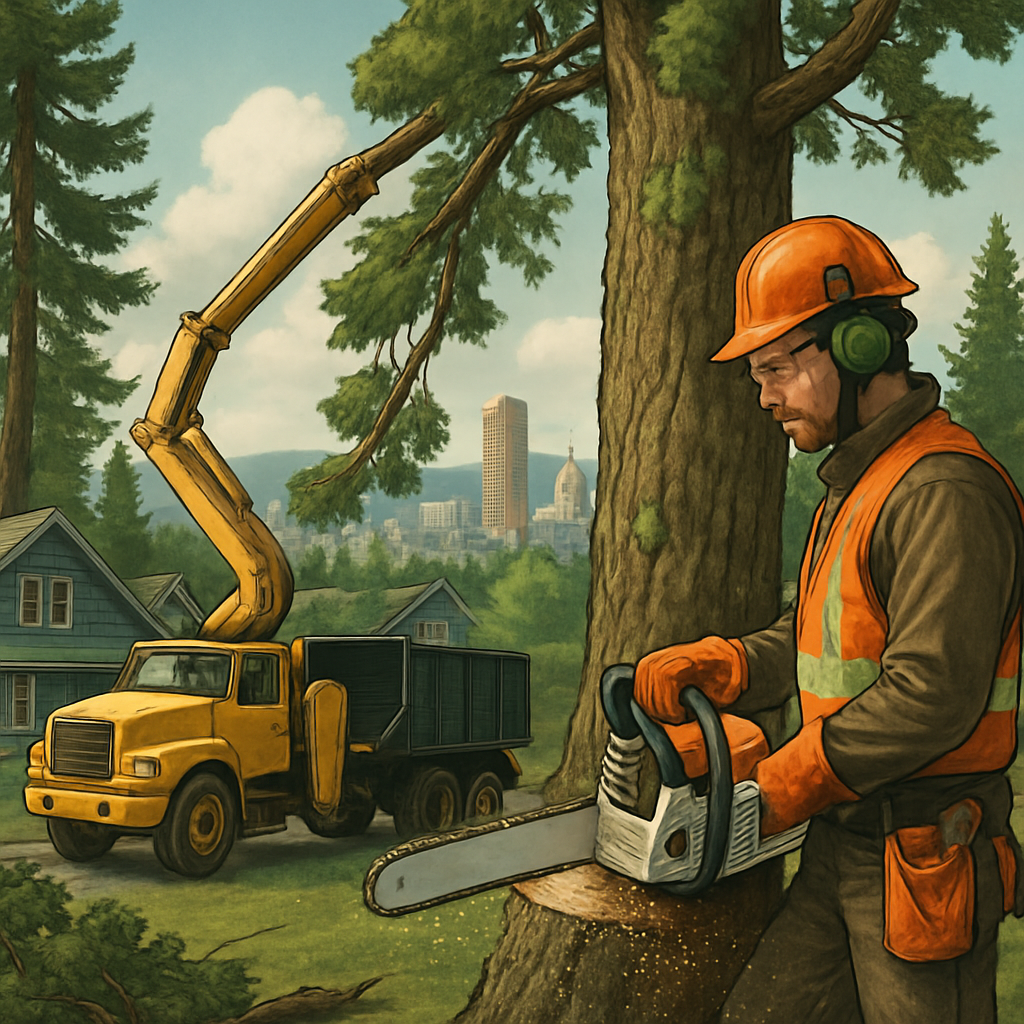
Tree removal Portland projects often trigger permits, replacement obligations, and coordination with multiple city bureaus; missing one requirement can lead to fines or a stop work order. This concise, locally focused guide explains the street tree versus private tree split, when permits are required or exempt for emergencies, how to vet arborists and contractor bids, realistic cost drivers and timelines, and practical alternatives to removal.
How Portland governs trees: street trees, private trees, and protected trees
Clear institutional split: Portland treats street trees as public assets while many private trees fall under development or environmental rules. That split is the single biggest practical divider you need to know before hiring a crew or ordering a permit.
Who enforces what: Portland Parks Urban Forestry manages trees in the public right of way and issues street tree permits – see Portland Parks street-tree permits. Private trees affected by development, land divisions, or environmental overlays are regulated through the Bureau of Development Services and Bureau of Planning and Sustainability – check BPS environmental zones and tree code and BDS permit pages. Title 11 and overlay maps determine whether a private tree is protected.
Protected categories matter in practice: Significant trees, trees inside environmental overlay zones, and landmark trees trigger additional review and often mitigation or replacement obligations. The tradeoff is simple: following the permit pathway increases time and paperwork but avoids fines, forced replanting orders, or stop work directives that are costly and slow.
Practical ownership rules and common pitfalls
Ownership is not obvious at a glance. A tree with its trunk partly in the park strip or directly over the property line is often treated as a street tree for permitting even though the canopy shades your house. Assuming ownership without checking is the most common and expensive mistake homeowners make.
Concrete Example: A 36-inch diameter bigleaf maple sitting with its trunk 2 feet behind the sidewalk produced root heave on the homeowner side. The owner called Portland Parks first, obtained a street-tree permit, and contracted a licensed arborist to prepare the required removal justification and replacement plan. Handling the permit up front avoided a citation and ensured the city approved the planting plan for the park strip.
Practical judgment: If a contractor urges immediate removal of a sidewalk-adjacent tree without confirming permit requirements, treat that as a red flag. Reputable arborists in Portland will confirm ownership, advise which bureau to contact, and either file paperwork or hand you a clear checklist so the removal is defensible with city records.
- Portland Parks Urban Forestry: street-tree permits and inspections – street-tree permits
- Bureau of Development Services: development-related private tree rules and permit intake – BDS permits
- Bureau of Planning and Sustainability: environmental overlays and tree protections – environmental zones
- Hiring help: see ISA guidance on hiring an arborist – International Society of Arboriculture and consider providers who assist with permits like Mr Tree Inc – arborist services.
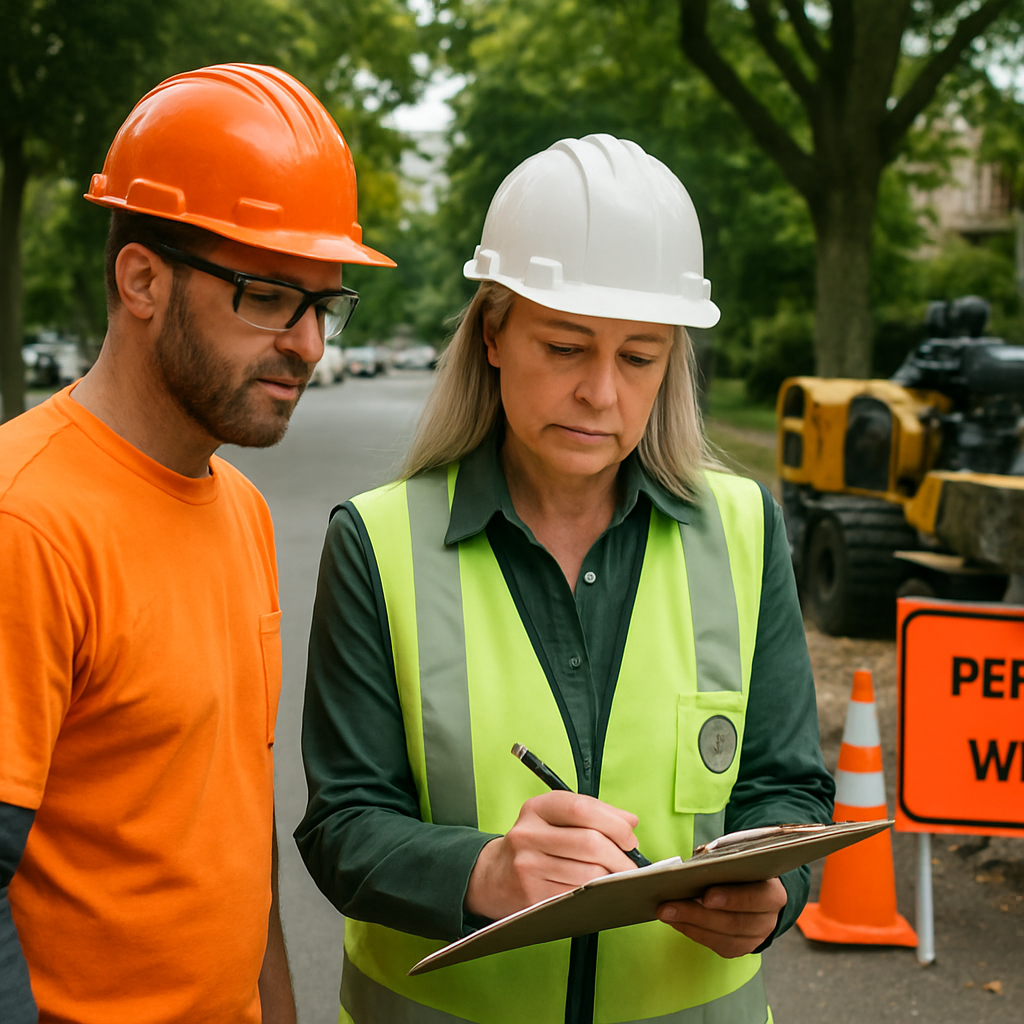
Next consideration: Map the tree trunk location and measure diameter at breast height before you request a permit or accept a bid – that small investment in fact-finding changes who you call, the paperwork required, and the final cost.
When you need a permit in Portland and common exemptions
Direct rule: In Portland, work that affects trees touching the public right of way, trees flagged as protected by environmental overlays, or trees involved in development usually requires a formal permit before any cutting starts. For practical purposes, treat any tree removal Portland job that impacts sidewalks, sewers, or site development as permitable until you confirm otherwise with the city.
Typical permit triggers
- Public interface: Removal of trees in the park strip or whose trunks cross the property line typically goes through Portland Parks – see street-tree permits.
- Protected status: Trees inside an environmental overlay or listed as significant require BDS or BPS review – start at BDS permit pages.
- Development work: Any removal tied to new construction, site grading, or land division almost always triggers a permit and mitigation conditions.
- Size and species: Large diameter trees or species the city considers high canopy value commonly need an arborist report as part of the application.
Emergency and short notice removals: The city allows immediate action for imminent hazards, but that is conditional. You must document the hazard with photos, get a certified arborist note when possible, notify the appropriate bureau promptly, and file follow up paperwork. The tradeoff is speed for scrutiny – removing first avoids immediate risk but increases likelihood of later mitigation requirements or fines if the city determines the removal was unnecessary.
What rarely needs a permit: Routine pruning, deadwood removal within a homeowner lot when it does not affect protected zone boundaries, and non-structural maintenance are often permit free. That said, assumptions cost money; confirm with Portland Parks or BDS rather than relying on a contractor claim that work is minor.
Concrete Example: A property manager called for emergency tree removal Portland after a 50 foot Douglas fir split and leaned into a public sidewalk during a windstorm. The crew performed an emergency removal for safety, then submitted an arborist report and photos to Portland Parks within 72 hours. Because the tree was a street-adjacent specimen, the city required a replacement plan and a small mitigation fee — handled during the post-removal permit process rather than blocking the immediate hazard removal.
Judgment call: In my experience, homeowners underestimate how often a trunk near the sidewalk triggers bureau involvement. The correct short workflow is simple and worth the time: locate the trunk, measure diameter at breast height, take photos showing the sidewalk or public asset, and call the relevant bureau or use their online intake. That small fact-finding step typically saves more than the cost of a rushed cleanup that violates local rules.
Next action: Before scheduling work, confirm ownership and submit either a pre-application inquiry or the required emergency notification. If you want help with that legwork, see providers that handle permit filing and mitigation planning like Mr Tree Inc arborist services.
Step by step guide to applying for a tree removal permit
Start by identifying jurisdiction. Whether Portland Parks or BDS handles the permit changes everything that follows — forms, fees, timelines, and which supporting documents matter.
- Step 1 — Confirm who controls the tree. Locate the trunk relative to the sidewalk, property line, and any mapped environmental overlay. If the trunk touches the public strip or the map flags the parcel, expect Portland Parks or BDS involvement; use the street-tree permit page and BDS permit intake as your first check.
- Step 2 — Document the tree and site. Photograph the trunk, canopy, nearby structures, and utilities from multiple angles. Record trunk diameter at 4.5 feet, approximate height, species ID if you can, and note any visible defects. Good photos shorten reviews.
- Step 3 — Get a short arborist assessment when required. For trees larger than about 24 inches or ones in overlays, obtain a written evaluation from an ISA certified arborist that explains hazard, decay, or justification for removal. Expect to pay for this; the tradeoff is fewer city questions and a faster approval.
- Step 4 — Prepare a simple site sketch. A hand-drawn plan with property lines, the tree location, adjacent sidewalk or street, and proposed removal/planting spots is usually enough for initial submittal. Accurate sketches prevent requests for follow-up maps.
- Step 5 — Complete the correct application packet. Use the Portland Parks online form for street trees or BDS forms for development-related removals. Attach photos, the arborist note if available, and a replacement/mitigation plan or payment option as the form requests.
- Step 6 — Submit and expect conditions. Submit electronically where possible and allow for clerical review. The city often issues permits with conditions: protected-species mitigation, replanting locations, or inspection windows. Read conditions closely before scheduling work.
- Step 7 — Schedule inspection and perform work. Arrange any required pre- or post-removal inspections. If the permit requires stump grinding, erosion controls, or tree salvage, include those line items in the contractor scope so there are no surprises.
- Step 8 — Final documentation. After work, file the post-work photos, disposal receipts, and confirmation of replacement planting or fee payment per the permit. This closes the loop and reduces the risk of later fines.
Practical tradeoffs and what usually slows approvals
Real tradeoff: paying for a professional arborist report up front adds cost but halves the typical back-and-forth with reviewers. If you skip the report to save money, plan for longer review times and a higher chance of conditional approvals that add cost later.
Limitation: complex removals that need traffic control, crane assistance, or work in environmental overlays routinely push review into multiweek timelines and sometimes require additional permits (right-of-way, noise, or erosion control). Budget time and contingency for those separate approvals.
Concrete example: A homeowner planning a small ADU found a 28-inch maple next to the proposed foundation. They hired an ISA certified arborist to produce a 3-page removal justification and a two-tree replacement plan, submitted that with the BDS packet, and received conditional approval in three weeks. Because the arborist documented root conflicts and mitigation planting, inspection conditions were limited and the construction schedule kept moving.
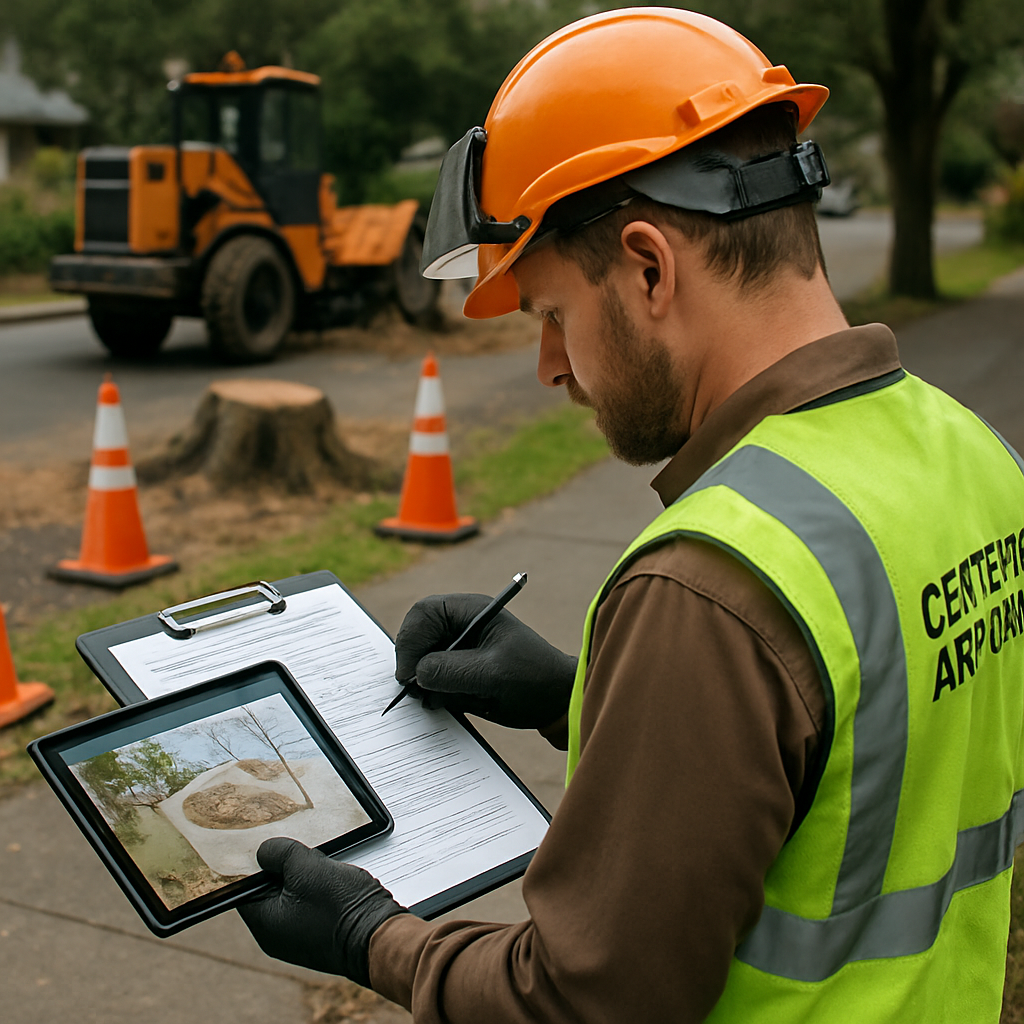
Next consideration: if you want to minimize surprises, work with a provider who will prepare and submit the packet on your behalf and who understands local mitigation expectations; that shifts risk away from you and keeps the city interaction cleaner.
City fees, replacement obligations, and potential penalties
Straight answer up front: Portland will usually require either on-site replacement planting or a mitigation payment when a protected or street tree is removed, and those obligations are triggered during permit review or after an emergency removal is reported.
Practical tradeoff: planting on site keeps your long-term costs and neighborhood relations lower but often requires space and maintenance; paying an in-lieu fee is quicker but shifts responsibility to the city planting program and can be more expensive for large trees. Choose based on parcel constraints and your willingness to commit to follow-up care.
- What drives the cost or mitigation amount: tree diameter (DBH), species canopy value, whether the tree is a street tree, presence in an environmental overlay, and whether the removal was planned or an emergency.
- How replacement is decided: the city compares lost canopy value to required replacement trees or a fee; sometimes they accept planting on private property, sometimes only in the park strip or through a fee.
- Timing and payment mechanics: mitigation fees are usually required before permit closeout; replacement plantings often come with inspection windows and maintenance periods.
Concrete example: A commercial property removed a 30-inch maple adjacent to the sidewalk after storm damage. Because it was a street-adjacent specimen, Portland Parks required a three-tree replacement plan or payment of a mitigation fee through the city program. The owner chose to plant one large canopy tree on-site and pay the balance as a fee so the approval closed quickly and inspections were limited to planting verification.
Penalties and enforcement realities
Enforcement in practice: fines, stop work orders, and mandatory replanting are the usual tools. The city also issues orders to restore the site or to pay increased mitigation if the removal lacked documentation or violated permit conditions.
Common misunderstanding: many property owners assume emergency removals eliminate future requirements. In reality, emergency work is allowed for safety but the city still expects timely documentation; inadequate proof or failure to follow up increases the odds of retrospective fines or a forced replanting order.
Judgment call: paying up-front for a qualified ISA arborist report and having a contractor that will submit post-removal documentation saves time and lowers enforcement risk. Skipping that step to reduce immediate expense often becomes costlier when the city re-opens the case.
Next consideration: if you want to minimize surprises, ask bidders to show how they will handle mitigation obligations and paperwork — providers who include permit assistance and a clear replacement option reduce your exposure to fines and delay. See local arborist services like Mr Tree Inc arborist services for firms that routinely manage mitigation with the city.
How to choose a trusted Portland provider and what to ask
Start with verification, not persuasion. Don’t hire on price or charm alone. Confirm a prospective company can legally and safely do the job in Portland: correct insurance limits, a verifiable arborist on staff, and demonstrable experience dealing with Portland Parks and BDS permitting issues.
A practical verification checklist
- Insurance proof: Request a current certificate of insurance naming your property (or the city when required) and confirm general liability and workers compensation — call the insurer if anything looks off.
- Arborist credentialing: Ask for the name and ISA certification number of the arborist who will assess the tree; verify at International Society of Arboriculture.
- Permit experience: Ask for two recent examples of permited work in Portland and the permit number or a redacted packet; companies familiar with local reviewers move faster and produce fewer conditional approvals.
- Written scope with exclusions: Insist on a signed estimate that lists what is included (stump grinding, chip hauling, traffic control) and what is not — vague scopes are the main source of surprise costs.
- Local references: Request recent Portland-area references (not distant suburbs) and drive by one completed site if possible.
What to ask during the estimate. Use focused questions that force concrete answers rather than sales talk. Ask how they will handle permit filing, who will perform the work (crew vs subcontractor), where debris will be disposed, and whether replacement planting or mitigation is included or billed separately.
- Expectation answers: Request a timeline tied to permit milestones, not a vague week window.
- Waste plan: Ask where chips and large logs will go and for a disposal receipt option — you may need that for permit closeout.
- Contingency pricing: Have them quote the additional cost for crane assistance, traffic control, or emergency stabilization so you can compare apples to apples.
Trade-off to accept: Faster response often costs more. Emergency tree removal Portland services that promise same-day response will charge a premium and sometimes use different crews. If the hazard is non-immediate, it is usually cheaper and safer to wait for a scheduled certified-arborist evaluation and a permit-compliant plan.
Red flags that should stop the conversation: refusal to provide insurance documents, no written scope, pressuring to pay cash-only, or claiming permits are unnecessary without showing a city contact or written justification. Companies that dodge showing past Portland permit examples are likely unfamiliar with local conditions.
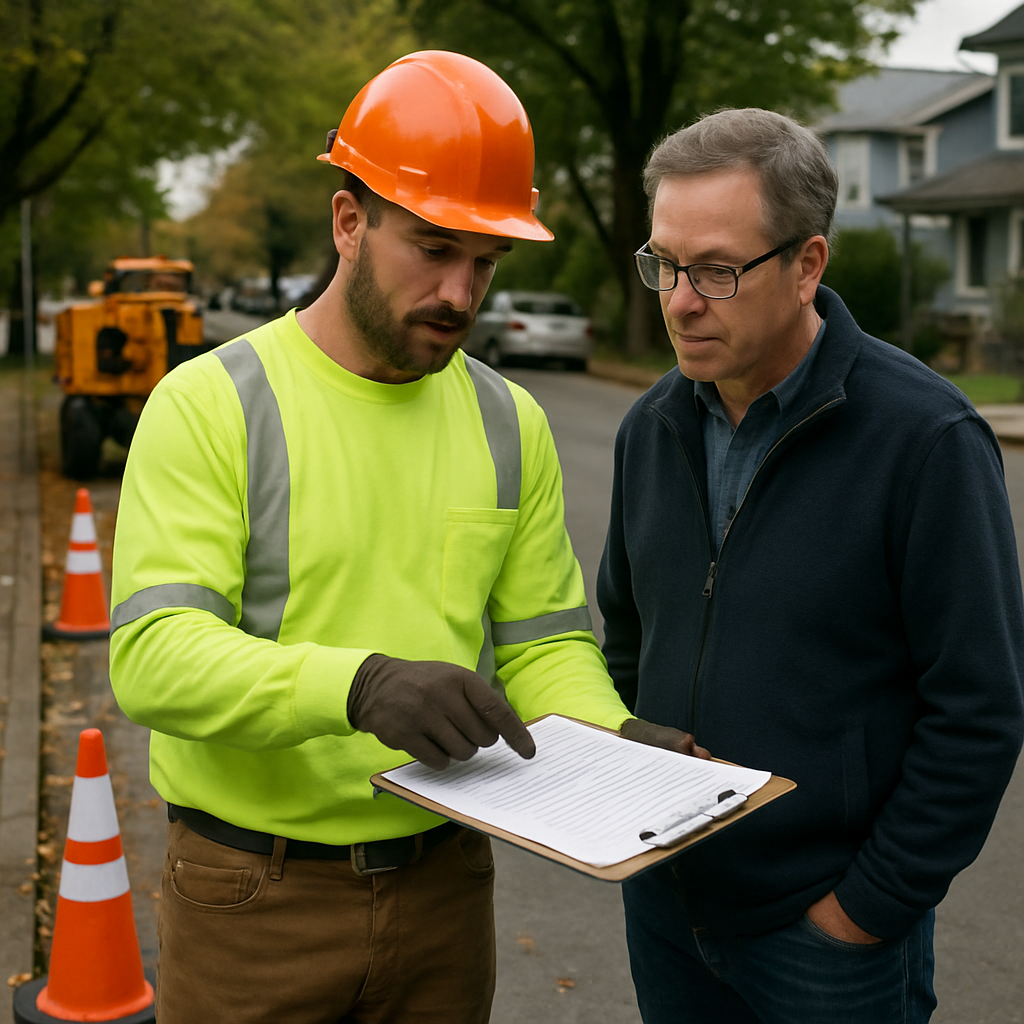
Concrete Example: A homeowner received three bids for a large maple near the sidewalk. The low bid excluded stump work and offered no permit help; the mid bid included an ISA arborist report and permit filing but added a separate mitigation fee; the highest bid included crane work, stump grinding, and planting. The homeowner chose the mid bid because the contractor provided the example permit number and a realistic timeline — the result was fewer surprises and a clean permit closeout.
Check permits first and pick the bid that reduces regulatory risk, not just the lowest dollar.
Cost drivers, ballpark price ranges for Portland, and how to compare bids
Straight fact: prices for tree removal Portland vary dramatically because each job is effectively custom work. The same 30-inch oak can be a $1,800 straightforward cut in an open yard or a $12,000 project when it sits over a sidewalk, next to power lines, and needs crane access and traffic control.
What actually moves the price
Primary drivers (short form): tree size and species (hardwoods take longer to section), proximity to structures and utilities, site access (alley vs backyard with no driveway), required equipment (crane, aerial lift), traffic or pedestrian control needs, whether stump grinding and root ball removal are included, and any permit or mitigation fees imposed by the city. Insurance, crew experience, and seasonal demand also tilt price lines more than most homeowners expect.
| Typical removal type | Ballpark Portland price range |
|---|---|
| Small yard tree (under ~12 inch DBH) | $300 – $900 |
| Medium tree (~12–24 inch DBH) | $800 – $2,000 |
| Large tree (~24–36 inch DBH) standard access | $1,500 – $4,500 |
| Very large or complex (36+ inch, tight access) | $4,000 – $12,000+ |
| Crane-assisted removal (includes crane day/rental) | $5,000 – $20,000+ |
| Stump grinding (per stump, depends on diameter) | $150 – $900 |
Practical tradeoff: a low bid that looks attractive often omits key costs — stump work, chip hauling, traffic control, permit filing, or the insurance rider required by Portland Parks. Those omissions become change orders or enforcement costs. Paying more up front for a contractor who includes these line items frequently saves both money and time.
Concrete Example: A homeowner needed a 36-inch maple removed near a busy sidewalk. One company bid $3,000 but excluded traffic control and permits. After the crew started, Portland inspectors halted work; the homeowner paid $4,700 in add-ons and fines. A competing quote at $6,000 had included crane lift, traffic control, stump grind, disposal receipts, and permit filing — that contractor finished without delay and produced the documentation the city required.
How to compare bids so you are comparing apples to apples
- Demand an itemized scope: unit prices tied to tree DBH, what sections of the tree are removed, who does the work (in-house crew vs subcontractor).
- Permit and mitigation: whether the contractor files permits or hands you paperwork, and whether mitigation/replanting or fees are included. See street-tree permits for city expectations.
- Equipment and access plan: explicit callouts for crane, lift, traffic control, or private property protection.
- Stump and debris handling: stump grinding depth, chip spreading vs hauling, disposal receipts for permit closeout.
- Insurance and references: verify the insurer and ask for one recent Portland permit number or project reference. Also confirm the name and ISA number of the assessing arborist — verify at ISA.
- Change-order rules and payment terms: how much deposit, when final payment is due, and contingency rates for unforeseen complexity.
Bottom line: treat bids as risk-allocation documents, not price tags. If you want help reducing that risk, hire a provider who prepares the arborist note and submits permits for you — firms offering full-service arborist services like Mr Tree Inc do this routinely in Portland.
Alternatives to removal and post removal planning
Direct point: Removing a tree is not the only practical option in Portland, and often not the cheapest long-term choice. For many properties, targeted interventions such as thoughtful pruning, cabling, pest treatment, or partial crown reduction preserve canopy value and keep you off the permit treadmill associated with street-tree and protected-tree removals.
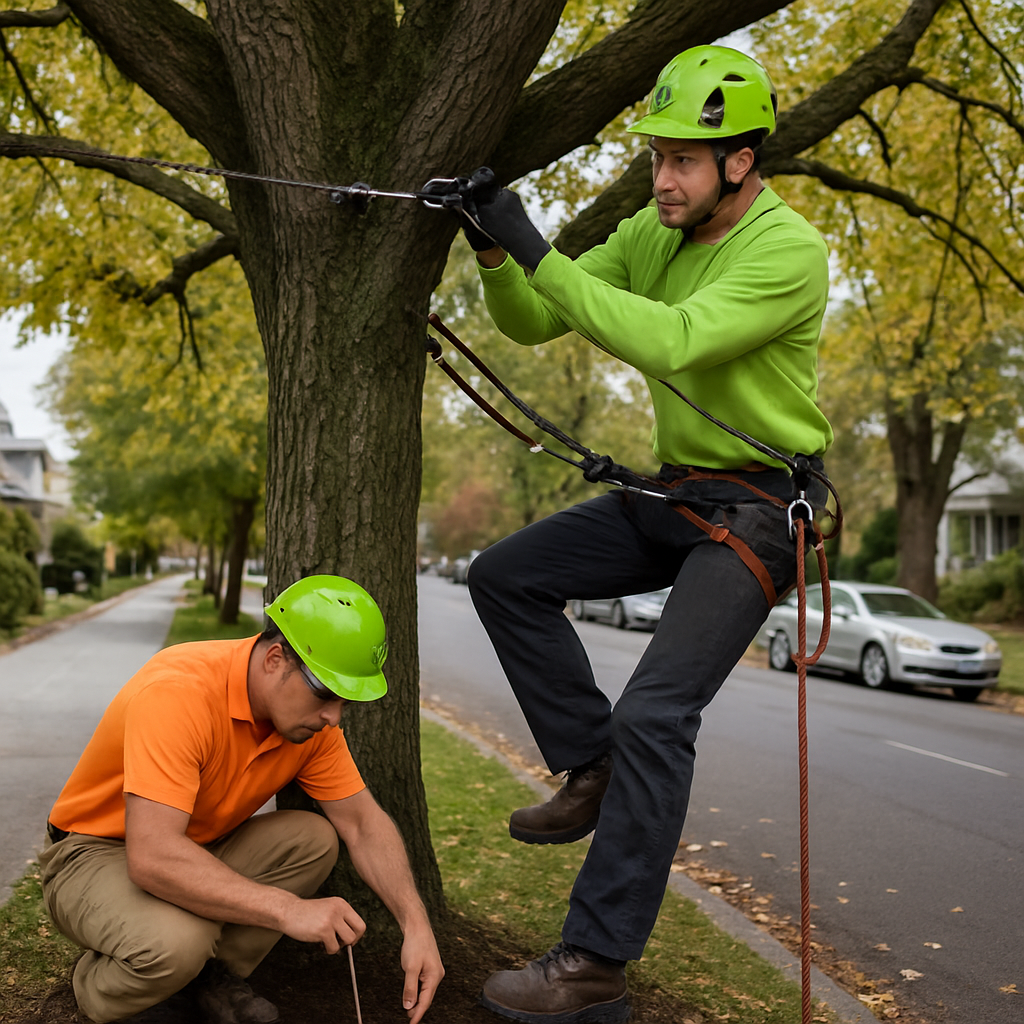
When alternatives work: Pruning and cabling buy time. If decay is limited to a single limb or codominant stem, a combination of crown reduction, selective pruning, and cabling can restore a safe weight distribution for years. These fixes require scheduled follow-up inspections and maintenance; they are not set-and-forget solutions.
Practical trade-offs to weigh
Key trade-off: Preservation often shifts cost from one-time removal to recurring maintenance. Cabling and repeated pruning cost less than crane-assisted removal today but require inspections, replacement hardware over time, and management of regrowth. If the tree is structurally compromised by internal rot beyond 30-40 percent of the trunk cross-section, preservation becomes a high-risk gamble — removal is the safer, cheaper option in the medium term.
- Pest and disease treatment: Effective only when the problem is detected early; treatments reduce spread but rarely restore heavily decayed trees to full structural integrity.
- Root interventions: Root pruning or barriers can protect sidewalks but may destabilize mature trees; expect an ISA-certified arborist to model risk before cutting major roots.
- Stump choices: Leaving a stump reduces immediate cost but obstructs future planting and can harbor pests; stump grinding Portland is the common compromise to clear space while recycling chips.
Use case: A homeowner with a 20-inch Douglas fir that snapped a primary limb in a windstorm chose controlled crown reduction and a two-point cable system rather than full removal. The tree retained most of its canopy, inspection intervals were added to the property maintenance plan, and the homeowner avoided a street-tree permit delay because the trunk remained outside the public strip. After two years the tree showed acceptable stability and lower maintenance cost than a replanting program would have required.
Judgment that matters: Contractors will sometimes push low-cost preservation because it keeps the tree on the job and revenue flowing. Insist on a quantified risk assessment from an ISA certified arborist that states likely lifespan extension, maintenance cadence, and worst-case failure scenarios. If the assessment lacks a time-bound prognosis, treat the preservation plan as provisional.
Post-removal planning — what to prioritize: Replanting strategy, utilities and right-of-way constraints, soil remediation, and irrigation. Planting a replacement without addressing compacted soil, root competition, or irrigation guarantees poor survival. Choose species suited to the site and your management capacity to avoid repeating this cycle.
- Plan species and location first: Prefer native, site-appropriate species like Oregon white oak or Bigleaf maple for canopy goals and long-term resilience.
- Check permits for park strip plantings: If planting in the park strip, coordinate with Portland Parks Urban Forestry to avoid later removal requirements.
- Decide stump strategy: If you plan immediate replanting, choose full stump and root ball removal; if not, schedule stump grinding and chip removal so the site is ready for mitigation plans.
Final consideration: If you need hands-on help assessing preservation versus removal, work with a provider that documents risk, files necessary permit paperwork, and outlines a post-removal planting and maintenance plan — for example, see providers offering arborist services Portland and stump grinding Portland options so the decision minimizes regulatory risk and future costs.
Next consideration: get a written, time-bound prognosis from a certified arborist before choosing preservation; the cost of repeated emergency work after a failed conservation attempt usually exceeds planned removal and replanting.
What to expect when you hire Mr Tree Inc for a Portland tree removal
Straight answer: hiring Mr Tree Inc for a tree removal Portland job means you should expect a documented, permit-aware workflow rather than a same-day hack job. They operate as a full-service crew that assesses risk, files or assists with city paperwork, performs the removal with safety controls, and delivers closure documents the city will accept.
Typical sequence and who does what
On-site assessment: a licensed, ISA certified arborist from Mr Tree Inc will inspect the tree and produce a short written evaluation that states the hazard, recommended action, and measurements (DBH and approximate height). This report is the document Portland reviewers look for when a tree is large or in an overlay.
- Estimate and scope: a written bid that lists permit filing, traffic control, crane needs, stump grinding, chip hauling, and disposal receipts if required.
- Permit assistance: Mr Tree can prepare the arborist note and submit applications to the right bureau — see Portland Parks street-tree permits — but the permit fee or mitigation payments remain the property owner’s responsibility.
- Execution: work is scheduled around permit windows; for simple yards the crew often completes removal and cleanup in a day, complex crane jobs take longer and require separate street or traffic permits.
- Closeout documentation: post-work photos, disposal receipts, and planting plans if mitigation is required — these are the records you keep or the company can file for permit closeout.
Practical trade-off: if you need rapid action for an immediate hazard, the crew will remove the danger first and handle documentation after. That buys safety now but increases the chance the city will require a mitigation plan or additional proof. If the risk is not immediate, paying for the arborist report and permit up front usually reduces total out-of-pocket cost and regulatory friction.
What you should prepare: clear vehicle access to the work area, a marked utility location request if underground lines may be affected, and a decision about stump grinding or full root ball removal so the bid reflects the true scope. Expect higher rates when work requires lane closures or crane rental; those are billed separately and need lead time for street permits.
Concrete Example: A homeowner in Gresham had a 28-inch oak leaning toward a garage and tangled with overhead service lines. Mr Tree Inc performed a same-day safety removal of the hazardous limb portion, then produced an ISA assessment and filed the follow-up permit with BDS. The final work — crane sections and stump grinding — was scheduled two weeks later after the permit cleared; the homeowner avoided emergency fines and had the mitigation planting plan ready when the city closed the file.
Judgment you should trust: pick a provider that separates responsibilities clearly in writing. A contractor who promises to handle everything but gives no line-item for mitigation fees or permit timelines is shifting risk to you. Mr Tree Inc routinely handles paperwork, but mitigation obligations, park-strip approvals, and utility clearances remain the homeowner’s approvals and costs.
Next consideration: before you accept a bid ask the company to show one recent Portland permit number or a redacted permit packet — that single verification is worth more than a low price when regulators are involved.
0 Comments