
Complete Guide to Tree Service in Portland: Services, Costs, and Local Resources
Tree service portland is more than cutting branches; it includes pruning, stump grinding, hazardous removals, emergency storm response, and long-term tree care. This guide gives Portland homeowners and property managers clear, locally specific guidance on service definitions, realistic cost ranges, permit rules, hiring checks, seasonal timing, and where to find certified arborists and recycling options. Read on for sample estimates, a practical hiring checklist, and the local resources you need to act quickly and safely.
1. Overview of Tree Services Available in Portland
Core reality: tree service portland covers a suite of distinct tasks, not a single job. Knowing which service matches your problem saves time and prevents unnecessary costs — for example, a structural pruning will not fix a severe root defect, and stump grinding will not prevent resprouts from root suckers.
Core services and the right time to call
- Tree trimming and pruning: Remove deadwood, improve structure, and reduce wind sail; often scheduled as preventative maintenance. See routine work examples at Tree Trimming.
- Tree removal and hazardous tree removal Portland: Full removal when the tree is a safety risk, a failure candidate, or conflicts with development; emergency crews handle life-safety situations. Example services: Tree Removal and Emergency Tree Service.
- Stump grinding Portland vs stump removal: Grinding reduces trip hazards and returns mulch; full stump extraction is disruptive and only necessary for construction or root disease removal. More at Stump Grinding.
- Arborist consulting and plant health care: Diagnosis, pest management, soil work, and treatment plans performed by a certified arborist; use this when you need a management plan rather than immediate cutting. See Arborist Services.
- Cabling and bracing, crown thinning, and root management: Preservation techniques for high-value or historic specimens — these are often cheaper than removal but require ongoing monitoring.
- Land clearing, brush removal, and lot clearing services in Portland: For development or large-scale site work; different crews and equipment than residential pruning.
Practical insight: Preservation costs time and receipts. Investing in cabling, targeted pruning, or soil treatments can extend the life of a specimen tree and avoid the expense and permitting complexity of removal — but these measures only work when structural defects are manageable, not when decay has compromised more than half the trunk or major roots.
Concrete Example: A 50-year-old bigleaf maple showing isolated large dead limbs and a cavity at 6 feet can often be salvaged with selective pruning, cabling, and a soil fertility plan from a certified arborist; conversely, a Douglas fir with an open root plate after saturated-soil windthrow typically needs hazardous tree removal and stump grinding to protect nearby structures.
Common misjudgment: Homeowners assume trimming equals health care. In practice trimming addresses crown structure and clearance, but plant health care (pest treatment, deep-root fertilization, mulching) is a different line item and a different specialist activity — ask for both when long-term health matters.
Next consideration: Match the observable problem to the service before you get estimates — make a short notes list: structural defect, root issue, pest/disease signs, or simple clearance. That list determines whether you call a pruning crew, a certified arborist, or an emergency tree cutting service in Portland.
2. Portland-Specific Cost Guide and Price Drivers
Direct point: Costs for tree service portland are set by what has to be done and how hard it is to get the crew and gear to the work. Expect wide variation across neighborhoods because access, permitting, and disposal are highly local factors.
Primary price drivers to watch
- Tree size and species: Larger trunk diameter and resinous or heavy wood increase crew time and equipment needs. Some species require extra care for chip disposal or disease controls.
- Access and logistics: Narrow yards, fences, proximity to houses, and curbside parking restrictions multiply labor. When crews need a crane or blocked street permits, expect a steep jump in cost.
- Hazards and complexity: Work near power lines, structures, or with significant decay requires specialized crews, sometimes an ISA certified arborist on site, and higher insurance exposure.
- Equipment and disposal: Use of cranes, chippers, grinders, or stump extraction machines are billed separately. Disposal method – hauling to a transfer station versus chipping onsite and hauling chips – affects the final invoice.
- Timing and demand: Emergency tree service portland during storm season carries surcharges; off-season scheduling and bundling multiple jobs reduce per-tree costs.
- Permits and right-of-way rules: Street-tree permits or required traffic control add fixed fees and administrative time; contractors often pass these through to the customer.
Practical trade-off: Spending more up front for a crew that stages properly and secures permits often saves money compared with an underbid crew that later adds change orders for access, disposal, or city fines. The cheapest visible price is rarely the cheapest final cost.
Concrete example scenarios
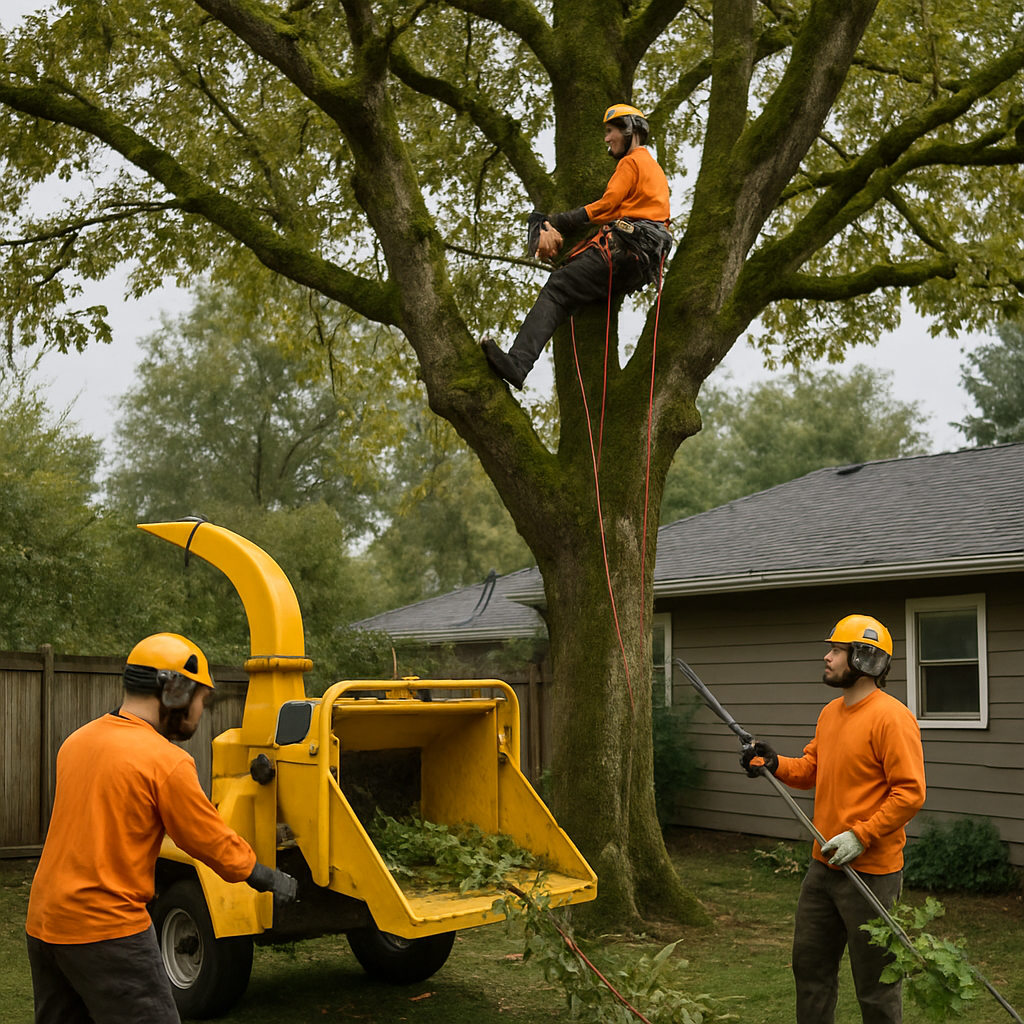
Concrete Example: A 40-foot Douglas fir behind a house with a 6-foot alleyway and overhead utilities generally requires an articulated lift and a larger crew to hand-piece sections to a chipper. Line items you will see on that job: site prep and traffic control, crane or lift rental, crew labor, chipper operation, stump grinding, and debris hauling. Those factors often make this a high-complexity removal rather than a routine backyard cut.
Another use case: Routine crown reduction on a mid-sized maple with good access will mostly be charged by crew hours and disposal volume; scheduling it outside storm season and combining with neighbor jobs cuts the per-tree rate.
| Scenario | Key cost drivers | Common line items | What to ask the contractor |
|---|---|---|---|
| Routine pruning on a street-facing maple | Access, extent of pruning, curbside permit | Site prep, pruning labor, chip hauling | Will you handle a street-tree permit and haul chips to Metro? |
| Backyard removal with narrow access (conical pine) | Access constraints, lift or crane, stump work | Lift/crane, extra labor to hand-rig sections, stump grinding, disposal | Can you itemize crane hours and disposal fees in writing? |
| Storm-damage limb on roof requiring emergency response | Life-safety priority, mobilization, liability | Emergency mobilization surcharge, roof protection, debris removal | Do you have emergency insurance coverage and a written safety plan? |
Final judgment: For most Portland homeowners, the single best investment is a line-item quote from a licensed arborist that includes permit handling and disposal. It costs a bit more up front, but reduces surprises, speeds permit approvals with the City of Portland, and limits liability if something goes wrong. For permit details consult City of Portland Parks – Trees and ask potential contractors how they handle City interactions and Metro composting options.
3. Permits, Protected Trees, and Portland Regulations
Direct point: Portland treats street trees and some large or notable private trees as public resources, and that changes what work you can legally do and how quickly it can happen. Work that affects the public right-of-way, trees tagged as significant, or trees near utilities commonly triggers reviews, replacement obligations, or permit fees.
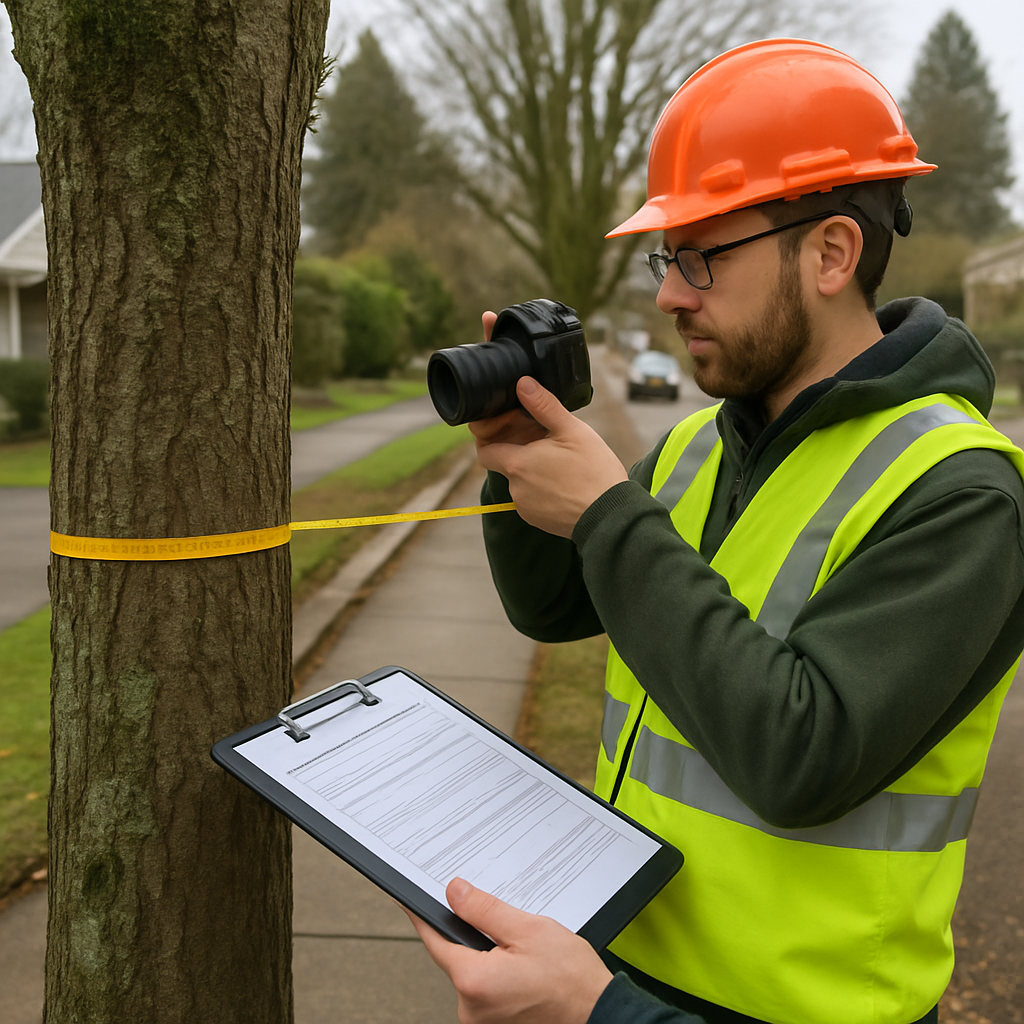
What to expect from the process: A permit application often asks for a site plan, trunk diameter (DBH), photos showing the tree and conflicts, and sometimes an arborist report from a certified professional. Expedited approvals exist for immediate life-safety hazards, but routine removal or major pruning can take days to weeks depending on documentation and whether replacement planting is required.
How to check quickly and what documentation helps
- Quick check: Look up street-tree rules on the City tree pages to confirm ownership and permit triggers.
- Measure and photograph: Record DBH (measure tape at 4.5 ft), four-sided photos showing house/sidewalk proximity, and a photo with a measuring stick or person for scale.
- Professional evidence: Ask for a written assessment from a certified arborist Portland if the tree is large, historic, or the basis of an insurance claim.
Practical trade-off: Applying for and following permit rules adds time and often cost, but it avoids enforcement fines and post-work mitigation (replacement trees or restoration bonds). Skipping permits to save a small upfront fee is a common mistake that can double costs later when the City orders replanting or fines the property owner.
Concrete Example: A homeowner hiring a local crew to remove a street-facing maple discovered mid-job that the tree belonged to the City and required a removal permit and replacement plan. The crew stopped work; the homeowner had to obtain an arborist report, submit the permit, and agree to a two-tree replacement—adding time and expense that could have been avoided with a quick pre-job City check and a certified assessment.
Common misjudgment and a practical rule: Contractors frequently say they handle permits — that is useful, but insist on copies of filings and permit numbers before work starts. If a contractor misfiles or claims a tree is not protected without documentation, the property owner bears the liability.
4. How to Choose a Qualified Tree Service in Portland
Straight fact: the safest predictor of a smooth job is clear paperwork and verifiable risk control, not a low bid. For work that touches roofs, power lines, or the public right-of-way, insist on documentation before crews arrive.
Verify these credentials: ask for a current certificate of insurance with a minimum of one million dollars general liability, evidence of workers compensation, and the contractor's business registration in Oregon. Also request the name and certification number for any consulting arborist; an ISA credential is the standard check for professional competence — see International Society of Arboriculture.
Practical hiring steps
- Document the problem: take photos, note nearby structures, and record DBH if you can; share these with bidders so estimates are comparable.
- Get three itemized bids: require breakdowns for access, equipment, labor, disposal, permit handling, and surcharges for emergency work.
- Confirm insurance and safety plan: call the insurer on the COI to confirm coverage dates; request a brief written site-specific safety plan for high-risk jobs.
- Require a written contract: include start/end dates, defined cleanup standard, change order rules, and a retention or final inspection holdback for larger jobs.
- Check two recent Portland references: ask about punctuality, unexpected costs, and how the crew handled permitting or neighbor impacts.
Trade-off to accept: a more experienced local crew will charge more, but they also lower hidden costs: fewer change orders, correct permit handling with the City of Portland, and less risk of property damage. Cheap crews often cut corners on rigging or insurance and that creates real liability for homeowners.
Local competence matters more than certifications alone: an ISA certified arborist demonstrates knowledge, but familiarity with Portland rules, Metro composting logistics, and local species behavior is equally important. Insist on both a certified arborist for diagnoses and a crew with documented Portland experience when work involves street trees or complex access.
Concrete Example: A homeowner needed a 45-foot Douglas fir removed from a narrow Lot 5 alley. The lowest bidder quoted a price without crane rental; mid-job they hit an access problem and added two days of hand-rigging and extra labor at premium rates. The chosen contractor — who provided an ISA arborist report, a COI showing crane liability coverage, and a permit number — completed the job on schedule and included stump grinding in the original contract, avoiding surprise fees.
Judgment call: prioritize verified scope clarity over marketing claims like best tree service in Portland or glowing reviews alone. Good indicators are itemized bids, an on-site ISA consult for complex work, and proof the contractor will process any required City permits in your name or as your agent.
5. Seasonal Planning and Risk Management for Portland Trees
Direct point: scheduling tree work to the local seasonal rhythm reduces emergency removals, limits soil damage, and cuts overall cost. Portland's wet winters and temperate summers create predictable windows for different interventions — use those windows instead of reacting after a storm.
Seasonal action calendar for Portland properties
- Late winter (January–March): structural pruning for most deciduous trees when leaves are off and inspectors can see form; good time for arborist assessments and permit applications with the City of Portland (see City tree pages).
- Spring (April–June): plantings and root establishment work; avoid heavy machinery on saturated ground. Time pest monitoring to species life cycles; consult OSU Extension for timing specifics.
- Summer (July–September): nonstructural pruning, mulching, and targeted deep-root fertilization when soil biology is active; best window for heavy equipment to limit compaction.
- Fall (October–December): pre-storm inspections, crown thinning where wind resistance is needed, and scheduling of preventive removals before ground freezes or saturates.
Practical trade-off: major excavations or stump extractions performed in winter often cause lasting soil compaction and root damage because the ground is saturated. If a tree is not an immediate safety hazard, defer heavy root work until drier months and accept the small added risk of winter storm exposure in exchange for better long-term root recovery.
Risk triage checklist: use these observable thresholds to decide next steps — monitor, schedule an ISA consult, or call emergency tree service Portland immediately. Lean angle increasing over 10 degrees = consult; visible root plate lift or recent soil heave = high concern; conks or fungal fruiting bodies at the trunk = professional assessment; progressive canopy dieback over 30 percent = schedule removal evaluation.
Specific species consideration: maples will bleed when pruned in early spring but are rarely harmed by the bleeding; conifers respond poorly to large flush cuts and often require staged crown work. My judgment from local jobs: prioritize structural pruning for long-lived ornamentals in late winter, but reserve extensive crown reduction for dry-season windows to avoid compaction and fungal colonization.
Example: A northeast Portland homeowner delayed root collar excavation for a sidewalk lift until mid-summer. The contractor performed controlled root pruning and installed structural soil cells, avoiding winter compaction. The tree recovered and the sidewalk was stabilized without emergency removal — a result that would have been unlikely if the work had been forced into a rainy-season mobilization.
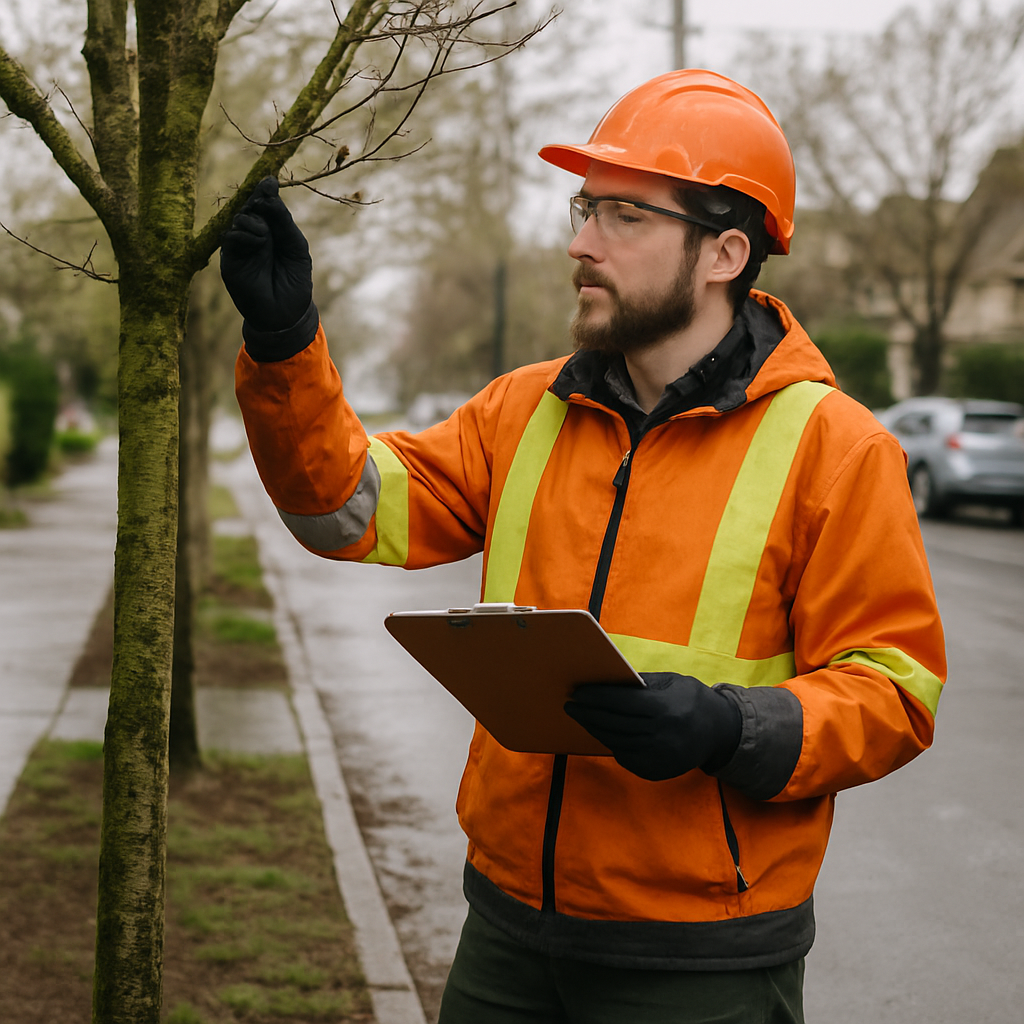
Next consideration: align your permit timeline with seasonal demand. Contractors who handle permits and reserve the seasonal windows will save you time; otherwise expect delays during peak pre-storm booking. For permit info check City of Portland Parks – Trees and book an on-site ISA consult when your inspection checklist flags any high-risk items.
6. Local Resources, Recycling, and Disposal Options
Straight advice: plan disposal before the chainsaws start. The cheapest crew line item is often disposal — insist on a destination and a written disposal allowance so you are not left with an unexpected hauling bill or, worse, illegal dumping liability.
Where to take wood, chips, and yard debris in Portland
Key local resources: use municipal facilities for most green waste and prioritize reuse when possible. Metro runs composting and yard-debris sites that accept wood chips and brush; check Metro for current drop-off rules and hours at Metro Composting and Yard Debris. For questions about public right-of-way trees and permit links, consult the City at City of Portland Parks – Trees.
- Metro drop-off and composting: good for large volumes of chips and brush; greener than landfill but typically charged by cubic yard.
- Private wood recyclers and local mills: salvage large logs for milling or furniture; this can recover value but requires coordination and on-site handling.
- Firewood reuse: split and season logs left by crews or contract a local firewood seller; seasoning time is the trade-off — immediate heat requires buying seasoned wood instead.
- Municipal curbside rules: small amounts of brush may be handled curbside, but check City of Portland pickup rules before assuming removal is free.
- Roll-off dumpsters vs chip-and-haul: dumpsters are convenient for lot clearing but often go to landfill; chipping on-site with haul-off to Metro is greener but costs more.
Practical trade-off: greener disposal increases cost and coordination. If you want chips reused as mulch on-site, insist that the contract specify chip depth, location, and whether the crew will spread or leave a pile. Chips left against foundations or under siding invite moisture problems and are not a free solution.
Documentation matters: require a disposal manifest or a weigh ticket for large jobs. A credible contractor will list the disposal site and provide proof of delivery; an evasive contractor is a red flag for potential illegal dumping or regulatory trouble.
Concrete Example: A southeast Portland homeowner contracted a crew to remove three backyard maples. The lowest bid assumed curbside pickup and later added a disposal surcharge when the contractor realized the neighborhood required a permit for curb blocking. The homeowner renegotiated to have chips hauled to Metro and arranged for the larger logs to be picked up by a local firewood buyer — that split saved money and kept material out of the landfill.
Judgment call: prioritize contractors who transparently present multiple disposal options (on-site chips, Metro haul, mill pickup) and who can explain the environmental and structural trade-offs of each. This reflects practical local experience more than a low price tag.
Next consideration: decide disposal pathway before signing the contract and confirm the contractor will provide proof of proper disposal. If you care about reuse or reduced landfill impact, allocate budget for chipping and Metro hauling or plan to arrange log pickup by a local mill or firewood seller.
7. DIY vs Professional Work: Safety and Scope
Clear boundary: handle routine, low-risk maintenance yourself; contract professionals for anything that introduces height, complex rigging, utilities, or uncertain structural integrity. DIY saves money on simple tasks but creates safety, liability, and long-term tree-health risks when misapplied.
Practical limits and common trade-offs
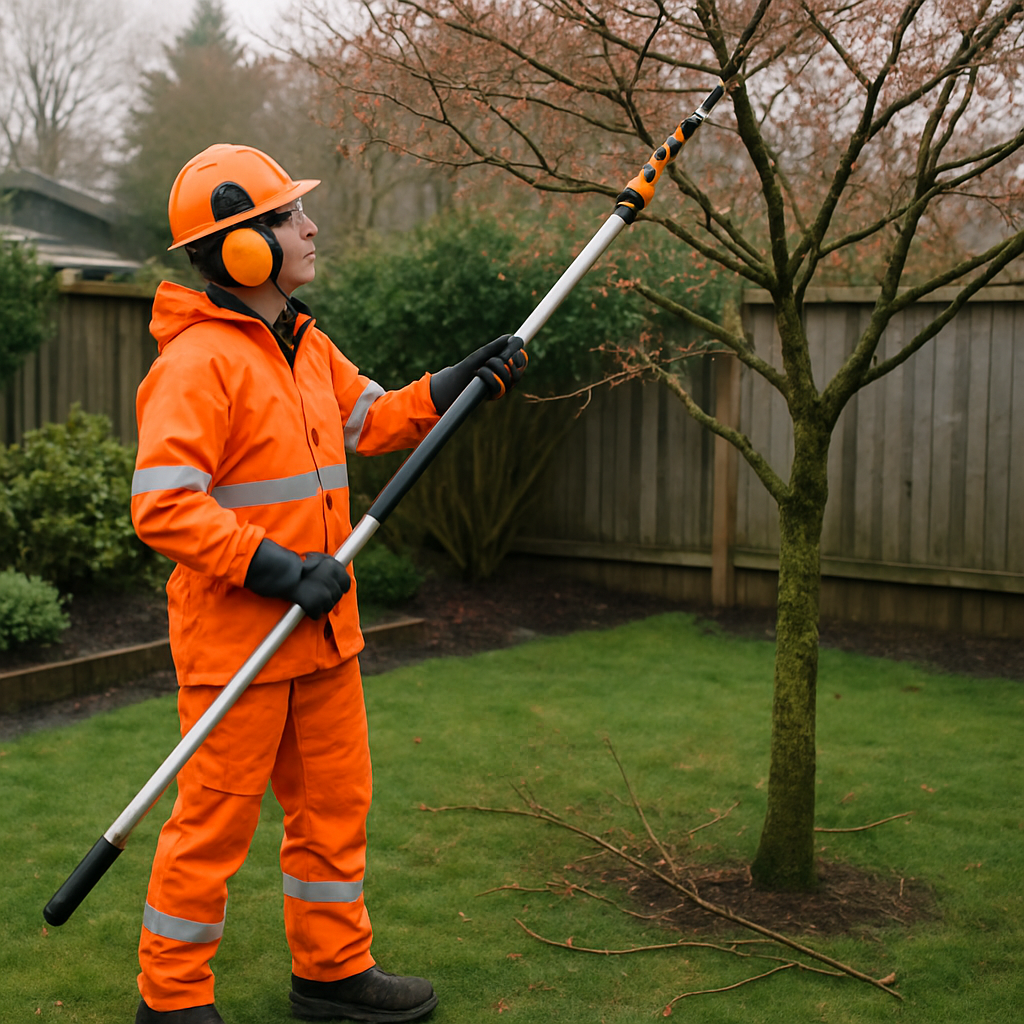
Tools that make DIY realistic: bypass pruners, long-handled loppers, a pole pruner, a folding saw, good gloves, eye protection, and a hard hat for higher work. Trade-off: these tools let you clean small growth safely, but they do not replace engineered rigging, lifts, or the judgment a licensed crew brings to structural defects.
When DIY is a false economy: inexperienced cuts, flush cuts, or removing large limbs yourself often cause decay, poor wound closure, or unexpected failures that increase long-term costs. Professional crews are costly up front but reduce hidden expenses: proper cuts, containment rigging, erosion-aware root work, permit handling, and verified disposal.
| Action | DIY suitability | When to hire professionals |
|---|---|---|
| Leaf cleanup, small twig removal | Good for homeowners with basic tools | If debris is in the public right-of-way or affects neighbors |
| Light pruning of shoots and small branches | OK for branches under ~1.5 inches and below shoulder height | If cuts are near a roof, over a driveway, or you see decay at the cut point |
| Stump grinding and deep root work | Not recommended as a DIY task | Hire a pro for machinery, root mapping, and erosion control |
| Large limb/whole-tree removal, work near power lines | Not suitable for DIY | Always hire insured, licensed crews and contact utilities first |
- Red flags that should stop any DIY attempt: proximity to occupied structures or vehicles, visible root failure or trunk cavities, branches over your safe working height, limbs resting on or over power lines, and soil heave around roots.
- Documentation step: photograph the problem from multiple angles and date-stamp images before any work — you will need these for permits or insurance if things go wrong.
- Permit and utility check: verify street-tree ownership and permit requirements at City tree pages and call the utility locate service before cutting near lines.
On-the-ground example: a southeast Portland homeowner used a pole pruner to remove low, needle-bearing shoots under 1 inch and avoided a $150 service call. In contrast, a neighbor attempted to cut an 18-inch limb that shifted during the cut, damaging a shed roof; that job required emergency stabilization, an insured removal crew, and a later stump-grinding invoice several times higher than the original DIY plan — a clear net loss.
If the work changes a tree's fall path, crosses utility lines, or exposes significant decay, hire a certified crew — costlier now, cheaper and safer later.
8. What to Expect During a Professional Job and Post-Service Care
Immediate reality: a professional tree job is logistics first, cutting second. Expect paperwork, site controls, and staged operations; when crews skip those steps you are buying risk, not savings.
Before crews arrive
Pre-work you should see: a written estimate with line items, a permit number if applicable, proof of insurance, and a brief site-specific safety note. Contractors should also complete a utility locate and, when work touches the right-of-way, confirm permit status with the City of Portland via the City tree pages.
Trade-off to accept: allowing a little extra time and cost for permit handling and traffic control usually prevents stop-work orders or fines later. Fast, undocumented jobs can save money today and create liability or mitigation costs tomorrow.
On-site workflow you will notice
- Site set-up: perimeter tape, roof and landscape protection, and a visible crew foreman.
- Sequenced removal or pruning: highest-risk cuts first, rigging to control fall path, and piecemeal lowering where access is tight.
- Material handling: chipping, staged log stacking for firewood or mill pickup, and a clear plan for chip disposal or Metro drop-off.
- Stump work and cleanup: grinder operation and final sweep; expect crews to leave discrete piles if chips are to be reused, not scattered debris.
Practical insight: chips left piled against foundations or under eaves are common contractor laziness and create moisture and pest problems. If you want chips spread as mulch, get that written into the scope with depth and allowed locations.
Post-service actions professionals should provide: before-and-after photos, a disposal manifest or weigh ticket for large jobs, and a simple care note listing watering, mulching, and signs of stress to watch for. Good crews also schedule a follow-up inspection window — typically 6 to 12 months — to evaluate recovery.
Misconception to correct: wound dressings and paint are outdated. They usually trap moisture and insects. Modern practice is selective pruning cuts and promoting rapid compartmentalization through proper pruning technique, mulch, and soil care rather than sealing wounds.
Limitation to recognize: even the best removal or corrective pruning does not guarantee long-term survival for a compromised tree. Expect monitored recovery and additional treatments such as pest management or deep-root fertilization if health does not improve.
Concrete Example: A southeast Portland homeowner had a large limb resting on a roof after a windstorm. The hired crew shut down the driveway, rigged the limb into small, controlled sections lowered to the chipper, ground the stump, and provided before-and-after photos plus a Metro chip-drop ticket. Because the contract specified chip spreading, the crew returned the next day to distribute a 2-inch mulch layer away from foundations, and the arborist scheduled a 9-month follow-up to check for secondary decline.
Next consideration: before signing, add a 6–12 month follow-up inspection clause and require disposal documentation. That small contract detail prevents most post-job surprises and is the clearest indicator of a professional, accountable tree service Portland crew.
0 Comments