
Post-Storm Recovery: How Tree Cleanup Services Restore Your Property Quickly and Safely
After a damaging storm, tree cleanup services are essential for removing hazards, protecting structures, and restoring safe access to your property. This guide explains how professionals triage storm damage, prioritize hazardous tree removal versus salvage, document work for insurance, and use equipment like cranes, chippers, and stump grinders to limit collateral damage. You will get practical checklists and timelines for the first 24, 72 hours, and the week after a storm so you can make safe, informed decisions and know when to call emergency tree services.
Immediate Safety Assessment and Triage
Immediate priority: separate life-safety hazards from routine cleanup. When crews arrive from tree cleanup services they are not there to finish the yard — they are there to clear threats that could injure people or cause additional property loss. That shifts the job from landscaping to incident response and changes what gets done first.
0–24 hour triage: what pros do first
Quick scan then focus: professionals perform a rapid perimeter sweep to identify downed lines, unstable root plates, hanging limbs over structures, blocked egress, and secondary hazards such as fuel smells or broken gas lines. Anything that could cause immediate harm is tagged for urgent mitigation; everything else is documented and scheduled.
- Do not touch downed lines: notify the utility and keep people and pets away — this is non-negotiable.
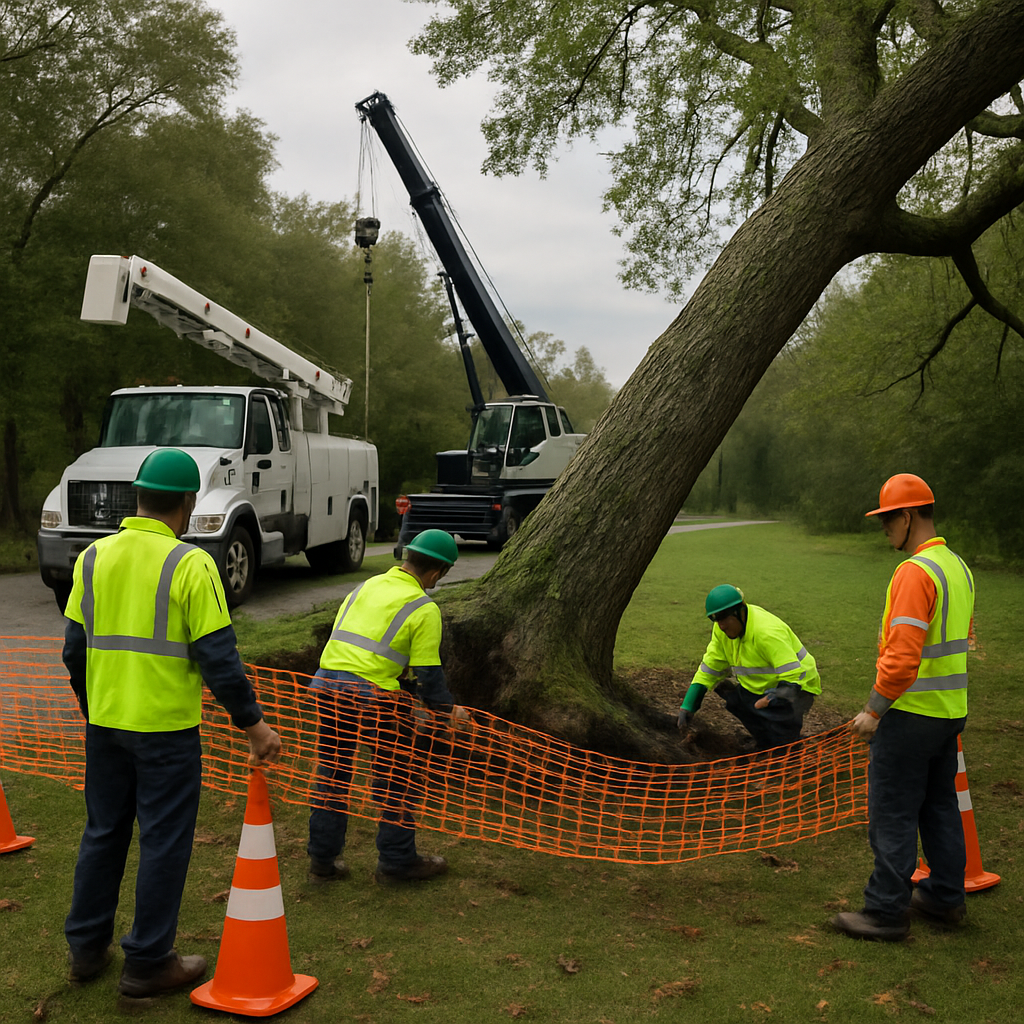
- Create an exclusion zone: flag fencing, tape, or cones to keep neighbors and children out of the work area.
- Document with time-stamped photos and video: capture hazards from multiple angles before cleanup begins to support insurance claims and crew decisions.
- Log access needs: note blocked drives, emergency exits, or buried irrigation that crews must protect during removal.
Trade-off to expect: rapid hazard removal reduces short-term risk but can make it harder to salvage trees later or to prove damage exactly as found by an adjuster. Good crews document the condition and methodically prioritize so you do not lose salvage options because first responders removed everything indiscriminately.
If a tree is touching a power line, only the utility or a contractor approved to work near energized lines should handle it. Contact your utility before any removal.
Practical tip for homeowners: mark hazards with simple numbered flags and give the numbers to the crew and your insurer. That small step speeds triage, reduces miscommunication about what was hazardous at arrival, and creates an easy reference in crew reports.
Concrete Example: A two-story oak leaned onto a porch after saturated soils undermined the root plate. The homeowner called emergency tree cleanup services; the crew cordoned the porch, notified the utility because the oak brushed a service drop, and then performed a sectional crane-assisted removal to lower heavy sections safely. The crew left a time-stamped photo log and a short hazard report that the homeowner attached to the insurance claim.
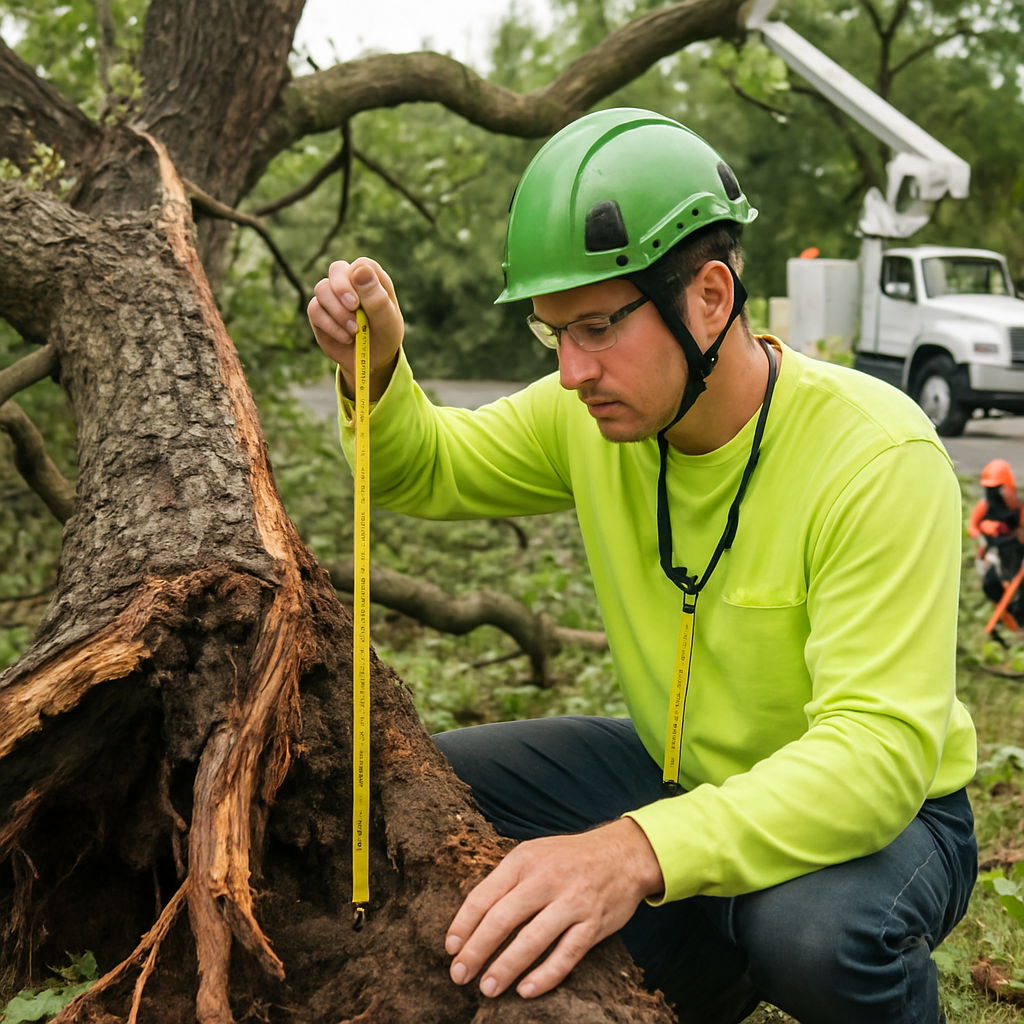
Judgment call professionals make: visible lean is not the same as catastrophic failure — root plate condition, soil saturation, and trunk cracking matter more. Insist on an on-site arborist assessment rather than decisions based solely on what the tree looks like from the driveway.
What Emergency Tree Services Do and What to Expect from a Crew
What the crew actually shows up to do: you should expect a staged operation that separates urgent hazard control from full cleanup. Crews will stop the immediate threat, secure the site for work and public safety, and then execute controlled removals and debris handling in phases so properties and neighbors suffer as little collateral damage as possible.
How the response is organized on site
On arrival the supervisor sets the priorities: which trees block access, which pose collapse risk to structures, and which issues must wait. That prioritization drives equipment brought in, whether additional permits are requested, and whether the crew will perform a temporary stabilization or a full sectional removal that day.
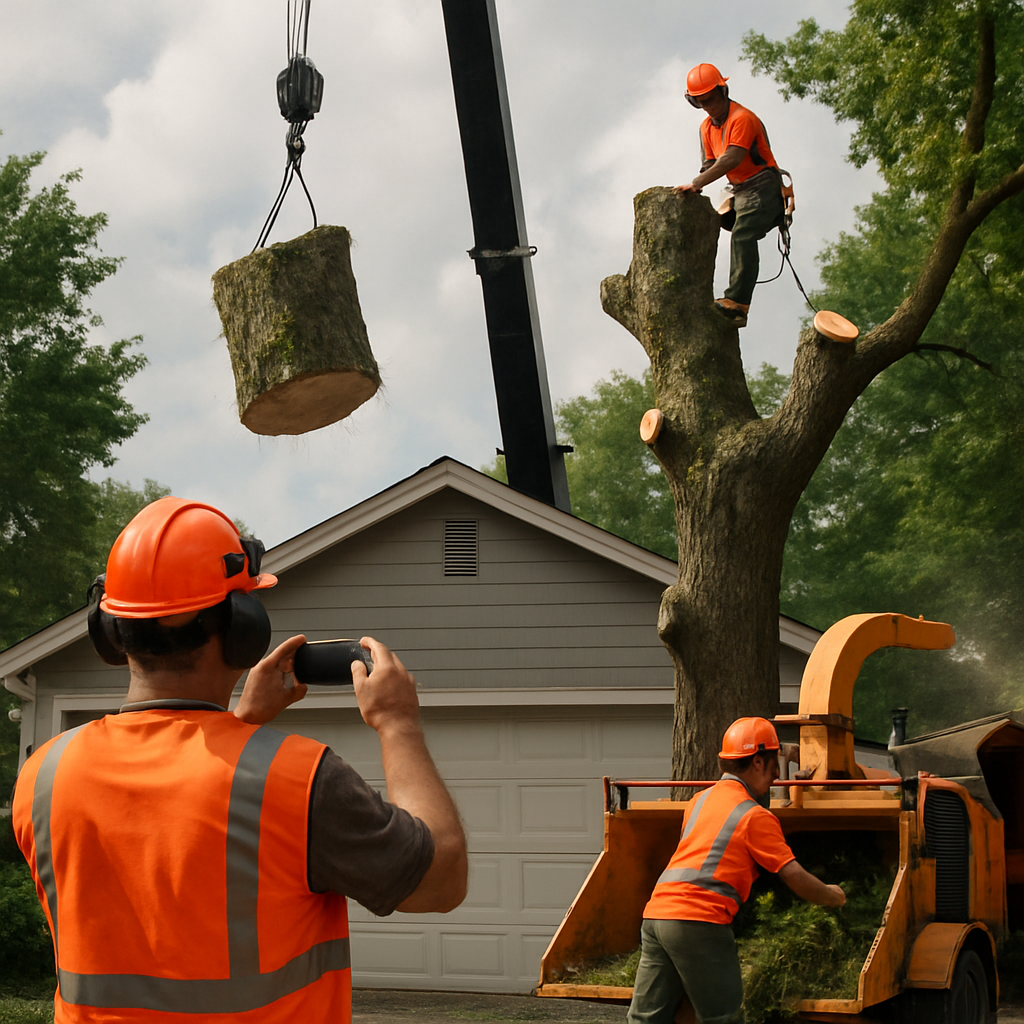
- Crew roles: Lead arborist or crew chief who documents condition and signs off on safety; climbers who do the hands-on canopy work; bucket/crane operators for heavy lifts and roof-safe lowering; chipper and ground crew for processing debris and staging wood.
- Documentation and liaison: someone will handle photos, generate the job report for insurance, and coordinate with utilities or municipal crews when required. Ask for this person when the crew arrives.
- Logistics and cleanup: crews bring chippers, winches, and tarping materials; stump grinders and hauling may be scheduled as a follow-up or done the same day depending on scope.
Practical trade-off to expect: on-site speed versus long-term preservation. Emergency crews routinely remove heavy limbs fast to remove immediate danger; that aggressive work can increase pruning wounds or remove salvageable sections. A competent crew documents what was cut and why, then outlines a follow-up plan for restoration or further pruning.
Concrete Example: A mature walnut had split and the top section hung over a garage. The crew used a crane to lower 300-lb sections rather than drop them, preventing roof punctures. They left time-stamped images and a signed hazard report; stump grinding and full debris hauling were scheduled for two days later once access lanes were cleared.
A realistic limitation: after large storms crews triage by severity and contract size. Municipal or high-risk removals are handled first, so residential jobs without immediate danger may wait. Expect staged returns; insist on written timelines and a documented scope so temporary fixes do not become permanent eyesores.
Judgment worth acting on: prioritize crews that pair fast action with clear documentation. Low bids that promise same-day total cleanup often cut corners or remove trees that might have been saved. If you need guidance on what to save versus remove, request an on-site assessment from a licensed arborist and consult resources like ISA storm resources for evaluation standards.
Next consideration: before work begins, get a written scope and temporary versus permanent work timeline so you know what will be left on site and what follow-up services like stump grinding or replanting will cost and when they will happen.
Deciding Between Removal and Salvage
Direct point: the choice to remove a storm damaged tree versus attempt salvage is rarely about sentiment. It is a risk calculation that weighs structural integrity, future liability, and the realistic costs and timeline for restoring the tree to a safe, stable condition. Professional tree cleanup services should give you a decision based on measurable factors, not just how the tree looks from the curb.
Assessment framework professionals use
- Trunk integrity: deep splits, crushed fibers, or longitudinal cracks that penetrate the sapwood usually point to removal because internal decay follows.
- Root plate stability: as a rule of thumb, if more than about 50 to 70 percent of the root plate is lifted or shredded the tree is an unstable candidate for salvage.
- Canopy loss: losing more than half the live crown typically reduces a tree's capacity to recover and raises the risk of dieback and secondary failure.
- Species tolerance and age: some species tolerate heavy pruning; others, especially fast growing pines, decline quickly after major canopy loss.
- Placement and exposure: trees that now threaten structures, lines, or public access are removed earlier; those in open yard space can be staged for restoration.
- Pathogens or pests revealed by the damage: when the storm exposes active decay or infestation, salvage success drops sharply.
Practical tradeoff: salvaging a large tree buys landscape value and shade but often requires staged interventions – cabling, targeted pruning, root care, and monitoring over 12 to 36 months. That route is more expensive up front than a simple cut and haul and it is not guaranteed. Removal is final, but it eliminates ongoing liability and can be cheaper once you factor in follow-up work and the risk of delayed failure.
Concrete Example: After a storm a mature sugar maple developed a split codominant stem but retained most of its roots and 60 percent of the crown. An arborist recommended crown reduction, dynamic cabling, and quarterly inspections for two years rather than immediate removal. By contrast, a nearby loblolly pine with 70 percent root plate uplift and crushed buttress roots was removed the same day because the cost and timeline to make it safe exceeded reasonable salvage prospects.
Judgment most owners miss: sentimental attachment often biases decisions toward salvage even when objective criteria point to removal. If the tree sits over a roof, driveway, or along a public walkway, accept that conservative removal is frequently the prudent choice. Ask the crew for explicit success criteria – what will indicate the tree is recovering versus when removal will be recommended later.
Next consideration: if you choose salvage, budget explicitly for follow-up pruning, cabling, soil and root care, and inspections. If you choose removal, plan stump grinding and site restoration so the gap does not become an ongoing liability or maintenance blind spot.
Professional Techniques and Equipment That Speed Cleanup and Reduce Risk
Direct point: the right gear plus disciplined rigging reduces repair time and prevents second-wave damage — not by brute force, but by choosing how and where each heavy piece of wood comes down.
What each major tool actually delivers — and its trade-offs
| Equipment | Primary purpose in storm cleanup | Common limitation or trade-off |
|---|---|---|
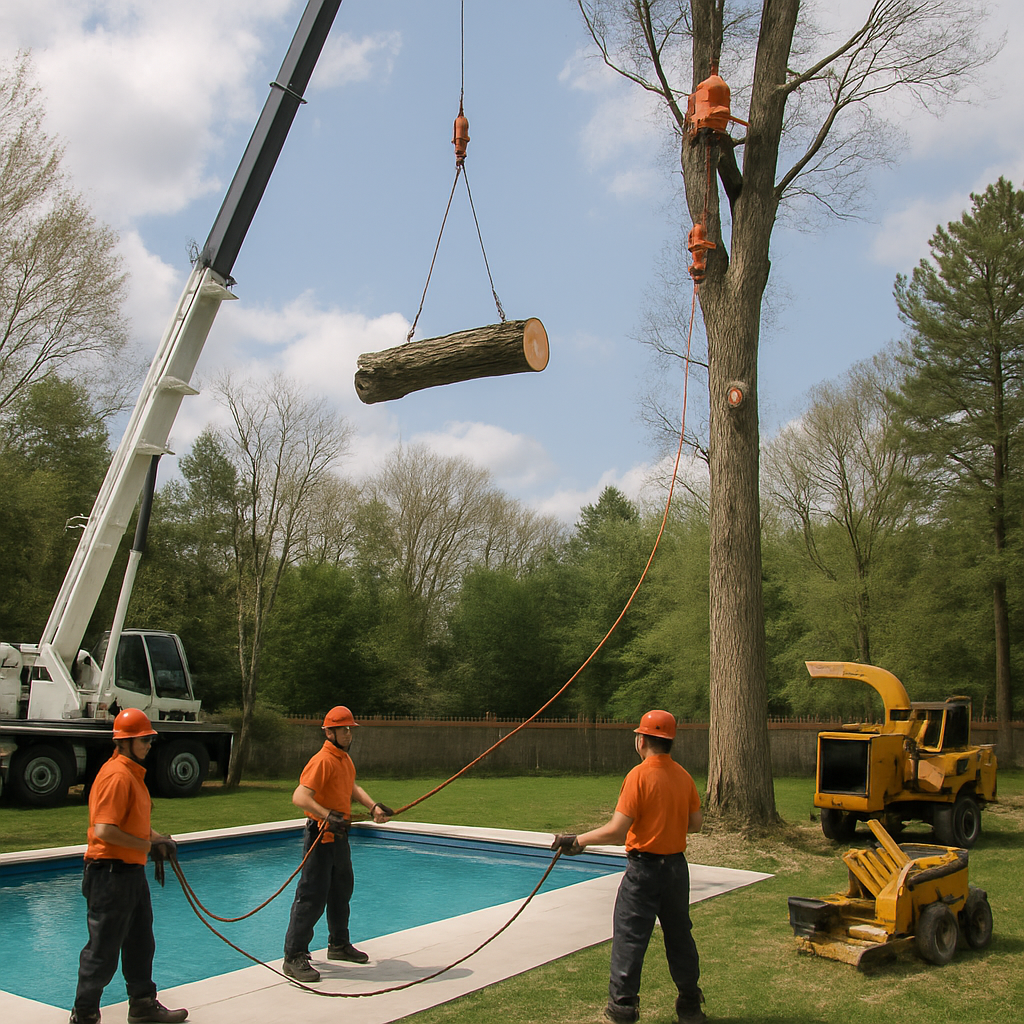
| Cranes (mobile) | Lift and lower multi-ton trunk sections away from structures and pools | High hourly cost and setup time; needs stable ground and sometimes permits |
| Bucket trucks and aerial lifts | Safe access to crowns for pruning and sectional removals without climbing | Reach limits versus cranes; can still damage turf if placed on soft ground |
| Commercial wood chippers | Convert branches into mulch on site to speed hauling and reduce landfill loads | Small chippers jam on large boles; large chippers require space and operator skill |
| Stump grinders | Remove remaining stump to below grade so replanting and lawn restoration can proceed | Grind depth varies by machine; deep root removal or root extraction requires extra work |
| Rigging, winches, and tag lines | Control drop paths for sectional cuts to protect roofs, fences, and vehicles | Requires trained riggers; improper rigging shifts loads unpredictably and risks property damage |
Rigging matters more than raw horsepower. A chainsaw and brute force will remove a tree but not safely when it is entangled or over a house. Pros plan anchor points, run tag lines, and agree on a step-by-step lift and lowering sequence before the first cut. That pre-work slows the saw for a few minutes but prevents hours of repair and insurance headaches later.
- On-site coordination: radio or hand-signal communication between climbers, ground crew, and crane operator keeps cuts synchronized and avoids dropped sections.
- Selective chipping: crews separate salvageable firewood and untreated logs from diseased material destined for disposal to preserve value and reduce contamination risk.
- Equipment selection: a smaller crew with a crane and chipper often completes a complex residential removal faster and with less lawn damage than a larger crew using only chainsaws and winches.
Practical trade-off: cranes and bucket trucks speed safe removals but increase mobilization time and cost; if budgets are tight and the tree is not over structures, a sectional removal with skilled climbers and rigging may be the better compromise.
Concrete Example: After a storm a large cedar split and lodged over a backyard pool and decking. The crew set a mobile crane off the street, used tag lines to prevent swing, and lifted 1,200-lb trunk segments directly into a waiting truck. Because the team avoided dropping heavy pieces onto the deck, the homeowner saved thousands in structural repairs and the cleanup finished in one day instead of stretching over a week.
Operators with the right machines and an on-site lift plan reduce collateral damage more reliably than faster but ad-hoc crews.
Next consideration: when you get estimates, compare not just price but the proposed equipment list and a short lift/rigging plan. That comparison tells you which bid actually reduces risk and shortens total recovery time.
Debris Removal, Stump Grinding, and Site Cleanup
Direct point: cleanup strategy shapes final cost, replanting options, and how quickly you can use the yard again. Choosing between on-site chipping, hauling to a transfer station, or selective salvage changes crew size, equipment, and whether the site is ready for immediate restoration or needs further work.
Options and the trade-offs that matter
There are three practical paths crews take to handle storm debris. Each solves a different problem and carries trade-offs you should decide up front with your contractor.
- On-site chipping: converts branches to mulch quickly, reduces truckloads, and speeds access restoration. Trade-off – very fine documentation of original debris is harder after chipping, and homeowners sometimes receive more mulch than they want.
- Haul-away to disposal or recycling centers: keeps the property tidy and separates recyclable logs from contaminated material. Trade-off – higher hauling fees and potential municipal restrictions that change cost or destination.
- Selective salvage or staging: crews separate merchantable logs, firewood, and habitat piles for wildlife. Trade-off – staged piles require more space and security and slow full site reopening.
Practical consideration: confirm whether your municipality has curbside rules, burn permits, or mandatory separation for storm debris. Some communities require a debris manifest for each load – that reduces illegal dumping risk but adds paperwork and time. Consult FEMA debris guidance if your storm is part of a larger declared event.
Stump grinding reality: grinding removes the visible stump and shortens roots but does not excavate the entire root system. Typical grinders remove 6 to 12 inches below grade quickly; deeper root extraction is possible but expensive and disruptive. If you plan to replant in the same spot the deeper you grind and the more you remove root wood, the easier the replanting and grading will be.
Timing and lawn protection: schedule stump grinding after heavy debris is cleared and before final grading. Ask crews about mats or track systems to protect turf during grinding and hauling – the cheapest crew will often leave significant rutting that costs more to fix than the grinding itself.
Ask for a debris manifest and a short written disposal plan before any chipping begins. That single document prevents surprises with insurers and municipalities.
Concrete example: on a narrow urban lot a maple fell across a driveway. The crew used a compact chipper to clear branches and a small stump grinder to remove three stumps to 8 inches below grade. They hauled larger logs to a recycling yard and left a pile of screened chips the homeowner used for erosion control. The job cleared access the same day and allowed replanting in eight weeks after the soil was amended.
Judgment call most owners miss: deeper root removal is rarely necessary unless you plan heavy construction or new large trees in the exact footprint. Paying for aggressive root excavation to avoid a small mulch mound is usually wasted money. Conversely, leaving stumps shallow to save on grinding is false economy if the stump will be a trip hazard or block mowing.
Insurance, Permits, and Utility Coordination
Direct reality: paperwork and permissions often control how fast crews can complete work. Insurance verification, municipal permits, and utility clearances create the legal and financial framework for any serious removal, so successful recovery starts with administrative steps as much as with chainsaws and cranes.
Documents to assemble: before heavy work begins, collect clear evidence and transactional records that insurers and local agencies expect. This speeds approvals and reduces the chance of denied claims.
- Proof of damage: multiple time-stamped photos and short videos showing the hazard from different angles
- Official references: utility ticket or outage number if power or service lines are involved
- Contractor records: an itemized emergency invoice, signed hazard report, and a debris manifest for each truckload
Practical solution for claims: hire a crew that produces a concise claim packet. An experienced team will supply a signed arborist assessment, before and after photos, an hourly itemized invoice for emergency mitigation, and a debris manifest. Insurers move faster when they see methodical documentation rather than raw photos from a phone.
Permit tradeoff: many cities allow emergency removals without prior approval if there is an imminent threat. However, emergency work frequently requires a retrospective permit or a notice to the municipality. Choosing to wait for a standard permit will reduce legal risk but may expose structures to greater short term damage; performing emergency mitigation without notifying authorities can lead to fines or claim complications later.
How professionals navigate permits: reputable tree cleanup services commonly file emergency notifications or request expedited permits on your behalf. When local regulations protect street trees, historic trees, or species in conservation zones, expect additional paperwork and possible holds. Consult your municipality early and ask the contractor to handle permit filings when available; see FEMA debris guidance for large-scale events and ISA storm resources for professional guidance.
Utility coordination reality: any tree work that is near or contacting service conductors requires the utility to authorize, de-energize, or provide a qualified line crew. Utilities prioritize electrical safety and grid restoration, so expect sequencing delays during wide outages. A contractor promising to remove trees on top of service lines without an explicit utility ticket is a red flag.
Concrete Example: A homeowner had a birch resting on the house service drop. The crew immediately called the utility and obtained a clearance ticket. The utility de-energized the service and removed the drop, the arborists performed a sectional removal, and the company supplied a detailed hazard report and the utility ticket number to the insurer. Because the sequence and documentation were clear, the claim progressed without dispute.
Next consideration: once permits and utility clearances are secured, schedule follow-up work such as stump grinding and replanting with a licensed arborist so the administrative window does not become a delay in restoring yard function and long term landscape health.
Restoring Landscape Health After Cleanup
Start here: removing fallen wood and trimming hazards is necessary but rarely leaves the yard ready to function. Professional tree cleanup services should include follow-through for soil repair, rooting-zone protection, and a planned replanting or monitoring program so the landscape recovers rather than deteriorates after work is done.
Staged restoration schedule
- 0–30 days: preserve exposed roots, correct buried root collars, apply 2–3 inches of mulch away from trunks, and cordon fragile areas to prevent foot or equipment traffic.
- 1–6 months: address soil compaction (aeration or subsoiling where needed), install temporary erosion control, complete stump grinding if not done during removal, and plan tree planting windows with an arborist.
- 6–36 months: implement follow-up pruning, cabling or bracing for survivors, scheduled inspections every 3–6 months, and targeted fertilization only if a soil test shows deficiency.
Practical consideration: compaction from heavy trucks and repeated foot traffic is the single most common reason replanted trees fail. Light surface amendments or a top dressing look helpful but often mask compacted subsoil; insist on an assessment for subsoiling before investing in specimen trees. If you need guidance, request on-site advice from Arborist Services so species selection and planting depth match the repaired soil profile.
Trade-off to weigh: immediate replanting restores appearance and shade quickly but can hide unresolved soil issues that kill replacements within two years. Waiting 6–12 months lets crews stabilize grades, rebuild topsoil where needed, and confirm that surviving trees have re-established root function — at the cost of temporary bare spots and possible erosion control work.
Example use case: after a storm a compact suburban yard lost two large maples; crews performed stump grinding, subsoiled the compaction ribbon caused by heavy equipment, amended the top 4 inches with screened topsoil, and planted three smaller, site-appropriate trees with properly set root collars. The crew scheduled 6-month and 12-month inspections and installed protective mulched rings; this approach cost more up front than quick planting but produced healthy replacements that established within two seasons.
Do not bury the root flare. Planting too deep is a frequent, avoidable mistake that reduces oxygen to roots and invites rot. Keep mulch away from trunks.
0 Comments