
Tree Cutting and Removal 101: How Professionals Protect Your Property During the Job
Tree cutting and removal can look simple until a falling limb smashes a roof or roots lift a driveway. This short guide explains how professionals protect your property during the job, covering tree health assessment, safe tree felling, stump grinding and cleanup, and when to call certified arborists or emergency tree removal crews.
Frequently Asked Questions
Straight answer: most FAQs from homeowners and property managers boil down to three concerns – protecting structures, limiting liability, and ensuring a clean, usable site after the work. This section gives direct answers that matter when hiring for tree cutting and removal rather than high level theory.
Common client questions
Permits and timing: many municipalities require permits for tree felling, lot clearing, or street tree work. That adds days or weeks to the schedule but skipping permits exposes you to fines and forced remediation. For large jobs the crew will usually handle permitting as part of the contract – expect that service to increase the price.
Who pays for accidental damage: professionals carry liability insurance and workers compensation, so start by asking for a certificate of insurance. Certified arborists and established local tree contractors will also offer to help with insurance claim assistance for trees when storm damage cleanup or hazardous tree removal triggers a claim.
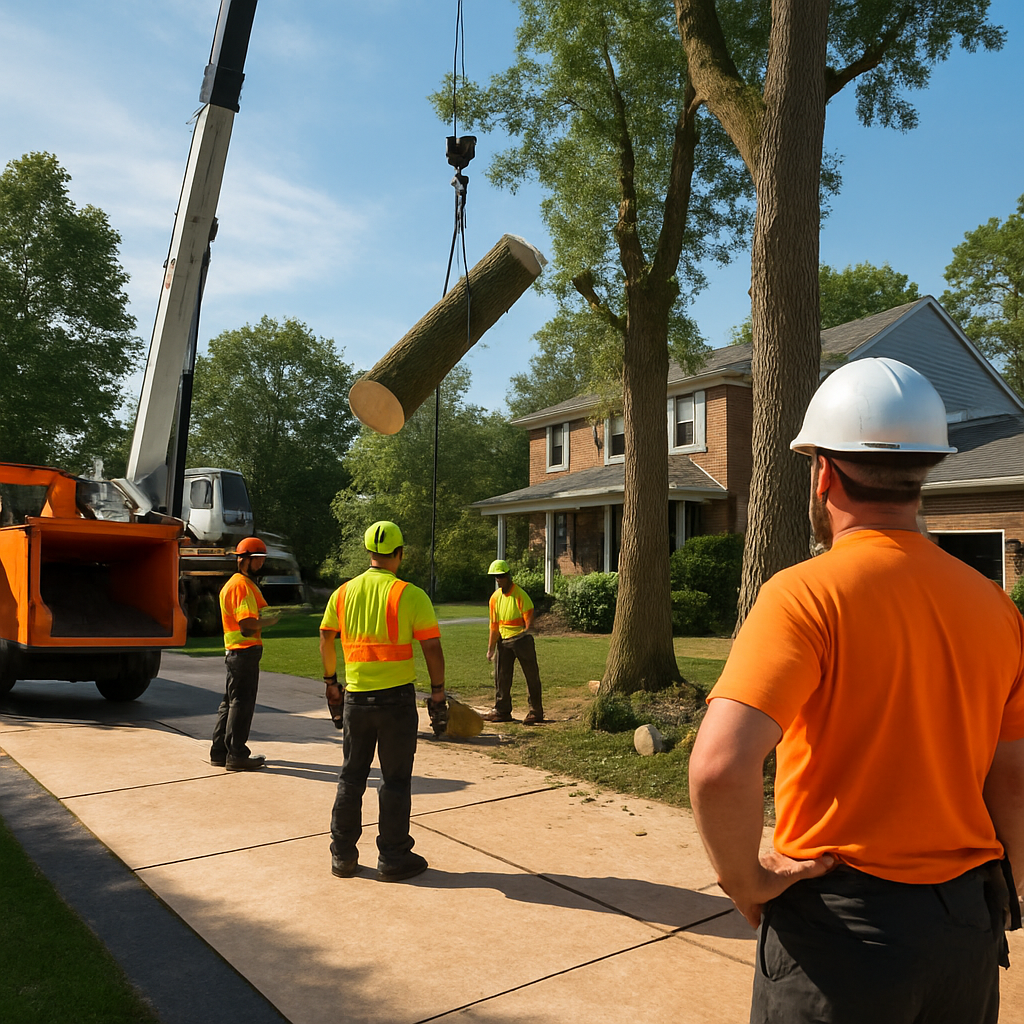
Tradeoff – crane assisted removal versus traditional rigging: cranes reduce the risk to roofs and landscaping on tight urban lots and shorten on site time, but they raise cost and require staging space. For a big tree over a garage a crane is the pragmatic choice; for many suburban removals sectional lowering with rigging and wood chipping services is cheaper and still safe when executed by professional tree climbers.
Concrete example: a homeowner had a mature oak leaning toward a two car garage. The crew used crane assisted tree removal to lift trunk sections directly to the truck, protected the roof with temporary decking and completed stump grinding the same day. The job cost more than a standard removal but prevented a likely roof repair and saved several days of driveway access issues.
Misconception to avoid: tree lopping feels like a quick fix but often creates weak regrowth and more deadwood removal later. When crown reduction is necessary insist on an approach from certified arborists that maintains tree health rather than blind topping.
- Must ask contractors: proof of insurance and license
- Method details: how they will protect nearby structures and utilities
- Disposal plan: whether they provide eco friendly tree disposal, wood chipping services, or will haul debris to landfill
- Post work: option and cost for stump grinding or root removal services
Context note: there are about 63,700 tree trimmers and pruners in the US, which means availability varies widely by season and region; schedule early for seasonal tree care tips to avoid delays and premium emergency tree removal rates. TCI Magazine
Next actions: get three bids that include a site walkthrough, ask each contractor to itemize protection measures and permit responsibilities, and schedule stump grinding within 2 weeks of removal to limit root related trip hazards. If a tree sits over structures push for crane quotes; if budget is tight accept longer removal windows with sectional lowering but insist on experienced crews.
0 Comments