
Choosing the right arborist portland can be the difference between safe, code-compliant work and costly mistakes for homeowners and property managers. This guide explains what certification actually means, which tree services matter in Portland, how to verify insurance and permits, and the exact questions to ask before you hire.
What certification and credentials mean for tree care in Portland
Clear baseline: Certification is a measurable baseline, not a guarantee of excellence. An ISA Certified Arborist or ISA Board Certified Master Arborist shows formal testing, required continuing education, and a commitment to industry standards — practical signals that the person understands pruning science, decay assessment, and safe rigging practices.
What the common credentials show: ISA Certified Arborist indicates passed exams and ongoing education; Board Certified Master Arborist signals deeper experience and extended testing. Also look for a current business license and contractor registration for Oregon, along with local familiarity with Portland tree rules. Certification plus local regulatory know how matters in practice.
Why these credentials matter in Portland
Safety and liability: Certified arborists are more likely to follow ANSI A300 pruning standards and recognized rigging protocols, which reduces risk to people and structures and creates defensible documentation for insurance claims. Ask for a certificate of insurance and confirm general liability and workers compensation coverage with the carrier before work begins.
Practical limitation: Certification alone does not mean strong local experience or a competent crew. A certified arborist with little experience on Pacific Northwest species or on-site logistics can still produce poor outcomes. Prioritize certification plus examples of recent Portland projects, references, and evidence the company manages permits and traffic when curb or street work is involved.
Tradeoff to expect: Certified professionals typically cost more than an unlicensed crew. That premium buys lower long term risk – fewer mistakes, better pruning that preserves tree value, and clearer insurance pathways after storm damage. For homeowners who plan to keep mature trees, that tradeoff pays off more often than inexpensive, one time fixes.
- Documents to request on first contact: ISA certification number with a link to the ISA lookup (ISA Certified Arborist), certificate of insurance showing limits and expiration date, business license, and a written, itemized estimate.
- Standards to confirm: Explicit reference to ANSI A300 pruning standards and a written description of pruning cuts, access methods, and debris disposal plan.
- Local compliance: Ask whether the arborist will advise on or obtain Portland permits where street trees or protected trees are involved.
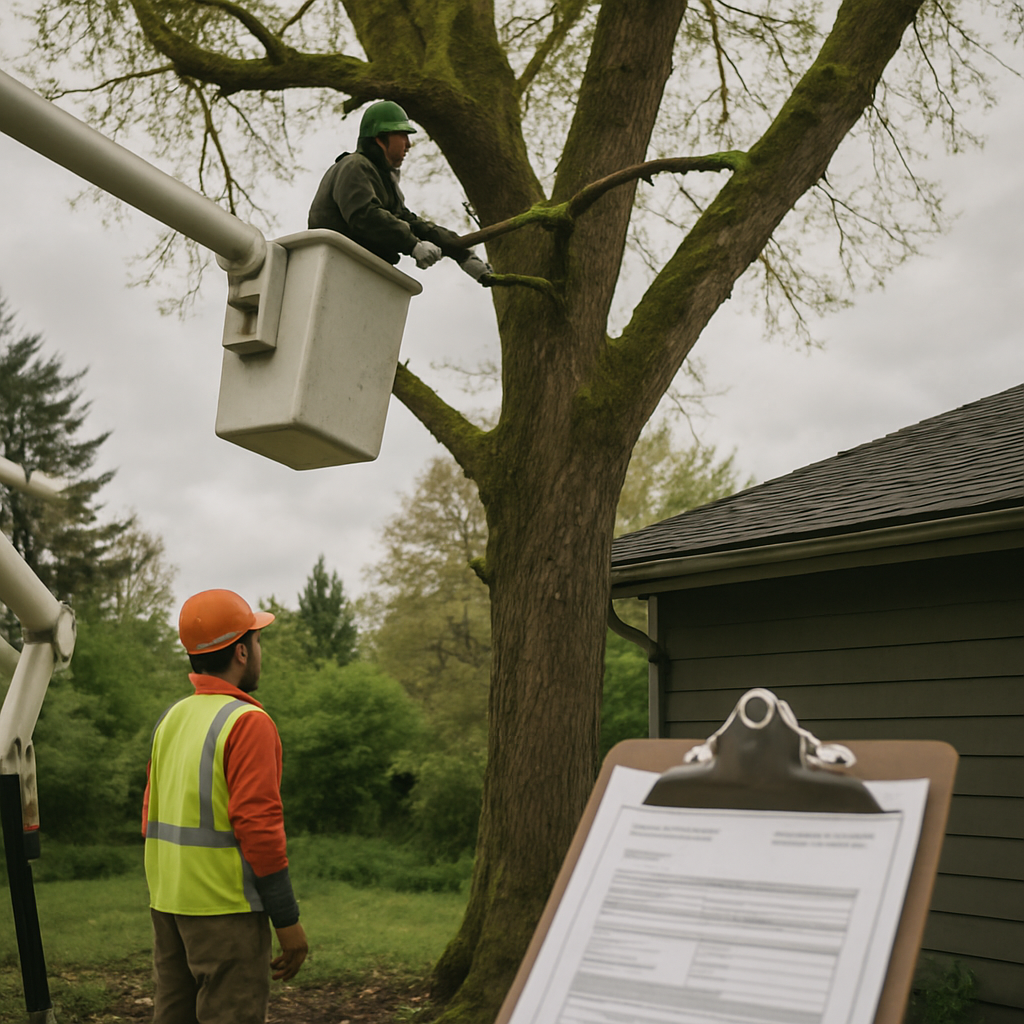
Concrete example: A large Douglas fir limb fell onto a roof eave during a winter storm. A certified arborist staged the scene, used proper rigging and a bucket lift to remove weight without further damage, documented the sequence for the homeowner and insurer, and recommended a follow up tree health assessment. That combination of technique, documentation, and local permit knowledge is what separates a professional response from a patch job.
Judgment to act on: Prioritize certification plus documented local experience and insurance verification over the lowest bid. In Portland the real risk is not the hourly rate; it is unresolved damage, permit fines, or a tree that declines because of improper cuts. Certification reduces those risks but only when paired with relevant, recent Portland work and clear proof of coverage.
Arborist services Portland property owners need
Direct point: Property owners in Portland should treat arborist work as a set of discrete professional services, not a one-size-fits-all task. Different problems require different skill sets and equipment — a pruning crew is not the same as a crane or emergency rigging team — and the wrong contractor choice increases cost, risk, and the chance a tree will decline after work.
Core services and what to expect from a qualified arborist
- Tree removal: For structurally failed, hazardous, or high-risk trees. When needed: clear and present danger or when retention is impractical. Scope: site assessment, permit handling if a street or protected tree is involved, sectional rigging or crane, cleanup, and disposal. See tree removal services for a local example.
- Stump grinding and disposal: Removes trip hazards and prevents suckering or pest habitat. Consideration: grinding depth and nearby roots affect plantings; full excavation rarely makes sense in established landscapes.
- Emergency tree service: Immediate stabilization, safe limb removal, and debris management after storms. Tradeoff: emergency crews cost more but limit secondary damage and simplify insurance claims; certified crews document work for adjusters.
- Tree trimming and pruning: Routine crown thinning, clearance pruning, and formative pruning for young trees. Practical note: frequent light pruning preserves structure better than sporadic heavy cuts.
- Tree planting and species selection: Planting for site conditions, native species preference, and long-term spacing. Local fit: choose species suited to Portland soils and canopy goals to avoid early replacements.
- Tree health assessment and plant healthcare: Diagnosis of pests, root decline, and soil problems with recommendations for integrated pest management, targeted fertilization, or root zone improvements.
- Cabling, bracing, and structural support: Noninvasive risk-reduction for mature Oregon white oaks or veterans with mechanical weakness. Limit: supports reduce risk but do not eliminate the need for ongoing inspection.
- Root management and soil work: Root pruning, soil aeration, and amendments where construction or compaction compromises stability. Warning: major root loss often limits successful preservation despite best mitigation.
- Construction protection and preservation: Fencing, monitoring, and supervision during excavation to preserve critical trees. Neither cheap nor automatic: keeping a mature tree through construction typically increases project complexity and cost.
- Storm cleanup, land clearing, and landscape restoration: Debris hauling, selective clearing, and follow up planting or mulching to restore site stability and erosion control.
Practical insight: Expect scope documents to separate line items for equipment (crane, lift, chipper), permits, and disposal. If a quote lumps those together you do not have an apples-to-apples baseline to compare risk or price — ask for itemized costs and who will pull permits.
Limitation to keep in mind: No arborist can reliably reverse decades of root compaction or severe root loss; preservation strategies are mitigation, not guarantees. That changes the decision calculus: sometimes removal and replanting is the more durable, lower-risk choice for a property owner.
Concrete example: A homeowner with a mature bigleaf maple whose limbs overhang gutters will get a different scope depending on risk and species: selective crown reduction to protect the roof, gutter clearance, and a two-year pruning schedule to avoid large flush cuts. If the same tree shows internal decay near the trunk the arborist may recommend cabling plus monitored reduction or removal with a crane if access and public safety require it.
Ask each contractor to mark which items they will handle: permits, traffic control, stump grinding, and final disposal. That single clarification prevents most post-job disputes.
Concrete benefits of hiring a certified arborist versus an unqualified contractor or DIY
Bottom line: hiring an ISA-certified arborist in Portland reduces the chance that a short-term, low-cost fix becomes a long-term liability — for your house, your landscape, and your insurance claim history.
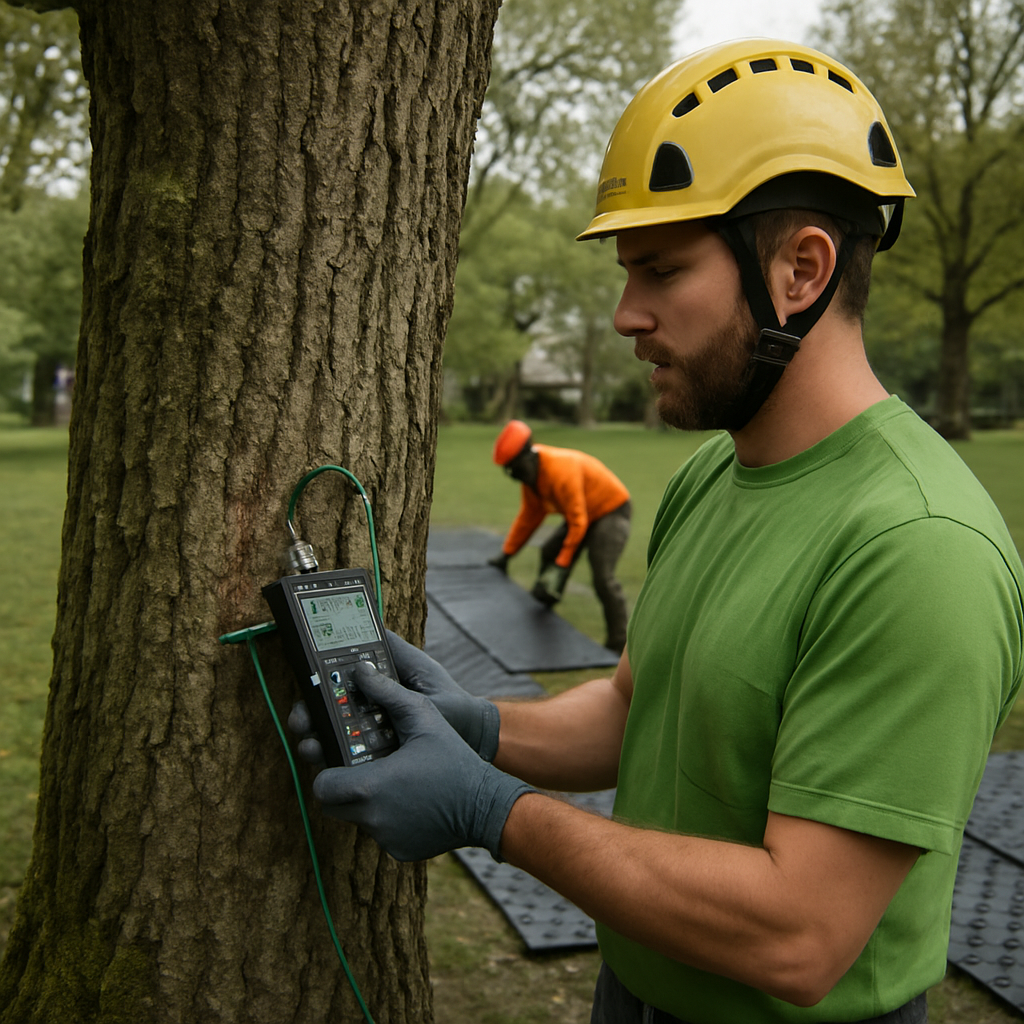
Better diagnosis, fewer surprises: certified arborists bring diagnostic tools and field-tested judgment most unqualified crews do not. Resistographs, sonic tomography, and trained decay detection let an arborist distinguish salvageable crown from concealed trunk failure; an inexperienced crew will often miss internal defects or treat symptoms with inappropriate cuts.
Risk transfer and documentation matter in practice: a certified crew documents pre-job condition, sequences of work, and post-job condition with photos and written notes that insurers accept. Uninsured or undocumented work shifts risk to you — a common real-world outcome is a homeowner stuck with repair bills after a poorly executed drop or an injured worker.
Practical tradeoff: expect higher upfront cost. That premium usually buys structured follow up, targeted treatments, and fewer emergency removals later. In some cases — like severe root damage under a driveway — the right arborist will advise removal as the lower-risk, lower-total-cost choice rather than attempt expensive, unlikely preservation.
Concrete example: a homeowner prunes a large bigleaf maple themselves to improve roof clearance and leaves multiple flush cuts and long stubs. Two seasons later the tree produces dense, weak sprouts and developed decay at the stubbed wounds, requiring removal and a crane. A certified arborist would have recommended selective, scaffold-preserving cuts and a staged pruning plan that reduced decay and avoided removal.
Practical advantages you actually see on site
- Safer operations: trained crews use engineered rigging, aerial lifts, and traffic control to protect people and property.
- Targeted interventions: less unnecessary felling — treatments like cabling, root-zone improvement, or timed pruning extend a tree's serviceable life.
- Regulatory and neighbor coordination: certified pros navigate Portland street-tree rules and coordinate permits, utility locates, and parking/work-zone needs so projects finish cleanly.
- Environmental best practice: techniques that reduce soil compaction, protect root collars, and avoid invasive wound patterns preserve urban canopy function.
- Post-job accountability: warranties, inspection schedules, and clear paperwork that support insurance claims and future maintenance planning.
A cheap, fast cut that eliminates immediate risk often creates a bigger, costlier problem later. Pay attention to documented scope and post-care plans, not just the bottom line.
Next consideration: when you schedule an on-site assessment, insist on a documented mitigation plan that lists alternatives, costs, and follow-up inspections so you can compare true lifecycle costs rather than headline prices.
Portland specific considerations: climate, species, pests, and codes
Quick reality: Portland is not a generic temperate city — repeated winter saturation, periodic high winds, and compacted urban soils create failure modes you will not see in drier regions. That combination pushes some species toward root failure and others toward crown breakage, and it changes when and how you should intervene.
Practical consequence: routine pruning schedules and preservation tactics that work inland or in drier climates often fail here. Expect more emphasis on root-zone care, storm-ready pruning, and invasive root and soil remediation when an arborist evaluates a tree in Portland.
| Species | Typical Portland concerns |
|---|---|
| Douglas fir | Crown and lateral limb failure in windstorms; large dead branches over structures |
| Bigleaf maple | Shallow rooting, heavy epicormic sprouting after improper cuts; vulnerable to Phytophthora in saturated soils |
| Western red cedar | Shallow roots and rot where drainage is poor; canopies hold moisture and ice |
| Oregon white oak | Valuable for canopy but slow to recover from major pruning; responds poorly to topping |
| Pacific madrone | Thin root systems and sensitivity to root disturbance; high transplant and preservation failure risk |
Pest and disease reality: Phytophthora root rot and laminated root rot are active problems where soils stay wet and compacted, while emerald ash borer is an emerging regional threat that changes long-term planning. Use OSU Extension for current regional disease guidance and rely on targeted monitoring rather than blanket pesticide approaches.
Code and permitting practicalities: Street trees and many significant on-site trees fall under City of Portland jurisdiction. Consult Portland tree rules early — permit review and public notice can add time and conditions to your project. In practice, a local arborist who regularly files permits will both reduce delays and avoid common compliance mistakes that lead to fines or rework.
Tradeoff to plan for: aggressive attempts to preserve a compromised root system with extensive soil work are expensive and slow to show results. Sometimes removal and replanting with a species better suited to the microsite is the lower-risk, lower-total-cost choice. Expect a competent arborist to present both mitigation and replacement as viable options, with honest prognosis.
Concrete example: A mature bigleaf maple in a soggy backyard showed progressive crown thinning and root collar flaring. A local arborist performed a soil probe and root collar excavation, reduced crown weight with selective cuts, recommended targeted Phytophthora testing, and scheduled a two-year monitoring plan — the recommendation balanced canopy retention with acceptance that full recovery was uncertain and removal could be needed later.
How to verify an arborist and documents to request before hiring
Start here: never hire an arborist in Portland based on a price or a friendly voicemail alone. Verification is a short series of documentary checks and a quick phone call that separates a responsible, insured crew from a liability you will own if something goes wrong.
Verification workflow you can complete in one business day
- Initial screen: Ask for a digital packet up front that includes an ISA credential ID, a certificate of insurance with policy numbers and carrier contact, and a business registration or local business address.
- Validate credentials: Confirm the ISA credential using the ISA lookup at ISA Certified Arborist. If the arborist claims local Portland expertise ask for two recent job photos with addresses or permit numbers.
- Call the insurer: Phone the insurer on the COI and confirm the policy is active, the named insured matches the contractor, and the coverage limits are adequate for your property and the job size.
- Permit and permit history: Ask whether the company has pulled Portland permits for similar recent jobs and verify by checking the City of Portland records at Portland Trees or requesting copies of approved permits.
- Scope and method statement: Request a one page description of how they will work on your site – rigging plan, traffic control, disposal route, stump treatment, and tree protection for adjacent plants.
- Crew and equipment: Get the name of the onsite supervisor, a crew size estimate, and the heavy equipment planned (crane, bucket lift, chipper).
- Contract sample and payment terms: Insist on a draft contract or a written estimate with line items for labor, equipment, permits, disposal, and a payment schedule.
- References and recent work: Ask for two Portland references or links to recent jobs and call them. Look for recent permit numbers or photos that match addresses.
Practical tradeoff: Insisting on full documentation can slow down immediate emergency responses. For hazardous storm damage, arrange temporary stabilization first and require the same verification paperwork within 48 hours once the site is safe. That balances urgent safety with risk control.
Concrete Example: A homeowner called three crews after a wind event. One crew sent an ISA ID and a COI with carrier contact; the homeowner called the insurer and confirmed the policy was current. The chosen crew also produced a recent Portland permit number and an on site supervisor name. The job proceeded with permits filed and photos for insurance, avoiding later disputes.
Important: a PDF COI is useful but not definitive. A five minute call to the insurer is the difference between insured work and surprise liability.
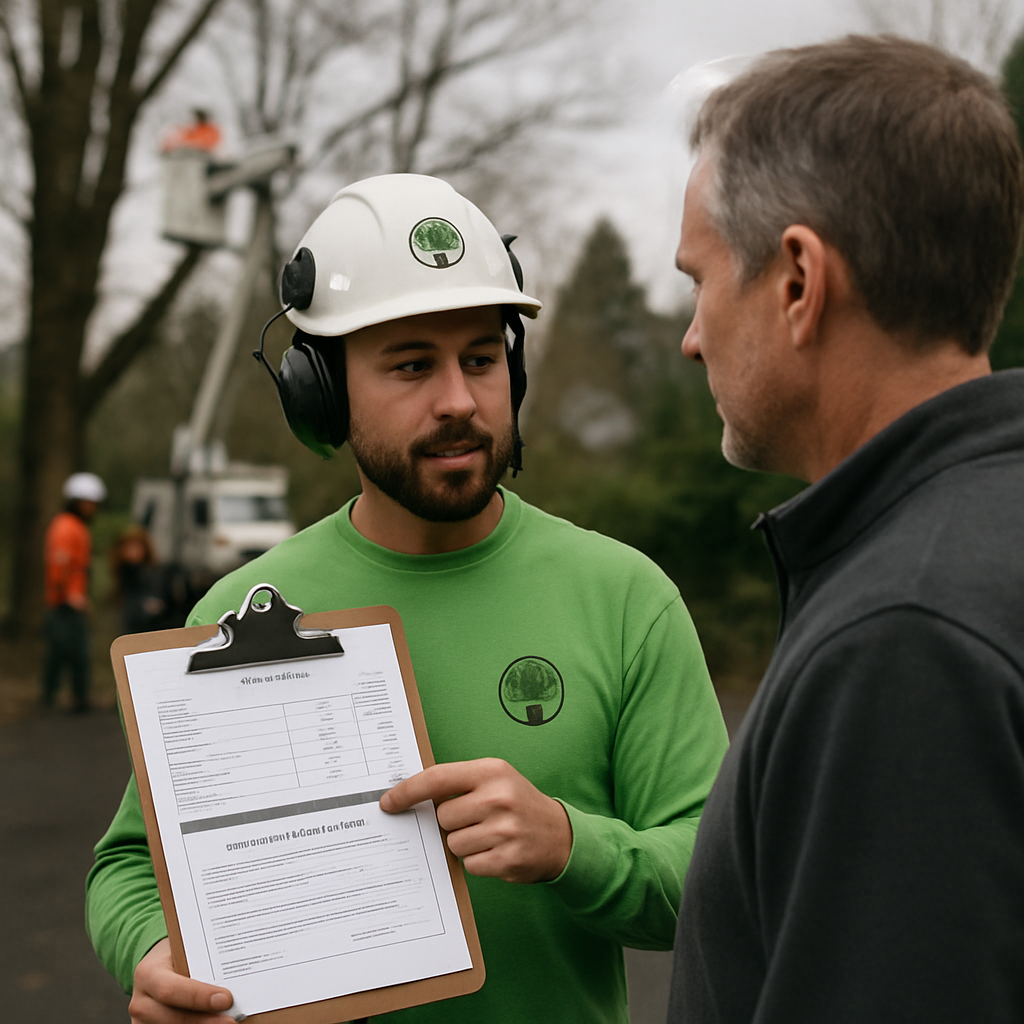
Takeaway: verify documents before work starts, but in immediate hazards accept temporary stabilization while you complete the verification steps. That approach protects people and property without sacrificing accountability.
Questions to ask a Portland arborist at first contact and during on site assessment
Cut through the sales pitch: early questions reveal competence faster than price negotiations. Use first contact to verify credentials and basic logistics; use the on-site conversation to test diagnostic reasoning, scope detail, and crew supervision.
Quick vetting at first contact
At first contact your goal is to separate serious contractors from low-commitment callers. Request verifiable identifiers, a short description of how they would approach your problem, and a timeline for an on-site assessment. Avoid long debates about price until you have a written, site-based scope.
| Question to ask | What a satisfactory answer sounds like | Red flag to walk away from |
|---|---|---|
| What is your ISA certification number and where can I verify it? | Provides a number and encourages you to check the ISA directory. | Refuses to give a number or says certification is irrelevant. |
| Can you email a current certificate of insurance and name the insurer? | Sends a COI with carrier contact and policy limits; offers a phone number for verification. | Only accepts cash, or says insurance is not necessary. |
| Who will supervise the crew on site and who signs the contract? | Names an on-site supervisor and clarifies whether subcontractors are used. | No supervisor name, vague about who will actually do the work. |
| Will you advise on or obtain Portland permits if required? | Confirms familiarity with Portland tree rules and will handle permitting or explain when a permit is needed. | Says permits are the owner's responsibility or seems unfamiliar with city requirements. |
| Can you provide a written, itemized estimate after the visit? | Agrees to a line-item estimate that separates labor, equipment, permits, and disposal. | Insists on a single lump-sum verbal quote without documentation. |
| What is your typical turnaround for an on-site assessment? | Gives a reasonable window, explains emergency options if applicable. | Avoids commitment or offers impossibly fast scheduling without site triage. |
Deeper questions during the on-site assessment
On site you are looking for diagnostic depth and honest tradeoffs. Good arborists will show you the evidence behind a recommendation, outline alternatives with pros and cons, and flag uncertainty rather than promise miracles.
| On-site question | What a credible response includes | Practical red flag |
|---|---|---|
| What are the realistic options for this tree and why? | Explains at least two options (e.g., monitored reduction + cabling vs removal), with clear risk, cost, and maintenance differences. | Pushes only one solution without discussing alternatives or follow-up needs. |
| How will you protect nearby trees, plantings, and soils? | Describes protection measures such as root-zone mats, mulching, or minimal excavation methods. | Focuses only on the tree being worked on and ignores adjacent plantings. |
| Do you expect any hidden conditions that could change scope or cost? | Notes potential unknowns (hidden decay, root damage, subsurface utilities) and how they will be handled contractually. | Says nothing could change once work starts. |
| Who will handle cleanup, disposal, and stump grinding, and how is that priced? | Identifies whether the crew includes stump grinding and hauling or if those are add-ons, with approximate costs. | Says disposal is incidental or gives no pricing guidance. |
| What follow-up inspections or maintenance do you recommend and at what interval? | Outlines a follow-up schedule or warranty terms when appropriate. | No plan for follow-up or refuses to specify inspection timing. |
Practical limitation: expect qualified arborists to withhold a firm fixed-price until they inspect the site. An instant, detailed bid delivered over the phone for complex work is usually bogus or ignores key risks.
Concrete example: After a heavy wind event a homeowner reported a leaning Douglas fir. At first contact the company provided an ISA ID and emailed a COI; on site the arborist documented root plate heave, took soil probes, and presented two paths: staged crown reduction plus cabling with six-month monitoring, or full removal with crane access and permit handling. The homeowner accepted cabling and a documented inspection schedule, avoiding an expensive emergency crane mobilization while buying time to reassess.
Ask for the on-site supervisor's name and a written estimate before work begins; if they hesitate, treat it as a reliability signal.
Next consideration: prepare clear photos, mark hazards, and note utilities before the visit so the on-site assessment focuses on diagnosis and options instead of basic logistics.
How pricing works and how to compare estimates
Direct point: total price alone tells you nothing useful. For an arborist portland quote to be comparable you need each bid split into the same components so you can see what is included, what is extra, and where the contractor is shifting risk back to you.
What actually drives the number
| Cost driver | Why it matters for your bid |
|---|---|
| Tree size and access | Bigger diameter and trees near roofs or wires require more rigging, more time, and heavier equipment. |
| Site complexity | Slopes, confined yards, or proximity to structures increase labor intensity and safety controls. |
| Equipment needs | Crane or bucket lift rentals and chippers are billed separately and can dominate a removal price. |
| Disposal and hauling | Chip hauling, green waste fees, and recycling vs landfill change final costs—some companies include, others bill per load. |
| Permits and traffic control | Street-tree permits, curb closures, and municipal fees are often passed through to the client. |
| Stump work and site restoration | Grinding depth, root complexity, and post-job clean up are frequent add-ons. |
| Timing and urgency | Emergency response or weekend scheduling carries a premium. |
Practical framework for comparing 2-3 bids: treat each estimate like a mini contract. The goal is to normalize cost items, expose assumptions, and compare residual risk rather than chase the smallest total.
- Normalize: require each company to break out labor, equipment rentals, disposal, permit fees, stump grinding, and any subcontractor work so the numbers line up.
- Value-check: compare not just price but what you get for it. A cheaper quote that omits crane rental or permit handling often becomes more expensive once change orders start.
- Risk-check: identify who carries the risk for hidden conditions (unexpected decay, buried utilities, bad weather). The contractor should state how change orders will be handled and what triggers additional charges.
Tradeoff to accept: flat-price bids give certainty and are useful for straightforward removals with clear access. For complex or uncertain sites, an hourly or measured-rate contract with a firm not-to-exceed cap is often the safer option because it avoids wildly underpriced bids that skip safety or permits.
Concrete example: two written estimates arrived for a hazardous Douglas fir. Bid A was materially cheaper but combined permit and disposal into one vague line and required full payment upfront. Bid B was higher but itemized a crane rental, Portland permit fee, stump grinding, and a clause for change orders tied to documented hidden conditions. The homeowner chose Bid B because it insulated them from surprise charges and showed the contractor understood local permitting and equipment logistics.
Focus on the contract mechanics: who pulls permits, how change orders work, what triggers extra charges, and when final payment is due.
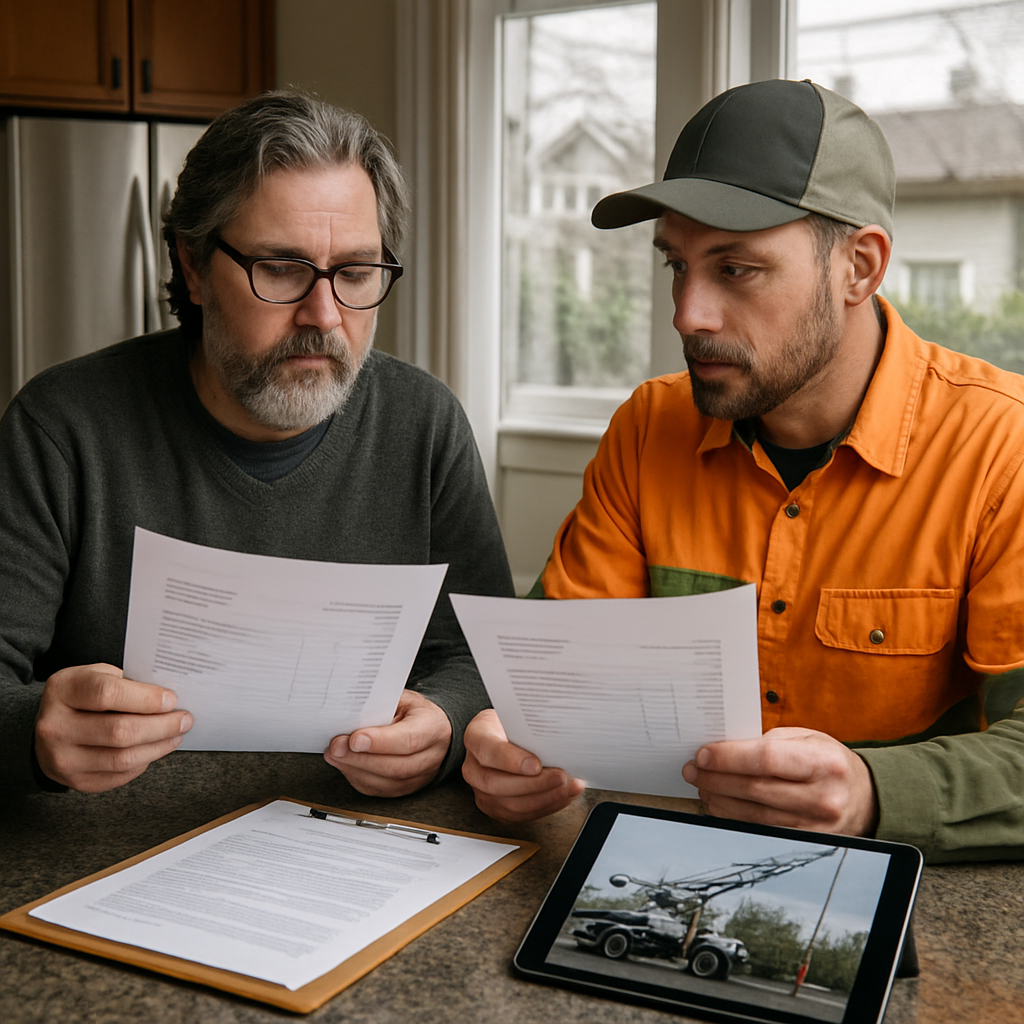
Next consideration: when you receive the estimates, walk the job with each contractor and insist on updating the written bid if onsite findings change. That small discipline eliminates most disputes and keeps tree removal portland, stump grinding portland, and other line items transparent.
Emergency tree situations and aftercare
Triage first, long term plan second. When a tree is an immediate danger to people, structures, or a driveway, your first objective is a safe scene and a clear record, not the lowest price. Fast, documented stabilization reduces the chance of secondary damage and makes insurance negotiations straightforward.
What a professional emergency crew does on arrival. A certified crew will secure the area, perform targeted hazard removal to eliminate imminent threats, and document the condition with photos and written notes. They coordinate with utility providers when lines are involved, set temporary bracing or support if removal is deferred, and separate stabilization work from full remediation so insurers can see what was urgent.
Practical homeowner actions while help is en route
- Keep people and pets away: establish a safe perimeter and do not let anyone approach a leaning or snapped tree.
- Photograph and timestamp: take wide and close photos from safe distances. These will be crucial for insurance and for the arborist record.
- Preserve evidence: do not cut or haul away major limbs before the crew documents them; small debris that blocks access can be cleared for safety but note it in writing.
- Separate invoices: ask that emergency stabilization be invoiced and described separately from later removal or rebuilding work to avoid claim confusion.
- Avoid DIY structural work: do not attempt to pry a root plate back into place or remove large limbs with ladders or ropes.
Tradeoff to expect: emergency response costs more per hour than planned work because crews mobilize quickly and accept higher risk. That premium buys containment of liability and typically prevents larger structural damage that would be far more expensive later.
Concrete example: After three days of heavy rain a mature Douglas fir developed a tilted root plate and threatened a garage roof. An emergency crew from a certified arborist stabilized the tree with temporary cables, removed weight-bearing limbs to reduce load, and photographed the root condition. The homeowner kept the stabilization invoice separate; the insurer approved a follow-up removal and stump grinding once a full assessment confirmed the tree would not recover.
Aftercare and claim management. Insurers want a clear narrative: what was urgent, what was preventative, and what the final remedy was. Keep all receipts, time-stamped photos, and the arborist report. Delay nonessential work like stump grinding until the claim status is clear, because grinding can remove physical evidence insurers sometimes want to inspect.
Longer term remediation choices and one practical judgment. You can sometimes buy time with bracing or cabling, but those are monitoring measures, not cures. In saturated Portland soils, expect root-related failures to recur unless you also address soil compaction and drainage; a competent arborist will present mitigation plus a realistic prognosis rather than promise a cure.
If power lines are involved do not approach the scene. Let the utility company and a qualified arborist coordinate the response.
Real world scenarios and what to expect from a professional assessment
Straight answer: a professional assessment is not a single opinion — it is a short investigation that produces a ranked set of options, an explanation of uncertainty, and a clear list of follow up actions and permit needs. Expect diagnosis, documented evidence, and at least two practicable solutions with their consequences spelled out.
Scenario 1: Storm-damaged Douglas fir threatening a roof
What the arborist will do on arrival: visually triage hazards, secure the scene if immediate risk exists, then perform focused checks including root plate inspection, sounding the trunk for hollow sections, and photographing attachment points and structural defects. If power lines are involved they coordinate with the utility company rather than work solo.
Assessment deliverables you should get: a photo log, a short risk-ranking (high/medium/low) for the tree and affected targets, a recommended action list with sequencing (stabilize, reduce, remove), and a note on permits or traffic control if a crane or street closure is needed. Typical turnaround for the written estimate is 48 to 72 hours after the visit.
- Assessment steps: Scene safety check and documentation
- Root and trunk inspection including soil probe where access allows
- Crown and branch load evaluation and risk ranking
- Develop mitigation options and note permit or equipment implications
Practical tradeoff: an urgent stabilization is expensive but preserves options for the owner and insurer. Conversely, an immediate full removal eliminates the risk faster but carries higher immediate cost and streetscape impact. A competent local arborist portland will explain both financial and ecological consequences.
Scenario 2: Preserving mature Oregon white oaks during property construction
What this assessment focuses on: root protection zone mapping, soil compaction risk, recommended fencing and monitoring, and a construction-stage supervision plan. A preservation plan usually includes hard limits on excavation, a written protocol for utility installs, and a phased inspection schedule tied to construction milestones.
Limitation to accept: preservation is mitigation, not a guarantee. If the assessment uncovers significant root loss or poor soil biology, the arborist should present likelihood of survival and a fallback planting strategy. Expect them to quantify uncertainty rather than promise the tree will survive every disturbance.
- Before assessment you should provide: site plans, proposed grading or trenching locations, and an outline of construction schedule
- Typical assessment outputs: root zone map, required protection fencing, monitoring checklist, and an itemized scope for protective measures and supervisory site visits
Concrete example: for a construction project next to three mature oaks the arborist produced a root protection map, specified trenchless utility options, required hourly supervision during excavation near the dripline, and scheduled three post-construction inspections. That plan allowed development to proceed while giving the owner realistic checkpoints to decide whether continued preservation was viable.
Good assessments convert uncertainty into options. If an arborist gives you only one solution or refuses to document risk, that is a practical red flag.
Final consideration: demand deliverables that let you compare lifecycle consequences, not just immediate cost. A useful assessment arms you with a documented reason to proceed with stabilization, removal, or preservation and tells you what to expect from permits, scheduling, and follow-up maintenance.
Next steps for readers and how to prepare for an on site visit
Start with clarity: Treat the on-site assessment as a fact-finding mission that should produce choices, not a sales pitch. Your objective is to leave the visit with a documented set of options, realistic timelines, and a list of items the contractor will handle (permits, traffic control, disposal). If the visit becomes a hard sell, pause and demand the written scope before authorizing work.
Before the visit: practical prep you can do in under an hour
- Photograph with purpose: Take four photos per tree — full-tree from street, full-tree from backyard, close-up of trunk at chest height with a tape measure or coin for scale, and the canopy over nearby targets (roof, power line, driveway). Clear photos save time and reduce guesswork during the visit.
- Sketch access and hazards: Draw a simple site sketch that shows property lines, driveway, gates, obvious slopes, and where underground services enter the house. Note where parked cars or street parking will block a crane or lift.
- Flag problem spots: Use temporary survey flags or biodegradable tape to mark the specific trees or limbs you want assessed. Do not prune or remove anything before the arborist documents condition.
- Gather recent records: Collect any planting receipts, previous work invoices, irrigation changes, pest treatments, or landscape renovations. These items often explain decline or root disturbance and materially change recommendations.
- Check utilities and neighbors: Call 811 if you plan work that involves excavation and tell immediate neighbors if trucks or street closures may be needed.
Tradeoff to consider: The more prep you do, the faster and more precise the assessment will be — but photos and sketches are supplements, not substitutes. A qualified arborist needs boots on the ground to probe roots and sound trunks. Use your prep to speed diagnosis, not to replace the inspection.
During the visit: focus areas and signals of competence
What to watch for: A competent arborist will spend time looking at root collars and soil, ask about irrigation and past disturbance, and walk the full property rather than only the obvious problem tree. Typical assessment time for a single-yard inspection is 30 to 60 minutes; expect longer for construction or multiple mature trees.
- Ask them to mark recommendations: Insist the arborist mark proposed cuts or danger zones with paint or flags so you and future crews share the same plan.
- Request a decision timeline: Get a clear turnaround for the written estimate and a statement of what triggers extra charges (hidden decay, utility conflicts, weather delays).
- Watch how they explain uncertainty: Good arborists will say where their diagnosis is uncertain and propose monitoring, testing, or conservative options rather than definitive promises.
Practical judgment: If an arborist consistently downplays root or soil issues during the walk-through, they are likely undervaluing long-term risk. In Portland that often means missed Phytophthora or compaction problems; push for a soil probe or root-collar inspection before accepting a quick fix.
Concrete Example: A homeowner emailed clear photos, a hand-drawn access sketch, and previous pruning invoices before a scheduled visit. The arborist arrived prepared, confirmed a likely permit need because of proximity to the street, marked three limbs for reduction, and produced an itemized estimate within 48 hours — saving the homeowner two onsite follow-ups and a weekend crane mobilization.
0 Comments