

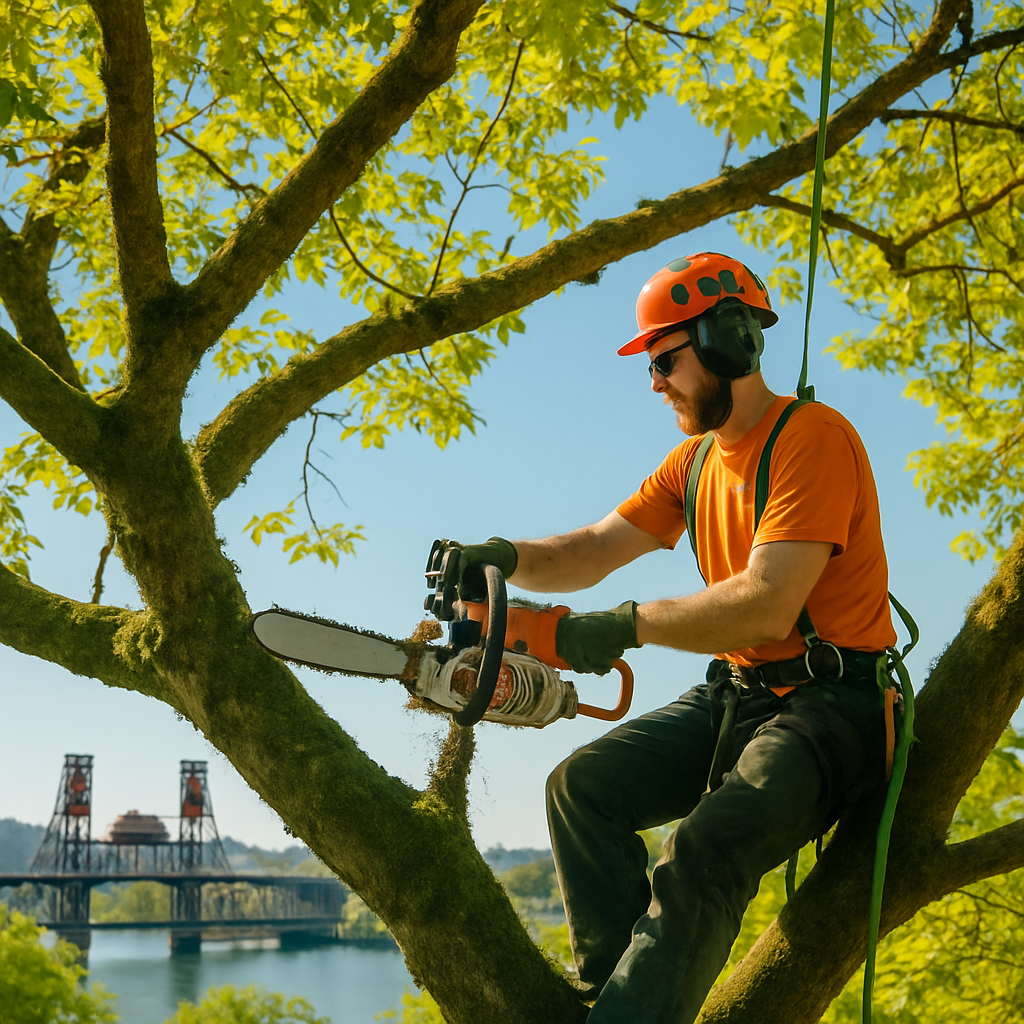
Portland Tree Trimming: Seasonal Tips and How to Choose a Local Trimmer
Portland's wet winters and frequent storms turn neglected branches into safety and property risks faster than many homeowners expect. This practical guide to tree trimming portland gives a season-by-season calendar, species-specific timing, clear DIY limits, and a straightforward checklist for hiring a local trimmer who will handle permits and utility coordination. Youll also find realistic cost ranges, common red flags, and a printable hiring checklist to use before any job.
Seasonal pruning calendar for Portland microclimates
Plain fact: in Portland, timing beats style — when you prune determines disease risk, regrowth response, and how visible structural defects are. For any plan around tree trimming portland, treat the calendar below as a template you adjust for microclimate: West Hills and Tualatin Valley sites leaf out earlier than north Portland river flats, and urban heat islands advance spring activity by weeks.
Late winter (January to March) — dormancy window
What to do: prioritize structural pruning, removal of dead and broken limbs, and crown cleaning while trees are dormant and defects are visible. Why: reduced sap flow, lower insect activity, and clearer sightlines for correct cuts make this the most efficient season for many deciduous species.
Trade-off to consider: heavy cutting in saturated soil increases root compaction risk if crews use tracked equipment. If access is wet, delay nonurgent work or request lighter machinery and extra ground protection from your contractor. See guidance from Oregon State University Extension for species-specific winter pruning notes.
Late spring to early summer — after bloom and corrective pruning
What to do: prune spring-flowering trees such as cherries and magnolias immediately after bloom to protect the next season's flowers. Use this window for corrective cuts on young trees once you can see new growth patterns.
Practical insight: avoid major structural work in this window on high-vigor species that will push excessive water sprouts. If you need to slow vigor, pair selective pruning with canopy thinning rather than large branch removals.
Summer — shaping, deadwood removal, and caution
What to do: perform light shaping, remove deadwood, and address minor clearance issues. Do not make heavy reductions during hot, dry stretches; trees under summer stress are slower to compartmentalize wounds and more susceptible to sunscald.
Real-world example: a homeowner in southeast Portland waited until mid-July to remove crossing branches on a mature bigleaf maple. The crew limited cuts to 10 percent of the live crown and left larger structural corrections for the following late winter to avoid compounding summer stress.
Fall and storm-prep — targeted hazard work
What to do: focus on deadwood removal, minor pruning to reduce sail effect on exposed crowns, and securing weak attachments before storm season. Large reductions or corrective reshaping are poor choices here because they can stimulate late-season growth that weakens wood before winter.
- Quick calendar prompts: January–March: structural pruning and dormancy cleanup
- April–June: prune after bloom for flowering species and do corrective work on young trees
- July–August: limit to small cuts and deadwood removal; avoid heavy reductions during heat
- September–November: remove hazards, clear vulnerable limbs ahead of winter storms; defer major cuts
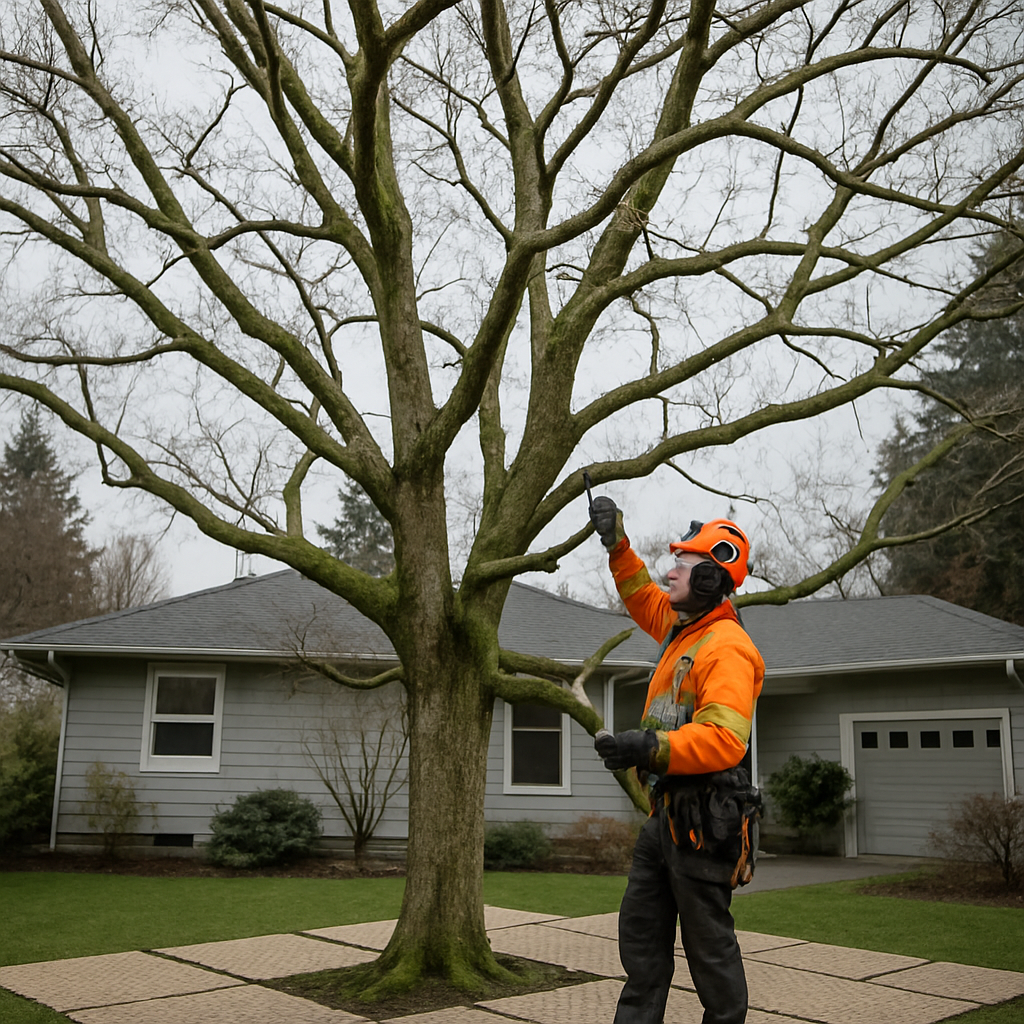
Takeaway: use the season windows above but apply local judgment — if a limb is an immediate hazard, remove it regardless of month; for planned maintenance, follow the season-specific goals to protect tree health and reduce follow-up work.
Species-specific guidance for common Portland trees
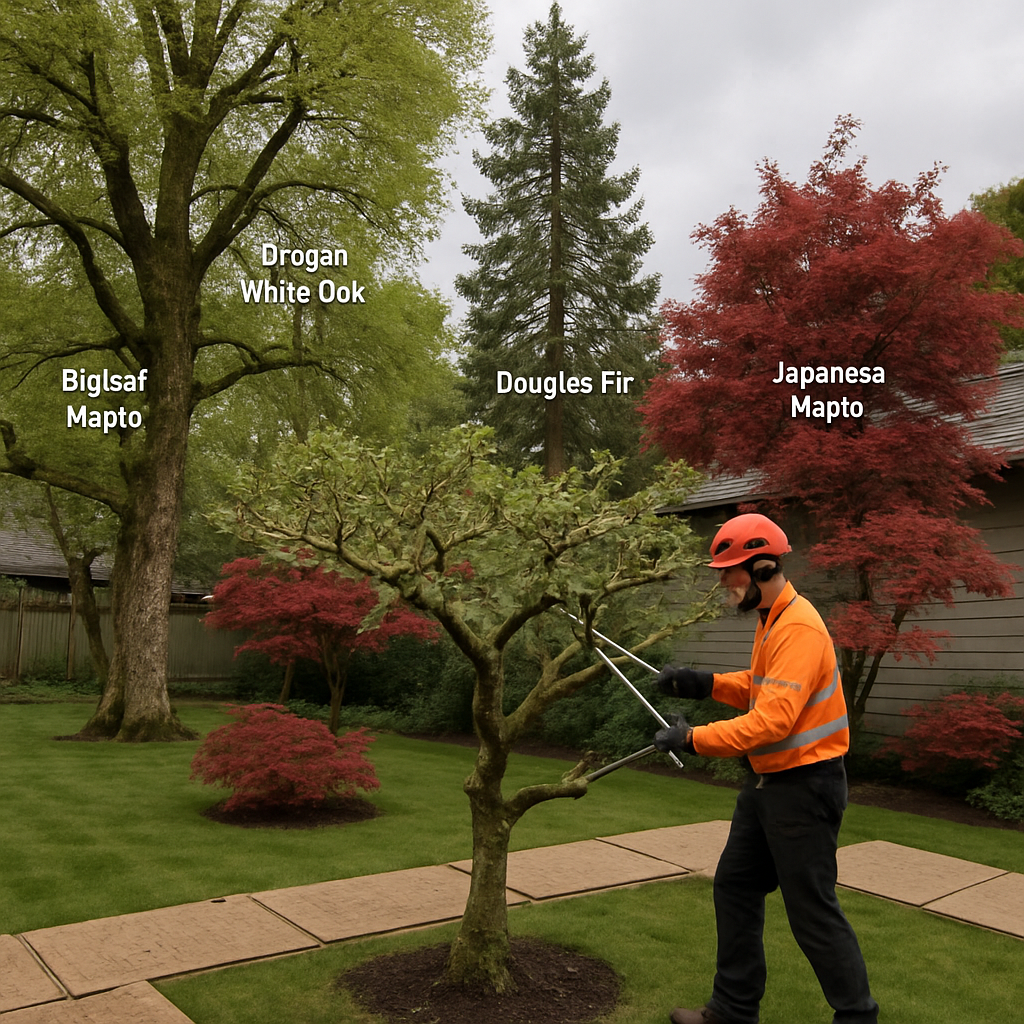
Key point: species determine both when and how to prune in Portland more than neighborhood or soil type. Apply timing and cut style to the biology of the tree, not to an aesthetic schedule, and plan small, staged corrections for long-lived specimens rather than one large overhaul.
Bigleaf maple
Timing and technique: prune bigleaf maple in late winter to very early spring before bud swell to expose structure and limit bleeding and pathogen entry. Focus on removing weak crotches and deadwood, and avoid large crown reductions in a single season because these trees send vigorous epicormic sprouts that create maintenance headaches.
Practical trade-off: aggressive reductions quickly reduce hazard but trade long-term form and increase future maintenance. For specimen maples invest in phased structural pruning over several winters to retain canopy shape and reduce regrowth.
Oregon white oak
Biology-first approach: oaks compartmentalize wounds slowly and support native wildlife. Limit large cuts during March through July to protect nesting birds and avoid removing large live wood unless there is an immediate hazard. When you must remove branches, make clean cuts and stagger work across years.
Judgment call: preserving habitat value often conflicts with hazard mitigation near homes. In practice homeowners balance by removing only clear failures and canopy sections that threaten structures, then scheduling lower-risk corrective pruning in dormant months.
Douglas fir and western red cedar
What works here: with large conifers, avoid crown reductions unless the tree is being removed. Acceptable work is targeted removal of lower limbs for clearance and sanitation cuts for deadwood. Major reshaping is risky and usually fails because conifers do not backfill large wounds.
When to bring in pros: if the work crosses into the upper crown, involves cavities, or is near roofs and lines, hire a certified arborist experienced with conifer rigging and safety. Professional crews will also advise when removal is the only long-term solution.
Japanese maple and flowering cherries
Fine pruning rules: prune these ornamentals immediately after flowering to protect next season's buds. Keep cuts light and surgical – these species heal slowly and are prone to rot when large exposed wounds are created in wet months.
Practical insight: shaping work is best done annually. A single heavy correction on an older specimen often damages form and invites disease. Small seasonal tweaks preserve ornamental value with lower disease risk.
Fruit trees – apple, pear and similar
Productivity focus: annual pruning in late winter sets scaffold structure and fruiting wood; light summer thinning controls size and improves light penetration. Be mindful of local disease cycles – for example timing removals to reduce fire blight risk changes practical choices.
Real-world example: Concrete example: an inner northeast Portland rental owner switched to targeted winter pruning for two mature apple trees and added summer thinning for overcrowded shoots. Within two seasons fruit size and harvest consistency improved and the manager reduced ladder work by scheduling routine small visits instead of emergency corrective cuts.
Local practice note: for many Portland yards the best long-term outcome is small, regular pruning by a local crew that understands species quirks rather than infrequent heavy cuts that create ongoing problems.
Next consideration: if you are unsure about a species specific plan, schedule a brief on-site consult with a licensed arborist who will match timing and technique to the tree rather than applying a one-size-fits-all cut. For local service and scheduling see Mr Tree Inc. pruning page.
Safety, common pruning mistakes, and DIY limits
Safety controls the outcome. For most Portland yards the single best decision is to stop when a job stops being simple and becomes hazardous. If work requires climbing more than a single-extension ladder, rope rigging over a roof, tree removal near powerlines, or heavy equipment on wet ground, hire a licensed crew that provides a written safety plan.
Practical DIY ceiling and when to call a pro
DIY ceiling: a competent homeowner can safely handle pruning below roughly 12 to 15 feet from grade using a pole pruner, pruning saw, and a stable ladder with a spotter. Anything taller, within 10 feet of a powerline, leaning onto structures, or involving suspected rot should be turned over to professionals.
- Essential PPE for homeowner pruning: hard hat with face shield, eye protection, hearing protection for powered saws, cut-resistant gloves, and steel-toe boots.
- Tools that belong in DIY kits: bypass loppers, hand pruning saw, pole pruner with replaceable blades, and a sharp chainsaw only if you have training and chaps.
- Site safety basics: mark utilities, remove vehicles and fragile items, establish a clear drop zone, and always have a second person as a spotter and phone contact.
Common real-world mistakes that cause the most damage. Homeowners and low-cost crews repeatedly cause accidents by misjudging a limb head weight, cutting from the wrong side which splits the branch, or failing to account for hidden decay. Those errors result in property damage, accelerated tree decline, and liability exposure that often exceeds any short-term savings.
Concrete example: a southeast Portland homeowner attempted to lop a heavy lateral from a 30-foot maple using an unsupported ladder. The limb split unexpectedly, took the ladder and a section of fence with it, and the property owner ended up paying for emergency removals and fence repair. If that job had been scoped by a professional crew with rigging and ground protection, the sequence of risk would have been identified up front.
A practical trade-off to accept: hiring a professional raises cost but lowers the probability of expensive follow-up. Experienced crews do two things homeowners rarely do well – they plan the drop path and have redundancies for powerline or roof contact. In Portland situations where storms amplify hazards, rapid professional response also reduces further tree failure and adjacent tree damage.
If work involves powerlines, roofs, cavities near the trunk, or heights above 15 feet, require a written rigging plan, proof of insurance, and ask whether the crew coordinates with Portland General Electric before work begins.
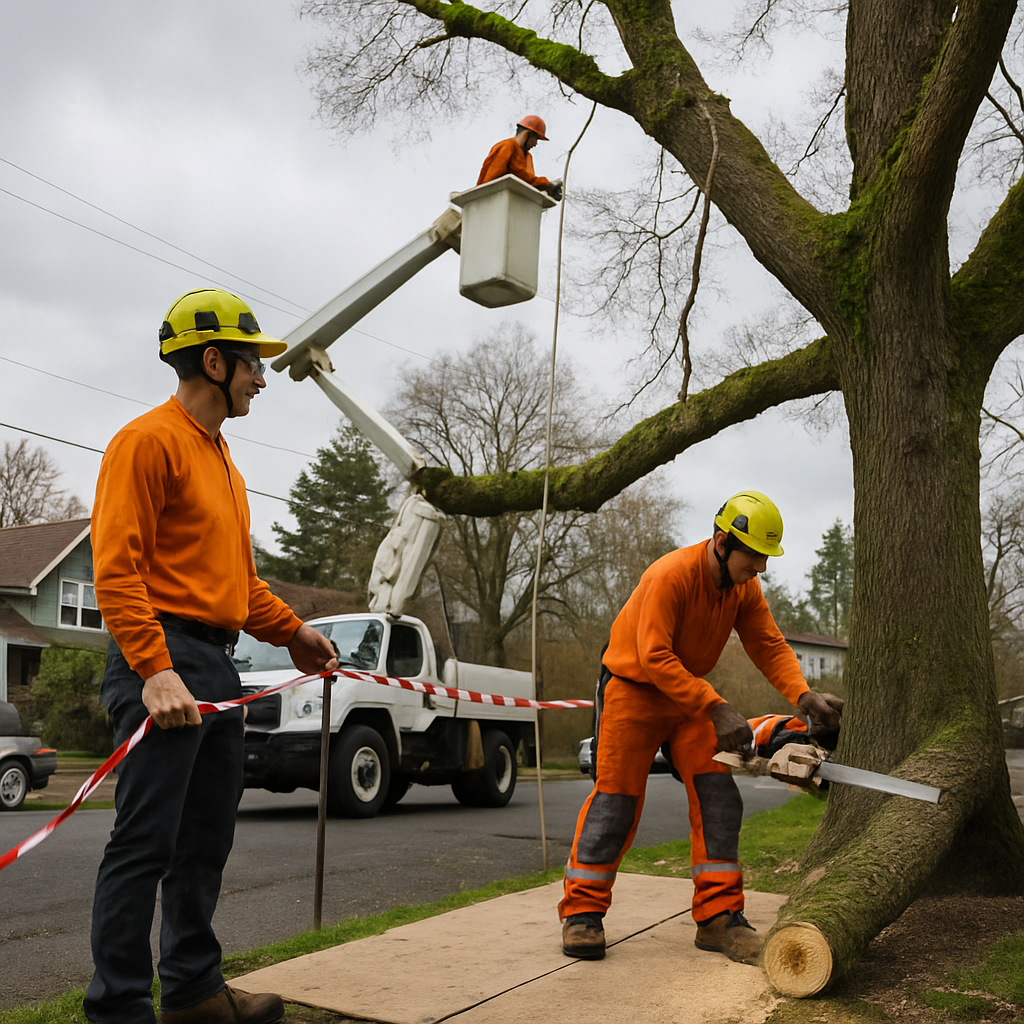
Next consideration: when you get estimates, compare the safety details not just price – look for itemized rigging, insurance certificates, traffic control for curbside work, and a commitment to handle permits. Those are the things that keep a job from becoming an emergency.
How to choose a local Portland trimmer: credentials, questions, and red flags
Start here: hire the firm that reduces your liability and paperwork, not the one with the lowest headline price. For tree trimming portland the single most valuable trait is reliable local process — written scopes, proof of insurance, and permit handling — because Portland rules and storms turn small jobs into municipal headaches fast.
What to expect on credentials and why each matters
| Document / Credential | Why it matters in Portland |
|---|---|
| General liability insurance & COI | Protects you from property damage claims; must name your property if requested and be current |
| Workers compensation | Prevents homeowner liability if a worker is injured on site |
| Business license and local address | Shows a stable local operator who understands city permit routes and neighborhood rules |
| ISA certification or certified arborist on staff | Indicates arboricultural training; useful but not a substitute for local experience |
| Experience with permit management | Avoids delays and fines for street trees, heritage trees, or large removals |
Practical insight: an ISA certified arborist is valuable, but certification alone does not guarantee safe rigging, clean contracts, or permit competency. Give higher weight to contractors who can show recent Portland projects, photos of similar scope, and evidence they coordinated with the city or utilities.
- Essential questions to ask upfront: Can you email a current certificate of insurance and a sample written scope? Who will be on site — your employees or subcontractors? Do you handle City of Portland permits and utility notifications? What is the cleanup standard and disposal cost? What are payment milestones and refund terms?
- Follow-up checks: Call the insurer on the COI if anything looks off; ask for three recent Portland references and check photos or addresses; search the company name plus Portland code enforcement to spot past permit issues.
Trade-off to consider: local mom-and-pop crews often charge less and respond faster, but they may lack heavy rigging gear or up-to-date insurance for complex jobs. For straightforward residential pruning under 15 feet a small crew is fine; for structures, powerlines, or large conifers pay for a fully equipped, insured crew.
Concrete example: A homeowner in inner southeast Portland hired a low-cost crew that skipped the street-tree permit and topped a public-facing maple. The city required corrective work and issued a fine; the homeowner then paid for a certified arborist to restore structure and reapply for the permit. That sequence cost more than hiring a permit-savvy company initially.
Red flags: refusal to provide a COI, insisting on large cash deposits, vague timelines, no written scope, or a pitch to top trees. Walk away — short-term savings can become long-term expense.
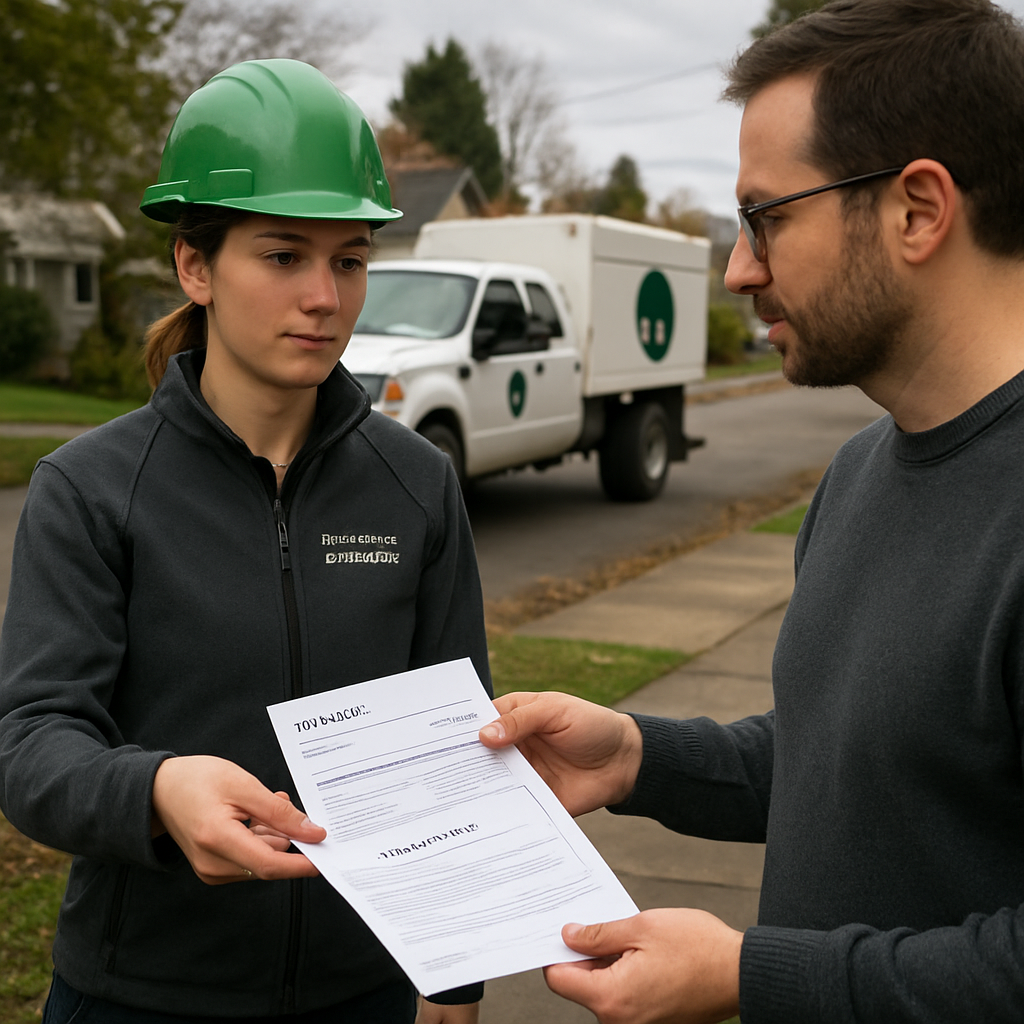
Final judgment: prioritize contractors who treat regulatory and safety work as part of the price, not an add-on. For persistent questions about permits and local rules see City of Portland and for credential verification check ISA. If you prefer a local firm that documents permits and provides on-site arborist assessments, consider a site consult before any pruning begins; it pays for itself when permits or storm risks are in play. For scheduling and scope examples see Mr Tree Inc. pruning page.
Portland rules, permits, utility coordination and environmental considerations
Plain reality: regulatory and utility issues are the most common reason a routine pruning turns into unexpected cost or delay in Portland. Handle permits, ownership questions, and utility coordination before crews arrive, or plan for extra time and expense while those items are resolved.
Permits, ownership and when the city gets involved
How to confirm whether city rules apply: start by locating the trunk relative to the public right-of-way and checking the City of Portland tree pages. Street trees, trees on public land, and some large or landmark trees are subject to city review or permits. If the trunk sits in the park strip or behind the sidewalk, assume you must coordinate with the city.
- Checklist before any work: Verify trunk location (private lot vs park strip), ask the city whether the tree is regulated, request a written permit requirement statement or exemption, and insist your contractor includes permit handling in the written scope.
- Practical limit: If a project includes removal, work that alters more than a third of a crown, or any topping-style reduction, get the city involved first — contractors that treat permits as optional are a liability.
Trade-off to accept: permitting adds time and paperwork but it protects you from fines and forced corrective work. Paying a contractor slightly more to handle permits and paperwork will almost always be cheaper than retroactive fines or mandated restoration.
Utility coordination: visible and hidden hazards
Safety-first rule: any pruning or rigging near powerlines requires coordination with the utility and crews trained to work to utility clearances. Contractors should document who they notified and whether PGE or another utility will be involved or will de-energize lines.
Hidden utilities matter too. Before bringing heavy equipment, confirm underground irrigation, gas, and telecom locations with a locate service and flag them on-site. Heavy machinery on wet Portland soil without ground protection increases the chance of root damage and later tree decline.
Concrete example: An owner in north Portland planned a large crown reduction under a street-facing maple. The hired crew scheduled work but failed to confirm it was a street tree. The city required a permit and an arborist report; the crew paused mid-job while the homeowner paid for the permit and a certified arborist assessment. If permit status had been checked in the estimate, the schedule and price would have been accurate from the start.
Environmental practices that matter in Portland yards
Root-zone protection is not optional. Ask your contractor about ground protection mats, avoiding storage of debris on the root-flare, and limiting machinery travel across the dripline. Compaction and root wounds are silent killers that show as decline years later.
Nesting birds and timing trade-offs: biological windows sometimes conflict with ideal pruning seasons. When work falls inside local nesting season, a qualified arborist should inspect for active nests and propose mitigations (delay, partial cuts, or targeted removals). Avoid blanket avoidance or illegal disturbance; a short delay often prevents enforcement issues and preserves wildlife value.
Final judgment: do the administrative work up front. The extra step of confirming permit status and utility coordination narrows uncertainty, keeps crews from stopping mid-job, and prevents most expensive after-the-fact corrections. For permit questions start at City of Portland and for species- and timing-specific guidance see Oregon State University Extension. For contractors that include permit and utility handling in their scope see a local example at Mr Tree Inc. pruning page.
Typical Portland cost ranges and factors that influence price
Straight talk: prices for tree trimming portland look cheap at first glance and expensive two calls later. A headline hourly rate or a low flat quote often hides mobilization, permit handling, equipment rental, stump work, and debris hauling — and those hidden items are where most homeowners overspend.
Benchmarks you can use when budgeting
| Typical job | Typical Portland range |
|---|---|
| Small yard tree pruning (single, <30 ft; access straightforward) | $150 – $400 |
| Medium tree structural pruning (30–60 ft; some rigging) | $350 – $900 |
| Large tree structural pruning (major crown work, complex rigging) | $900 – $2,500+ |
| Stump grinding (diameter and depth vary the price) | $150 – $700 |
| Emergency storm response (after-hours, hazardous conditions) | Premiums apply; often substantially higher than scheduled work |
Why costs swing so much: three practical drivers dominate price in Portland — access, hazard complexity, and scope clarity. Tight backyards, steep slopes, proximity to roofs or utilities, and heavy equipment needs multiply labor hours and safety controls. Permits and city coordination add both time and administrative cost when work touches park strips or regulated trees; assume that a permit-aware contractor will charge more up-front and save you risk later. See the City of Portland rules at City of Portland.
- Access and site constraints: narrow streets, stairs, or sensitive lawns require hand work or ground protection and increase time on site
- Species and tree condition: dense, heavy-wood species or trees with decay need slower, more cautious cuts and often extra rigging
- Debris handling choices: chips left as mulch reduce haul fees; full haul-away or off-site disposal raises the invoice
- Timing and demand: fall storms and emergency windows push prices up; off-season scheduling can reduce bid prices
Concrete example: A homeowner in northwest Portland scheduled pruning for two medium oaks on separate weeks and got two mobilization fees. Combining both trees into one visit cut the total bill by nearly one-third because the crew amortized setup, haul, and permit processing across a single job. The contractor also left chips on-site for mulch, further lowering the final invoice.
A trade-off worth naming: the cheapest bid rarely includes permits, a COI on file, or a written rigging plan. In Portland those omissions usually convert into additional expense when the city intervenes, when utilities must be coordinated, or when a small error becomes a property claim. Paying 15–25 percent more for a documented, insured scope is often the cheaper path in practice.
Bottom line: budget from the written scope, not the headline number — verify permit handling, disposal terms, and safety rigging in writing before you sign. That is where real value shows up in professional tree trimming portland.
Hiring checklist and contract elements plus where Mr Tree fits in
Straight to the point: a signed contract is your risk control tool — not a formality. Insist on precise language that ties price to a defined scope, not to vague promises like labor and materials. A clear contract prevents mid-job price creep, permit surprises, and arguments about cleanup.
What to require in the agreement (practical, enforceable items)
- Exact scope: list each tree by location (front yard maple, backyard apple), the work on each (remove deadwood, 2 lowest limb reductions, crown thinning 12 percent), and the allowed maximum live-crown reduction for this visit.
- Start/completion window: specify earliest start date, estimated days on site, and a firm completion date or daily cap on work hours for noisy operations.
- Insurance and indemnity: require a current certificate of insurance (COI) attached to the contract and language that the contractor is responsible for worker injuries and property damage during performance.
- Permit and utility clause: state who obtains permits, who pays permit fees, and require documentation of any utility coordination or ticket numbers before work begins.
- Change-order process: require written approval for any scope changes, with hourly rates and equipment rates listed so additions cannot be billed later as surprises.
- Debris handling and site restoration: define whether chips are left as mulch, depth and spread area, or removed and hauled away; spell out turf protection measures and compaction mitigation.
- Payment schedule and lien waiver: tie final payment to written completion criteria and require a final lien waiver and written sign-off before releasing the last payment.
- Photo records and follow-up inspection: require pre-work and post-work photos for each tree and an agreed 30-day follow-up visit window to address any storm damage or bleed issues.
- Warranty of work: limited warranty language for workmanship (for example, corrective work within 30–90 days at no charge) and an exclusion for natural dieback or unrelated disease.
Practical insight and trade-off: leaving chips on-site reduces cost and feeds soil, but it can hide roots, attract pests, or complicate city curbside pickup rules. If you accept chips as mulch, specify maximum chip pile size, spread depth, and an acceptable removal alternative so the choice is reversible.
Sample short clause you can adapt
Sample scope sentence: Contractor will prune Tree A (front yard maple at sidewalk) to remove deadwood, reduce lateral limbs listed on page 2 by up to 10 percent of live crown, and remove all debris from private property unless otherwise noted. Contractor will secure any required City of Portland permits and provide copies of approvals to Owner prior to work. This is a useful starter — customize numbers and locations for your job.
Concrete example: A Laurelhurst homeowner required pre- and post-work photos in the contract for three street-facing maples. Mid-job the crew discovered a suspected cavity and paused to get an ISA arborist report; the photos documented the condition and the city permit request, preventing a later dispute about whether damage was preexisting. The homeowner paid more for the arborist report but avoided a potential restoration order and fine.
Judgment that matters: prioritize contracts that document decision points and evidence, not ones that promise vague expertise. In Portland, the real cost is administrative — permits, utility coordination, and documented safety — and contractors who bake those into their contract earn their premium. Certification matters, but documented process matters more.
Where Mr Tree fits: Mr Tree Inc. typically shows up at three points homeowners care about — routine maintenance with a written phased plan, on-site ISA-informed assessments for complicated trees, and emergency response with documented safety and debris handling. See Mr Tree services for examples of scopes and permit-aware work at Mr Tree Inc. pruning page and Mr Tree Inc. arborist services.
Limitation to accept up front: even the best contractor cannot guarantee outcomes for trees with advanced decay or root damage; contracts should allow for changed recommendations after a formal arborist inspection and include a clear path for authorization and pricing of those changes.
Next step: ask for a site estimate that includes a written draft contract. If permit work or utility coordination is involved, require documentation up front — it saves time and money later. For permit basics visit City of Portland and for credential checks see ISA.
0 Comments