
Tree removal is one of those home projects where safety, permits, and cost collide, and making the wrong call can leave you exposed to big bills or hazards. This guide shows how to assess whether a tree should stay or go, outlines the professional removal process and realistic cost ranges, explains permit and utility issues, and covers aftercare like stump grinding and replanting. You will get a photo-ready checklist, clear decision rules for emergencies versus repairable problems, and the practical questions to ask before hiring a licensed arborist or local tree service.
Assessment checklist to decide if a tree needs removal
Quick rule: mark and photograph every item that applies. If two or more serious red flags are present, schedule a professional evaluation — the risk and liability rise faster than repair costs once a tree enters failure mode.
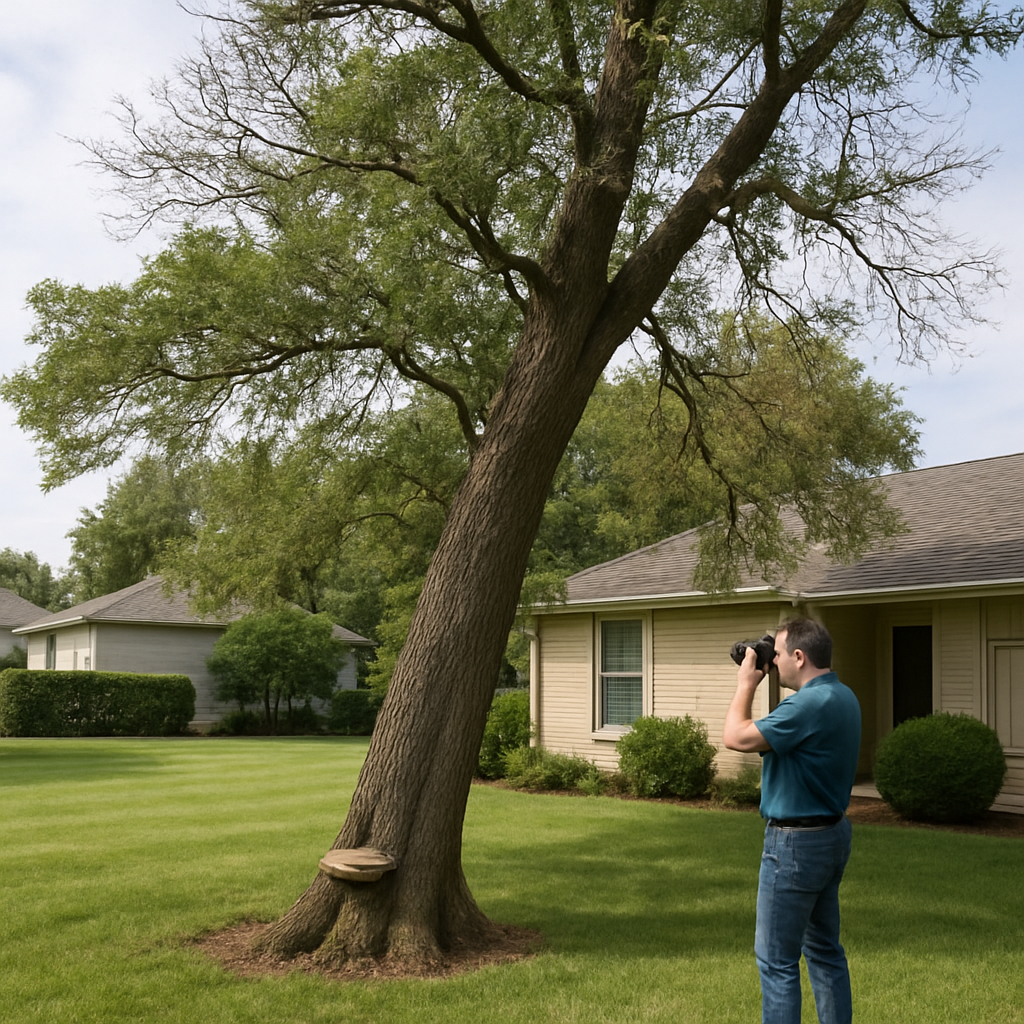
- Major lean: New or increasing tilt, or a lean greater than about 15 degrees compared with previous seasons — a small lean on stable roots can be monitored, a rapid or recent change usually signals removal.
- Longitudinal trunk cracks or splits: Cracks that run vertically and expose heartwood or extend around the circumference indicate structural failure and often mean removal is the safer option.
- Visible rot or fungal fruiting bodies: Mushrooms, shelf fungi, or conks at the base usually mean internal decay; pruning does not resolve butt rot — removal is commonly required when decay is extensive.
- Root crown problems: Exposed or rotted root flare, severe soil heave, or a lifted root plate after storms; compromised anchorage is a direct hazard.
- Repeated limb failure: Branches breaking in several parts of the canopy over time shows declining wood strength — selective pruning only buys time if the underlying cause is treatable.
- Dead canopy >30 percent: A small dead top can be pruned; a third or more dead foliage suggests decline and higher failure probability.
- Clear pest indicators: D-shaped exit holes, heavy boring dust, or galleries under bark consistent with pests like emerald ash borer — infestations can make removal the only practical option.
- Soil movement or sinkage near base: Settling or cracking around the trunk often means root loss; excavation for repairs is disruptive and not always feasible.
- Proximity to structures or utilities: Trees with major defects within the dripline of a house, garage, or under power lines raise the removal threshold because consequences are severe.
- Recent severe storm damage: Large splits, open crotches, or root plate uplift after storms frequently require removal when repairs would not guarantee safety.
Documenting the tree for a fast, accurate estimate
Photograph these views: a full-tree shot from about 20 feet to show posture and proximity to structures, a close-up of the trunk base and root flare, canopy overview showing dead limbs, and any visible fungus or pest signs. Attach location notes and the timeline of decline to speed the assessment.
Concrete example: A homeowner sent photos showing a 30-inch oak with a shelf fungus at the base and roughly 40 percent crown dieback. An ISA certified arborist inspected and recommended removal because the fungus had likely caused heart-rot — cabling was rejected as unsafe near a busy street.
Trade-off to consider: single minor signs can usually be monitored and treated, but trying to save a severely decayed or poorly anchored large tree with repeated pruning or bracing often costs more over time and leaves a persistent hazard. Prioritize elimination of immediate risk over saving a marginal specimen.
0 Comments