
Hiring a Local Tree Removal Company: Red Flags, Quotes and What to Expect
Searching for a tree removal company near me is easy; choosing a safe, insured crew is not. This guide lays out concrete red flags to stop bad hires, a line-item checklist for comparing quotes, what happens on job day, and which permits and insurance to verify. Use it to hire a local crew that protects your property and your wallet.
Verify Local Credentials and Arborist Qualifications
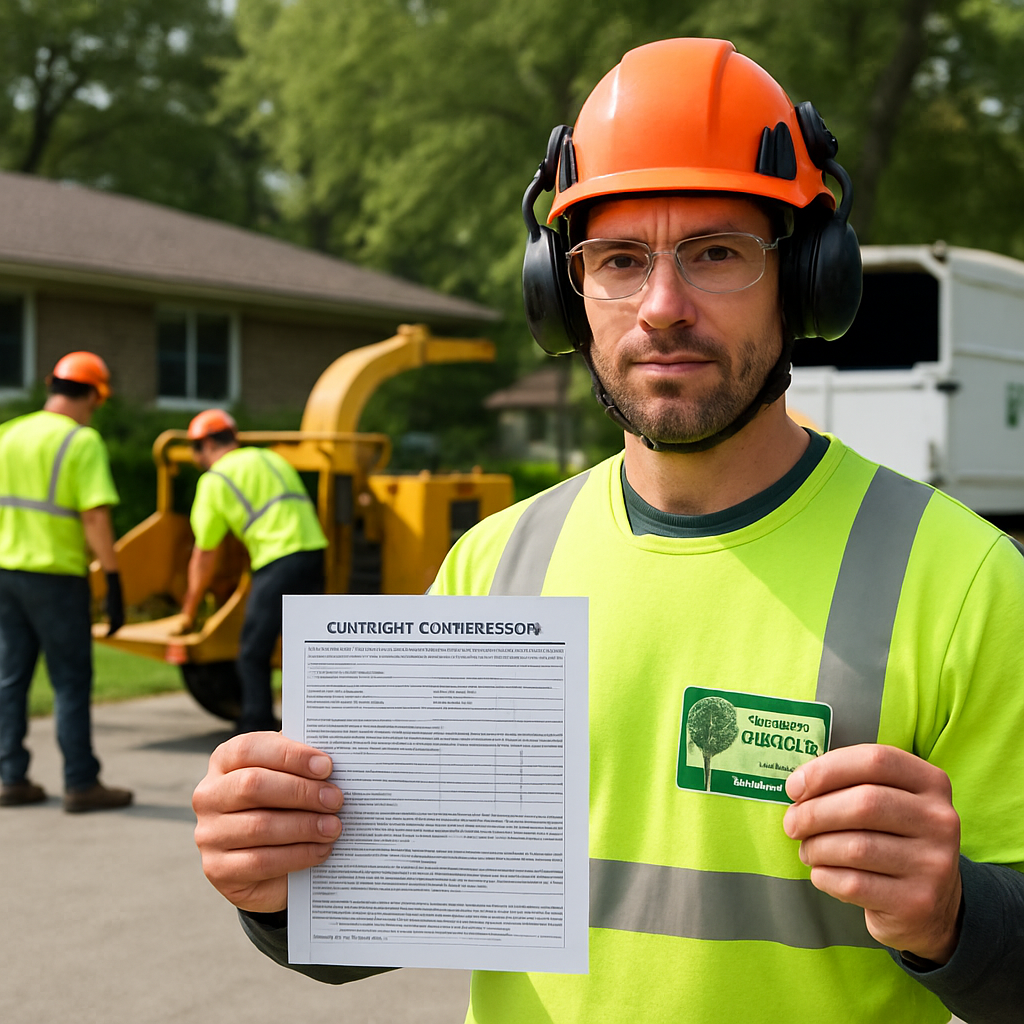
Start by requiring proof, not promises. A Google listing or a local address alone does not protect you when a chain saw, crane, and falling limbs are involved. Insist on seeing current certificate of insurance (COI) showing general liability limits (aim for at least $1,000,000 per occurrence) and workers compensation, plus a business license and any state contractor registration.
How to verify reliably. Ask for a COI with the policy number and insurer name, then call the insurer to confirm coverage dates and limits. Check for on-staff or subcontracted ISA-certified arborists via the International Society of Arboriculture directory. Use your state contractor lookup to confirm the business license. These checks take 5 to 10 minutes but remove a common false economy where uninsured crews expose the homeowner to liability.
Subcontractors and hidden risk. Many small local tree removal services use subcontractors. That is acceptable if the primary contractor produces COIs covering all workers on-site. If they cannot prove subcontractor coverage, treat that as a material risk: your home insurer and the worker compensation carrier will point fingers if someone is hurt or property is damaged.
Quick verification checklist
- Certificate of insurance with policy number, effective/expiration dates, and limits.
- Workers compensation policy or signed waiver if your state allows it (rare).
- ISA certification for the arborist on-site — verify on the ISA directory.
- Business license or state contractor registration showing active status.
- Local references with recent job photos and an on-site point of contact.
- Clarify who will perform the work: company crews or named subcontractors.
Template script to request proof. Use this verbatim by email or phone to avoid ambiguity: Please email a current certificate of insurance showing general liability and workers compensation, name of insurer and policy numbers, and your arborist's ISA certification number. Also include two references from jobs in my zip code performed in the last 12 months.
Concrete example: A homeowner in a narrow-lot neighborhood asked for a COI before a scheduled removal. The emailed COI showed a policy that had expired two months earlier. A quick call to the insurer confirmed the lapse; the homeowner canceled the job and hired a different, properly insured local crew. The time spent verifying avoided a likely dispute when equipment tracked sod and a hired hand injured themselves.
Judgment that matters in practice. Recent, local job references and a live COI call are better indicators of competence than a five-star review from three years ago. Certificates can be faked or expired; phone verification separates professional outfits from fly-by-night cutters. If a bidder resists these checks, treat that as a hard no.
Important: No COI, no work. Never allow a crew on your property without confirmed insurance and a named person who is an ISA-certified arborist or demonstrably experienced supervisor.
Takeaway / next step. Verifying credentials is low effort and high leverage: once you have confirmed insurance, licensing, and the arborist on record, move on to getting itemized quotes so you can compare value rather than risk.
Clear Red Flags That Should End the Conversation
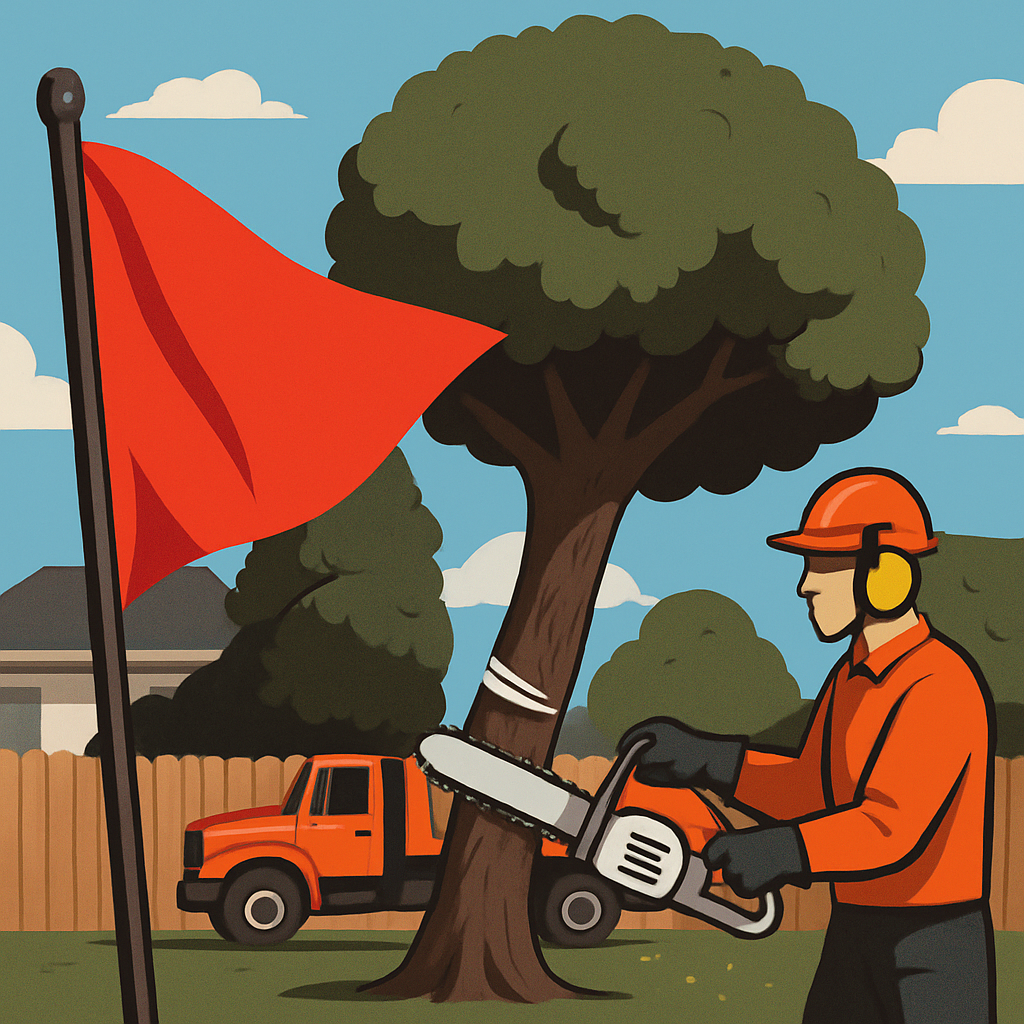
If a bidder shows any of these behaviours, stop engaging. You can search for a tree removal company near me and get dozens of hits, but responsiveness alone is not competence. These are the concrete, practical red flags that reliably predict safety failures, uninsured liability, or poor cleanup.
- Vague lump-sum quote. A single number with no breakdown for labor, equipment, stump grinding, permits or disposal hides change orders and surprises.
- Cash-only or full prepayment demands. Requests for large cash deposits or insistence on final payment before work is finished are classic signals of fly-by-night operators.
- Unmarked vehicles or inconsistent paperwork. Trucks without clear company ID, crew members using different company names, or invoices that don’t match the business on their website make follow-up and accountability difficult.
- Obvious safety shortcuts. Crews arriving without PPE, using unsecured loads, or performing dangerous cuts without exclusion zones indicate systemic safety problems that will cost you later.
- Bids far below local market rates. Extremely low prices often mean subcontracted crews, missing insurance, or shortcuts on property protection — not a bargain.
- Evasive on permits and local rules. If they say permits aren’t needed without checking with your city, or promise to handle permits but won’t put it in writing, that’s a risk.
Practical trade-off to keep in mind. In emergency situations you may accept a premium for fast response, but urgent work still requires documentation. Legitimate emergency tree removal teams will provide a same-day written scope, an after-action cleanup plan, and proof of coverage — anyone who refuses paperwork to save time is increasing your liability, not reducing it.
Concrete Example: A homeowner called a cheap, same-day crew after a storm; the crew removed the leaning limb but left the stump and a torn lawn, demanded final payment, and disappeared. Later the homeowner discovered the crew was uninsured and paid out-of-pocket to repair a crushed irrigation line. That sequence is common when bidders push for quick cash and skip documentation.
A sharper judgment most people miss. Online reviews and flashy ads are easy to fake; the single most telling behaviour is resistance to written terms. If a company argues they operate on trust, you are their risk buffer. Trust is fine after verification — not in place of it.
If you catch a red flag, do this immediately: pause scheduling, request an emailed itemized estimate and current insurance proof, photograph the crew and vehicle plates before work begins, and get a second written bid. If a contractor still refuses to provide documentation, move on — contingency costs for property damage and uninsured claims are almost always higher than paying a reputable crew.
If they resist paperwork or safety controls, end the conversation — fast response is not an excuse for no documentation.
Next consideration: if you need a fast hire, get at least one reputable local alternative and insist on the same paperwork. That preserves speed without surrendering safety or your legal protection.
How to Request, Read, and Compare Quotes
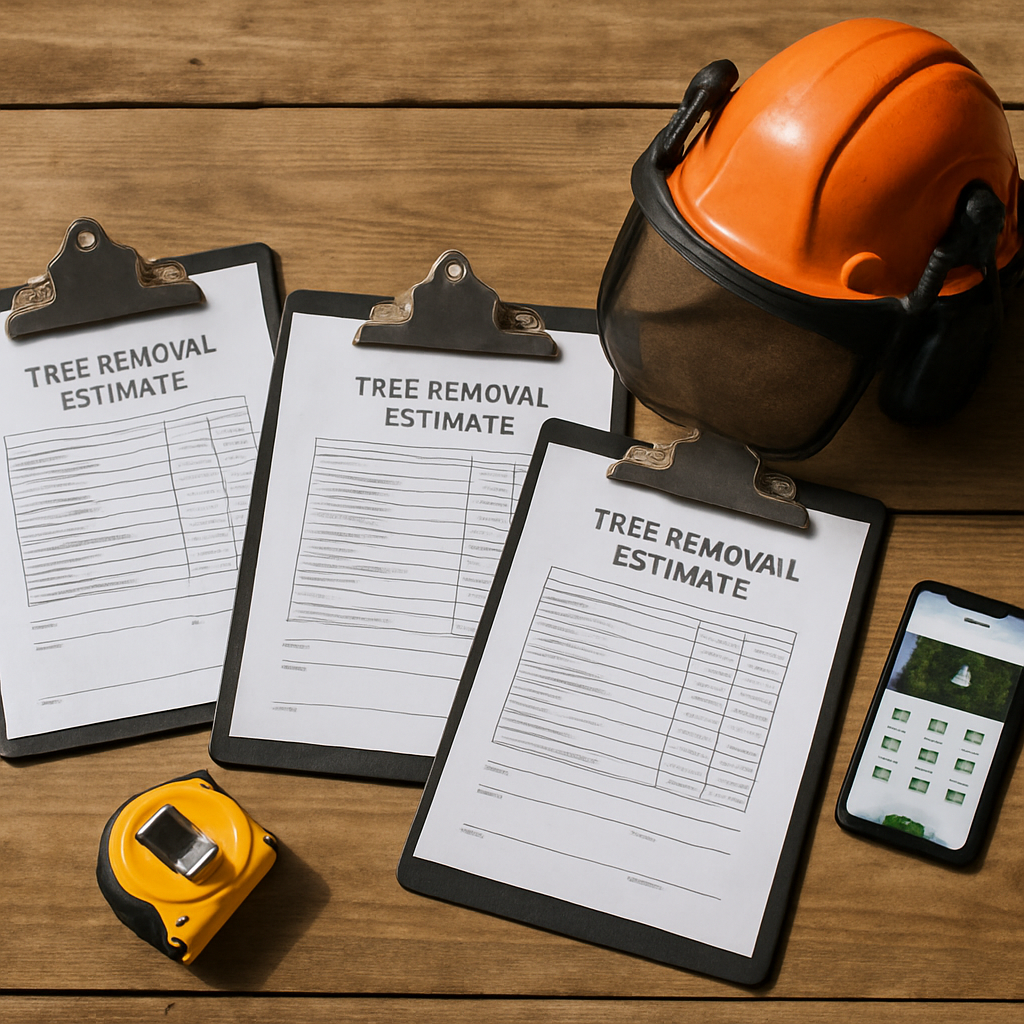
A quote is not a promise — it is the first draft of your contract. Ask for a written scope that ties price to measurable facts (tree species, trunk diameter or DBH, and access constraints) and rejects vague totals. When you request estimates, insist on three things: an on-site or live-video assessment for anything over 30 feet or near structures, a line-item breakdown for optional services, and a clear statement of who files permits. For a real example of a clear scope, compare bids to Mr Tree Inc. tree removal services.
Normalize bids before you compare prices
Normalize by stripping each bid to the same scope. Convert lump sums into unit components: labor hours, equipment hours (crane, bucket truck, chipper), stump grind depth, and debris disposal by volume or weight. Trade-off: virtual or photo-based quotes are fast and acceptable for small, obvious removals, but they routinely underprice complexity. For medium or hazardous jobs, a site visit prevents surprise change orders and is worth the short delay and modest inspection fee.
- Require measurement-based items: Ask bidders to state trunk diameter or estimated tree height and how that maps to price.
- Separate optional services: Get separate line items for stump grinding, hauling, permit fees, and root/landscape repairs.
- Force equipment transparency: Ask for hours or daily rental rates for major equipment and whether crane time is billed by hour or job.
Concrete Example: Three bids for the same backyard 50-foot maple arrived: Bid A $1,200 lump; Bid B $1,650 including crane, stump grind, and hauling; Bid C $1,050 but listed a separate $450 permit and a $300 disposal fee. After normalizing (add permit and disposal to Bid C), Bid B was actually the best value because it included crane rigging that avoided roof risk and a deeper stump grind—things the cheapest bid skipped. The cheapest initial number would have cost more after repairs.
Key point: If a quote omits an expiry date or change-order rates, expect the price to move — quickly and upward.
Final judgment: price is only useful when you compare like with like. If a bidder resists breaking down costs or refuses a short on-site check, treat the quote as unreliable. Your next step is to normalize any remaining bids against the contract mechanics above, then pick the bidder who minimizes your total risk — not just the sticker price.
Realistic Cost Benchmarks and Pricing Drivers
Straight truth: the sticker price tells you very little until you know the specific complexity drivers. Size matters, but access, proximity to structures or utilities, and the removal method change cost faster than trunk diameter does.
Primary drivers that move the price
- Tree characteristics: species and height affect rigging difficulty and cutting sequence; dense hardwoods take longer to cut and lower wood value for firewood salvage.
- Access constraints: tight backyard, fences, pools, steep slopes increase labor hours and often require special rigging or manual lowering, which multiplies time on site.
- Proximity to risk targets: work next to a house, garage, or power line forces slow sectional removals or crane use and increases liability and supervision costs.
- Equipment choice: cranes, bucket trucks, and specialized rigging raise mobilization fees. Choosing a crane reduces roof impact risk but adds substantial equipment charges.
- Timing and urgency: weekend work, same-day response, or emergency storm cleanup will carry overtime premiums and possible mobilization surcharges.
- Permits and disposal: municipal permits, arborist reports, and bulky debris hauling are real line items; if a quote omits these, it is incomplete.
Tradeoff to consider: opting for a crane or bucket truck raises the bill but can be cheaper than repairing roof, gutter, or pool damage later. In practice, selecting the higher-cost option up front is the correct financial decision when structure risk is high.
| Scenario | Complexity factors | Relative cost vs simple roadside removal |
|---|---|---|
| Small street-side ornamental | Easy access, no structures, minimal cleanup | 1x |
| Backyard medium tree with tight access | Fencing, lawn protection, manual rigging | 2x to 3x |
| Large constrained tree or storm-damaged hazardous tree | Crane or special rigging, emergency response, traffic control | 4x or more |
Concrete example: A homeowner needed a 40-foot maple removed behind a narrow fence and beside a swimming pool. Two bidders gave similar base numbers, but the company that included a temporary fence, ground protection mats, and sectional rigging charged about 2.5 times the simple roadside price. The higher bid avoided a near miss with the pool coping and saved the homeowner from paying for tile repair later.
Ask each bidder to show a baseline price and then list per-driver adjustments – for example, crane fee, overtime, permit cost, and stump grind depth. That makes apples-to-apples comparison possible.
Final consideration: when bids look close, focus on which one prices and manages the high-risk drivers explicitly. A modestly higher bid that itemizes crane time, permit fees, and cleanup will usually cost you less in total risk than the cheapest number on the page.
What to Expect on Job Day: Safety, Equipment, and Timeline
Job day shows the difference between a professional crew and a weekend cutter. When you search for a tree removal company near me, watch how the team turns your yard into a temporary worksite — that setup, not just the price, tells you if they took permitting, insurance, and risk management seriously.
How a professional crew runs the site
First things first: a walk-through and a named supervisor. Expect the lead arborist or crew supervisor to re-confirm the scope, point out hazards (power lines, pools, fences), and mark exclusion zones. They should also ask you to move vehicles, secure pets, and show where underground services run — and they should call 811 or demonstrate that utilities were checked before heavy digging or stump removal begins.
Visible safety controls are non-negotiable. Crews should deploy cones, tape, or portable fencing, use ground protection mats where heavy equipment crosses lawns, and show PPE on every worker. When a crew skips simple protections to save time, the trade-off is almost always higher repair bills and a higher chance of an insurance dispute later.
Equipment and practical expectations
Expect the right tools for the specific task. Small cutters might only need chainsaws and a chipper, while constrained or high-risk removals bring bucket trucks, aerial lifts, rigging hardware, or a crane and a stump grinder for follow-up work. If a crew insists they can do a complex sectional removal without rigging or lifting gear, treat that as a red flag — the shortcut saves them time, not you.
Timing is predictable only within a range. Short, low-risk removals are typically complete in a few hours; medium jobs commonly occupy a half-day, and large or constrained jobs may take a full day or longer. Expect noise, heavy vehicle movement, and intermittent stoppages to reposition equipment. The practical trade-off: paying for slower, controlled sectional removals and proper rigging is often cheaper than paying for post-job repairs.
Homeowner responsibilities on job day matter. You usually need to clear access (move cars, unlock gates), point out sprinkler lines or irrigation valves, and keep children and pets away from exclusion zones. Do not stand in the drop zone or attempt to direct lowering branches — remain available for questions but stay out of the work corridor.
Concrete Example: A suburban homeowner hired a local crew after searching tree removal service near me. The crew arrived with ground protection mats, a bucket truck, and a supervisor who walked the homeowner through a laminated risk plan. Because they set up sectional rigging instead of a quick top-down cut, they avoided a costly crack to the garage fascia; the job took most of a day but required no post-job repairs.
Judgment that matters: Speed alone is a poor proxy for competence. Reliable arborists and nearby tree care specialists will charge for setup and supervision because those steps prevent expensive mistakes. If a bid is significantly lower but the crew rushes setup or omits ground protection, plan on downstream costs and greater disruption.
If you want immediate confirmation: ask the crew to show the on-site supervisor, the COI binder or electronic certificate, and the plan for stump grinding or debris removal before any chainsaw starts. If they hesitate, pause the job.
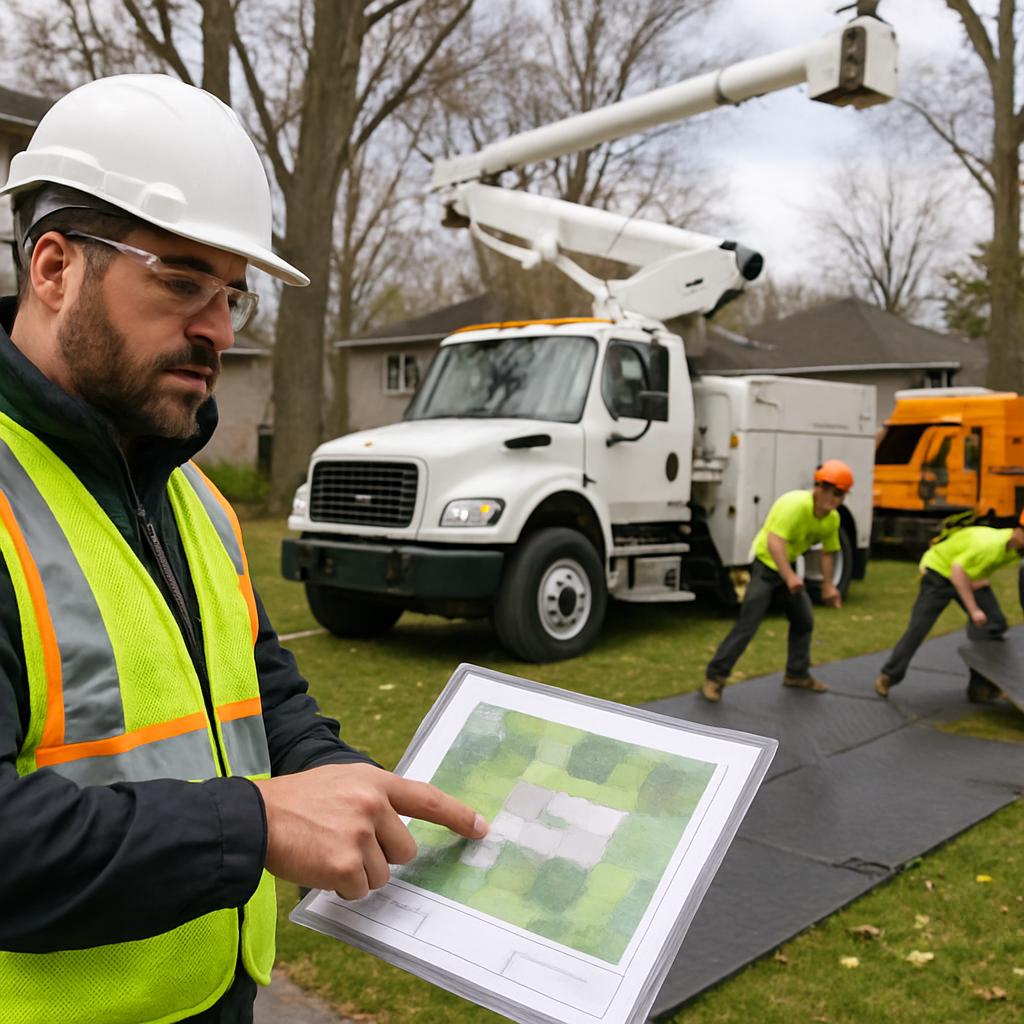
If you want a reference for how a competent crew behaves on job day, compare observed practices to OSHA guidance on tree care safety and the ISA contractor expectations: OSHA tree care resources and ISA contractor guidance. For local service details and typical on-site procedures, see Mr Tree Inc. tree removal services.
Permits, Insurance, and Liability Responsibilities
Permits, insurance, and liability are not paperwork exercises – they are who pays and who gets sued if something goes wrong. When you search for a tree removal company near me, the contractor who handles permits and demonstrates clear insurance coverage will save you money and legal headaches down the road.
Many municipalities require a tree removal permit, a street or traffic control permit when vehicles or cranes block a lane, or special approval for protected trees. Practical tradeoff: letting the contractor file permits saves you time but does not remove your responsibility – the permit is issued against the property. Insist the bid states who files, who pays, the permit number, and whether the contractor will be the named permittee.
Insurance is multi-layered. A valid bidder should show current general liability, workers compensation, commercial auto, and, where appropriate, umbrella coverage. Do not be satisfied with a COI alone. Ask for an additional insured endorsement and, when work is near structures or utilities, primary and non-contributory language. Call the insurer to confirm the endorsement and effective dates rather than assuming the certificate is factual.
- Documents and contract clauses to insist on before work starts: Permit number and issuing agency – stamped or electronic confirmation
- Named insurer and policy numbers with effective and expiration dates – not just agent contact
- Additional insured endorsement or equivalent wording when property risk is high
- Payment and indemnity language that limits homeowner liability and avoids broad hold-harmless clauses
- Clear statement on who pays permit fees and who is responsible for code violations
Concrete example: After a storm a homeowner hired a same-day crew that removed a dangerous limb. The crew did not pull a permit and left debris in the street. The city issued a citation to the property owner and demanded a cleanup plan; the crew had no insurance to cover the fine or a subsequently damaged underground irrigation line. The homeowner ended up paying twice – once for the immediate hazard removal and again for municipal fines and repairs.
A common misunderstanding is that a certificate of insurance is the same as coverage that protects you. It is not. Certificates show limits and carriers. Endorsements extend coverage. If a contractor refuses to provide an additional insured endorsement when asked, that is a real gap. Also be wary of contractors asking you to sign waivers that shift liability to the homeowner or to accept verbal promises about permits.
Key point: If a bidder will not put permit responsibility, insurer name and policy numbers, and an additional insured endorsement in writing, pause and get another estimate.
Next consideration: if you face an emergency removal, require a same-day written scope and COI before work begins. If the crew cannot produce either, call your municipality or utilities to arrange an authorized contractor. Paperwork slows nothing that matters more than avoiding open-ended liability.
Post-Job Follow-Up: Stump Grinding, Cleanup, Warranties and Tree Health
Concrete point: The job is not finished when the trunk is on the ground. How the crew handles the stump, cleanup, and follow-up determines whether you close the chapter or keep paying for repairs, rework, and pest remediation.
Stump choices and practical trade-offs
Stump timing matters. Immediate stump grinding eliminates sprouting and shortens the timeline for replanting, but it raises the day-of cost and can complicate heavy-equipment access. Delaying grinding saves money up front but leaves you managing suckers, rot, and lawn disruption.
- Shallow grind (3–6 inches below grade): cosmetically clean, faster, easier for lawn repair but may allow re-sprouts and slower root decay.
- Deep grind (8–12+ inches): better for replanting and preventing regrowth, requires more machine time and may increase compaction or require backfill.
- Full stump removal: expensive and invasive; use when roots will interfere with foundations, driveways, or major landscaping.
Specify grind depth, chip handling, and backfill in writing. When you request follow-up or separate stump grinding from a tree removal quote, require the exact grind depth, whether chips are hauled or left for mulch, and whether the hole will be backfilled or compacted. For a practical reference to service options, see Mr Tree Inc. stump grinding.
Cleanup standards, soil repair and acceptable sign-off
What good cleanup looks like. Expect removal or redistribution of chips per your contract, safe stacking or hauling of logs, repair or note of damaged irrigation, and remediation of matting or tracks that compact soil. A quality crew will offer either sod replacement or topsoil and seed, not a promise to let the yard look better over time.
Trade-off to watch: leaving chips in place saves the contractor hauling costs and can be fine for mulch, but heavy chips buried in turf create drainage and regrowth problems. If you want chips for mulch, ask for a screened product and a specified maximum depth when spread.
Sign-off only after a walkthrough. Photograph the site with the crew present and get a brief written acceptance that lists outstanding follow-up items (stump grind, turf repair, chip haul).
Warranties: what is reasonable and what is not. A workmanship warranty for cleanup and agreed repairs of 30 to 90 days is standard; structural fixes or failures caused by contractor negligence should be covered longer. Do not expect guarantees for stump rot, future fungal invasion, or regrowth unless a specific treatment is contracted and priced.
How to preserve a warranty claim. Take time-stamped photos before work, immediately after work, and after any follow-up repair. Report issues in writing within the warranty window and keep the original contract, COI, and any invoice. If the contractor resists a legitimate warranty claim, your documented photos and the COI will be essential when involving your insurer or municipal code office.
When to request a tree-health follow-up
Look for delayed impacts on adjacent trees. Root plate shifts, torn roots, or cambium damage may not show obvious symptoms immediately. If adjacent trees develop dieback, increased leaf drop, or fungal fruiting bodies within months, call a certified arborist for an inspection — early diagnosis limits spread and is cheaper than emergency removals later. For certified assessments, consider ISA resources or a nearby arborist.
Concrete Example: A homeowner scheduled stump grinding two weeks after removal to save on day-of costs but did not specify grind depth. The crew ground only 3 inches below grade; when the homeowner replanted a sapling a month later, roots encountered the remaining stump and required re-grinding to 10 inches. The homeowner paid a second mobilization fee that would have been avoidable with a clearly specified grind depth on the original contract.
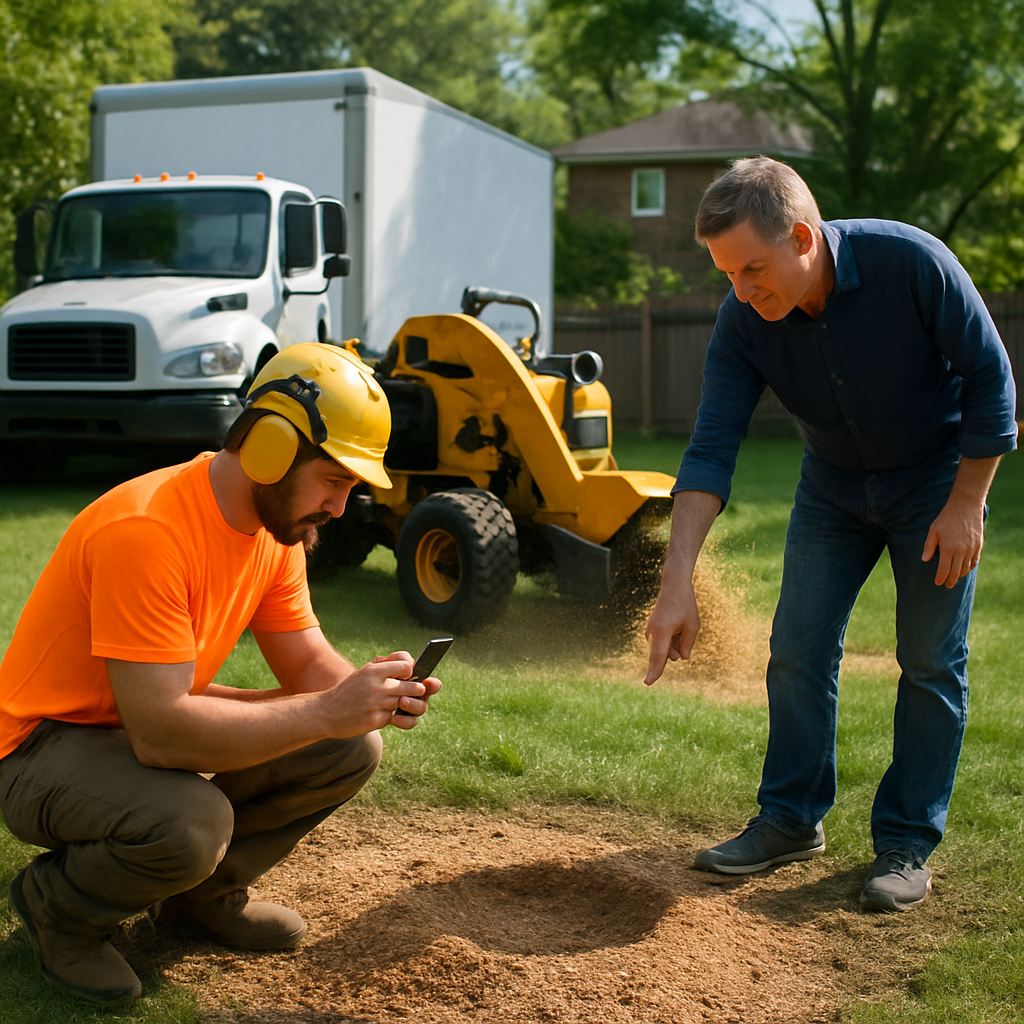
Next consideration: Before you pay final balance, require the signed post-job checklist and proof that any agreed stump grinding, soil repair, or arborist follow-up has been scheduled or completed. That step closes the job cleanly and reduces the chance you will be the one chasing repairs later.
How Mr Tree Inc. Approaches Local Tree Removal and What to Expect When You Call
Immediate triage, not a sales call. When you search for a tree removal company near me and call Mr Tree Inc., the first conversation is treated as a field assessment: they gather photos, exact location, access constraints, and whether the situation is hazardous. That intake determines whether you get a same-day emergency mitigation, a prioritized site visit, or a scheduled onsite estimate by an experienced arborist near me.
What Mr Tree Inc. does on first contact
- Document the hazard: Request photos or video and create a timestamped record in their dispatch system to justify any emergency response.
- Triage solution: Offer temporary stabilization for immediate danger (strap or limb removal) versus full removal scheduling.
- Schedule a qualified site visit: If the job is over 30 feet or near structures, an ISA-certified arborist inspects in person and records DBH and rigging needs.
- Deliver a written, line-item estimate: COI, permit handling, stump grinding services, disposal, and optional add-ons are listed separately so you can compare apples-to-apples.
Practical trade-off to expect. Fast emergency tree removal reduces immediate risk but carries higher mobilization and overtime charges. Mr Tree Inc. separates emergency mitigation fees from the final removal quote so you are not surprised by double billing – a common failure mode with cheaper crews who bundle everything into an ambiguous lump sum.
Operational practices that matter in real yards. Crews arrive with a supervisor, show proof of insurance on a tablet, deploy ground protection mats when needed, and present a short written work plan before any cuts start. They also provide a post-job digital report with photos, a recommended monitoring period for adjacent trees, and clear dates for any scheduled stump grinding or follow-up work.
Concrete Example: After a storm a homeowner called for emergency tree removal. Mr Tree Inc. performed same-day limb stabilization to remove immediate danger, emailed a COI and a same-day scope, then scheduled full sectional removal two days later with a crane and stump grinding services included. That two-step approach stopped the hazard quickly and avoided the rushed, uninsured work that often creates follow-on damage.
Judgment most homeowners overlook. A clearly documented staged response is better than a speedy complete cut with no paperwork. In practice, reputable local tree removal services balance speed and documentation – insist on written scopes and a visible COI even when you accept expedited service.
If a local crew promises same-day removal without a written scope, COI, and a named supervisor, treat that as an unacceptable shortcut to avoid.
0 Comments